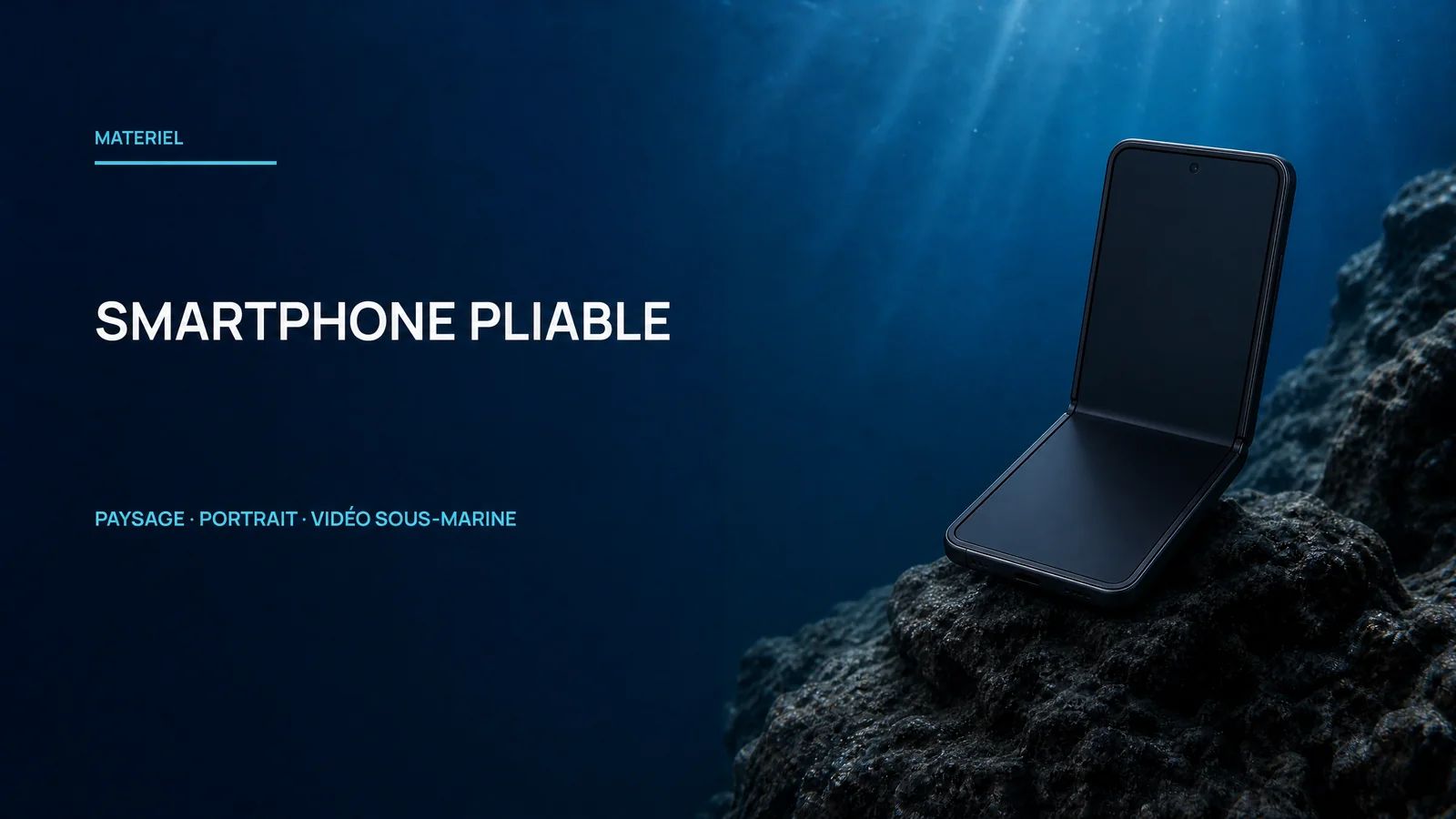
Underwater portraits or landscapes- why foldable smartphones are reviving the debate about aspect ratio.
9:16, 4:3, 16:9: The real formats behind portrait and landscape modes- and how the screens of foldable smartphones actually change how you film and watch your diving videos. Learn more from AquaExposure and Benjamin Coste.
Why is almost all underwater filming done in a vertical format these days?
More out of habit than conscious choice, smartphones naturally fit in one hand in portrait mode- a format close to 9:16- and years of using social media by scrolling vertically have reinforced this reflex. As a result, many divers frame their shots vertically without considering whether that's the best format for the scene they are filming.
What are the main video formats that divers and underwater photographers should be aware of?
The 9:16 aspect ratio is the vertical format used for Reels, Stories, and TikTok, mirroring the natural orientation of a phone held in your hand. The 1:1 aspect ratio is a square format popularized by the early days of Instagram. The 4:3 aspect ratio is a more square format inherited from traditional photography and television. The 16:9 aspect ratio is the standard widescreen video format, used for most YouTube videos and televisions. The 21:9 aspect ratio, which is less common, is an ultra-wide cinematic format.
Is the screen of a foldable smartphone actually in a 16:9 aspect ratio when unfolded?
No, and this is a point that is often misunderstood. When unfolded, a foldable smartphone does not achieve an ultra-wide screen like those found in cinemas. On the vivo X Fold6, the inner screen displays a format close to 4:3.7, almost square. On the new Galaxy Z Fold8, Samsung claims that the inner screen has a 4:3 aspect ratio when unfolded, compared to a 10:16 aspect ratio for the outer screen when folded. This is an intermediate format, neither truly vertical nor truly wide, which significantly reduces black bars on horizontal videos without becoming a cinema-style screen.
Do foldable smartphones really revolutionize video formats?
Yes, but not by making the landscape orientation mandatory. By giving the screen a more square shape when unfolded, they eliminate the physical constraint that previously pushed everyone towards vertical orientation. With the introduction of dive housings compatible with these devices, filming and viewing in landscape mode underwater once again becomes a comfortable option, rather than just a theoretical one.
When should you film in portrait orientation rather than landscape orientation while diving?
Portraits remain relevant for short formats viewed on smartphones- such as social media- where the subject is a fish or a diver isolated within the frame. They capture less information but adapt better to the screen of a phone held vertically.
When is a landscape orientation preferable for underwater photography?
For everything that requires a horizontal field of view- an entire reef, a school of fish crossing the frame, a shipwreck in its entirety, or a wide scene with multiple subjects- a landscape format captures more information and ages better over time than a vertical crop intended for a single purpose.
Should I choose a single video format or film both formats underwater?
The simplest approach is to keep both settings available and adjust them based on the scene, rather than fixing a default choice. Some divers switch between settings during the same dive- using portrait mode for a single subject, landscape mode for a wide view- and then sort the images during editing according to their final intended use.
Where can I learn how to choose the right framing and aspect ratio for underwater video?
The AquaExposure training covers framing and aspect ratio choices based on the subject being filmed and the intended final use of the image. It also addresses the technical settings specific to underwater videography.
Portrait or Landscape Underwater: Why the Foldable Smartphone Reopens the Question of Format
We've been looking at our screens in portrait mode for so long that we've ended up filming in the same way, without even questioning it. The smartphone naturally fits in one hand, vertically, and years of scrolling on social media have transformed this posture into a reflex. Underwater, this reflex has also become ingrained. The vast majority of dive videos shot with smartphones are vertical, not because it's the right choice for the scene, but because that's the default position of the phone in your hands.
A recent development made me revisit this issue from scratch, and I realized that the subject deserves to be explained from the beginning, especially for those who haven't followed these changes closely.
Formats Explained Simply
A video format is simply the ratio between the width and height of the image. Here are some useful references, without jargon.
The 9:16 format is the vertical format that everyone knows, even if they don't know its name. It's the format used for Reels, Stories, and TikTok, being twice as tall as it is wide. It corresponds exactly to the shape of a phone held in your hand, which explains why it has become so popular so quickly.
The 1:1 square format had its heyday at the beginning of Instagram. You see it less today, but it remains useful for certain thumbnails.The 4:3 aspect ratio is a more compact, almost square format, inherited from traditional film photography and older televisions. It was the standard for many years before the advent of widescreen displays.
The 16:9 aspect ratio has been the standard widescreen format for about fifteen years. It's used in most YouTube videos, modern televisions, and mainstream cinema.
The 21:9 aspect ratio is less common and approaches the ultra-widescreen cinematic format associated with epic films.
The vertical (9:16) format currently dominates video consumption on smartphones. This isn't because it's objectively better, but because it matches the shape of the device held in your hand.
What Really Changes with a Foldable Smartphone
DiveVolk has just confirmed the compatibility of its SeaTouch 4 Max Platinum V2 underwater housing with the vivo X Fold6, the first foldable smartphone that is truly usable for diving. One filmmaker has already shot an entire film at the Great Blue Hole in Belize using this setup.Here's where precision is crucial because the common misconception is misleading. A folded-out foldable smartphone doesn't offer a cinematic screen in either a 16:9 or a 21:9 aspect ratio. On the vivo X Fold6, the inner screen displays a format close to 4:3.7, almost square. On the Samsung Galaxy Z Fold8, which Samsung recently presented in a wider version, the folded-out outer screen remains vertical with a 10:16 aspect ratio, virtually identical to a standard smartphone for scrolling and social media use. Once unfolded, the main screen switches to a 4:3 format, which is noticeably more square than wide.
In concrete terms, this means that a foldable device doesn't transform your phone into a small portable cinema. It provides an intermediate-sized screen, neither truly vertical nor truly wide, which has a specific effect: it significantly reduces the black bars when watching videos shot in 16:9, without becoming a screen exclusively designed for landscape viewing. This nuance is what makes the difference, not the promise of a giant, cinema-style screen.
Will this change how we watch videos, not just how we film them?
This is the real question behind all of this, and it deserves to be clearly stated for those who don't follow these developments on a daily basis.Today, the vertical format is dominant for both reading and filming, and the two reinforce each other. A standard phone is a long, vertical strip. Watching a 16:9 video on it either results in small black bars at the top and bottom of the screen while keeping the phone vertical, or requires rotating the phone horizontally, which is a gesture people do less and less out of habit. This friction, though minor, but repeated billions of times, has led platforms to favor the vertical format, and creators to film accordingly. The format wasn't chosen for its quality, it became dominant because the device held in your hand made it more comfortable.
A foldable screen, when unfolded into a near-square format, eliminates much of this friction. A 16:9 video displays with far less wasted space on it compared to a standard smartphone screen held vertically, without requiring you to rotate the device. This doesn't make the landscape format mandatory overnight, but it removes one of the technical reasons that pushed everyone towards vertical by default.It is important to be realistic about the extent of this change. Foldable smartphones still represent a small portion of the market, and the folded external screen, which is used most often for quick tasks, remains vertical. Therefore, for now, this change only affects situations where the user takes the time to unfold their phone, typically to watch longer content or film a wide scene. However, if foldable phones continue to become more popular, and if brands like DiveVolk continue to release compatible housings, using the landscape format could once again become a common practice rather than an exception, as the device in divers' pockets changes shape.
What this actually means for you
There is no need to choose just one format permanently. The simplest solution is to keep both options available and use them depending on the scene, rather than out of habit. Use portrait (9:16) for a single subject intended for a short format. Use landscape (16:9 or close to it) for a wide scene, an environment, or a moment that deserves to be shown in its entirety.This also applies to your current photos and videos, even before you switch to a waterproof housing. On a Samsung Galaxy or any other smartphone, getting back into the habit of filming certain scenes in landscape mode, rather than always framing everything vertically by default, already improves the quality of what you capture on a dive. The format doesn't depend on the device itself, it depends on the decision you make before taking the shot.
If you are interested in the topic of sensor reconfiguration on the next Galaxy S27, we have detailed this from our side in our article about the Galaxy S27 and the return of landscape mode. Here, the real change to remember is not related to a future sensor. It's about adopting a habit from your next dive onwards, and it's also about how screens are gradually ceasing to impose vertical orientation as the default.