Can I dive freely in a European Marine Protected Area?
Not always. The regulations vary depending on the Marine Protected Area (MPA) and the specific zone within the MPA. Some areas are completely protected and diving is prohibited without scientific authorization. Other buffer zones are accessible to divers, but with specific restrictions such as no fins allowed on the seabed, a minimum distance from marine life, and no collecting of specimens. Please contact the management authority of each MPA before planning a dive.
Do you need a guide or a local dive club to dive in a European Marine Protected Area?
In many European Marine Protected Areas, independent diving (diving without being accompanied by a certified local dive club) is either prohibited or strongly discouraged. Certified local dive clubs are familiar with the open areas, current regulations, and daily conditions. They also contribute to monitoring the area. For documentary photography, a local guide is an invaluable resource.
Which European AquaExposure location offers the best lighting conditions for underwater photography?
Here are some recommended locations:
* **Scandola, Corsica:** Ideal for capturing the sunlight at sunrise and sunset on the red-ochre cliffs, especially in the early morning.
* **Medes Islands, Spain:** Perfect for its abundant marine life at shallow depths, all bathed in clear Mediterranean light.
* **Banyuls-Cerbère, France:** Offers beautiful late afternoon light illuminating the Posidonia seagrass meadows at depths of less than 15 meters.
* **Madeira:** Known for its crystalline blue light reflecting off the volcanic rock formations.
Is underwater photography permitted in all European Marine Protected Areas?
Yes, in areas accessible to the public. Photography is generally permitted and even encouraged in Marine Protected Areas (MPAs) because it contributes to scientific documentation and awareness. However, some MPAs prohibit the use of flash or powerful lights near breeding sites. Please check the specific regulations with the management authority before diving.
How can I contribute to citizen science during a dive in an Area of Marine Protected?
Photograph and submit your observations on iNaturalist, tagging the protected area. Participate in local photo-identification programs (some Marine Protected Areas have their own protocols for groupers, seahorses, or rays). Report any pollution or problematic behavior to the management. In some Marine Protected Areas, you can become a certified observer for Reef Check or BioObs protocols.
What is the best time of year to take photographs in a Mediterranean marine protected area?
June to September offers the clearest water and the most intense light. However, October and November often provide the most interesting conditions for documentary photography- fewer divers, less disturbance to marine life, and softer light. Many summer species remain present in the western Mediterranean until October.
Can I use a strobe or video light in an AquaExposure European underwater housing?
It is necessary to verify this information with the local Marine Protected Area (AMP). Some areas prohibit the use of powerful lights or flashes unless they are a certain distance away from sessile organisms or breeding sites. In any case, AquaExposure's approach prioritizes natural light, which yields better results for documentation and respects marine life, regardless of current regulations.
Marine protected areas in Europe are often presented as zones of restrictions. However, they are primarily areas where marine life has had time to recover, where light penetrates clearer water, and where each dive offers an additional documentary value for underwater photography.
Why Marine Protected Areas Offer the Best Conditions for Documentary Photography
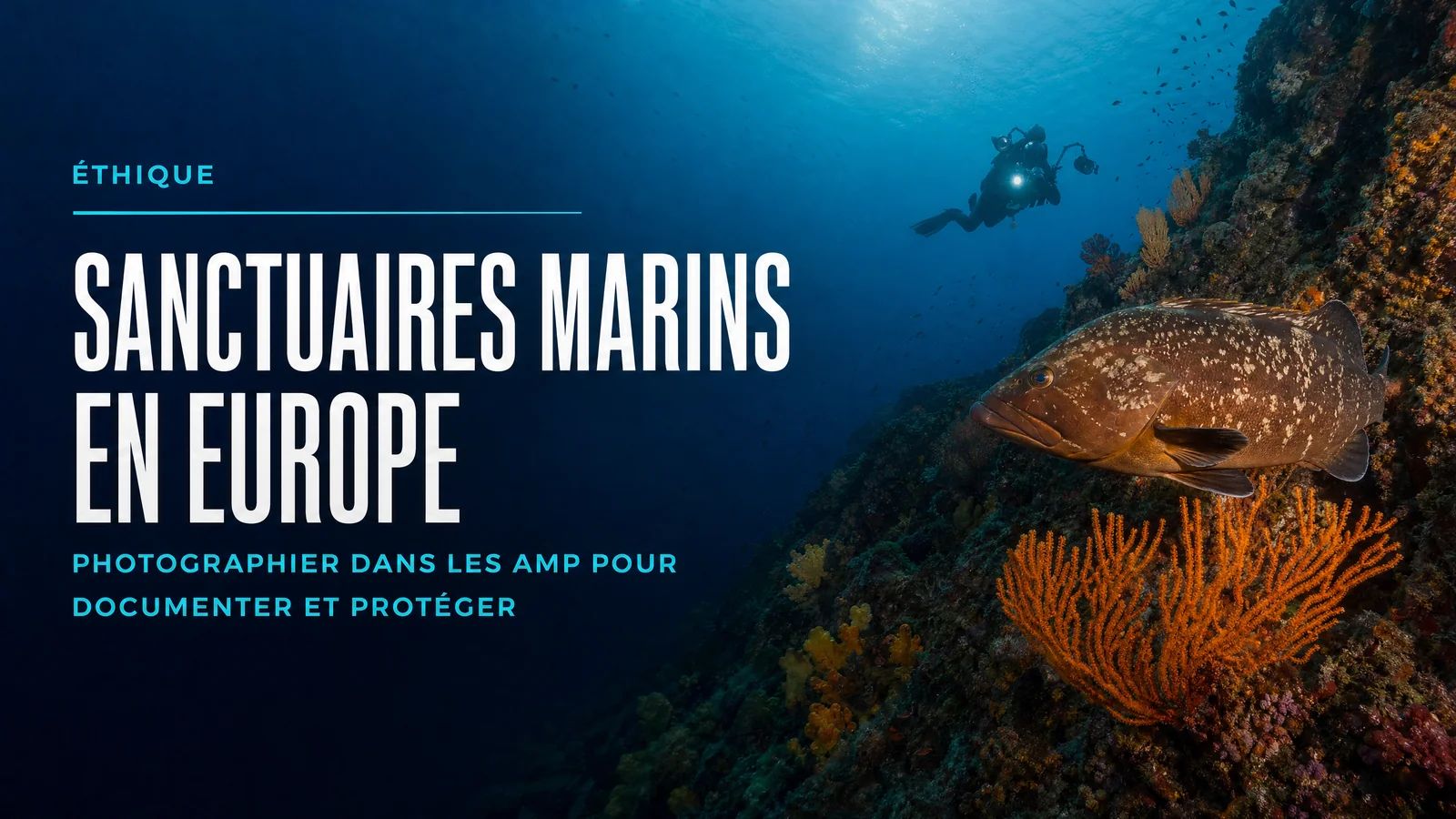
The logic is simple: in a well-managed marine protected area, the wildlife is less disturbed. Fish are less likely to flee immediately. Grouper tend to remain in place. Lobsters are not always hidden. This relative trust of the marine life towards divers is a concrete photographic advantage, and not just a nice conservation idea.
There is a second, less obvious reason: the water is often clearer. Less trawling means fewer suspended particles. Less disturbance of the seabed results in more stable visibility. For natural light photography, which remains the guiding principle for AquaExposure's documentation work, this clarity of the water directly translates into image quality.
The Banyuls-Cerbère marine reserve convinced me of this. The difference in behavior between the fauna inside and outside the protected area is visible and measurable in the images.The third reason is the most important for this type of work: images produced within a Marine Protected Area (MPA) have an identifiable context. A photo of a grouper in "the Mediterranean" is a nice image. The same photo taken in the Scandola integral reserve provides documentary data about the state of the MPA.
Rules to Understand Before Diving in an MPA
This is not optional. European MPAs have regulations that vary depending on the zone (integral, buffer, periphery) and by country. Ignoring these rules carries legal risks and contributes to the degradation of areas that function precisely because their rules are respected.
Common rules for most Mediterranean MPAs: no collection of living or mineral matter, no kicking up sediment from the bottom (a rule already ingrained in every good diver's reflexes), safety distances to maintain from iconic species, and no feeding fish. In some zones: a limit on the number of divers per mooring buoy, and a requirement to use a local certified dive club.
For areas that are completely protected, diving is generally prohibited without scientific authorization. These areas are not tourist destinations, they are sanctuaries in the strictest sense. Documentary work is conducted there as part of research programs.Before each dive in a Marine Protected Area (MPA), contact the manager or local club for the most up-to-date regulations. Regulations change frequently, and information on official websites is not always current.
5 Photogenic European MPAs for Documentation
These five areas are accessible to non-scientific divers within their buffer zones and surrounding areas, and are known for the quality of their marine life and lighting conditions.
Scandola (Corsica, France) - The Red Cathedral
This is one of the most photographed MPAs in the Mediterranean. Red and ochre rhyolite cliffs descend into the water and continue below the surface, creating vertical structures that transform diving into an exploration of volcanic cathedrals.
For documentary photography, the appeal lies in two aspects. The marine life - including brown grouper, sea bream, and dentex - is exceptionally unafraid for the Mediterranean region. And the contrast between the warm colors of the rock and the blue of the water naturally creates compositions that do not require aggressive post-processing.
Optimal lighting conditions: early in the morning during the summer months, when low-angle light strikes the east-facing walls. In June and July, between 8 am and 10 am, natural light penetrates sufficiently to capture images at depths of 15-20 meters without the use of a flash.Important restriction: no independent diving is allowed. All dives are conducted with a local, certified dive club, and departures are possible from Girolata or Porto. The number of divers per trip is strictly limited. Book several weeks in advance during peak season.
Cabrera (Balearic Islands, Spain)
This is a maritime-terrestrial national park, the only one in this Spanish archipelago. The marine protected area surrounds a group of uninhabited islands accessible only by boat from Porto Petro, south of Mallorca.
Cabrera's photographic appeal lies in the presence of large eagle rays in the shallow sandy areas and the posidonia seagrass meadows. The posidonia ecosystem here is exceptionally well-preserved: seahorses, pipefish, and giant scallops (Pinna nobilis) can be found in areas where this species still survives after the epidemics of 2016-2020.
For documenting the posidonia and its inhabitants, Cabrera is one of the best options in the western Mediterranean. The light between 10 and 15 meters during the summer months is direct and sufficient for clean images using natural light.
Banyuls-Cerbère Marine Reserve (France)
This is my reference area on the Catalan coast and one of the oldest French marine protected areas (established in 1974). The long-term protection has resulted in a remarkable density of brown grouper, which is significant for the northwestern Mediterranean.What I appreciate here for documentary photography is the variety of environments- from seagrass meadows at 8-12 meters to rocky walls at 15-25 meters, and coral reefs starting at 30 meters- and the stable light conditions between May and October. The protected area is accessible to independent divers, allowing you to work at your own pace.
The reserve also has scientific monitoring programs in which divers can participate. It's the most easily accessible location from the French coast for combining diving photography with contributing to citizen science observation protocols.
Medes Islands (Costa Brava, Spain)
A group of seven islets located less than 1500 meters off the coast near Estartit, in the province of Girona. The seabed between 5 and 20 meters is home to one of the highest densities of marine life in the western Mediterranean- including lobsters, prawns, moray eels, large grouper, and octopuses. The wildlife is relatively undisturbed and photogenic.
Regulations are strict regarding the number of divers per outing, which helps maintain the quality of the experience. Book your spot in advance during peak season.
For documentary photography, the appeal lies in the coexistence of species rarely seen outside of marine protected areas. An octopus observing a brown grouper while a diver is present- at a depth of 10 meters with good natural light- this type of image is practically unique to this location or similar MPAs.### Madeira (Portugal) - Volcanic Walls and Large Cetaceans
Technically an Atlantic Marine Protected Area, not a Mediterranean one, but Madeira deserves to be on this list due to its unique photographic characteristics. The volcanic walls descend to significant depths with cold-water fauna (groupers, amberjacks, barracudas) in water of remarkable clarity.
What makes Madeira unique for documentation is the possibility of observing sperm whales, Risso's dolphins, and blackback dolphins outside of the diving areas (on the surface, snorkeling, or by boat). These surface observations, combined with underwater images of the same area, create comprehensive documentary records of species that are rarely photographed in such close proximity.
Photography as a Tool for Scientific Monitoring in MPAs
Documentary work in MPAs goes beyond simply producing images. It can directly contribute to scientific research, which justifies and strengthens the protection of these areas.
iNaturalist in European MPAsiNaturalist is particularly useful in Marine Protected Areas (MPAs) because the naturalist community there is more active and identifications are faster. Submit your observations by accurately tagging the location (name of the MPA, approximate depth, date).
MPA managers increasingly use iNaturalist data as indicators of species presence. A series of well-geolocated photographic observations over several years represents a valuable contribution to wildlife monitoring.
Local Photo-Identification Programs
Several European MPAs have developed their own photo-identification programs. At Scandola, the brown grouper are individually monitored through photo-identification of their markings. In Banyuls, similar programs exist for stingrays and flounder. In Madeira, sperm whales and pilot whales are cataloged using photographs.
Contact the MPA manager before your dive to find out if such a program is active and whether your images can be included in the catalog.
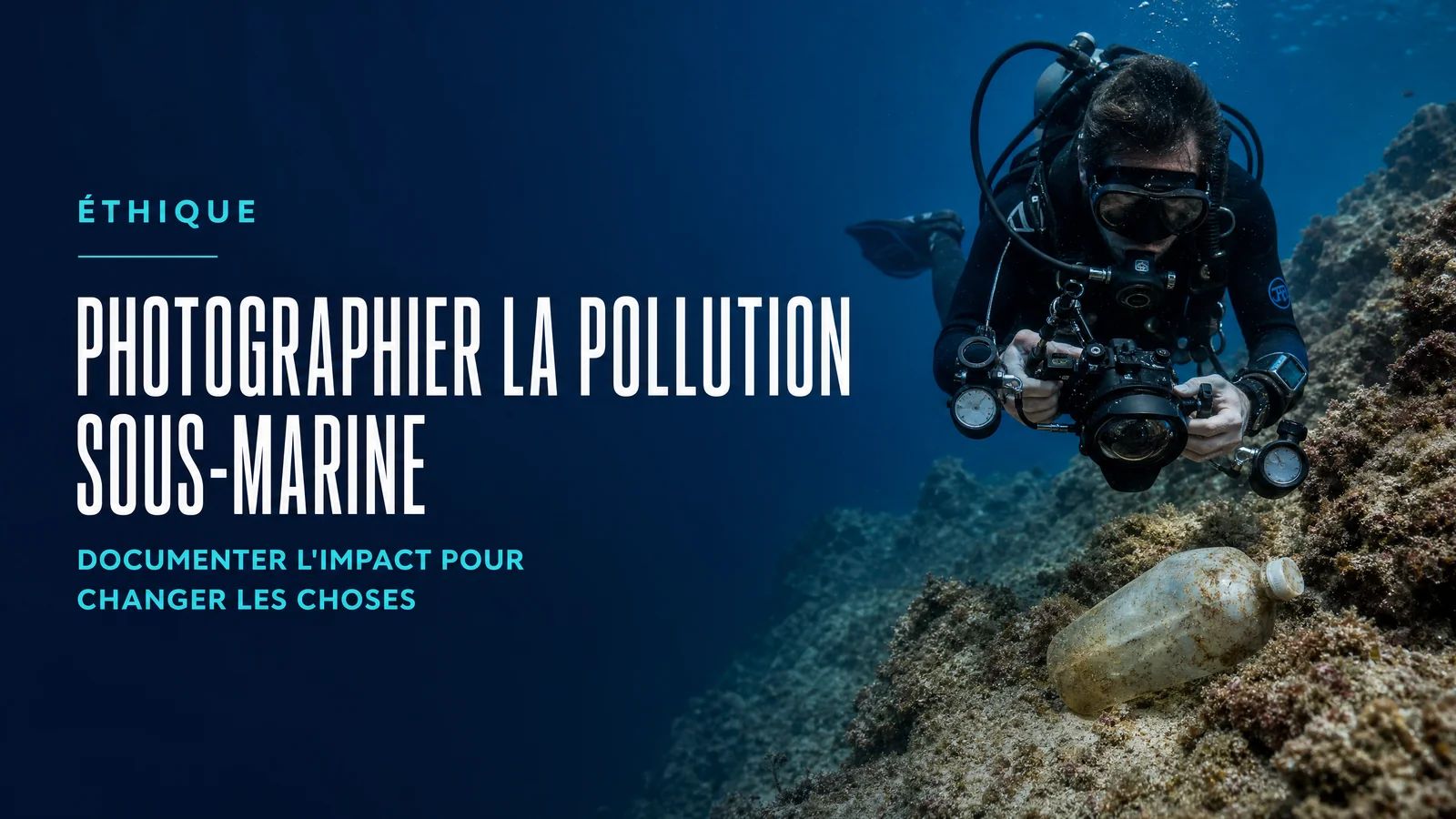
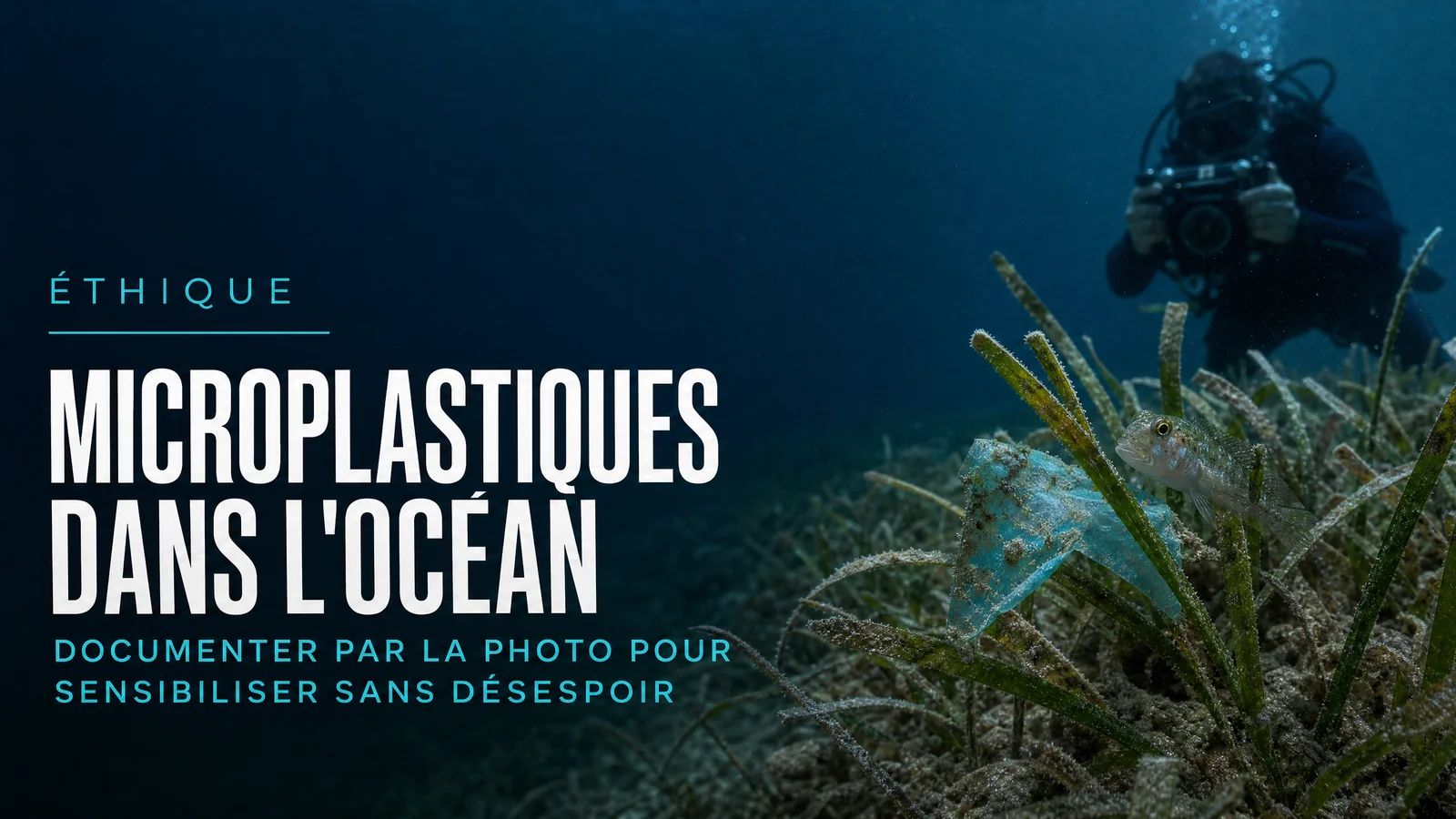
Documenting Pollution in MPAsUnderwater pollution documentation takes on a special significance within Marine Protected Areas (MPAs). A piece of trash photographed and geolocated within a protected area is data that goes directly to the MPA manager, carrying more weight than a report from outside the protected zone. Some MPAs have specific protocols for reporting pollution incidents.
Planning Your Underwater Photo Shoot in an MPA: Practical Checklist
Two to four weeks before the dive: Contact the MPA manager or the local authorized diving club to confirm that the area is open, to learn about current regulations, and to check on diver quotas.
Before you leave: Verify the specific regulations for the area (flash usage, lights, safety distances). Download the iNaturalist app in offline mode for the geographic area.
Before entering the water: Briefing with the local guide regarding areas that are open and any potential restrictions for the day. Adjust your equipment to suit the available natural light at that depth.
During the dive: Make geolocated observations. Use a wide-angle lens for iconic species (to contextualize the image within the MPA) and a macro lens for small, endemic species.
After the dive: Submit your findings on iNaturalist, report any observed pollution to the manager, and archive the GPS metadata.
Further InformationUnderwater photography in marine protected areas naturally fits within a broader conservation approach. It connects with citizen science tools, initiatives for documenting pollution, and protocols for monitoring species.
If you want to integrate this approach into a structured learning path - how to photograph in varying light conditions, how to adapt your technique to the fauna of marine protected areas, how to produce images that truly contribute to documentation - the AquaExposure underwater photography course addresses photography in protected areas as an integral part of responsible practice.
Diving in a marine protected area allows you to experience what the ocean can become when left undisturbed for long enough. Photographing this resilience contributes to the argument for its protection.
Marine Sanctuaries in Europe- Photographing within Marine Protected Areas to Document and Protect. | AquaExposure