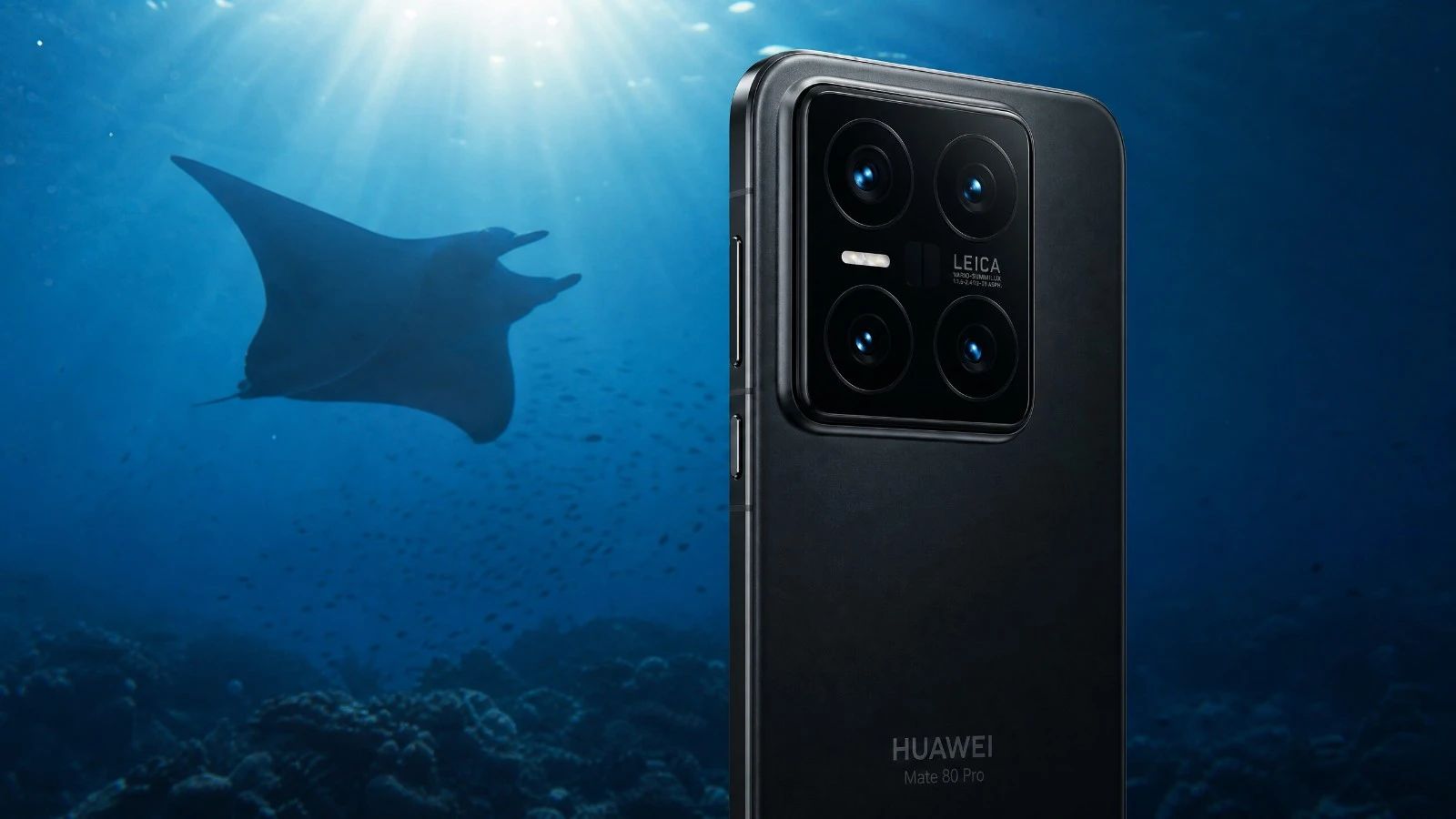
Is the Huawei Mate 80 Pro suitable for underwater photography?
The Huawei Mate 80 Pro has advantages such as its battery life and storage capacity. However, the lack of Google services and therefore certain photography apps is a significant drawback. Its potential for underwater photography in natural light is limited.
What underwater housing is suitable for the Huawei Mate 80 Pro when diving?
Finding a housing that is compatible with the Huawei Mate 80 Pro can be challenging. The HarmonyOS ecosystem makes integration with universal housings more complex. You need to look for specific solutions or generic housings that require modifications.
Does the Huawei Mate 80 Pro shoot in RAW format while diving?
Yes, the Huawei Mate 80 Pro can capture RAW files. However, without Google services and the Blackmagic Camera app, access to and control over the RAW format are much more limited. This is a significant drawback for post-processing.
What is the battery life for a day of three dives when using the Huawei Mate 80 Pro?
With its 5750 mAh battery, the Huawei Mate 80 Pro offers excellent battery life. You should be able to comfortably complete a full day of diving, including three dives, even with extensive use of the underwater camera.
Huawei Mate 80 Pro for Underwater Photography: Our 2026 Review
Introduction
Many of you use your smartphones for diving. We're looking for simplicity, lightness, and most importantly, great images without breaking the bank on professional equipment. The Huawei Mate 80 Pro arrives on the market with promising specifications. However, underwater, in natural light, things change dramatically. It's a completely different experience than using it on land. You have to deal with color loss, low light conditions, and the device's responsiveness becomes the key issue. Let's see together if this Mate 80 Pro can handle the challenges of underwater photography. Forget about marketing specs, we're talking about real-world performance, which is what truly matters when you're at a depth of 15 meters.
The Huawei Mate 80 Pro is a device with certain potential in terms of hardware. Its battery life and storage are advantages. However, the HarmonyOS ecosystem, without Google services, is a major drawback for underwater photography. The ideal user for this device is an occasional diver who doesn't seek technical perfection and is willing to make compromises on workflow and raw file quality.
Analysis Block by Block
B1 Optics: 3/5The Mate 80 Pro features a 50 MP main sensor. On paper, this seems impressive. However, underwater, the quality of the optics is put to the test. Color rendition and sharpness are decent in good light. The problem is the lack of Google services (GMS). This means no Blackmagic Camera, an application that allows for much finer control over the optics and image. This is a real drawback for optimizing your underwater shots.
To delve deeper: The 50 MP main sensor provides a solid foundation. However, the absence of advanced third-party applications limits the potential of this lens in challenging conditions.
B2 RAW: 1/5
This is a weak point of the Mate 80 Pro for underwater photography. Yes, it supports RAW format. But the HarmonyOS ecosystem without GMS makes accessing and processing these files complicated. Without Blackmagic Camera, you lose essential control over your raw files. Post-processing becomes a headache. For an underwater photographer who wants to get the most out of their images, this is a significant disadvantage. RAW is key for recovering colors and details lost underwater.
To delve deeper: The Huawei Mate 80 Pro supports RAW format. However, the lack of suitable software tools on HarmonyOS severely degrades the experience and potential of these files.
B3 Storage: 4/5With storage options ranging from 256 GB to 1 TB, the Mate 80 Pro is well-equipped. You won't run out of space for your photos and videos, even over multiple dives. The USB 3.2 port is a plus for quickly transferring files to your computer. This is important when you have hundreds of shots to download after a day at sea.
For more information: The Huawei Mate 80 Pro offers 256 GB, 512 GB, or 1 TB of internal storage. The USB 3.2 port ensures high transfer speeds.
B4 Thermal Management: 3/5
Heat management is always a challenge for smartphones underwater. The Mate 80 Pro doesn't have any specific features that particularly stand out in this area. Like many phones with glass or aluminum frames, it can overheat. This can lead to reduced performance or the video recording stopping. You need to be careful, especially during long photo sessions.
For more information: No specific active cooling solution is included. The thermal performance is comparable to other high-end smartphones, with a risk of overheating under heavy use underwater.
B5 Battery: 4/5
The 5750 mAh battery is a strong point. This generous capacity will allow you to comfortably get through a full day of diving. Battery life is a real concern underwater, as recharging your phone between dives isn't always easy. With the Mate 80 Pro, you have plenty of headroom.For more details: Battery capacity of 5750 mAh. Supports fast charging at 100W via cable and 80W wirelessly. Excellent battery life for extended use.
B6 Autofocus: 2/5
The autofocus on the Mate 80 Pro is good in normal conditions. However, underwater, speed and accuracy are crucial. The lack of GMS and a Blackmagic camera directly impacts the ability to have precise and responsive manual autofocus. You risk missing fast-moving subjects or getting slightly blurry images. This is a significant drawback for photographing moving objects.
For more details: The autofocus is fast on the surface. However, the lack of fine control through third-party applications is a major disadvantage for underwater photography in natural light.
B7 Housing: 1/5
Finding a compatible housing is the biggest challenge with the Huawei Mate 80 Pro. The HarmonyOS ecosystem makes integration with universal housings more complex. Housing manufacturers often focus on the most common brands that use Google services. You may need to search for generic housings and make modifications, which is never ideal for the safety of your device.
For more details: The HarmonyOS ecosystem makes compatibility with specific housings difficult. Universal housings may require complex adjustments.
What you should know before buyingBefore you decide to buy a Huawei Mate 80 Pro for your diving adventures, there are some important factors to consider. The first is the underwater housing. This is the crucial element. Without a reliable and well-suited housing, your phone will never see the water. And for Huawei devices, finding one can be challenging. Next, consider the workflow in the field. The lack of Google services affects the ease of use of certain photo editing or image management applications directly on the phone. You'll likely need to rely on a computer more often. Price is also a factor. While the device itself might be cheaper than some competitors, the cost of a compatible underwater housing can quickly increase the overall expense. Carefully weigh the pros and cons.
Our VerdictThe Huawei Mate 80 Pro is a powerful phone with impressive specifications in many areas. Its battery life is excellent and it has ample storage. However, for underwater photography in natural light, its ecosystem presents limitations. The absence of Google services and the difficulty in finding a suitable waterproof housing are significant drawbacks. If you are a demanding photographer who wants maximum control over your RAW images and flawless autofocus, this is not the phone for you. If you're looking for a versatile phone and underwater photography is an occasional activity where some compromises are acceptable, it could be an option. But be aware of its limitations. For us, there are better options on the market specifically designed for underwater photography.
Yes, absolutely. With its aluminum housing, the risk of condensation in cold water (below 15 degrees C) is significant. Using an anti-fog treatment (silica gel packet or inserts) inside the waterproof housing is mandatory before each dive. > To learn more: Smartphone overheating and fogging underwater: The physics of a waterproof case - Explains thermal mechanics, dew point, and silica gel protocol.
How can I quickly transfer my photos and videos from this device?This device features a fast USB-C port (USB 3.0 or 3.2). You can transfer your large RAW files or video clips in seconds (100 to 800 MB/s) directly to an external compatible SSD or computer.
Is the Huawei Mate 80 Pro good for underwater photography?
The Huawei Mate 80 Pro has advantages like its battery and storage capacity. However, the lack of Google services and therefore certain photo applications is a significant drawback. Its potential for underwater photography in natural light is limited.
What housing is available for the Huawei Mate 80 Pro for diving?
Finding a housing compatible with the Huawei Mate 80 Pro is a challenge. The HarmonyOS ecosystem makes integration with universal housings more complex. You need to look for specific solutions or generic housings with adaptations.
Does the Huawei Mate 80 Pro shoot RAW underwater?
Yes, the Huawei Mate 80 Pro can capture RAW files. However, without Google services and the Blackmagic Camera app, access to and control of RAW are much more limited. This is a major disadvantage for post-production.
What battery life can you expect for a day of three dives with the Huawei Mate 80 Pro?
With its 5750 mAh battery, the Huawei Mate 80 Pro offers excellent battery life. You should be able to easily handle a full day of three dives, even with intensive use of the camera underwater.### Learning Underwater Photography with This Camera
Want to master underwater photography with your Huawei Mate 80 Pro or another device? Join our AquaExposure training courses. We will teach you the techniques, settings, and tips to enhance your underwater photos, regardless of your equipment. Visit AquaExposure training to discover our courses.
Compare This Camera with Others
Are you undecided between several devices? Use our diving photo equipment comparator to compare this device with other tested models.
Test Huawei Mate 80 Pro: Underwater Photography Review and 2026 Score | AquaExposure