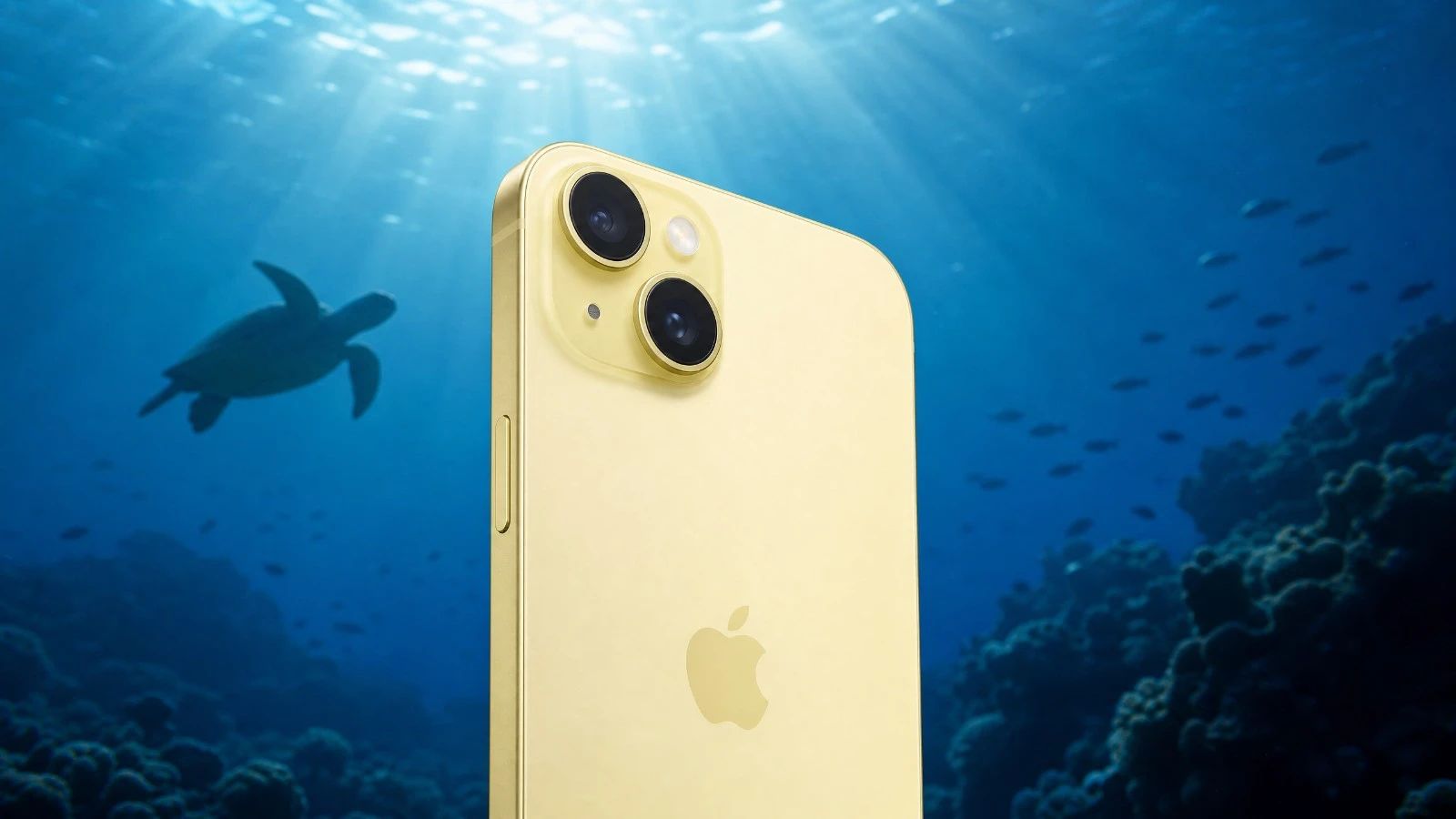
Is the iPhone 15 Plus suitable for underwater photography?
It is suitable for occasional use in natural light. It captures nice images, but it has clear limitations. Don't expect professional-level performance. This camera is for capturing memories, not for competitions.
What underwater housing is suitable for the iPhone 15 Plus when diving?
The Divevolk SeaTouch 4 Max is our recommendation. It's a reliable and effective housing. It provides excellent protection for your phone and allows for good usability underwater. It's a necessary investment.
Can the iPhone 15 Plus shoot in RAW format while diving?
No, there is no native ProRAW support. You can use third-party applications to obtain DNG files. This is a possible solution, but it doesn't offer the same level of flexibility as the ProRAW format found in professional models. It's a compromise you have to consider.
What is the expected battery life for a full day of diving with three dives using an iPhone 15 Plus?
Battery life is standard. For three dives, you will need to manage your power consumption. Shooting a lot of video will quickly drain the battery. Plan to bring an external battery pack to recharge between dives. Planning ahead is your best asset.
Should I use an anti-fog treatment with this device?
Yes, absolutely. Due to its aluminum housing, the risk of condensation in cold water (below 15 degrees Celsius) is significant. Using an anti-fog treatment (silica gel packet or insert) inside the housing is mandatory before each dive.
How can I quickly transfer my photos and videos from this device?
The wired connection of this device is limited to the USB 2.0 standard (approximately 35-40 MB/s). To quickly transfer your RAW files or video clips, prioritize fast wireless transfers using the ecosystem's features (AirDrop on iOS, Quick Share on Android) or by removing the memory card if the housing allows it.
1. Introduction
The iPhone 15 Plus is the subject of much discussion. But underwater, does it perform well? That's the question every underwater photographer asks. At AquaExposure, we got our hands on one. We took it to where it really matters: for dives, using natural light. No frills, no embellishments. Just the phone, a waterproof housing, and the ocean. We want to know if this device can become your reliable companion for capturing marine life. We're not interested in raw numbers, but in real-world experience. What matters is the final result, ease of use, and durability in a demanding environment. You will discover our unfiltered opinion.
2. The Verdict: In Summary
The iPhone 15 Plus is a capable device, but it has clear limitations for underwater photography. It doesn't compete with the Pro models, that's obvious. However, it can produce beautiful images if you understand its limits.
Overall score: 3/5| Criterion | Score (out of 5) | Explanation | |---|---|---| | B1 Optics | 3.5 | Decent optics for producing good-quality images in natural light. | | B2 RAW | 2 | No native ProRAW format. Converting to DNG via a third-party app is an option, but not ideal. | | B3 Storage | 2.5 | The USB-C 2.0 port significantly limits the transfer speed of large video files. | | B4 Thermal Performance | 1.5 | The aluminum casing poses a high risk of condensation in cold water. | | B5 Battery | 3 | Standard battery life that requires careful management for a full day of diving. | | B6 Autofocus | 3.5 | Responsive autofocus, but it may show its limitations with fast-moving or complex subjects. | | B7 Housing | 4 | The Divevolk SeaTouch 4 Max is an excellent housing- reliable and affordable. |
Ideal User Profile: The occasional diver who wants to capture their memories without investing in dedicated photo equipment. Someone who prioritizes simplicity and versatility, even if it means making compromises on pure technical quality. You're looking for a camera to take successful vacation photos, not for creating an exhibition-worthy portfolio.
3. Analysis by Feature
B1 OpticsThe iPhone 15 Plus features solid optics for its class. In natural light, you'll get sharp and colorful images. The contrast is well-managed, and details are rendered nicely, especially in good lighting conditions. Don't expect the finesse of a full-frame sensor, but for a smartphone, the result is very respectable. It's a device that allows you to capture the underwater atmosphere without major difficulties.
For more information: Main sensor: Not specified in inches / Not specified MP / Not specified aperture Stabilization: Not specified
B2 RAW
The real issue here is the RAW format. The iPhone 15 Plus does not offer native ProRAW. This is a limitation for those who want to push post-processing. You can use a third-party app to obtain DNG files, but it's not the same thing. The ProRAW on higher-end models offers much greater flexibility. With the 15 Plus, you primarily work with JPEGs, which reduces your margin for editing. This is something to consider if you are demanding about the final quality.
For more information: RAW available: No / Not specified bits / Not specified format
B3 StorageStorage is a critical factor. The iPhone 15 Plus uses USB-C 2.0. It's slow. Very slow. If you shoot a lot of high-resolution video, emptying your phone after a day of diving will be a test of patience. Transfer rates of 480 Mbps are a bottleneck. For large files, this quickly becomes frustrating. Allow plenty of time, or consider alternative transfer solutions if available. This isn't designed for handling large volumes of data quickly.
Learn more: Storage: Not specified GB / No memory card slot / USB-C 2.0 Transfer Rates: Not specified MB/s read / Not specified MB/s write
B4 Thermal Management
The aluminum frame is a problem in cold water. The risk of condensation is high. This has been observed. It can affect screen visibility and, eventually, the device's electronics. This is a major concern. If you dive regularly in temperate or cold waters, this risk should be taken seriously. Models with titanium frames handle this constraint much better. The 15 Plus isn't designed for extreme conditions.
Learn more: Frame: Aluminum / Cooling: Not specified
B5 BatteryBattery life is standard. For a day of three dives, you'll need to manage your power consumption. Continuous filming and using apps that consume a lot of power will impact the battery. It's recommended to have an external battery pack to recharge between dives if you want peace of mind. It's not designed for heavy use, but it works well if you plan ahead. The key is anticipation.
For more information: Battery: Not specified mAh / Not specified chemistry / Not specified cycles
Before each dive session, remember to check your external battery pack. Use our portable battery comparator tool to choose the power bank that's right for your housing and your desired battery life.
B6 Autofocus
The autofocus is responsive. It locks onto subjects well in natural light. For fish swimming calmly, there are no issues. For more dynamic scenes, with fast-moving subjects or sudden changes in direction, it may show its limitations. This is a smartphone autofocus system, not one from a professional DSLR camera. It works well for most situations, but don't ask it to do the impossible. The important thing is to understand its limits.
For more information: Native focus range: Not specified cm Burst rate + buffer: Not specified fps / Not specified RAW images Latency: Not specified ms
B7 HousingThe underwater housing is your best insurance. For the iPhone 15 Plus, the Divevolk SeaTouch 4 Max is an excellent option. It is reliable, easy to use, and offers good access to the screen's functions. It's a necessary investment to protect your device and ensure a good underwater experience. Without a good housing, even the best phone is useless underwater. This is what matters most for safety and functionality.
For more information: Recommended housing: Divevolk SeaTouch 4 Max
Choosing the right housing is crucial. For the iPhone 15 Plus, the Divevolk SeaTouch 4 Max is the top choice. It's robust, waterproof, and allows for good interaction with the touchscreen underwater. Don't compromise on the quality of the housing. It's what protects your investment and ensures successful photo dives. Other brands exist, but make sure they are reliable and perfectly compatible.
On-site workflow
Your workflow should be adapted. Regularly clear space on your phone. USB-C 2.0 is slow, so plan accordingly. Prepare your settings before the dive. Use a third-party app for DNG files if you want more flexibility in post-production. Simplicity is your ally. The less you handle the device underwater, the better. Focus on composition and natural light.
Important considerationsThe aluminum housing is a real issue. Condensation in cold water is a genuine risk. Carefully monitor the inside of your underwater housing. The lack of native ProRAW limits post-processing capabilities. The USB-C 2.0 transfer rate slows down video transfers. These are compromises you need to accept. Don't expect the performance of a dedicated camera. The iPhone 15 Plus is a good companion, but it has its weaknesses.
Price
The price of the iPhone 15 Plus is an investment. Add to that the cost of a good underwater housing. It's a more affordable solution than a complete DSLR or mirrorless system, but it's not free. Carefully evaluate your needs and budget. The value for money is interesting for occasional use and capturing quality memories. For intensive or professional use, other options should be considered.
5. Our Verdict
The iPhone 15 Plus is a good smartphone. For underwater photography in natural light, it can produce beautiful images. But you need to be realistic. It's not a professional device. The aluminum housing is a weak point. Video transfer is slow. Native ProRAW is missing. If you are an occasional diver who just wants to capture nice memories, it will suffice. If you are looking for pure performance, flexibility in post-production, or if you dive in cold water, look elsewhere. The key is to know what you expect from it. Don't be mistaken about its capabilities.
7. Learning Underwater Photography with this iPhoneYou have an iPhone 15 Plus and want to master underwater photography? That's a great starting point. At AquaExposure, we guide you on how to get the most out of your equipment, even a smartphone. Learn composition techniques, natural light management, and tips for successful shots. Your iPhone has potential, and we'll show you how to unlock it. AquaExposure training.