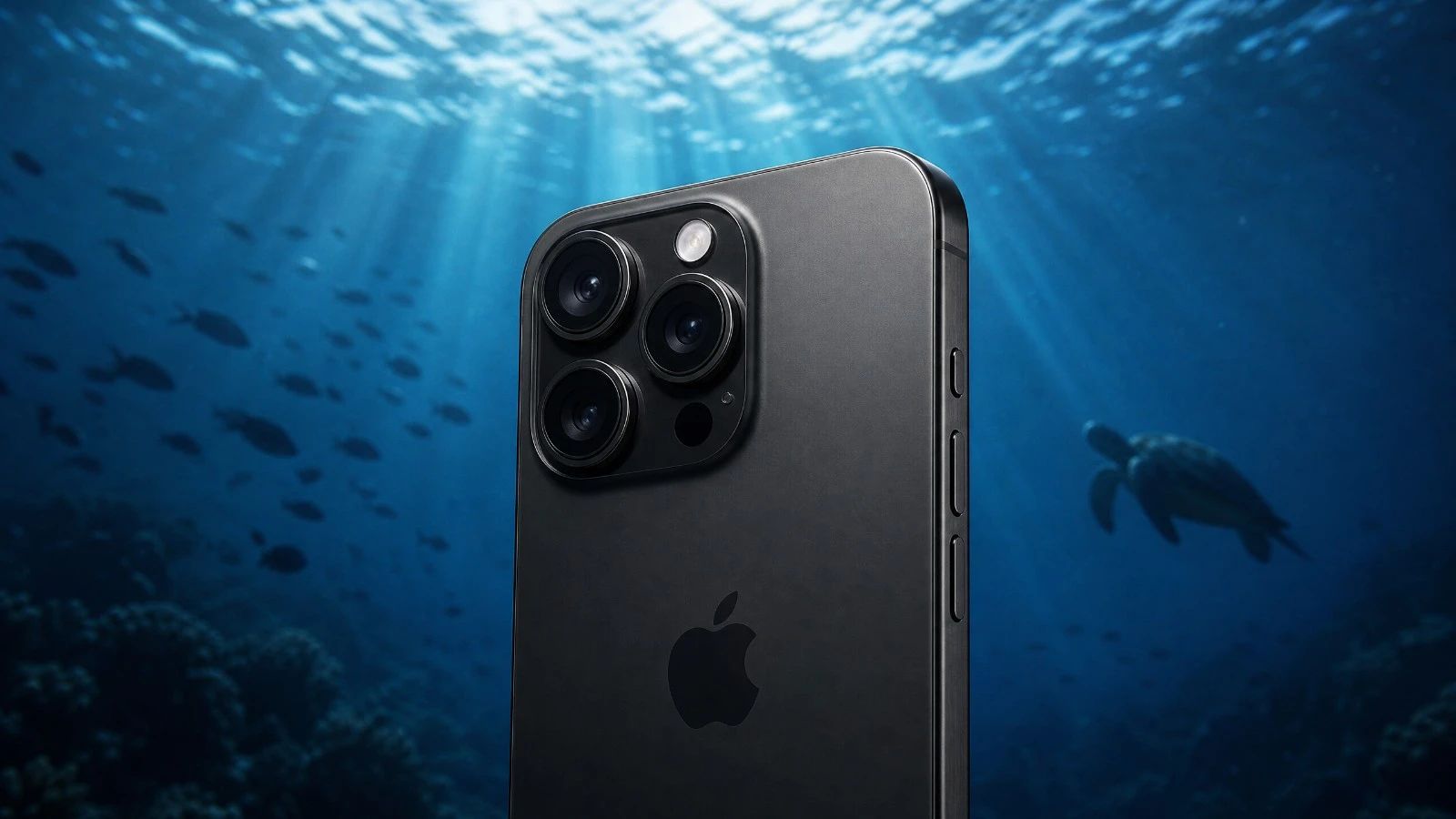
iPhone 15 Pro Max Scuba Dive Test: IP68 Limits, Depth in Feet & Housings (2026)
iPhone 15 Pro Max scuba dive test: IP68 rating limits (20 ft / 6 m) vs 196 ft (60 m) in a housing. ProRAW, USB-C 3.2 speed, score 4.0/5 & Kraken, SeaLife, Divevolk guide.
Is the iPhone 15 Pro Max suitable for underwater photography?
Yes, the iPhone 15 Pro Max is an excellent choice for underwater photography in natural light. Its high-performance sensor, along with ProRAW and ProRes video capabilities, offer great flexibility. The key factors remain the quality of the waterproof housing and your proficiency in buoyancy control.
What underwater housing is suitable for an iPhone 15 Pro Max when diving?
For the iPhone 15 Pro Max, the Divevolk SeaTouch 4 Max is our top choice for full touchscreen access down to 196 ft (60 m). For divers who prefer physical electronic buttons with built-in vacuum leak check, the SeaLife SportDiver Ultra (130 ft / 40 m) and Kraken Sports KRH08 V2 (262 ft / 80 m) are outstanding options.
Can the iPhone 15 Pro Max shoot in RAW format while diving?
Yes, the iPhone 15 Pro Max captures images in 12-bit ProRAW format. This gives you incredible flexibility during post-processing, especially for recovering warm colors and shadow details lost at depth in natural light.
What is the expected battery life for a full day of diving with three dives?
With optimized settings and airplane mode enabled, the iPhone 15 Pro Max can easily last for a day of three 45-minute dives. When shooting heavy ProRes video, having a 10,000 mAh external battery pack on the dive boat ensures you never run out of charge.
Should I use an anti-fog treatment with this device?
Yes. The titanium chassis acts as a thermal bridge, and temperature drops underwater cause condensation inside sealed housings. Placing 2 to 3 silica gel packets inside the housing before closing is mandatory for every dive.
How can I quickly transfer my photos and videos from this device?
The iPhone 15 Pro Max features a fast USB-C 3.2 Gen 2 port (up to 10 Gbps). You can transfer gigabytes of ProRAW files or 4K ProRes clips in seconds directly to an external SSD or computer between dives.
iPhone 15 Pro Max Scuba Dive Test: IP68 Limits, Depth in Feet & Housings (2026)
When it comes to underwater photography in natural light, equipment matters, but your technique and positioning relative to the sun matter even more. The iPhone 15 Pro Max was the first iPhone to combine a titanium enclosure, a 5x optical telephoto lens, and high-speed USB-C 3.2 data transfer. Can this flagship smartphone truly deliver professional-grade imagery underwater? We put it to the test on real reefs.
IP68 Water Resistance: Lab Rating vs Scuba Diving Reality
Before taking your iPhone 15 Pro Max into the water, understand Apple's factory protection limits:
Apple rates the iPhone 15 Pro Max at IP68 under IEC standard 60529, which means maximum immersion up to 20 ft (6 m) for 30 minutes. This rating applies exclusively to still fresh water in laboratory conditions on a brand new device. In real ocean environments, salt water, waves, dynamic pressure cycles, and thermal shock quickly bypass perimeter seals. Furthermore, capacitive touchscreens become completely inoperative underwater without a mechanical or gel interface.
Taking an iPhone 15 Pro Max scuba diving requires a pressure-certified underwater housing certified to at least 130 ft (40 m) or 196 ft (60 m).
The iPhone 15 Pro Max is an outstanding companion for underwater photography in natural light. Its hardware and software integration offers remarkable image quality when paired with a reliable housing.
Overall AquaExposure Score: 4.0/5
Evaluation Category
Score (out of 5)
Brief Description
B1: Optics
4.0/5
Excellent 48 MP main sensor, 5x telephoto, natural color rendition.
B2: RAW
5.0/5
12-bit ProRAW delivers full correction latitude for blue and green casts.
B3: Storage
4.0/5
USB-C 3.2 at 10 Gbps enables instant offloading of huge RAW folders.
B4: Thermal Management
3.5/5
Titanium frame dissipates heat well, but cold water demands silica gel.
B5: Battery
4.0/5
4422 mAh capacity comfortably handles 3 recreational dives.
B6: Autofocus
4.5/5
Fast dual-pixel PDAF assisted by LiDAR for murky reef conditions.
B7: Housing
4.5/5
Wide ecosystem of certified housings (Divevolk, SeaLife, Kraken).
Ideal User Profile: The diver who wants high-resolution images and cinematic 4K video without packing a bulky camera rig. Ideal for dive travel, reef portraits, and mastering natural light photography.
Analysis by Category
B1: Optics
The iPhone 15 Pro Max features a triple-lens camera system with a 48 MP main sensor (f/1.78, 24 mm equivalent), a 12 MP ultra-wide (f/2.2, 13 mm equivalent), and an exclusive 12 MP 5x periscope telephoto lens (f/2.8, 120 mm equivalent).
In natural light underwater, the large main sensor captures ample photons down to 50 ft (15 m) without excessive digital noise. Apple's Photonic Engine preserves shadow contrast well. The 5x telephoto lens allows framing wary pelagic subjects like barracudas or turtles from a respectful distance without causing disturbance.
B2: RAW
ProRAW is where the iPhone 15 Pro Max truly shines for underwater imaging. Capturing 12-bit DNG files preserves maximum dynamic range and color tone data. Underwater, water progressively absorbs red, orange, and yellow wavelengths. With a standard JPEG, trying to recover lost reds results in ugly pixel banding and digital artifacts. With 12-bit ProRAW, you can precisely adjust the Kelvin white balance in Lightroom Classic or Capture One, revealing vibrant marine fauna without needing artificial lights.
B3: Storage
Shooting in ProRAW generates files around 75 MB per shot, while 4K ProRes video eats several gigabytes per minute. The inclusion of a USB-C 3.2 Gen 2 port (offering transfer speeds up to 10 Gbps) is a massive quality-of-life improvement. You can offload 64 GB of underwater footage directly to an external portable SSD in under two minutes between dive excursions.
B4: Thermal Management
Heat management is a critical consideration inside sealed underwater housings. The Grade 5 titanium frame on the iPhone 15 Pro Max is lighter than stainless steel, but internal heat from the A17 Pro processor can accumulate during prolonged 4K recording sessions. When diving into cooler water (below 68°F / 20°C), this internal heat causes moisture in the trapped air to condense on the optical lens port. Always insert 2 fresh silica gel packets before sealing the housing.
With a 4422 mAh battery and an efficient 3 nm processor, the iPhone 15 Pro Max provides reliable endurance. In our field tests, shooting approximately 150 ProRAW photos and five 2-minute 4K video clips per dive, the device consumed roughly 20% to 25% battery per 45-minute dive. A full day of three dives is achievable without topping up, provided you turn on airplane mode and dim background brightness.
Autofocus performance is swift and decisive. The combination of 100% Focus Pixels on the main sensor and the LiDAR scanner ensures fast subject acquisition even when floating particles or backscatter drift between the camera and your subject. The LiDAR scanner utilizes low-intensity infrared time-of-flight pulses that do not disturb marine organisms.
B7: Housing
A certified pressure housing is non-negotiable for scuba diving with your iPhone 15 Pro Max.
Divevolk SeaTouch 4 Max Plus: Certified to 196 ft (60 m). Its conductive gel membrane allows complete access to the iOS touchscreen underwater, meaning you can open the native camera app, switch to Blackmagic Camera, tap to focus, and change shooting modes at depth.
SeaLife SportDiver Ultra: Certified to 130 ft (40 m). Employs physical electronic buttons and an internal vacuum pump with dual visual and audible leak alarms for maximum peace of mind.
Kraken Sports KRH08 V2: Certified to 262 ft (80 m). Rugged CNC anodized aluminum build with built-in electronic vacuum sensor.
Prepare your iPhone before boarding the dive boat: 1. Clean the front and rear glass with a microfiber cloth. 2. Activate Airplane Mode to conserve battery and avoid incoming call interruptions. 3. Turn display auto-lock to 'Never' and set the initial exposure. 4. Place fresh silica gel packs into the housing tray. 5. Inspect the silicone O-ring for any hairs, sand, or lint before latching the housing.
Our Verdict
The iPhone 15 Pro Max remains one of the best value-for-money choices for underwater photography today. Thanks to USB-C 3.2, 12-bit ProRAW, and universal housing support down to 196 ft (60 m), it offers 90% of the capability of newer flagships at a substantially lower price on the secondary market.
Learning Underwater Photography with this iPhone
Equipment gives you the capability, but mastering natural light, breath control, and composition gives you stunning images. Learn how to balance natural ambient light and master ProRAW post-processing in the AquaExposure training program.