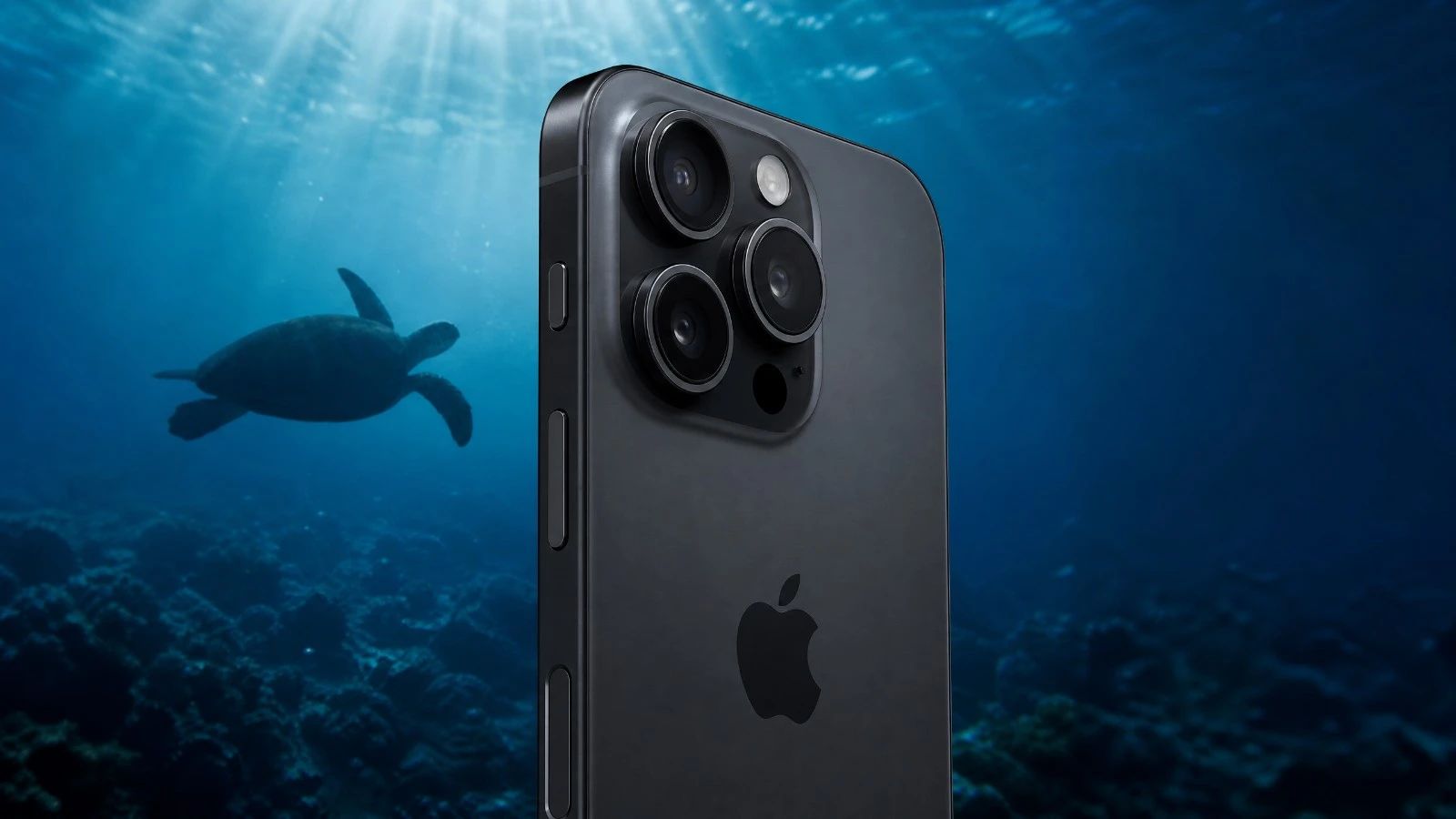
iPhone 16 Pro Max Scuba Dive Test: IP68 Limits, Depth in Feet & Housings (2026)
iPhone 16 Pro Max scuba dive test: IP68 rating limits (20 ft / 6 m) vs 196 ft (60 m) in a housing. ProRes 4K 120fps, score 4.2/5 & Kraken, SeaLife, Divevolk guide.
Is the iPhone 16 Pro Max suitable for underwater photography?
Yes, the iPhone 16 Pro Max is one of the best smartphones for underwater photography in natural light. Its 48 MP main sensor, ProRAW capabilities, ProRes video recording, and titanium chassis make it a top-tier tool. However, you should anticipate the risk of condensation in cold water and plan for a strict silica gel drying protocol.
What underwater housing is suitable for the iPhone 16 Pro Max when diving?
The Divevolk SeaTouch 4 Max is the reference housing for the iPhone 16 Pro Max. It offers certified waterproofing up to 196 ft (60 m) on the Plus model, full access to the touchscreen underwater, and compatibility with the Camera Control button. For divers preferring electronic buttons with vacuum alarms, the SeaLife SportDiver Ultra (130 ft / 40 m) and Kraken KRH08 V2 (262 ft / 80 m) are premier alternatives.
Does the iPhone 16 Pro Max record in ProRes format while diving?
Yes, the iPhone 16 Pro Max can record video in ProRes format up to 4K at 120 frames per second. This is a major advantage for underwater videography in natural light. However, be aware that ProRes generates very large files. Plan for a minimum of 512 GB of storage and a USB-C 3.2 port to quickly transfer footage after each dive.
What is the expected battery life for a full day of diving with three dives using an iPhone 16 Pro Max?
The iPhone 16 Pro Max has a 4685 mAh battery- the largest in the iPhone 16 lineup. It easily lasts for a day of three dives with moderate video recording. However, if you plan to use it extensively with ProRes or at 4K 120 fps, bring a power bank for the evening.
Should I use an anti-fog treatment with the iPhone 16 Pro Max?
Yes, absolutely. Despite its titanium casing, the large surface area of the 16 Pro Max increases the risk of condensation in cold water. Below 18°C, silica gel is not an option- it's a necessity. Place 2 to 3 sachets inside the housing before each dive and replace them every two dives.
How can I quickly transfer my photos and videos from my iPhone 16 Pro Max?
This device features a USB-C 3.2 port with speeds up to 10 Gbps. You can transfer 100 GB of ProRAW or ProRes files in just a few minutes to a compatible portable SSD. Wi-Fi 7 and AirDrop also enable very fast wireless transfers to a Mac or iPad on the boat.
To learn how to get the most out of your underwater equipment, discover the AquaExposure training.
iPhone 16 Pro Max Scuba Dive Test: IP68 Limits, Depth in Feet & Housings (2026)
Introduction
The iPhone 16 Pro Max is the large format flagship for creators who refuse compromise. Underwater, this brings massive advantages alongside specific handling requirements.
Before entering the water, let us clarify the manufacturer rating. Apple certifies the iPhone 16 Pro Max at IP68, up to 20 ft (6 m) for 30 minutes in still fresh water. This is an accidental immersion rating, not a diving certification. In real ocean diving, pressure cycles and saltwater quickly compromise unprotected electronics, and the bare touchscreen becomes unresponsive below the surface. To dive safely to depth, you must house it in a certified underwater housing rated to 196 ft (60 m) such as the Divevolk SeaTouch 4 Max, SeaLife SportDiver Ultra (130 ft / 40 m), or Kraken KRH08 V2 (262 ft / 80 m).
A larger chassis means more surface exposed to temperature swings, and a larger 4685 mAh battery generates heat that must be managed. I have dived with it in various configurations, from the temperate Mediterranean to tropical reefs, and here is what the field testing revealed.
The Verdict: Summary
The iPhone 16 Pro Max is currently the best iPhone for underwater photography in natural light. It receives an overall score of 4.2/5.
AquaExposure Criteria
Score
Explanation
B1 Optics
4.5/5
Triple 48 MP system + 5x periscope telephoto lens, the best sensor in an iPhone.
B2 RAW
5/5
ProRAW + ProRes 4K 120fps, maximum post-production flexibility.
B3 Storage
4/5
USB-C 3.2 at 10 Gbps, up to 1 TB internal storage. Very fast Wi-Fi 7 transfer speeds.
B4 Thermal
3.5/5
Titanium chassis is a good conductor but the large size = risk of condensation in cold water.
B5 Battery
4/5
4685 mAh, the best battery life in the range. Lasts for 3 dives without problems.
B6 Autofocus
4.5/5
PDAF + LiDAR, fast focus even on fast-moving subjects in low light.
B7 Housing
5/5
Divevolk SeaTouch 4 Max, full compatibility including Camera Control.
Ideal Profile: The serious underwater videographer who wants ProRes, solid battery life, and the best telephoto lens available on a smartphone. They primarily dive in warm or temperate waters and are willing to invest in a rigorous anti-condensation protocol.
Analysis by Category
B1 Optics
The optical system of the 16 Pro Max is a key strength of this device. The main 48 MP sensor with an aperture of f/1.78 captures a significant amount of light, which directly translates to cleaner images underwater as depth increases and light diminishes. The 48 MP ultra-wide lens at 13 mm is excellent for capturing wide scenes, wrecks, and schools of fish. The 5x telephoto periscope lens at 120 mm, inherited from the 15 Pro Max and refined here, allows you to get closer to shy subjects without disturbing them. This is a real advantage over standard models.
Specs B1 Main sensor: 48 MP, f/1.78, 24 mm (2nd generation optical stabilization) Ultra-wide lens: 48 MP, f/2.2, 13 mm Telephoto lens: 12 MP, f/2.8, 120 mm periscope, 5x optical zoom LiDAR: integrated 3D TOF scanner
B2 RAW
ProRAW is the main reason why serious photographers choose an iPhone Pro. Underwater, a blue or green cast is inevitable. With a JPEG file, you can recover very little. With ProRAW, you have complete freedom to recreate lost reds and oranges at depth, adjust white balance precisely, and work on shadows without excessive noise. ProRes video in 4K at 120 fps is another level- it provides smooth slow motion for fish movements and a color richness that H.264 cannot approach. This is the real deal for anyone who wants to produce high-quality underwater video content.
Specs B2 Photo: ProRAW (DNG up to 48 MP) Video: ProRes 4K at 24, 25, 30, 60 and 120 fps Log Video: Apple Log available for color grading Note: No ProRes RAW video (introduced on the iPhone 17)
B3 Storage
ProRAW files weigh between 25 and 75 MB depending on the scene. A one-hour ProRes 4K 120 fps session can exceed 200 GB. Therefore, choosing internal storage is a strategic decision: opt for at least 512 GB, or 1 TB if you're doing liveaboards. The USB-C 3.2 port at 10 Gbps allows you to transfer 100 GB in just a few minutes to an external SSD. Wi-Fi 7 is also very fast for wireless transfers to a NAS or iPad Pro on the boat. This is a field workflow that works well.Specs B3 Internal Storage: 256 GB, 512 GB, 1 TB (NVMe) USB-C: 3.2 Gen 2 at 10 Gbps Wi-Fi: Wi-Fi 7 (802.11be), up to a theoretical maximum of 5.8 Gbps Bluetooth: 5.3 * AirDrop: Fast peer-to-peer transfer to Mac or iPad
B4 Thermal Management
This is the primary concern with the 16 Pro Max. The titanium frame is an excellent thermal conductor, which is beneficial for dissipating heat from the processor in warm water. However, this same conductivity creates a risk of condensation inside the housing when used in cold water. The temperature difference between water at 14°C and ambient air at 25°C can cause fogging on the lens or inside the housing. The larger size of the 16 Pro Max slightly amplifies this risk compared to the 16 Pro, as the surface area in contact with the air inside the housing is greater. The use of silica gel is mandatory below 18°C.
Specs B4 Frame: Grade 5 titanium (frame) + ceramic glass (back) Processor: Apple A18 Pro (3 nm) Thermal Management: Integrated vapor chamber Risk of condensation in cold water (below 18°C): High - silica gel mandatory * Time until overheating in tropical ProRes conditions (28°C+): Approximately 35 minutes
B5 Battery
The 4685 mAh battery is the most generous ever included in an iPhone. For a standard day of diving with 2 to 3 dives and reasonable video recording, it easily lasts the entire day. In intensive ProRes 4K 120 fps mode, power consumption increases, and you'll likely end the day with around 20-30% battery remaining. A 10,000 mAh power bank between dives solves this problem. The standard Li-Ion chemistry performs well in cold water, without the capacity drop seen in some lower-quality Li-Po batteries.
Specs B5 Battery: 4685 mAh Li-Ion Fast Charging: 27W wired, 25W MagSafe Performance in Cold Water: Stable, no significant capacity drop up to 10°C Estimated Battery Life: 3 dives (moderate recording): Sufficient without recharging
Before each diving session, remember to check your external battery. Use our portable battery comparator tool to choose the power bank that is right for your underwater housing and desired battery life.
B6 Autofocus
The autofocus on the 16 Pro Max is among the best available on smartphones. The dual-pixel PDAF covers the entire main sensor, ensuring fast focusing even on fast-moving subjects like dolphins or rays. LiDAR provides valuable assistance in low light conditions, where contrast-only systems struggle. In practice underwater, the focus is reliable and losing track of the subject is rare. The macro mode available through the ultra-wide lens allows you to get as close as 2 cm to the subject for portraits of nudibranchs or small crustaceans.
Specs B6 Autofocus: Dual-pixel PDAF on both the main sensor and the ultra-wide angle lens. Assistance: LiDAR 3D TOF scanner. Macro: Minimum distance 2 cm (via ultra-wide angle). Subject Tracking: Yes, with underwater subject detection in video mode.
B7 Housing
The Divevolk SeaTouch 4 Max is the reference housing for the iPhone 16 Pro Max. It includes compatibility with the Camera Control button introduced on the iPhone 16 Pro models, allowing you to trigger the shutter, zoom, and adjust exposure without touching the screen. Full touchscreen functionality works well up to 50 ft (15 m). Beyond that depth, water pressure can stiffen the capacitive gel membrane, but physical controls take over. The maximum certified depth is 196 ft (60 m) on the Plus version, covering the entire recreational scuba profile.
Recommended Housings: Divevolk SeaTouch 4 Max Plus, SeaLife SportDiver Ultra, Kraken Sports KRH08 V2 Maximum Depth: 196 ft (60 m) for SeaTouch 4 Max Plus, 130 ft (40 m) for SportDiver Ultra, 262 ft (80 m) for Kraken Camera Control Compatibility: Yes Touchscreen Access: Full on Divevolk (gel membrane) * Optical Lens: Anti-reflective tempered glass
What You Need to Know Before Buying
Housings
The Divevolk SeaTouch 4 Max is our top pick for full touchscreen access to ProRAW and camera apps. For divers seeking vacuum leak monitoring and electronic buttons, the SeaLife SportDiver Ultra (130 ft / 40 m) and Kraken Sports KRH08 V2 (262 ft / 80 m) offer rock-solid alternatives. For a flagship device at this price point, always choose a certified pressure housing.
Field Workflow
Prepare the iPhone the night before: charge it to 100%, place 2-3 sachets of silica gel in the housing, and check the seals. Launch the camera app before closing the housing. Underwater, use the Camera Control for quick adjustments. After the dive, allow the housing to stabilize in temperature before opening it - especially in cold water. Connect the USB-C cable to a portable SSD to offload large files as soon as you return to the boat.
Important Considerations
Condensation in Cold Water: This is the number one risk with the 16 Pro Max. The titanium frame and large format amplify this phenomenon. Below 18°C (64°F), silica gel is not an option, it's a necessity. Replace the sachets every two dives.
Housing Size: The 16 Pro Max is large. Make sure your dive bag can accommodate the closed housing before you travel.
ProRes and Storage: One hour of ProRes 4K at 60 fps exceeds 100 GB. Plan on having a minimum of a 1 TB portable SSD for liveaboards.
Price
A new iPhone 16 Pro Max costs between €1,299 and €1,599 depending on the storage capacity. Add €350 to €400 for the Divevolk SeaTouch 4 Max. The total budget exceeds €1,700. This is a significant investment. If your budget is tighter, the iPhone 16 Pro offers 90% of the performance at a lower price, or a used iPhone 15 Pro Max remains an excellent option for under €900.
Our Verdict
The iPhone 16 Pro Max is the most capable iPhone I have ever dived with. The ProRes 4K at 120 fps, the 5x telephoto lens, and the battery life make it a complete tool for underwater photography and videography in natural light. The only real concern is condensation in cold water, which requires a strict but simple protocol to manage. If you primarily dive in warm waters and are looking for the best smartphone available to capture professional-quality images, this is it. If you regularly dive below 18°C, also consider the 16 Pro or the standard 17, which handle that parameter better.
Learning Underwater Photography with This iPhone
You have the equipment. Now it's time to master the technique. Underwater natural light has its own rules: angles of incidence, Snell's window, and color correction at depth. The AquaExposure training program covers all of this - from exposure settings while diving to the ProRAW post-production workflow. Join the photographers who have already transformed their dives into images they are proud of.