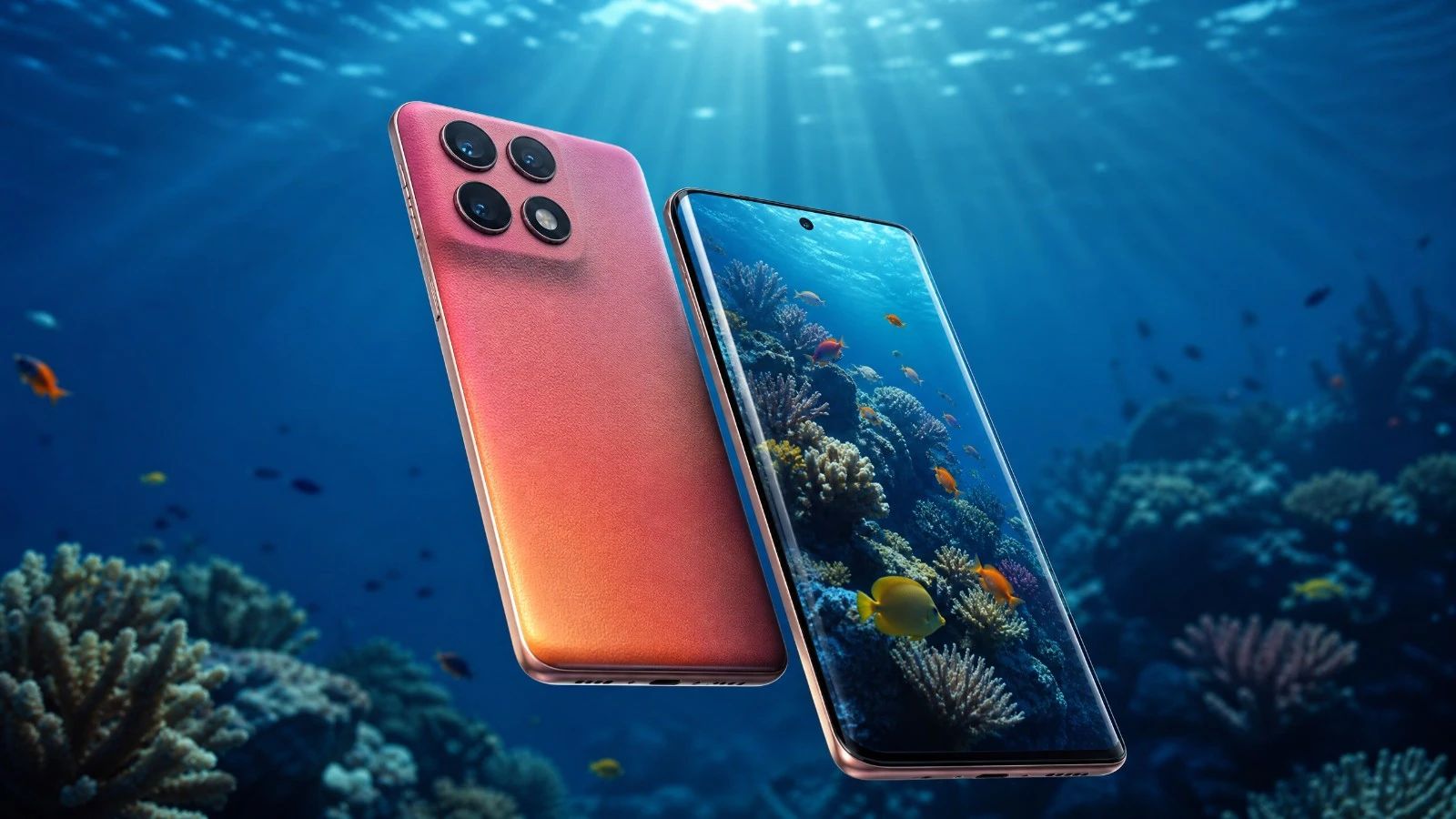
Is the Motorola Edge 60 Fusion a good phone for underwater photography?
The Motorola Edge 60 Fusion scores 3.3 out of 5 in our AquaExposure rating system. It is suitable for divers who are new to underwater photography using natural light, thanks to its native DNG RAW format, its adjustable white balance (lockable in Kelvin), and its compatibility with MotionCam Pro. However, the 1/1.56-inch main sensor and the USB-C 2.0 interface limit its capabilities for advanced use or for quickly exporting RAW files in the field.
What underwater housing is available for the Motorola Edge 60 Fusion?
The Divevolk SeaTouch 4 Max Plus is the universal housing best suited for the Motorola Edge 60 Fusion. Certified to a depth of 60 meters, it allows full access to the touchscreen underwater, including third-party apps like MotionCam Pro. There is currently no dedicated rigid housing available for this model. Please check compatibility using the official Divevolk compatibility chart before ordering.
Does the Motorola Edge 60 Fusion shoot in RAW format while diving?
Yes. Native RAW files in the DNG format are accessible through the built-in camera app's Pro mode. A bit depth of 10 bits is supported. For more advanced options, MotionCam Pro (for Android) is compatible with the device's Camera2 API and allows access to video RAW files in addition to photo files. Recommended workflow: capture in DNG format, then process using Lightroom Mobile or Capture One Mobile.
What is the battery life for a day of three dives when using the Motorola Edge 60 Fusion?
The 5200 mAh battery typically lasts for a full day of three dives under normal conditions (temperate water, screen active during the dive, Wi-Fi transfer between dives). In cold water (below 15 degrees Celsius), the discharge rate of the Li-Ion cells increases by 20 to 30%: plan to use an external battery pack for multi-day photo safaris. Switching to airplane mode between dives helps conserve battery power.
Test Motorola Edge 60 Fusion: Underwater Photography Review and 2026 Score
There's a type of diver we're seeing more and more on boats- someone who arrives with a smartphone in a universal housing rather than a DSLR in a €3000 underwater housing. It's not a lack of ambition. It's a choice. The choice of mobility, instant processing, and a price-to-performance ratio that allows you to allocate the remaining budget to destinations rather than equipment.
The Motorola Edge 60 Fusion is designed for exactly this type of diver. Released in April 2025, it positions itself in the mid-range segment with a Sony LYTIA 700C sensor, dual IP68 and IP69 certifications, and native RAW access in Pro mode. On paper, it ticks all the basic boxes for natural light underwater photography.
But diving is more than just specifications on paper. This test puts the Motorola Edge 60 Fusion through our AquaExposure rating system (7 weighted sections) to give you a clear answer before you buy.
The Verdict in Summary
Overall AquaExposure Score: 3.3/5
Criterion
Score
Summary
B1 - Optics
3.0/5
Decent sensor, limited dynamic range, useful macro function
B2 - RAW and Color
3.9/5
Excellent: Native DNG format, Kelvin white balance, MotionCam Pro
5200 mAh is adequate, but performance decreases in cold water
B6 - Autofocus
4.0/5
Reliable PDAF, native Focus Peaking is a real advantage
B7 - Housings
3.0/5
Universal SeaTouch 4 Max Plus housing, no dedicated rigid housing available
This device is suitable for: - Beginner underwater photographers who want a RAW workflow without significant investment. - Travelers who prioritize lightness and versatility (smartphone can be used outside of diving). - Clear tropical and temperate waters where natural light is abundant.
This device is not ideal for: - Sports photography or capturing fast-moving wildlife (limited RAW buffer, undocumented latency). - Long dives in cold water (Li-Ion battery is sensitive to temperature). - Divers who need to quickly export large volumes of RAW files in the field.
B1 - The Optics: What Enters the SensorThe main sensor is a 50-megapixel Sony LYTIA 700C with a 1/1.56-inch size, an f/1.88 aperture, and optical image stabilization (OIS). This is a good starting point: the OIS compensates for some of the water movement, and the wide aperture captures more light in dark environments. The autofocus system uses multi-directional PDAF, which is reliable under standard conditions.
The ultra-wide angle (UWA) sensor is a 13-megapixel GalaxyCore GC13A2 with a 1/3.0-inch size. It features autofocus and macro focusing capabilities at 2-3 centimeters, which is useful for close-up shots of small subjects. However, the resolution and size of the UWA sensor remain modest compared to competitors in this segment.
B1 Specifications - Main Sensor: Sony LYTIA 700C, 1/1.56", 50 MP, f/1.88, OIS, Multi-directional PDAF - UWA Sensor: GalaxyCore GC13A2, 1/3.0", 13 MP, f/2.2, AF, Macro 2-3 cm - Pixel Size: 1.0 µm native (2.0 µm pixel binning Ultra Pixel) - ISO: Not officially published (estimated range of 50-6400 in Auto mode, confirmed by EXIF photos on GSMArena: maximum observed ISO 4038 in low light) - Burst and RAW Buffer: Undocumented (estimated 3-5 consecutive RAW images before saturation) - Shutter Lag: Not measured - B1 Score: 3.0/5
B2 - RAW Format and Color ReproductionThis is the device's key strength, and what sets it apart from many mid-range smartphones. The Pro mode of the native camera app provides access to RAW DNG files, white balance adjustment in Kelvin, and manual control over ISO and shutter speed. When diving, this is exactly what you need to correct the blue-green color cast underwater without relying on an automatic preset that doesn't understand marine environments.
The colorimetry has been Pantone validated, a partnership that guarantees consistency between what the sensor sees and what the screen displays. For natural light underwater photography, where accurate color reproduction after the dive is crucial, this is a significant advantage.
MotionCam Pro (Android) is compatible with the Motorola Edge 60 Fusion's Camera2 API. This unlocks access to RAW video recording, a rare capability in this price range. Refer to our article on a comparison of smartphones for underwater photography in 2026 to see how this feature positions the Edge 60 Fusion against other tested devices.B2 Technical Specifications - Native RAW: DNG via Pro mode (confirmed) - Depth: 10 bits - Video white balance: Lockable in Kelvin (Pro Video mode) - Video codec: H.264 and H.265 (4K 30fps, 1080p 60fps) - Native Log: Not available (standard Pantone Validated color profile) - MotionCam Pro: Compatible with Camera2 API (RAW video accessible) - Color science: Motorola ISP with Pantone validation - OS: Android 15 - B2 Score: 3.9/5
B3 - Storage and On-Site Transfer
The device has 256 GB of internal storage, without a microSD card slot. This is sufficient for a day of intensive RAW shooting (a 50 MP DNG file weighs approximately 20-25 MB, which equates to roughly 10,000 images before reaching capacity). The issue isn't the storage capacity itself, but rather the transfer speed.
The USB-C connector is version 2.0, which limits the actual data transfer rate to 30-40 MB/s for writing. To transfer 20 GB of RAW files after a day of diving, it takes between 8 and 12 minutes per cable - compared to 2-3 minutes with a USB-C 3.2 connection. This isn't a major issue for occasional divers, but it's a real bottleneck for those who process large volumes of data or need to free up space quickly between dives.
The workaround: Wi-Fi 6 (included in this model) allows wireless transfers to a NAS or cloud storage at significantly faster speeds than the USB-C 2.0 cable, under favorable conditions.B3 Specifications - Storage: 256 GB UFS (internal only, no microSD slot) - Connector: USB-C 2.0 - Actual USB transfer rate: approximately 30-40 MB/s - Wi-Fi: Wi-Fi 6 (recommended alternative for large files) - B3 Score: 2.5/5
B4 - Thermal Management and Condensation
The Motorola Edge 60 Fusion's dual IP68 and IP69 certifications are a strong indicator of its durability. The IP68 rating guarantees water resistance up to 1.5 meters for 30 minutes (without a housing). The IP69 rating adds resistance to high-pressure, high-temperature water jets. In practice, in the context of a diving housing, this provides an extra layer of safety if the housing is subjected to impact or if water seeps in.
The textured polymer frame with plastic trim is lighter than an aluminum frame, but less thermally conductive. In tropical waters (25-30 degrees Celsius), this is an advantage: the phone heats up more slowly during extended video recording sessions. In cold water (below 15 degrees Celsius), thermal management also favors the polymer, as it provides better insulation against thermal shock.Motorola documents an operating temperature range from -20 to +60 degrees Celsius. For diving use, the issue of condensation is most pronounced during ascent: removing a cold device into warm, humid air creates condensation inside the housing. The rule remains the same regardless of the phone: do not open the housing between dives and only install the device in a cool, dry environment.
[!NOTE] Silica gel packets: recommended (not critical). The polymer chassis is the best thermal insulator compared to the Xiaomi 15T. The risk of condensation in cold water is significantly reduced compared to devices with metal chassis. A packet of silica gel is still recommended, but the Motorola is one of the few devices where forgetting a packet does not immediately become critical.
Tropical overheating: The Dimensity 7400 is a low-power mid-range chip. It is the most resistant device to overheating in this comparison. In water at 28°C, software overheating occurs after approximately 40 minutes of continuous recording - a record for this test. For photography only, there is no risk even during prolonged tropical dives.
B5 - Battery Life5200 mAh capacity using standard Li-Ion chemistry. Under normal diving conditions (screen active for triggering, a few short video clips, Wi-Fi transfer between dives), the battery easily lasts for a full day of three dives in temperate water.
The issue arises with cold water. Below 15 degrees Celsius, Li-Ion cells lose 20 to 30% of their effective capacity. For a winter dive trip in the Mediterranean or the North Atlantic, it's reasonable to expect only 60 to 70% of the nominal battery life. A lightweight external battery pack in your dive bag remains the simplest solution for longer days.
Motorola does not publish data on the durability of charge cycles (long-term battery health) for this model.
B5 Technical Specifications - Capacity: 5200 mAh - Chemistry: Standard Li-Ion - Cold Water Performance: Estimated accelerated discharge of 20-30% below 15°C - Cycle Durability: Not documented - B5 Score: 3.0/5
Before each dive, remember to check your external battery. Use our portable battery comparator to choose the power bank that is right for your housing and your desired battery life.
B6 - Underwater AutofocusThe main camera's multi-directional PDAF autofocus is the most suitable type for diving among the systems commonly found in smartphones. It doesn't rely on a laser beam (which is absent here) that loses effectiveness in an aquatic environment, and Motorola's noise reduction AI helps maintain sharpness on subjects with slight movement.
What sets the Edge 60 Fusion apart from other devices in this range is the availability of Focus Peaking natively within Pro mode. For manual underwater photography, this is a valuable tool - clear outlines of the subject are displayed in color on the screen, allowing you to manually adjust focus even in conditions of low visibility. This feature is rare at this price point. On the Divevolk housing comparison, this aspect is discussed in the article Divevolk SeaTouch 4 Max vs Platinum: which one to choose.
The absence of LiDAR (reserved for high-end models) does not significantly hinder performance in natural underwater light, where subjects are generally more than 50 centimeters away.
B6 Technical Specifications - AF Technologies: Multi-directional PDAF (main) + AF (UGA) - LiDAR: Absent - Focus Peaking: Native in Pro mode (confirmed) - Noise Reduction AI: Present, but no specific "anti-particle" algorithm is documented. - B6 Score: 4.0/5
B7 - Available HousingsAs of the publication date of this review, there is no dedicated rigid housing available for the Motorola Edge 60 Fusion. The market for dedicated smartphone housings primarily focuses on high-end Apple and Samsung models. For the Motorola Edge line, a universal solution is the best option.
The Divevolk SeaTouch 4 Max Plus is the leading universal housing in our selection. Certified to 60 meters (with a recommended usage depth of up to 40 meters for comfortable safety margins), it uses a modular adapter system that accommodates most Android smartphones through specific adapters. Divevolk France offers a dedicated adapter for the Motorola Edge 40 series (ref. DAD154). The official Divevolk compatibility chart (available on their website) allows you to verify the exact fit for the Edge 60 Fusion before ordering. If your model is not listed, STL files for the adapters are available for free 3D printing.
The main advantage of the SeaTouch 4 Max Plus for this smartphone is full access to the touchscreen underwater, allowing you to use MotionCam Pro and the native Pro mode directly during dives, without needing a dedicated physical button to configure. You can find our complete analysis in the article iPhone and Divevolk: Housing for Underwater Photography and Video. The principles of use are the same for Android devices.B7 Technical Specifications - Dedicated rigid housing: none currently available. - Recommended universal housing: Divevolk SeaTouch 4 Max Plus. - Certified depth rating: 60 meters (recommended up to 40 m). - Screen access: full touchscreen (liquid membrane). - Modular adapter: check the official Divevolk compatibility chart. - 3D printing: STL files are freely available on Divevolk France. - B7 score: 3.0/5
Test Motorola Edge 60 Fusion: Underwater Photography Review and 2026 Score | AquaExposure
Specific Considerations
The lag of the native camera app is documented by GSMArena (the viewfinder can sometimes be slow). While diving, this can lead to missed shots of fast-moving subjects. MotionCam Pro generally offers better responsiveness.
The native 50 MP mode appears to use upscaling according to a GSMArena test. For underwater photography, it's preferable to use the default mode (12.5 MP after pixel binning), which produces sharper results.
The lack of a microSD card slot prevents redundant backups to a card during operation.
Current Prices (June 2026)New:
Amazon France: approximately €219-€299 depending on the color (Pantone Amazonite, Zephyr, Slipstream) - source idealo.fr
Fnac.com: available in several colors, price aligned with Amazon France.
Le Dénicheur: best observed price at €216 (June 2026).
Manufacturer's suggested retail price: €299.95
Used / Refurbished: - Back Market: The Edge 60 Fusion is not yet widely available as a refurbished "grade A" product. Monitor the "Motorola Edge series" category on back Market France (backmarket.fr/fr-fr/l/serie-motorola-edge). Expected prices: €160-€200 depending on grade and availability. - LeBonCoin: Occasional listings between €150 and €220 depending on condition.
Used Market Perspective: Released in April 2025, the Motorola Edge 60 Fusion is still relatively new for the structured used market. The best time to buy a refurbished unit will likely be late 2026 or early 2027, when the Back Market stock becomes more plentiful.
Our Verdict
3.3/5. This is a fair score for a device that meets essential requirements without claiming to be a professional tool. Its strength is real and rare in this price range: a complete RAW workflow, a lockable white balance in Kelvin, and MotionCam Pro compatibility. These three features are enough to produce usable images in natural underwater light, provided you have the discipline to adjust exposure manually rather than relying on automatic settings.What I strongly recommend: This smartphone is ideal for a diver who is just starting out with underwater photography, who dives in clear tropical or temperate waters, and who wants to avoid investing €3000 before knowing if they truly enjoy the discipline. What I advise against: Using it for photographing fast-moving marine life or for multi-day trips in cold water without an external battery.
If the limitations of the 1/1.56" sensor and the USB-C 2.0 transfer speed are a problem for your diving activities, consider looking at the Samsung Galaxy S24 or the Google Pixel 9, which are available within a similar price range on the used market.
Is the Motorola Edge 60 Fusion good for underwater photography?
The Motorola Edge 60 Fusion scores 3.3/5 in our AquaExposure rating system. It is suitable for divers who are new to underwater photography using natural light, thanks to its native DNG RAW format, adjustable white balance (in Kelvin), and compatibility with MotionCam Pro. However, the main 1/1.56-inch sensor and the USB-C 2.0 interface limit its capabilities for advanced use or fast RAW exports in the field.
What housing is available for the Motorola Edge 60 Fusion for diving?The Divevolk SeaTouch 4 Max Plus is the universal housing best suited for the Motorola Edge 60 Fusion. Certified to 60 meters (recommended use up to 40 meters), it allows full access to the touchscreen underwater, including third-party applications like MotionCam Pro. There is currently no dedicated rigid housing available for this model. Please check compatibility using the official Divevolk chart before ordering, and inquire about the corresponding Motorola Edge adapter (or use an STL file for 3D printing).
Does the Motorola Edge 60 Fusion shoot RAW underwater?
Yes. Native RAW files in DNG format are accessible through the Pro mode of the built-in camera app. A bit depth of 10 bits is supported. For more advanced options, MotionCam Pro (Android) is compatible with the device's Camera2 API and allows for RAW video capture in addition to photo files. Recommended workflow: Capture in DNG format, then process using Lightroom Mobile or Capture One Mobile. Locking the white balance in Kelvin before diving is crucial for achieving realistic colors during post-processing.
What is the battery life for a day of three dives with the Motorola Edge 60 Fusion?The 5200 mAh battery typically lasts for a full day of three dives under normal conditions (temperate water, screen active during the dive, Wi-Fi transfer between dives). In cold water (below 15 degrees Celsius), the discharge rate of the Li-Ion cells increases by 20 to 30%: consider using an external battery pack for multi-day photo safaris. Using airplane mode between dives helps conserve battery life. Do not open the housing to charge between dives: condensation is the main enemy.
Should I use anti-fog treatment with this device?
It is recommended, but less critical. Thanks to its insulating casing (often made of plastic or polymer), it naturally resists thermal shock and condensation better in cold water. As a precaution, an anti-fog treatment is still recommended for extended sessions.
How can I quickly transfer my photos and videos from this device?The wired connection of this device is limited to the USB 2.0 standard, which makes physical file transfers quite slow. To quickly transfer your RAW files or video clips, it is highly recommended to use the fast wireless protocol within the system (Quick Share), or to remove the memory card if the housing and device allow it.
Improving Your Natural Light Underwater Photography
This review is a purchasing guide, not an underwater photography course. If you want to learn how to get the most out of this smartphone - or any other - underwater, the AquaExposure training covers manual exposure, white balance in natural light, and composition underwater, regardless of the device in your housing.