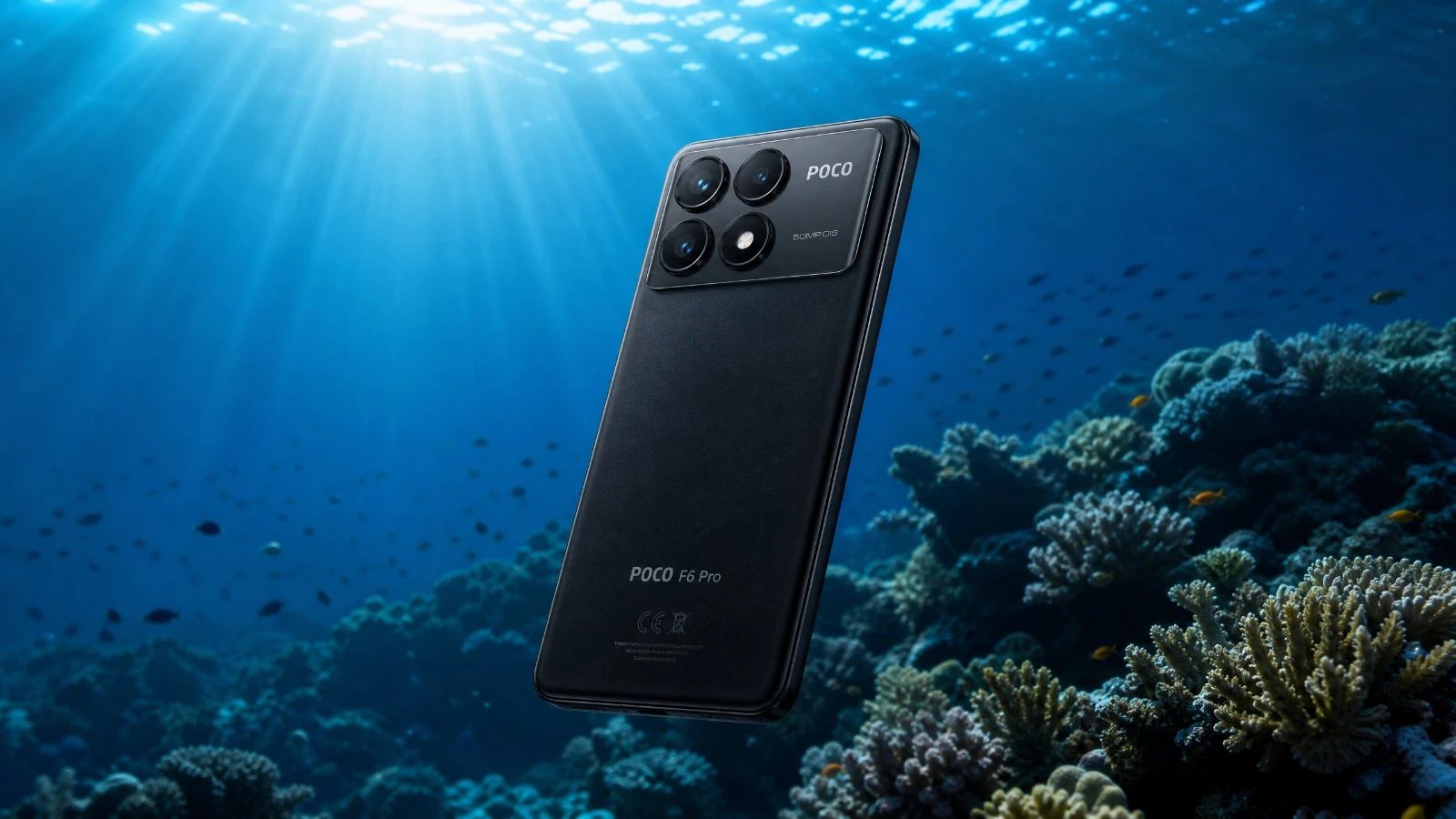
Is the Poco F6 Pro suitable for underwater photography?
The Poco F6 Pro is a good option for underwater photography in natural light, especially if you are a beginner or have a limited budget. It offers decent performance, but it has limitations, particularly regarding data transfer speed and heat management. It's suitable for taking casual snapshots, but not for professional use.
What underwater housing is suitable for the Poco F6 Pro when diving?
You will need a universal underwater housing compatible with smartphones up to 6.9 inches. Brands like ONEFLOW or WRTBS offer models. The most important thing is to ensure that the housing allows easy access to the phone's controls while underwater, and that it is certified for the depth at which you plan to dive.
Does the Poco F6 Pro shoot in RAW format while diving?
Yes, the Poco F6 Pro is capable of capturing photos in RAW format. This gives you more flexibility for post-processing and editing your images. It's an advantage for improving the quality of your underwater shots.
What is the battery life for a full day of diving with three dives using the Poco F6 Pro?
For a day of diving with three dives, the battery life of the Poco F6 Pro will be limited. Underwater photography and videography consume a lot of power. It is highly recommended to fully charge your phone before each dive and to consider using an external battery pack to recharge between dives if necessary. Battery management is crucial to avoid running out of power.
Test Poco F6 Pro: Underwater Photography Review and 2026 Score
1. Introduction
Hello everyone, Benjamin here. Today we're taking a look at a new device that's generating buzz: the Poco F6 Pro. In the field, we're always looking for the right balance. A phone that can handle the conditions and won't let us down when things get rough. The Poco F6 Pro arrives with some promises, especially in terms of its camera capabilities. But the real question is how it performs underwater, in natural light. Does it have what it takes to capture the magic of the marine environment without artificial enhancements? We'll break it down together, moving beyond the marketing specifications. What matters is the result you get in your hand after the dive. Experience shows us that numbers on paper don't tell the whole story. It's real-world usage that makes the difference, especially when you're submerged. So we're going to test its limits, its strengths, and its weaknesses, to give you a clear and unbiased opinion.
2. The Verdict in Summary
Overall AquaExposure Score: 3.5/5
Criterion
Score
Comment
B1: Optics
3/5
The sensor is decent, but it doesn't compete with high-end models.
B2: RAW
4/5
Supports RAW format, but the richness of the data is limited by the sensor size.
B3: Storage
2/5
USB 2.0 is very slow for transferring large files.
B4: Thermal Management
3/5
Requires attention during extended sessions.
B5: Battery
3/5
The battery life is only sufficient for a few dives, so careful management is needed.
B6: Autofocus (AF)
4/5
Fast and accurate autofocus in good conditions.
B7: Housing
3/5
Universal housings are available, but ergonomics may vary.
Ideal Profile: The Poco F6 Pro is aimed at casual divers who want a versatile smartphone for everyday use and occasional underwater shots without breaking the bank. It's perfect for you if you're new to underwater photography and prioritize ease of use. This isn't a professional-grade device, but it can work for capturing vacation memories. It requires some compromises, especially regarding photo transfer speed and heat management. If you're looking for a backup solution for photos in natural light, it could be an option. However, don't expect miracles. You need to understand its limitations before using it underwater.
3. Analysis by Component
B1: OpticsThe Poco F6 Pro features a 50MP main sensor with an aperture of f/1.6. On paper, this sounds good. However, when it comes to diving, the size of the sensor and the quality of the lenses are what truly matter. The 1/1.55" sensor is decent, but not exceptional. It captures a reasonable amount of light, but it doesn't compete with giants like the Vivo X100 Ultra and their Zeiss optics, which operate in a different league with significantly larger sensors. With the Poco F6 Pro, you will get usable images, especially if there is plenty of natural light. However, don't expect the same depth of field or sharpness as you would find on dedicated cameras or high-end smartphones designed for photography. It's a good starting point, but it's important to be realistic about your expectations.
For more details: The Poco F6 Pro has a 50MP main sensor (1/1.55", 1.0µm, f/1.6), an 8MP ultra-wide angle lens (f/2.2), and a 2MP macro lens. The Vivo X100 Ultra, X200 Pro, and X100 Pro stand out with their Zeiss optics and sensors that are significantly larger.
B2: RAWThe ability to shoot in RAW format is a major advantage for post-production in underwater photography. It gives you incredible flexibility to recover details in the shadows or highlights, and to adjust white balance. The Poco F6 Pro, like most recent Android smartphones, allows you to capture RAW files. This is a good feature. However, the quality of the RAW file will depend heavily on the initial processing of the sensor. Some phones, such as Huawei devices running HarmonyOS, have limitations with third-party applications like Blackmagic Camera, which directly impacts the quality and management of the RAW file. With the Poco F6 Pro, you should be able to edit your images, but the amount of information contained in the file will not be the same as that of a larger sensor. This is a trade-off to consider.
For more information: Most modern Android smartphones support the RAW format. Be aware of alternative operating systems like HarmonyOS (Huawei P60 Pro / Mate 80 Pro), which may limit access to advanced photo applications and impact the quality of the RAW file.
B3: StorageStorage isn't just about the amount of gigabytes. It's also about the speed at which you can transfer your photos and videos after a dive. And that's where the Poco F6 Pro shows one of its weaknesses. It uses USB 2.0, which means transfer speeds of 480 Mbps. That's slow, very slow, especially if you've filled your memory card with RAW files and 4K videos. Imagine after a day of diving, having to wait for hours to empty your phone. This is a key point to consider for your workflow. Devices like the Vivo X100 Ultra or the Honor Magic V3, with their USB 3.2 (10 Gbps), offer a much smoother experience. The Wi-Fi 7 on the Poco F6 Pro can compensate somewhat for wireless transfers, but for large volumes, a cable is still king. And that's where the Poco F6 Pro falls behind.
For more information: The Poco F6 Pro and the Poco F7 Ultra are equipped with a USB 2.0 port (480 Mbps). In comparison, the Vivo X100 Ultra, X200 Pro, X100 Pro, Honor Magic V3, Huawei P60 Pro, and Mate 80 Pro benefit from USB 3.2 (10 Gbps). The Poco F6 Pro supports Wi-Fi 7.
B4: Thermal PerformanceHeat management is a major challenge for any smartphone enclosed in a waterproof housing. Water is an excellent heat dissipater, but the housing itself provides insulation. The Poco F6 Pro, like many high-performance phones, can overheat. Overheating can lead to reduced performance, unexpected shutdowns, or even damage to the device. We've seen cases like with the Nothing Phone 2, which has a transparent back and heats up quickly. Conversely, a Motorola Edge 50 Fusion, with its plastic or leather back, manages heat better over time. With the Poco F6 Pro, it's important to be vigilant. Prolonged photo or video sessions can cause problems. Remember to take breaks between dives to allow the device to cool down. This is often an overlooked aspect, but it can ruin a photography outing.
For more information: Heat dissipation is critical in underwater housings. Some materials like plastic/leather (Motorola Edge 50 Fusion) can offer better thermal insulation than glass or transparent backs (Nothing Phone 2). Foldable phones (Honor Magic V3) are particularly sensitive to heat at the hinge.
B5: BatteryBattery life is always a concern when diving. You can't recharge underwater! The Poco F6 Pro has a decent battery, but underwater photography and especially video consume a lot of power. With the screen on, the sensor active, and image processing running, all of this drains the battery. For a day with multiple dives, it's likely you'll need an external battery pack between dives, or a fully charged phone before each outing. The good news is that fast charging is often available on these devices, which can help recover some power on the surface. But the real key is to manage your power consumption carefully and avoid being caught off guard. Always plan for extra capacity.
For more information: Underwater photography and video heavily drain the battery. Good energy management and a full charge before each dive are recommended.
Before each diving session, remember to check your external battery pack. Use our AquaExposure training (/outils/comparateur-powerbank) to choose the power bank that's right for your underwater housing and your desired battery life.
Test Poco F6 Pro: Underwater Photography Review and 2026 Score | AquaExposure
B6: AF (Autofocus)Autofocus is your best friend underwater. The light changes rapidly, subjects move, and you need fast and accurate focusing. The Poco F6 Pro features a multi-directional PDAF autofocus system and OIS (optical image stabilization). This is a solid configuration that should allow you to capture most scenes without too much difficulty. Compared to phones that require manual focus, like some Huawei models, this is a clear advantage. However, the speed and accuracy of the AF can vary depending on underwater lighting and contrast. In low-light conditions or with subjects that have little contrast, it may show its limitations. Test it in real-world conditions before embarking on important photo shoots.
For more information: The Poco F6 Pro incorporates a multi-directional PDAF autofocus system and optical image stabilization (OIS). Some devices, such as the Huawei P60 Pro and Mate 80 Pro, may suffer from manual or limited autofocus.
B7: HousingWithout a waterproof housing, there is no underwater photography. The Poco F6 Pro, despite its IP53 rating (splash resistance), is absolutely not suitable for submersion. You will need a dedicated housing. The good news is that universal IP68 housings are available that can accommodate phones up to 6.9 inches, which includes the Poco F6 Pro. Brands like WRTBS or ONEFLOW offer solutions. The key here is to carefully check the compatibility of the physical or touch controls through the housing. Some universal housings may be somewhat generic and not offer perfect ergonomics. For high-end models like the Vivo Ultra, specific housings such as the Divevolk Platinum are often necessary. For the Poco F6 Pro, you will find options, but pay attention to the quality of construction and access to essential functions. It is the interface between you and your phone underwater, so it must be reliable.
To learn more: The Poco F6 Pro has an IP53 rating (splash resistance, not submersion). Universal IP68 housings are available for phones up to 6.9 inches. Some specific devices (e.g., Vivo Ultra) require dedicated housings (e.g., Divevolk Platinum). The availability of housings for models like the Honor Magic V3 may be very limited.
HousingsAs we have seen, a housing is essential. For the Poco F6 Pro, you will need to use universal housings. Brands like ONEFLOW or WRTBS offer models compatible with the phone's size. The key thing is to check that the buttons are accessible and that the touchscreen remains responsive underwater. Some housings offer lever or button systems that replicate the phone's controls. This is what you should prioritize for a good experience. Also, make sure to check the maximum operating depth. Never compromise on the safety of your device. A housing is your lifeline underwater.
Field Workflow
The Poco F6 Pro is a good companion for occasional dives. However, its USB 2.0 port can slow down your workflow. If you take many photos or videos, allow time for transferring them. Wi-Fi 7 can help, but for large files, a cable remains the most reliable method. Remember to clear space on your phone regularly. Thermal management is also something to watch out for. Avoid excessively long sessions and let the device cool down between dives. A good workflow involves anticipating these limitations so you are not caught off guard.
Important ConsiderationsThe Poco F6 Pro is a decent smartphone, but it has its limitations when it comes to underwater photography. The optical quality is acceptable, but it doesn't compete with the top brands on the market. Data transfer is slow. Heat management requires attention. These aren't deal-breakers, but they are points to keep in mind so you won't be disappointed. The real question is whether these compromises are acceptable for your needs. If you're looking for a device to take casual photos in natural light, it might suffice. However, if you're aiming for perfection, you'll need to consider higher-end options.
Price
The Poco F6 Pro is positioned in a very competitive price segment. This is one of its major advantages. For a controlled budget, you get a high-performing smartphone for everyday use and capable of underwater photography. The cost of the waterproof housing will be added, of course. But the total investment remains reasonable for beginners or for occasional use. It's a device that offers good value for money for those who don't want to spend a fortune on a dedicated underwater camera.
5. Our VerdictThe Poco F6 Pro is a decent smartphone for underwater photography in natural light. It doesn't revolutionize the field, but it gets the job done. Its key advantage is its affordability. For a reasonable price, you get a device that can accompany you underwater. You will need to deal with slow data transfer speeds and monitor heat management. However, if you are an occasional diver or just starting out in underwater photography, it can be an excellent entry-level option. It allows you to capture beautiful memories without breaking the bank. For more demanding users, other options may be better. But for many, it represents a good compromise. It's a device that will allow you to learn the basics of underwater photography before potentially investing in more specialized equipment.
6. Frequently Asked Questions
Is the Poco F6 Pro good for underwater photography?
The Poco F6 Pro is a good choice for underwater photography in natural light, especially if you are a beginner or have a limited budget. It offers acceptable performance, but it has limitations, particularly regarding data transfer speed and heat management. It's suitable for taking casual photos, but not for professional use.
What waterproof case is available for the Poco F6 Pro for diving?You will need a universal waterproof housing compatible with smartphones up to 6.9 inches. Brands like ONEFLOW or WRTBS offer models. The most important thing is to ensure that the housing allows easy access to the phone's controls underwater and that it is certified for the depth at which you are diving.
Does the Poco F6 Pro shoot RAW images while diving?
Yes, the Poco F6 Pro is capable of capturing photos in RAW format. This gives you more flexibility for post-production and editing your images. It's an advantage for improving the quality of your underwater shots.
What is the battery life for a day of three dives with the Poco F6 Pro?
For a day with three dives, the battery life of the Poco F6 Pro will be limited. Underwater photography and video are very energy-intensive. It is highly recommended to fully charge your phone before each dive and to consider an external battery pack to recharge between dives if necessary. Battery management is a key factor to avoid running out of power.
7. Learning underwater photography with this device.You have the Poco F6 Pro and want to master underwater photography? It's an excellent starting point. At AquaExposure, we help you transform your shots into true works of art. Discover our training courses dedicated to underwater photography using natural light, suitable for all levels. Whether you are a beginner or looking to perfect your technique, our instructors will guide you step by step. Learn how to compose images, manage light, and understand the behavior of marine life. Your Poco F6 Pro has potential, and we'll help you maximize it. Visit our learning platform to learn more: (https://www.aquaexposure.com/en/lms)
Frequently Asked Questions
Should I use an anti-fog treatment with this device?
Although this model has a chassis less prone to condensation than all-aluminum models, temperature differences underwater remain a factor. An anti-fog treatment (silica gel packet or inserts) is highly recommended as a precaution before each dive. > To learn more: Smartphone overheating and fogging underwater: the physics of the housing -- Explains thermal mechanics, dew point, and silica gel protocol.
How can I quickly transfer my photos and videos from this device?The wired connection of this device is limited to the USB 2.0 standard (approximately 35-40 MB/s). To quickly transfer your RAW files or video clips, prioritize fast wireless transfers using the ecosystem's features (AirDrop on iOS, Quick Share on Android) or by removing the memory card if the housing allows it.