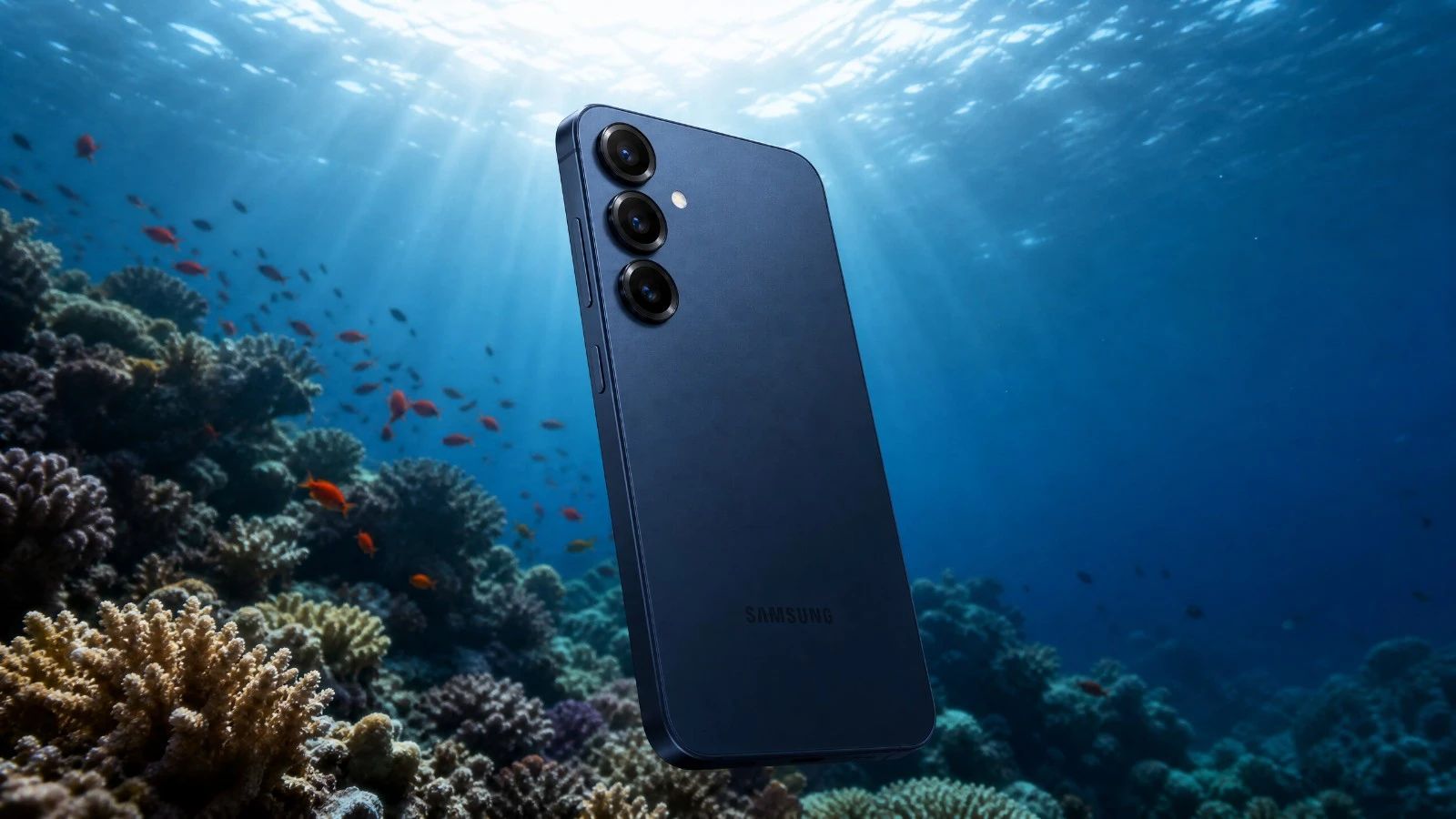
Is the Samsung Galaxy S25+ suitable for underwater photography?
The Samsung Galaxy S25+ offers good performance for underwater photography in natural light. Its sensor and image processing capabilities allow for detailed shots. However, the most important factors are a suitable underwater housing and your proficiency in adjusting camera settings.
What waterproof case is suitable for a Samsung Galaxy S25+ when diving?
For the Samsung Galaxy S25+, the Divevolk SeaTouch 4 Max is the recommended housing. It provides reliable protection and full access to the touchscreen underwater. Please verify the exact compatibility with your phone model.
Does the Samsung Galaxy S25+ shoot in RAW format while diving?
Yes, the Samsung Galaxy S25+ can capture images in RAW format. This is a key feature for post-processing in underwater photography. It gives you more flexibility to correct colors and exposure.
What is the battery life for a day of three dives when using the Samsung Galaxy S25+?
The battery life of the Samsung Galaxy S25+ is sufficient for a day of three dives. Remember to disable unnecessary functions and optimize settings to extend battery life while underwater. A portable charger is always a good idea.
Should I use an anti-fog treatment with this device?
Yes, absolutely. Due to its aluminum housing, the risk of condensation in cold water (below 15 degrees Celsius) is significant. Using an anti-fog treatment (silica gel packet or insert) inside the housing is mandatory before each dive.
How can I quickly transfer my photos and videos from this device?
This device features a fast USB-C port (USB 3.0 or 3.2). You can transfer your large RAW files or video clips in just seconds (100 to 800 MB/s) directly to an external, compatible SSD drive or computer.
Test Samsung Galaxy S25+: Underwater Photography Review and 2026 Score
The world of underwater photography is constantly evolving. Smartphones are playing an increasingly important role. The Samsung Galaxy S25+ has arrived on the market with some promises. We put it to the test in natural light. No frills, just real-world performance. We wanted to see if this model can handle the demands of the ocean. Image quality is our top priority, as is the robustness of the system. You want sharp photos and accurate colors. That's what we tested. Forget marketing numbers. Only experience matters here.
The Verdict in Summary
The Samsung Galaxy S25+ receives an overall score of 3.5/5 for underwater photography in natural light. It's a good companion for occasional divers. It's also suitable for beginners who want to improve their skills. Its ideal user is the photographer who seeks simplicity, someone who doesn't want to be weighed down by heavy equipment, but still demands quality.
Criterion
Score (out of 5)
Description
B1 - Optics
3.5
Good sharpness, natural colors.
B2 - RAW
4.0
Usable RAW files, good dynamic range.
B3 - Storage
3.0
Sufficient internal storage, USB 3.2 (5 Gbps) is a bit slow.
B4 - Thermal Performance
3.0
Risk of condensation with the aluminum housing.
B5 - Battery
4.0
Good battery life for multiple dives.
B6 - Autofocus
3.5
Fast in good light, may hesitate in low light.
B7 - Housing
4.5
Housings available and perform well.
Analysis by Category
B1 - Optics
The Samsung Galaxy S25+ offers quality optics. The sharpness is present. The colors are accurate. In natural light, the images are bright. The sensor handles contrast well. This is a key factor for underwater photography. You get precise details, even on distant subjects. Distortion is well controlled, which is an advantage for wide-angle shots.
For more information: The S25+ uses a high-performance sensor. Its image processing is optimized. It offers good dynamic range. This helps to recover information in dark and bright areas.
B2 - RAWThe ability to shoot in RAW format is a significant feature. The S25+ allows this. The files contain a wealth of information, giving you great flexibility in post-production. This is crucial for demanding photographers. Correcting white balance becomes easy. Adjusting exposure is also simplified. The RAW format gives you complete control over your image.
For more details: The S25+ does not offer a native Log profile. However, the RAW files remain very effective and allow for in-depth color adjustments. The files are compatible with standard editing software.
B3 - Storage
The internal storage of the S25+ is generous, allowing you to capture many photos. However, data transfer can be somewhat slow. The USB 3.2 (5 Gbps) connection handles the task. But it's not as fast as the S26 Ultra or the S24 Ultra. Quick Share is very effective for wireless transfers and provides a good alternative for faster transfers.
For more details: The S25+ uses USB 3.2 (5 Gbps). The S26 Ultra and the S24 Ultra use USB 3.2 (10 Gbps). Wi-Fi 6E is included. Wi-Fi 7 is available on newer models.
B4 - Thermal Management
The aluminum chassis of the S25+ presents a potential issue: condensation can appear, especially after consecutive dives or in colder waters. This is something to be aware of. The S23 Ultra had this problem. The S26 Ultra and the S24 Ultra are made of titanium, which reduces this risk. Carefully monitor your device after each dive.To delve deeper: The aluminum housing dissipates heat less effectively than titanium. The temperature difference between the inside and outside of the housing can cause condensation, which may affect screen visibility.
B5 - Battery
The S25+'s battery life is excellent. You can complete multiple dives without worrying about it. That's what matters in the field. A day with three dives is manageable with good settings management. Disable the GPS. Lower the screen brightness. These small actions extend battery life.
To delve deeper: The S25+ has an optimized battery. The Snapdragon 8 Elite Gen 2 processor is energy-efficient, offering a good balance between power and battery life.
Before each dive session, remember to check your external battery pack. Use our portable battery comparator tool to choose the right power bank for your housing and desired battery life.
B6 - Autofocus
The S25+'s autofocus is fast. In good light, it locks onto subjects effectively. This is important underwater. However, in low light, it may hesitate, especially with moving subjects. You need to anticipate or get closer. This is a limitation to be aware of. The key aspects are responsiveness and accuracy.
To delve deeper: The S25+ benefits from improved autofocus. It uses phase detection algorithms. However, the lack of LiDAR technology can be noticeable in challenging conditions.### B7 - Housing
The choice of housing is crucial. For the S25+, the Divevolk SeaTouch 4 Max is a reliable option. It offers perfect protection and full access to the touchscreen. This is key for ergonomics. You can use all the functions of your phone without any limitations. Be sure to check compatibility with your specific model.
To learn more: The Divevolk SeaTouch 4 Max is compatible with many smartphones. The Platinum version is often required for newer, high-end models. Make sure you have the correct adapter.
What You Need to Know Before Buying
Housings
The Divevolk SeaTouch 4 Max is the reference housing. It's robust and reliable. It allows you to use the touchscreen underwater, which is a huge advantage. Other brands offer universal housings, but compatibility can sometimes be uncertain. The SeaTouch 4 Max is a safe bet for the S25+.
Field Workflow
Your workflow is simple. Prepare your phone. Place it in the housing. Check the seal. Dive. Take your photos. Transferring the files is easy, either via USB cable or Quick Share. You can then process RAW files on your computer. This is a smooth and efficient process.
Important ConsiderationsThe risk of condensation is the main thing to watch out for, especially with an aluminum housing. Make sure to thoroughly dry your camera before and after each dive. The autofocus in low light can be a bit slow. Anticipate your shots. The S25+ doesn't have native Log recording. However, the RAW format compensates well for this lack.
Price
The Samsung Galaxy S25+ is an investment. Consider the price of the phone plus the cost of the underwater housing. It's a budget to consider. But you get a versatile device that can be used for everyday life and for underwater photography. It's a good value proposition for many divers.
Our Verdict
The Samsung Galaxy S25+ is a good smartphone for underwater photography in natural light. It doesn't compete with dedicated cameras, but it offers very respectable image quality. Its key strength is its versatility. You have a powerful phone and an capable underwater camera. It's a smart choice for divers who want beautiful images without breaking the bank or carrying extra equipment. Just be sure to manage condensation properly and master the RAW settings. It's a good tool for exploring the underwater world.
Learning Underwater Photography with this iPhoneWant to master underwater photography with your Samsung Galaxy S25+? AquaExposure is here to help. Our courses are designed for you. Learn composition techniques. Master the settings of your device. Discover the secrets of natural light. Visit our learning platform to learn more: [Access a specialized course for smartphone and action camera photography](/blog/Smartphone overheating and condensation in an underwater housing.