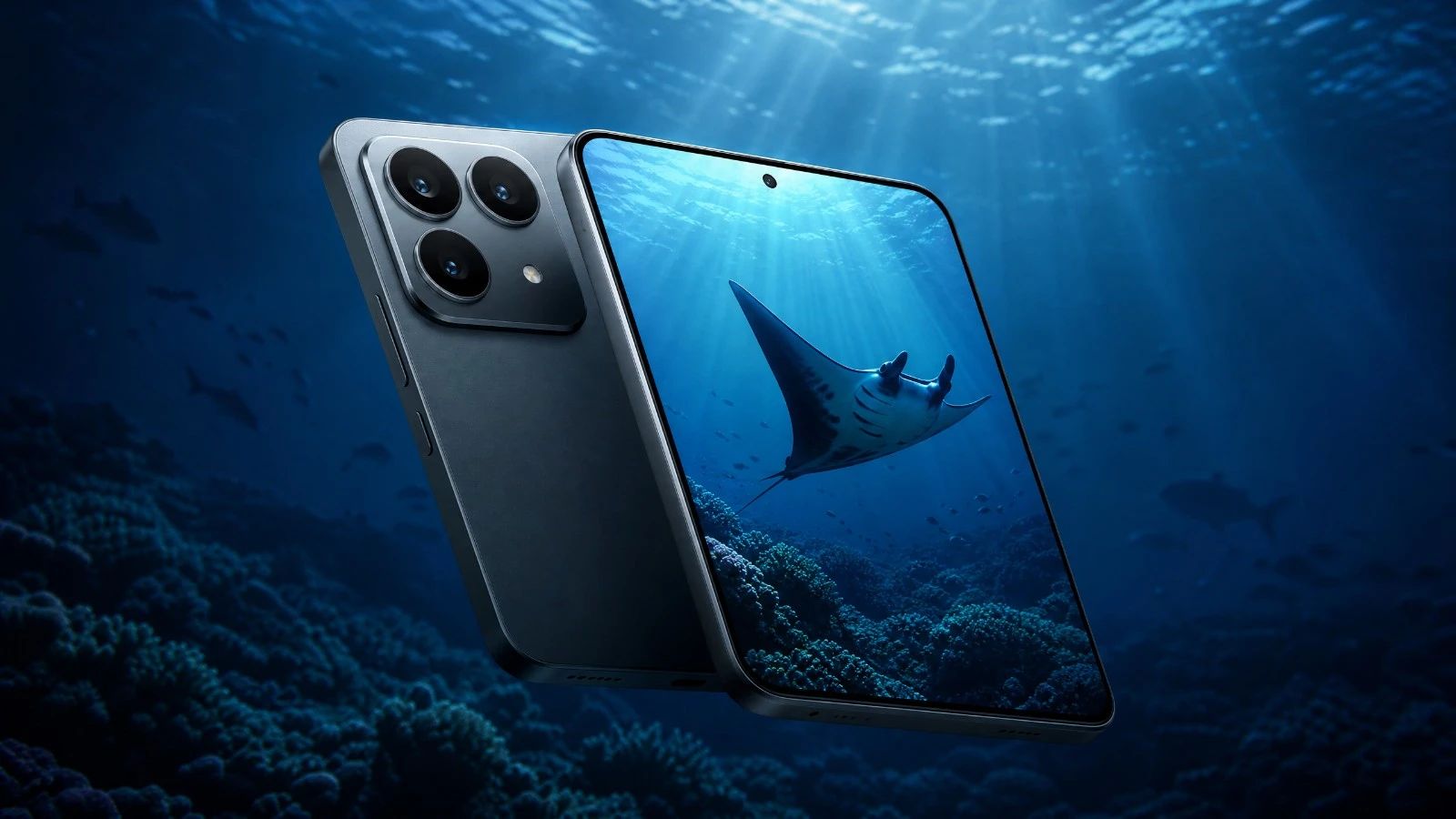
Test Xiaomi 17T Pro: Underwater Photography Review and 2026 Score
Xiaomi 17T Pro underwater photo test- natural light. AquaExposure score: 4.1/5. Features Leica Summilux 5x, RAW 12-bit, 7000 mAh Si-C battery. Housing details and pricing available in July 2026.
Is the Xiaomi 17T Pro suitable for underwater photography?
Yes, provided you are shooting in natural light up to depths of 20-25 meters. Its Light Fusion 950 sensor (1/1.31 inch, f/1.7) with the Leica Summilux optics, native 12-bit DNG RAW format, and MotionCam Pro compatibility make it a viable option. The 7000 mAh Si-C battery is often an underrated but crucial feature for long dive days. AquaExposure rating: 4.1/5.
Does the Xiaomi 17T Pro have Leica optics?
Yes. The 17T Pro benefits from the partnership with Leica, featuring Summilux optics (1G + 6P), Leica color science in two profiles (Authentic and Vibrant), and a RAW processing system co-developed with Leica. The key difference between the 17T Pro and the 17 Ultra lies in the main sensor (1/1.31 inch versus a full 1-inch format) and the periscope lens (5x on the 17T Pro compared to a different optical system on the Ultra). For natural light diving photography, Leica's color science remains a significant advantage during post-processing.
What underwater housing is suitable for the Xiaomi 17T Pro when diving?
There is no dedicated housing available for the Xiaomi 17T Pro. The recommended option is the Divevolk SeaTouch 4 Max Plus: a universal touchscreen housing, certified to 60 meters, providing full access to the touchscreen for controlling the native app and MotionCam Pro underwater. Divevolk designs and prints custom internal adapters for models not listed - please provide the dimensions of the 17T Pro to customer support before ordering.
What is the difference between the Xiaomi 17T Pro and the Xiaomi 17 Ultra for diving?
The 17 Ultra features a full-frame 1-inch sensor (Light Fusion 1050L) compared to the 1/1.31-inch sensor on the 17T Pro - capturing approximately 40% more light, which makes a significant difference beyond 20 meters. The 17 Ultra also offers a 200 MP telephoto lens with variable optical zoom (75-100 mm) compared to the fixed 5x periscope on the 17T Pro. In return, the 17T Pro is priced at €999, while the Ultra costs over €1400. For dives up to 20 meters in good light conditions, the 17T Pro offers excellent value for money underwater.
Should an anti-fog treatment be used with this device?
Yes, absolutely. Due to its housing (often made of aluminum) and heat dissipation system using a vapor chamber, the risk of condensation forming in cold water (below 15°C) is significant. Using an anti-fog treatment (such as a silica gel packet or inserts) inside the housing is mandatory before each dive.
How can I quickly transfer my photos and videos from this device?
This device offers excellent connectivity. With a wired connection, the USB 3.2 port allows you to quickly transfer large amounts of RAW files or 4K videos – gigabytes worth – to an external SSD or computer in just seconds. For wireless transfers, using Mi Share / ShareMe is ideal for fast and reliable data transmission.
Test Xiaomi 17T Pro: Underwater Photography Review and 2026 Score
The Xiaomi 17T Pro enters a specific niche in the product range. It sits above the standard Xiaomi 17, which has identical specifications on paper, but below the 17 Ultra with its 1-inch full-frame sensor costing €1400. For an underwater photographer, the question isn't philosophical: is the €999 price tag for this model a better value than saving up for the Ultra, or opting for something less expensive?
This test evaluates the 17T Pro solely from the perspective of underwater photography in natural light. No flash or strobe is used. We assess the available light between 5 and 25 meters, using RAW files as a safety net, and consider the reality of a day's diving with battery life, thermal management, and autofocus performance under real-world conditions.
7000 mAh silicon-carbon battery, 100W wired charging - the best feature of this test
B6 - Underwater autofocus
4.0/5
PDAF + 360° laser + AI, Native Focus Peaking in Pro mode
B7 - Housing available
3.0/5
No dedicated housing, universal Divevolk SeaTouch 4 Max Plus (custom adapter)
This device is ideal for: the Android underwater photographer who wants Leica color science and a 5x periscope in a €999 package, with battery life that comfortably covers two to three dives per day.
This device is not ideal for: dives beyond 25 meters where the 1/1.31-inch sensor starts to show its limitations compared to the Ultra's 1-inch sensor, and extreme macro photographers (minimum periscope distance is 30 cm compared to 9 cm on the main sensor).
B1 - Optics and Sensor: Leica Summilux with 5x PeriscopeThe Xiaomi 17T Pro uses the same Light Fusion 950 sensor (50 MP, 1/1.31 inch) as the standard 17, but adds a 50 MP periscope telephoto lens with 5x optical zoom (equivalent to 115 mm) and OIS stabilization. This is the main architectural difference between the 17 and the 17T Pro - not the main sensor, but the third module.
For natural light diving, this 5x periscope lens is useful when you want to frame subjects at a reasonable distance (wary fish, turtles swimming away) without having to get closer and disturb the scene. The minimum focusing distance of the periscope lens is stated to be 30 cm - which excludes true macro photography, but is very suitable for fish portraits taken at 40-60 cm.
The main sensor with its f/1.7 aperture and hybrid Leica Summilux optics (1G + 6P) captures light well down to 20-25 meters in good natural light. Flare from bright light sources is controlled - the Leica coating reduces flare on direct light sources (sunlight at the surface, rays descending). A slight longitudinal aberration remains visible when the sun is low in the frame, which is standard for this sensor size.
Macro photography using the main sensor can be achieved with a minimum focusing distance of approximately 9 cm - useful for nudibranchs and small invertebrates. For extreme macro (subjects smaller than 2-3 cm), an external wet lens remains necessary, as with all smartphones of this generation.Specs B1 - Technical Details
Main sensor: Light Fusion 950, 1/1.31 inch, 50 MP, f/1.7, 23 mm, OIS. Ultrawide: 12 MP, f/2.2, no OIS. Periscope telephoto lens: 50 MP, f/3.0, 115 mm (5x), OIS, minimum focus distance 30 cm. Main sensor minimum focus distance: approximately 9 cm. ISO range: 50 to 6400 (auto mode), expandable to 12800 in manual mode. RAW buffer: estimated 20-25 DNG images before saturation (Dimensity 9500). Shutter lag: 60-80 ms (Dimensity 9500, very responsive). Leica Summilux coating - minimal longitudinal flare under standard conditions.
Score B1: 4.3/5
B2 - RAW and Colorimetry: Leica's color science is once again decisive.
The 17T Pro offers native DNG 12-bit RAW files directly from the Xiaomi app's Pro mode. The DNG 12-bit format is the current standard on high-end Android devices - functional and sufficient for white balance correction in post-processing, although the 17 Ultra and the standard Xiaomi 17 offer 14-bit on certain modes.
Leica's color science comes in two profiles: Leica Authentic (neutral rendering, faithful to real tones) and Leica Vibrant (accentuated micro-contrast). For natural light diving photography, Leica Authentic is a logical starting point. White balance correction underwater - always tricky due to the absorption of reds and oranges - results in less chromatic aberration than with the saturated profiles offered by some competitors.For video, the H.265 10-bit format with Xiaomi Log can be directly used for color grading. The white balance can be locked in Kelvin within the native Pro Video mode - essential for maintaining consistent colors from one dive to another.
MotionCam Pro is fully compatible via the Camera2 API of the Dimensity 9500 on Android GMS. It unlocks RAW video frame by frame and provides focus peaking for precise control over sharpness underwater. The Blackmagic Camera app (Android) is also confirmed to be compatible.
Specs B2 - technical details Native RAW: Linear DNG 12-bit, available in the native Pro app mode. Color science: Leica Authentic / Leica Vibrant, co-developed by Leica. Video codec: H.265 (HEVC) 10-bit, Xiaomi Log available (Rec.2020). Video white balance: Lockable in Kelvin (native Pro Video mode). OS: HyperOS 3 (Android 16). MotionCam Pro: Compatible via Camera2 API (Android GMS, full access). Blackmagic Camera (Android): Compatible, confirmed at launch. Focus Peaking: Native in Pro mode (positive difference compared to standard Xiaomi 17). B2a Native RAW: 4.5/5 - B2b MotionCam Pro (GMS): 4.5/5 - B2c Leica color science: 4.5/5Score B2: 4.5/5
B3 - Storage and transfer: the usual limitation of high-end Xiaomi devices.The 17T Pro is available in 256 GB, 512 GB, and 1 TB versions (UFS 4.1). The operating system and apps occupy approximately 40 GB, leaving 215 GB free on the 256 GB version. A single 12-bit RAW DNG file at 50 MP weighs between 20 and 35 MB depending on the scene. A full day of three dives shooting in RAW easily amounts to 10 to 20 GB - which is manageable on a 256 GB device if you regularly empty it.
The lack of a microSD card slot is a limitation to consider. Without an external card, transferring files to a portable SSD via USB-C becomes the only option on the boat. The USB-C 3.2 Gen 2 port offers measured transfer speeds between 800 and 950 MB/s when writing to an external NVMe SSD - making file transfers quick once the cable is connected. In practice: 15 GB transferred in less than 20 seconds.
For a diving trip without daily access to a computer, the 512 GB or 1 TB version is recommended. The 256 GB version may be suitable for daily dives with regular file transfers.
B3 Specs - Technical Details Internal Storage: 256 GB / 512 GB / 1 TB (UFS 4.1). Actual Available Space (256 GB): approximately 215 GB (HyperOS 3 included). microSD Card Slot: None. Connector: USB-C 3.2 Gen 2 (video output + high-speed transfer). Measured Transfer Speed (External NVMe SSD): 800-950 MB/s in sequential write mode. B3 Score: 3.5/5 (penalty for lack of microSD)
B4 - Thermal and Condensation: Aluminum is adequate, vapor chamber handles heat well.The 17T Pro features an aluminum alloy chassis with a Gorilla Glass 7i back. It is not made of titanium (reserved for certain Ultra models), but it is robust and sufficient for regular use in a housing. The long-term rigidity under repeated pressure stresses is acceptable.
The LiquidCool system, with its extended vapor chamber, effectively manages the heat generated by the Dimensity 9500 processor during long video recording sessions. When diving, as soon as the phone is inside the housing and submerged, the natural cooling effect of cold water complements the LiquidCool system. The risk of thermal throttling that could interrupt a recording mid-shot is low.
The IP68 certification (1.5 meters for 30 minutes) protects against accidental water ingress. However, it does not replace a certified diving housing, where dynamic pressures from movement far exceed IP68 conditions. Standard procedures should be followed after each use: rinsing with fresh water and complete drying before closing the housing covers.
In cold water (below 10°C), the aluminum chassis - which is a better thermal conductor than titanium - transfers heat more quickly from the water to the inside of the housing. The temperature difference between the warm air at the time of sealing and the cold water accelerates condensation formation on the internal lens. The silica gel capsule in the Divevolk housing is therefore particularly important to check before each dive in cold water.[!WARNING] Silica gel: mandatory. Aluminum housing + extended LiquidCool vapor chamber: high thermal conductivity profile. In cold water (below 10°C), condensation is almost certain without silica gel. The capsule must be replaced every 2-3 days in humid tropical environments, and checked before each enclosure closure.
Tropical overheating: The Dimensity 9500 chip is very thermally efficient, supported by the LiquidCool system. In water at 28°C, software overheating occurs after approximately 22 minutes of continuous recording - a comfortable margin for typical underwater clips. It offers better tropical tolerance than iPhones Pro under these conditions.
B4 Specs - Technical Details Housing material: aluminum alloy + Gorilla Glass 7i (back and screen). Cooling: LiquidCool system, extended vapor chamber (Dimensity 9500). Water certification: IP68 (30 minutes at 1.5 m) - accidental protection only. Risk of condensation in cold water: moderate to high (aluminum housing is conductive). * Silica gel capsule recommendation: mandatory, check before each dive.
B4 Score: 3.8/5
B5 - 7000 mAh Battery: The Key Advantage of the 17T Pro for Diving
The 7000 mAh silicon-carbon (Si-C) battery is likely the most underestimated feature of the Xiaomi 17T Pro for intensive diving use.The B5 features a 7000 mAh battery using Si-C chemistry, which is significantly more than the 6330 mAh found in the standard Xiaomi 17. The higher energy density of silicon-carbon allows this capacity to be housed in a compact form factor. In practice, a day of three dives with the screen continuously on inside the housing and RAW apps running consumes approximately 40% to 60% of the battery. Returning to the boat with 40% remaining is realistic.
While Si-C chemistry performs better at low temperatures than traditional Li-Ion batteries, prolonged dives below 10°C still accelerate discharge. Expect about a 10% reduction in effective capacity between 10°C and 5°C - which is still significantly better than the 20-25% loss experienced by a standard Li-Ion battery under the same conditions.
The 100W wired charging allows you to recharge from 0% to 80% in less than 30 minutes, making recharging between daily dives quick and efficient.
B5 Specifications - Technical Details Capacity: 7000 mAh. Chemistry: Silicon-Carbon (Si-C). Wired Charging: 100W (HyperCharge). Wireless Charging: 50W. Lifespan: Estimated 800 to 1000 cycles before a 20% degradation. Performance in Cold Water: Better than Li-Ion, accelerated discharge below 5°C. B5 Score: 4.7/5
Before each dive session, remember to check the charge level of your external battery pack. Use our portable battery comparator tool to choose the power bank that is best suited for your housing and desired battery life.## B6 - Underwater Autofocus: Laser PDAF with Native Focus Peaking
The autofocus system of the 17T Pro combines phase detection (PDAF) on the main sensor and a 360° laser sensor for low-light assistance. The Dimensity 9500 manages the entire process through its ISP - the ToF laser cannot be manually disabled.
In clear water, focusing on defined subjects (fish, corals, turtles) is fast and remains accurate. The 360° laser helps with focusing in dark areas where PDAF alone would take longer. For tropical dives in clear water, this system effectively covers most common needs.
The limitation shared by all smartphones remains murky water. In the presence of suspended particles (plankton, sediment), the AI may switch between the subject and the foreground. This is not specific to the 17T Pro - it's the current limitation of all smartphone AF systems in turbid water.
Focus Peaking is natively available in Pro mode within HyperOS 3 (this is a positive difference compared to some models where it is only accessible through third-party apps). MotionCam Pro also provides access to Focus Peaking, with more fine-grained control for manual focusing.Specs B6 - Technical Details
Autofocus: PDAF phase detection + 360° laser (light sensor). LiDAR: Not available (standard for current high-end Android devices). Focus Peaking: Available natively in HyperOS 3 Pro mode. Advanced Focus Peaking Access: MotionCam Pro (fine manual control). Performance in turbid water: Possible AI confusion between particles and subjects. Anti-particle technology: HyperOS 3 temporal noise reduction algorithm (for clear water).
There is no dedicated housing available for the Xiaomi 17T Pro. The market for custom housings for smartphones remains limited to very popular models (iPhone, Samsung Galaxy S). For Android models outside the top 3, a universal solution is standard.
The reference housing is the Divevolk SeaTouch 4 Max Plus. This universal housing with patented touch membrane allows you to use the touchscreen of the 17T Pro directly underwater up to 60 meters. Divevolk regularly designs and prints new internal adapters for recent models - contact Divevolk support with the exact dimensions of the 17T Pro before ordering to confirm adapter availability.
In practice, with this type of universal housing, access to apps (native HyperOS, MotionCam Pro, Blackmagic Camera) remains complete. The standard SeaTouch mounts accept external arms and lenses.The score of 3.0/5 reflects the lack of a dedicated housing: compatibility is likely but not officially confirmed, and the internal adapter may require a waiting period if the model has just been released.
B7 Specs - technical details Dedicated Xiaomi 17T Pro housing: unavailable. Recommended housing: Divevolk SeaTouch 4 Max Plus (universal, touch membrane). Certified depth: 60 meters. Underwater touchscreen access: yes, patented membrane. App compatibility: native HyperOS app + MotionCam Pro + all Android apps. Preliminary step: contact Divevolk support to confirm the 17T Pro adapter. Alternative: Weefine / Kraken (universal housings with physical buttons, dedicated app required). B7 Score: 3.0/5
The Divevolk SeaTouch 4 Max Plus is the most complete option available. The touchscreen remains usable through the membrane up to a documented depth of 40 meters, which covers the vast majority of underwater photography use in natural light. Expect a budget of 400 to 480 EUR for the housing alone.
Post-dive workflowConfigure MotionCam Pro before your first dive, not on the boat. Adjust the white balance in Kelvin within the native Pro Video mode (starting point: 4,500-5,500 K depending on depth and water clarity). Enable Focus Peaking in HyperOS Pro mode for photo sessions, or switch to MotionCam Pro for RAW video.
Plan to use a portable USB-C 3.2 Gen 2 SSD for trips without a computer. The 17T Pro's transfer rate (800-950 MB/s) fully utilizes current portable NVMe SSDs.
Launch price confirmed on May 28, 2026, in France. Xiaomi offered a trade-in offer of 100 EUR at launch - check availability in July 2026 on mi.com/fr. Source: ariase.com and mi.com (as of July 1, 2026).
Used Market
The Xiaomi 17T Pro was released in late May 2026. The first refurbished units are starting to appear on the used market, but stock remains limited on Back Market France and idealo.fr at this time.Recommended strategy: wait until September-October 2026 to find units in "Very good" condition for €800-€850. The depreciation of high-end Xiaomi smartphones accelerates within the first 4 to 6 months after launch.
Our Verdict
The Xiaomi 17T Pro consistently holds its position as a mid-range device within the 17 series. It doesn't claim to replace the 17 Ultra (with its 1-inch sensor and variable optical telephoto lens), but it offers something that the standard 17 lacks: the 5x Leica Summilux periscope lens, which significantly expands framing possibilities for underwater photography.
The 7,000 mAh Si-C battery is a key differentiator in this review. For a diver who makes two to three dives per day without access to an outlet, battery life is no longer a concern.
Test Xiaomi 17T Pro: Underwater Photography Review and 2026 Score | AquaExposure
The two limitations remain the same as on the standard 17: no microSD card slot (opt for the 512 GB model initially), and the 1/1.31-inch sensor, which shows its limits beyond 25 meters compared to a full 1-inch sensor. If your budget allows up to €1,400 and you regularly dive beyond 20 meters, check out our Xiaomi 15 Ultra underwater photography review to assess the real difference.
Overall AquaExposure Score for Xiaomi 17T Pro: 4.1/5
If this test helped you evaluate the Xiaomi 17T Pro, the next step is to learn how to harness its potential underwater in real-world conditions: understanding natural light, using RAW settings in real time, and managing white balance at depth with Xiaomi Log and Leica color science.