1,332 square miles: the second smallest dead zone in the Gulf of Mexico in 40 years. The good news is accidental. Discover what hypoxia erases from the seabed.
A dead zone, or hypoxic zone, is an area of water where the concentration of dissolved oxygen is too low to support most marine life (below 2 mg/L). In the Gulf of Mexico, this zone forms each summer near the mouth of the Mississippi River, due to the massive influx of nitrogen and phosphorus fertilizers that are drained from the agricultural basin in the central United States. These nutrients trigger algal blooms, which, when they decompose, consume the available oxygen in the water layer near the bottom.
Why was the dead zone in the Gulf of Mexico relatively small in 2026?
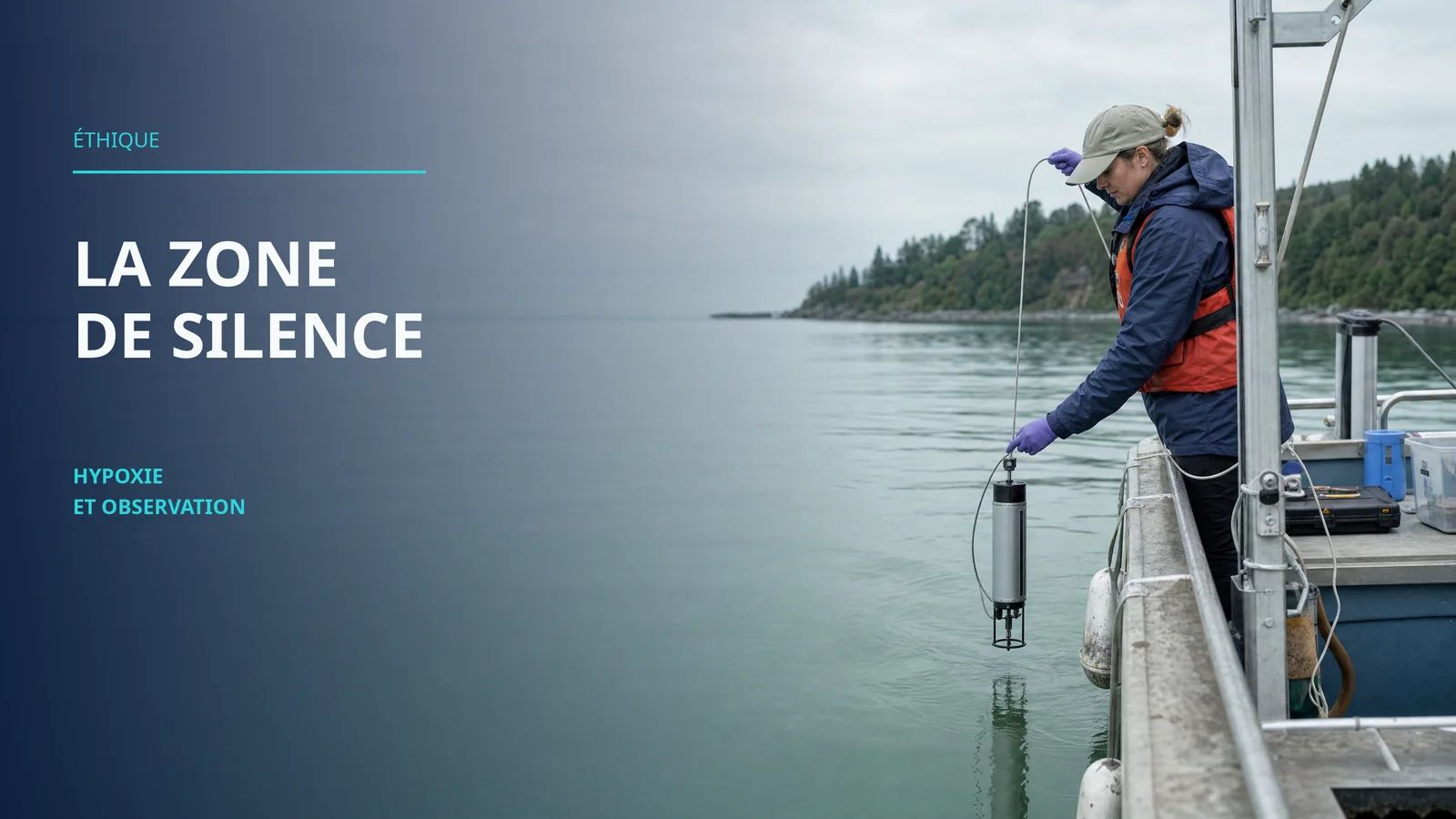
The hypoxic zone in 2026 (1,332 square miles, measured from July 24th to 30th aboard the R/V Pelican) is the second smallest since monitoring began in 1985. The cause was that Tropical Storm Bertha crossed the northern Gulf of Mexico the day before the measurement cruise departed, mixing the water column and bringing oxygen from the surface layers down to the bottom. This is not a structural improvement- the nutrient inputs from the Mississippi River basin remain at the same level.
Since when has the NOAA been measuring the dead zone in the Gulf of Mexico?
The annual monitoring of the hypoxic zone in the Gulf of Mexico began in 1985, representing over 40 years of continuous data. This is one of the longest time series available on coastal hypoxia worldwide. The 2026 research cruise took place from July 24th to 30th aboard the R/V Pelican (LUMCON), with funding and coordination provided by NOAA.
What does the seabed look like in a hypoxic zone?
In areas with severe hypoxia, fish will flee to waters with better oxygen levels. Benthic organisms- such as worms, bivalves, echinoderms, and small crustaceans- that cannot move will die in place. The seabed becomes a decomposition environment with no predators or mobile prey. For an underwater photographer documenting benthic fauna, it is literally a zone of visual silence: nothing moves, and nothing lives in the way that a healthy seabed does.
Will the hypoxia in the Gulf of Mexico improve over time?
Scientific projections are not optimistic. The influx of nutrients from the Mississippi River basin depends on the agricultural practices of a vast territory. Climate change is also altering river flow, surface temperatures, and the frequency of mixing events, such as the one caused by Bertha in 2026. The small size of the affected area this year is a meteorological anomaly, not a sign of a positive long-term trend.
Underwater photographic ethics are based on the principle of non-interference with marine life: no manipulation of animals, no contact with the seabed, and a minimum observation distance that respects the comfort zone of the species. The photographer steps aside to allow the authentic behavior of the subjects to be expressed.
L'Encre is a weekly series about recent marine discoveries. It's the ink of writing, the anchor of the seabed. Each issue features a few news items and explores how they change things when diving with a camera.
"It is strange that the sea, from which life first arose, is now threatened by the activities of only one form of that life." Rachel Carson, The Sea Around Us, 1951 On August 5, 2026, the NOAA announced some good news.
The annual hypoxic zone in the Gulf of Mexico measured 1,332 square miles in 2026. This is the second smallest area measured since monitoring began in 1985, representing over 40 years of continuous data. Headlines reported an unexpected result, a positive surprise, and relief for the Gulf fisheries.
The good news is real. It is also entirely accidental.
A Zone of Silence at the Bottom of the GulfEach year since 1985, a team from Louisiana State University and the Louisiana Universities Marine Consortium (LUMCON) boards the research vessel Pelican and measures dissolved oxygen levels in the waters of the Gulf of Mexico, between the mouth of the Mississippi River and the coast of Texas.
What they are looking for is the extent of the hypoxic zone: the area of the seabed where the oxygen concentration falls below 2 mg/L, a level below which most marine organisms cannot survive.
The formation of this zone is a mechanical and recurring process. Every spring, runoff from the agricultural basin in the central United States – a territory of several million square kilometers largely cultivated with nitrogen and phosphorus fertilizers – flows into the Mississippi River and its tributaries, eventually reaching the Gulf. These nutrients fertilize the surface, causing algae to proliferate. When these algae die and decompose, bacteria consume the oxygen in the water layer near the seabed. Summer thermal stratification prevents mixing between the oxygen-rich surface waters and the oxygen-depleted bottom waters.
The result is that every summer, a portion of the seabed in the Gulf becomes uninhabitable.For fish and shrimp, this means a migration to waters with better oxygen levels. For benthic organisms – polychaete worms, bivalves, echinoderms, and small crustaceans – that cannot move, it means death in place. For an underwater photographer documenting the seabed fauna, this means something very specific: a zone of visual silence. Nothing moves, and nothing lives in the way that a healthy seabed does.
What Made the Difference in 2026 – and Why It's Concerning
The measurement cruise took place from July 24th to 30th, 2026. The result: 1,332 square miles of hypoxic zone, the second smallest since the beginning of the monitoring.
The reason for this small size is not an improvement in agricultural practices in the Mississippi River basin. It's not a reduction in nutrient inputs, nor a change in land management policies. It's the tropical storm Bertha.
Bertha crossed the northern part of the Gulf of Mexico the day before the measurement cruise departed. As it crossed, it mixed the surface waters with the oxygen-depleted waters from the bottom, temporarily neutralizing the thermal stratification that allowed the hypoxic zone to persist.A few days of unusual weather accomplished what decades of discussions about agricultural nutrient management have failed to achieve sustainably.
What this reveals is that the "good news" of 2026 doesn't reflect a structural change. The nutrient inputs from the Mississippi River basin have remained at the same level as in 2024 or 2023. The storm's ability to temporarily "solve" the problem highlights exactly how much the normal solution - reducing nutrients at the source - remains unfulfilled.
There's a parallel here with what climate change acceleration does to coral bleaching. Natural variability can sometimes produce local recoveries or temporary mitigations, which mask the underlying trend. The early bleaching observed at Cheeca Rocks in July 2026 is the same logic reversed: a single thermal event that reveals systemic fragility.And the slowing of the AMOC adds another layer: changes in major oceanic circulation systems alter stratification patterns, surface temperatures, and the frequency of mixing events. What worked this year with Bertha won't work the same way in a Gulf with a stronger thermal stratification.
Dead Zones and Underwater Photography
A hypoxic zone doesn't have a particular color from the surface. You can't see it from a boat. You can sail over it for hours without knowing that you're above 1,332 square miles of seabed where nothing complex lives.
This is one of the reasons why these zones took so long to enter the collective consciousness. They don't have the dramatic visibility of an oil spill or a bleached reef. They are invisible from above.
From below, it's a different story.A diver descending into the few meters above a hypoxic zone observes a transition. The benthic fauna gradually disappears: sea urchins, starfish, sea cucumbers, and bivalves that normally inhabit a sandy coastal seabed. What underwater photography documents in these areas is an absence. It's a flat seabed, devoid of biological features, with the only visible activity being microbial.
This type of documentation is valuable precisely because it is challenging. An image of a hypoxic seabed is not spectacular in the classic sense. It doesn't produce a photo suitable for a competition. However, it documents a state that satellite data and surface measurements cannot reveal in the same way.
The marine protected areas created in recent years, as described in this blog post about marine protected areas in 2026, generally do not cover coastal agricultural hypoxic zones because these zones are defined by criteria of remarkable biodiversity, not by the temporary absence of all life. This is one of the limitations of the current protection system: it protects what is visible and identifiable, but less well what is gradually disappearing.The role of an underwater photographer in documenting the actual state of marine environments also includes this: bearing witness to what is no longer there, not just what still exists.
This is a practice that develops over time. It relies on the ability to return to the same sites year after year and document the changes. This is one of the core principles of the AquaExposure underwater photography training: to develop a practice that endures rather than focusing on isolated events. Complete information is available on the AquaExposure training platform.
Frequently Asked Questions
What is a dead zone in the ocean?
A dead zone, or hypoxic zone, is an area of water where the concentration of dissolved oxygen is too low to support most marine life (below 2 mg/L). In the Gulf of Mexico, this zone forms each summer at the mouth of the Mississippi River, fueled by agricultural fertilizers drained from the central United States.
Why was the dead zone in the Gulf of Mexico small in 2026?Tropical storm Bertha crossed the northern Gulf the day before the measurement cruise (July 24-30, R/V Pelican), mixing the water column and bringing oxygen up from the surface. The area measures 1,332 square miles, the second smallest in 40 years of monitoring. Nutrient inputs from the Mississippi River have not decreased, indicating a meteorological effect rather than a structural improvement.
Since when has NOAA been measuring the dead zone in the Gulf of Mexico?
Since 1985, representing over 40 years of continuous data. This is one of the longest time series on coastal hypoxia in the world.
What does the seafloor look like in a hypoxic zone?
Fish migrate to areas with better oxygen levels. Benthic organisms that cannot move (worms, bivalves, echinoderms) die in place. For an underwater photographer, it's a zone of visual silence: a flat seabed with little complex biological activity.
Will hypoxia in the Gulf of Mexico improve over time?
Projections are not optimistic. Nutrient inputs from the agricultural basin of the Mississippi River depend on practices across a vast territory. Climate change is also altering thermal stratification patterns and the frequency of mixing events. The small size observed in 2026 is a meteorological anomaly.You can find previous issues of L'Encre on the AquaExposure blog. And for those who want to develop a long-term underwater photography practice, comprehensive resources are available on the AquaExposure training platform. This summer, 1,332 square miles of the Gulf of Mexico's seabed were uninhabitable. This is the second smallest area recorded in the last 40 years. This is good news, and a tropical storm deserves some credit.