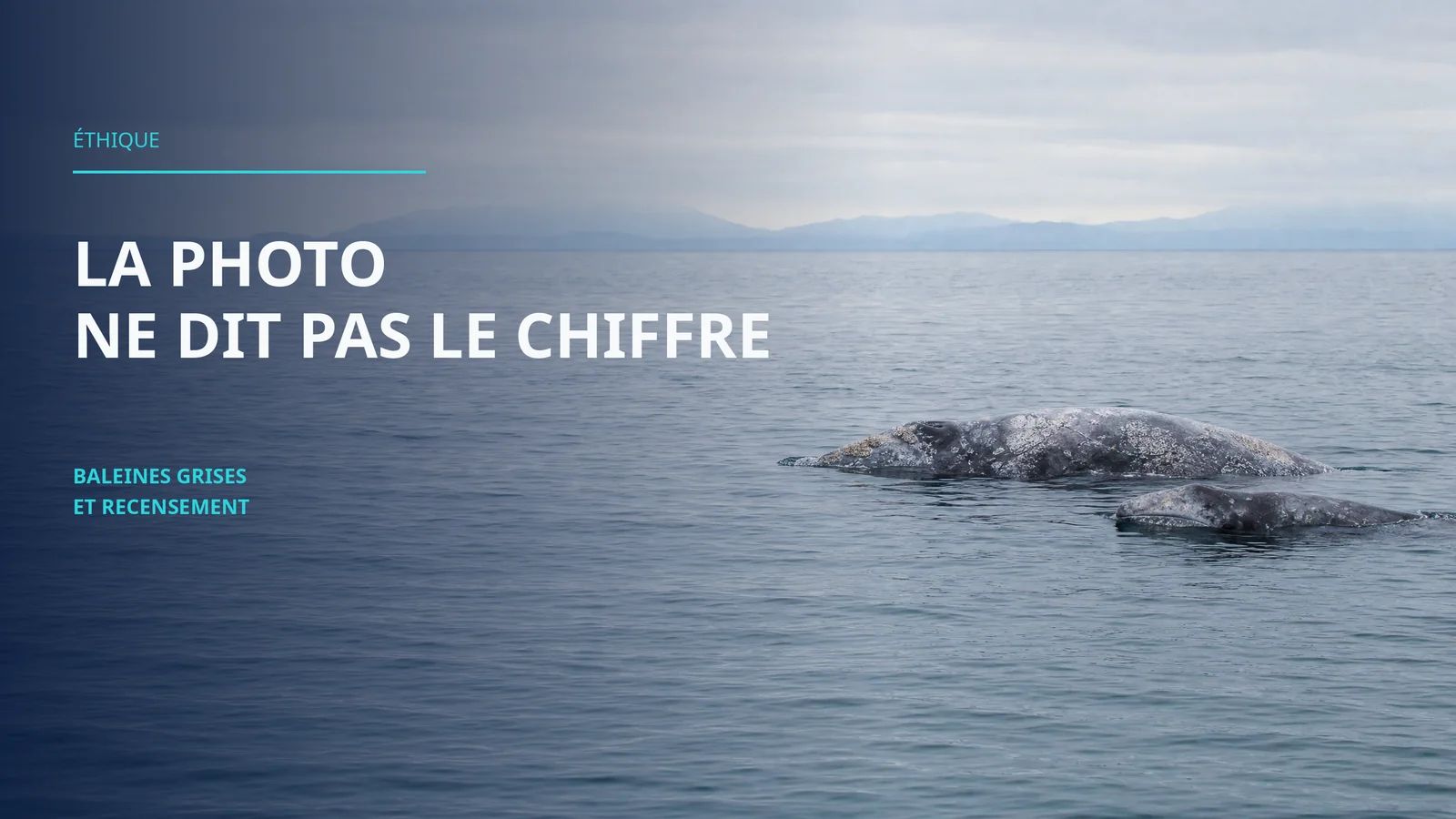
17,750 gray whales in the Northeast Pacific by 2026, but only 85 calves in 2025 - a historically low number. What this paradox reveals to an underwater photographer. NOAA Fisheries, Lang et al. 2026.
What is the current population of gray whales in the Northeast Pacific?
According to the report by Lang et al. (2026), published by the NOAA Southwest Fisheries Science Center on July 15, 2026, the population of gray whales in the Eastern North Pacific is estimated at 17,750 individuals (95% confidence interval: 15,930-20,530) for the 2025/2026 season. This figure represents an apparent increase compared to the previous estimate of approximately 12,890 individuals. However, the observed rate of increase exceeds the theoretical maximum reproductive capacity of the species, suggesting that the increase is partly due to methodological issues or changes in behavior.
Why is the number of whale calves a better indicator than the total count?
In 2025, only 85 gray whale calves were counted in the lagoons of Baja California - the lowest number recorded since systematic monitoring began. The number of calves directly reflects the reproductive success of the previous season, which itself depends on the body condition of the females at the end of the Arctic summer. Thin whales that are unable to store enough fat during the summer cannot carry a pregnancy to term. The total count can also be affected by changes in migratory behavior and variations in methodology.
Why are gray whales in poor condition in 2025-2026?
The primary identified cause is the disruption of Arctic feeding grounds. The retreat of Arctic sea ice alters the distribution and availability of benthic amphipods, which are a food source for gray whales during the summer months. In the spring of 2026, emaciated gray whales washed ashore on the west coast of North America, unable to reach or utilize their usual feeding areas in the Bering Sea and the Chukchi Sea. This same phenomenon had previously been observed during the Unusual Mortality Event of 2019-2023.
Where can I photograph gray whales?
The lagoons of Baja California in Mexico (San Ignacio, Scammon's Lagoon, Bahía Magdalena) are the primary calving and mating grounds, accessible from January to March. Gray whales then migrate to their Arctic feeding areas (the Bering Sea, the Chukchi Sea) from June to October. The coasts of California, Oregon, and Washington are transit zones during migration. Access to the Baja California lagoons is regulated by Mexican authorities.
What does the term "Rmax" mean in relation to gray whales?
The Rmax value represents the theoretical maximum growth rate of a population- that is, the fastest speed at which it can reproduce under optimal conditions. For gray whales, it is estimated to be 0.062, or approximately 6.2% per year. The apparent increase from 12,890 to 17,750 individuals between the last two surveys represents an increase that exceeds this theoretical maximum, which indicates that either the methodology used has changed or migratory behaviors have altered- rather than the population actually growing at that rate.
L'Encre is a weekly series about recent marine discoveries. The ink of writing. The anchor of the seabed. Each issue features news and insights, exploring how these developments impact underwater photography.
"One sees clearly only with the heart. What is essential is invisible to the eye." Antoine de Saint-Exupéry, The Little Prince, 1943
On July 15, 2026, the NOAA Southwest Fisheries Science Center published its annual estimate of the Pacific Northwest gray whale population.
17,750 individuals, with a 95% confidence interval of 15,930-20,530. This is an increase compared to the previous estimate, which was approximately 12,890.
The headlines report the increase. They don't read the rest of the report.
In 2025, 85 calves were counted in the lagoons of Baja California. This is the lowest number recorded since systematic monitoring began. And in the spring of 2026, emaciated and weakened whales washed ashore on the west coast of North America, unable to reach their Arctic feeding grounds.
The numbers go up. But biology tells a different story.
17,750 Whales - and 85 CalvesThe annual census of the North Pacific gray whale population has been conducted since 1977 from the central California coast. Observers stationed on land count the whales as they migrate north, from January to February. The method is standardized, the counting sites are fixed, and the time series is one of the longest available for large cetaceans in the world.
The report by Lang et al. (2026), published by the NOAA Southwest Fisheries Science Center, estimates the population at 17,750 individuals for the 2025/2026 season.
The apparent increase since the last estimate (approximately 12,890) exceeds the Rmax of the species: the theoretical maximum growth rate of the gray whale is estimated to be 0.062, or 6.2% per year. A population cannot physically grow faster than this rate, which assumes ideal conditions. Therefore, the apparent increase in the numbers is likely partly a methodological artifact or a reflection of a change in migratory behavior rather than a true demographic recovery.
On the other hand, the report indicates 85 calves in the lagoons of Baja California in 2025.The number of calves is a direct indicator of reproductive success. A female gray whale that does not store enough fat during the Arctic summer cannot carry a pregnancy to term - and even if she does, she produces a smaller, less viable calf. The 85 calves born in 2025 reflect the body condition of the females during the summer of 2024 in their feeding areas.
These females did not eat enough.
What's Happening in the Arctic
The Pacific gray whale follows one of the longest documented migration routes among mammals: from the calving lagoons of Baja California to the feeding grounds of the Bering Sea and the Chukchi Sea, a distance of approximately 20,000 kilometers round trip.
In the Arctic feeding areas, gray whales primarily feed by filtering sediments from the bottom: they suck up mud and filter out benthic amphipods, tiny crustaceans that live in the first few centimeters of the Arctic seabed. This method of feeding makes them very dependent on ice and sediment conditions in specific areas of the Bering Sea.
The retreat of Arctic sea ice is changing these conditions. Traditional feeding grounds are being transformed. The distribution of amphipods is changing. Warmer waters support fewer benthic prey in historically important feeding areas.In the spring of 2026, gray whales beached themselves along the coasts of California, Oregon, and Washington. Some were unable to feed adequately during the previous Arctic season. This same phenomenon had already been documented during the Unusual Mortality Event of 2019-2023, during which hundreds of gray whales washed ashore on the American Pacific coast.
The 85 whale calves born in 2025 represent the reproductive outcome of what the adults experienced the previous summer.
The effects of climate change on marine ecosystems are not always evident in the species directly affected. They are reflected in the food chain: what eats what, during which season, and in which area. The gray whale is a prime example of this mechanism.
What the Photo Doesn't Tell You
There's a certain type of photograph of gray whales that circulates through magazines and social media every winter.
It typically features a lagoon in Baja California - most often San Ignacio. The water is calm, and the morning light is soft. A gray whale surfaces its head out of the water, nose to nose with the outstretched hands of tourists on small pangas (boats). The image is beautiful, and it's true: the whales of San Ignacio are well-known for their willingness to approach boats, a behavior that researchers and guides have observed for decades.The photo shows a whale. It doesn't show whether this whale successfully stored enough fat during the Arctic summer to produce a viable calf the following year. It doesn't show what its foraging dives revealed – or didn't reveal – in the sediments of the Chukchi Sea.
You can have a full-frame image of a gray whale in the San Ignacio lagoon in February, and not know whether what you are photographing is a species recovering or a species being depleted. The photo doesn't tell the whole story.
This is the honest limitation of nature photography: it documents a moment, in a place, with what is visible at that time. It doesn't document the state of a system.
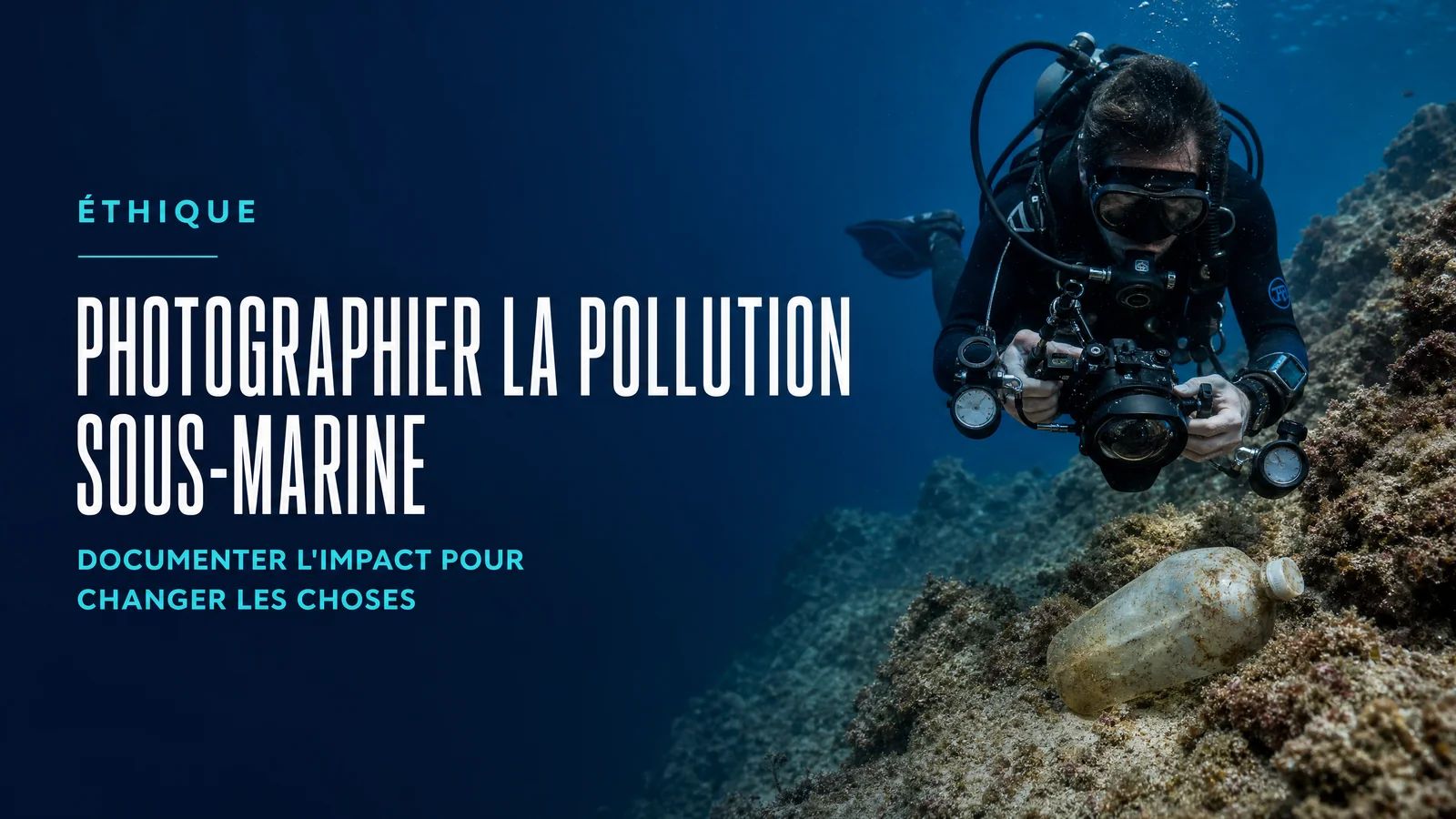
This disconnect is one reason why underwater photography, when combined with an understanding of scientific data, can become something more than just a collection of images. It's not a substitute for science, but rather a complement to what the numbers alone don't reveal.The role of the underwater photographer in documenting the status of species goes beyond simply taking portraits. It extends to interpreting signs: a thin whale, altered behavior, a feeding area that is less productive. These signals are not always spectacular. But they can precede population survey data by several years.
The collapse of biodiversity and the protection of marine species cannot be understood solely through global counts. It is also reflected in the individual animals we encounter, in the condition of those we photograph, and in the difference between a lagoon in Baja California in 2010 and one in 2026.
Not because a picture is worth more than a census. Because a census and a picture, together, tell something that neither can convey alone.
The AquaExposure underwater photography course develops this ability to interpret: not just the techniques of exposure and focus, but also the capacity to see what you are photographing within its ecological context. Complete resources are available on the AquaExposure course.
Frequently Asked Questions
What is the current population of gray whales in the Northeast Pacific?According to Lang et al. (2026), the NOAA Southwest Fisheries Science Center estimates the population at 17,750 individuals (95% confidence interval: 15,930-20,530) for the 2025/2026 season. This represents an apparent increase from the last estimate of approximately 12,890, but an increase that exceeds the species' theoretical maximum growth rate (Rmax = 0.062), suggesting a behavioral or methodological change rather than actual growth at this rate.
Why is the number of calves so important?
In 2025, only 85 calves were counted in the lagoons of Baja California - the lowest number recorded since monitoring began. The number of calves directly reflects reproductive success, which itself depends on the body condition of females at the end of the Arctic summer. Females that have not stored enough fat cannot carry a pregnancy to term.
Why are gray whales in poor condition in recent years?
The disruption of Arctic feeding grounds is the primary cause. The retreat of sea ice alters the distribution of benthic amphipods, which whales feed on during the summer. Emaciated whales washed ashore on the west coast of North America in the spring of 2026, unable to exploit their usual feeding areas in the Bering Sea.
Where can you photograph gray whales?The lagoons of Baja California (San Ignacio, Scammon's Lagoon, Bahía Magdalena) are the main calving sites, accessible from January to March. The migration follows the coasts of California, Oregon, and Washington. Access to the lagoons is regulated by Mexican authorities.
What does an Rmax of 0.062 mean for gray whales?
The Rmax is the theoretical maximum growth rate of the population. A value of 0.062 indicates a maximum growth of 6.2% per year under ideal conditions. When the apparent increase in counts exceeds this threshold, it suggests that other factors are at play- such as changes in migratory behavior, improvements in methodology, or counting biases.
Find previous issues of "L'Encre" on the AquaExposure blog. And to develop a photographic practice that understands living things within their context, comprehensive resources are available on the AquaExposure training program.
17,750 gray whales in the Northeast Pacific. 85 calves in 2025.
The number is increasing. Biology suggests otherwise.
And in the lagoons of Baja California, the whale approaching the boat in February doesn't know it's part of a time series.
Ink #19 - Photography doesn't tell the number. | AquaExposure