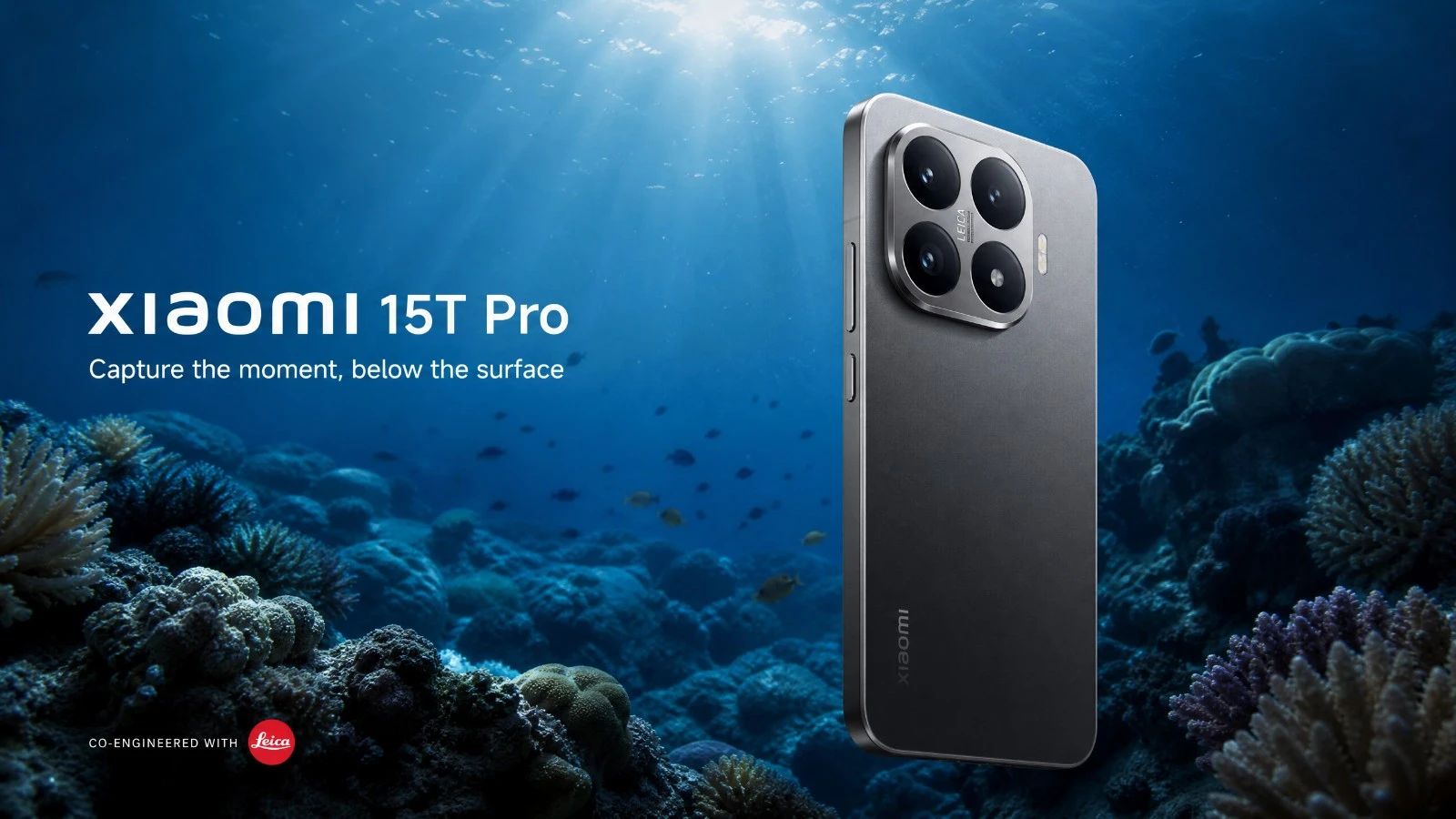
Is the Xiaomi 15T Pro good for underwater photography?
The Xiaomi 15T Pro offers a good main sensor and the ability to shoot in RAW, which is a major advantage for post-production. However, its USB 2.0 port is a real bottleneck for fast video transfers. It performs well for pure photography in natural light, but you need to be aware of its video limitations.
Which housing is available for the Xiaomi 15T Pro when diving?
The Divevolk SeaTouch 4 Max is the obvious choice for the Xiaomi 15T Pro. It is robust, reliable, and allows you to use your phone safely underwater.
Does the Xiaomi 15T Pro shoot RAW underwater?
Yes, the Xiaomi 15T Pro supports RAW format. This is a key asset for underwater photographers who want to maximize image quality and have more latitude in post-processing.
How long does the battery last for a day of 3 dives with the Xiaomi 15T Pro?
With its 5500 mAh battery, the Xiaomi 15T Pro has excellent autonomy. You can easily expect to last a full day of 3 dives, or even more, without worrying about recharging. This is a real plus on the field.
Should I use an anti-fog treatment with this device?
Although this model has a chassis less prone to condensation than fully aluminum models, underwater temperature changes are still a factor. An anti-fog treatment (silica gel pack or anti-fog inserts) is highly recommended as a precaution before every dive.
How can I quickly transfer my photos and videos from this device?
The wired port on this device is limited to the USB 2.0 standard (about 35-40 MB/s). To quickly offload your RAW files or video clips, favor fast wireless transfer within the ecosystem (Quick Share on Android) or extracting the memory card if the housing allows.
To learn how to get the most out of your gear underwater, discover the AquaExposure training.
Xiaomi 15T Pro for Underwater Photography: Our 2026 Review
When you are underwater, every detail counts. The equipment must be reliable, intuitive, and above all, perform well in natural light. The Xiaomi 15T Pro arrives on the market with promising features, but what is it really like once submerged? I put this device to the test, far from marketing specifications, to see what it actually offers for underwater photography. We are not talking about gadgets here, but a real tool to capture the beauty of the aquatic world. Forget the specs on paper, the real topic is what you get at the bottom. Can it become your diving companion? That is what we will discover together.
Summary Verdict
Overall AquaExposure Score: 3.5/5
Criterion
Score (out of 5)
Comment
B1 Optics
4
50 MP main sensor with OIS, good image quality in natural light.
B2 RAW
4
RAW format support, a real asset for post-production.
B3 Storage
2
Very slow USB 2.0 port for transferring videos, a true weak point.
B4 Thermal
3
No major issues observed, but watch out for long video sessions in warm waters.
B5 Battery
5
Excellent 5500 mAh battery life, easily lasts a full day of diving.
B6 AF
4
Multi-directional autofocus with OIS, responsive and precise underwater.
B7 Housing
5
Divevolk SeaTouch 4 Max housing available and highly effective.
Ideal Profile: The Xiaomi 15T Pro is designed for the diver who prioritizes pure photography in natural light and seeks excellent battery life. If you shoot a lot of video and need to empty your cards quickly, its USB 2.0 port will frustrate you. It is a good device to start with or for occasional use, with a controlled budget.
Block-by-Block Analysis
B1 Optics: The Underwater Vision
The 50 MP main sensor of the Xiaomi 15T Pro, with its f/1.62 aperture and optical image stabilization (OIS), delivers sharp and detailed images in natural light. Color management is decent, though it requires some work in post-production to recover the exact tones of the underwater world. For photography, you have everything you need to get beautiful shots.
To go further: The 1/1.31" sensor is a good size for a smartphone, capturing enough light for successful shots without additional lighting. The OIS helps compensate for small movements, which is crucial when diving.
B2 RAW: The Raw Material of Your Images
Support for the RAW format is an undeniable advantage for any underwater photographer. It gives you maximum flexibility in post-processing, allowing you to correct white balance, adjust exposure, and recover details in shadows and highlights without degrading image quality. This is what counts for a professional result.
To go further: RAW files are heavier, but they contain all the raw data from the sensor. This is the foundation for fine and precise edits, a real plus for underwater photography where light conditions are often complex.
B3 Storage: The Bottleneck
This is where the shoe pinches. The USB 2.0 port on the Xiaomi 15T Pro is a major limitation. If you film a lot in 4K or even Full HD, transferring your videos after a day of diving will take ages. Wi-Fi 7 can help slightly for wireless transfers, but for large volumes, you will feel the difference. This is a point of concern that should not be overlooked.
To go further: A transfer rate of 480 Mbps for USB 2.0 is well below current standards. A USB 3.2 port (10 Gbps) would have been much more suitable to handle the large video files generated by underwater photography.
B4 Thermal: Keeping a Cool Head
The Xiaomi 15T Pro manages its temperature quite well in photo use. However, like many powerful smartphones, prolonged video sessions, especially in warm tropical waters, could potentially lead to slight overheating and a reduction in performance. I did not observe any major issues, but you should remain careful if you chain long takes together.
To go further: Thermal dissipation is a challenge for smartphones enclosed in a waterproof housing. Good software and hardware management is necessary to maintain optimal performance over time.
B5 Battery: Endurance Underwater
With its 5500 mAh battery, the Xiaomi 15T Pro is a champion of battery life. You can confidently plan a full day of 3 dives without worrying about recharging. This is a significant advantage when you are on a boat or far from any electrical outlet. You can focus on your shots, not on your battery level.
To go further: A large battery capacity means peace of mind. It allows you to fully enjoy your dives without the fear of running out of energy at a critical moment.
Before each dive session, remember to check your external battery. Use our portable power bank comparator to choose the right power bank for your housing and autonomy needs.
B6 AF: Sharpness at the Right Moment
The multi-directional autofocus, combined with OIS, makes the Xiaomi 15T Pro quite responsive underwater. It locks onto subjects well, even when they are moving, which is essential for marine life. You get sharp images without too much effort. This is a strong point for ease of use.
To go further: A fast and precise autofocus is key to not missing the moment. The combination of phase detection and optical stabilization is effective for underwater conditions.
B7 Housing: The Essential Protection
The Divevolk SeaTouch 4 Max housing is perfectly adapted to the Xiaomi 15T Pro. It offers reliable protection and easy access to touchscreen controls, even underwater. It is a robust housing that will allow you to fully exploit your smartphone's capabilities in complete safety. This is the key point for taking it diving.
To go further: The choice of housing is just as important as the choice of phone. The Divevolk SeaTouch 4 Max is a safe bet, offering good ergonomics and proven waterproofing for most smartphones.
As mentioned, the Divevolk SeaTouch 4 Max is the reference housing for the Xiaomi 15T Pro. Make sure you get the correct version for your model. It is an investment, but it is indispensable to protect your device and ensure a good underwater experience.
Field Workflow
Prepare your phone before the dive. Disable notifications, and put it in airplane mode. The biggest challenge will be file transfers after the dive, especially if you filmed a lot. Plan some time or an efficient Wi-Fi transfer system if you are in a rush.
Points of Attention
The USB 2.0 port is the weak point. If video is a priority for you, this can become a problem. Also, think about heat management in very warm waters if you perform long video sessions. For photography, it is a good companion, but for video, there are better options.
Price
The Xiaomi 15T Pro positions itself as a high-performance device at a competitive price. It is a good value for money for underwater photography, provided you accept the compromises on data transfer.
Our Verdict
The Xiaomi 15T Pro is an interesting smartphone for underwater photography in natural light. Its main sensor is capable of beautiful things, RAW support is a real plus, and its battery life is excellent. For the photographer who focuses on still images and does not produce large volumes of video, it is a solid choice. However, the USB 2.0 port is a dark spot that cannot be ignored if video is at the heart of your practice. It is a device that requires you to know its limits, but can give you very good results if you respect them. It does not revolutionize the genre, but it does the job, and that is what matters.
Learn Underwater Photography with This Device
Do you have the Xiaomi 15T Pro and want to master underwater photography? AquaExposure is here for you. Discover our training programs and tips to get the most out of your equipment in natural light. Visit [Access specialized training for smartphone and action camera photography](/blog/Smartphone overheating and fogging in an underwater housing.
Compare This Device with Others
Are you hesitating between several devices? Use our diving photo gear comparator to compare this device with other tested models.
Xiaomi 15T Pro for Underwater Photography: Our 2026 Review | AquaExposure