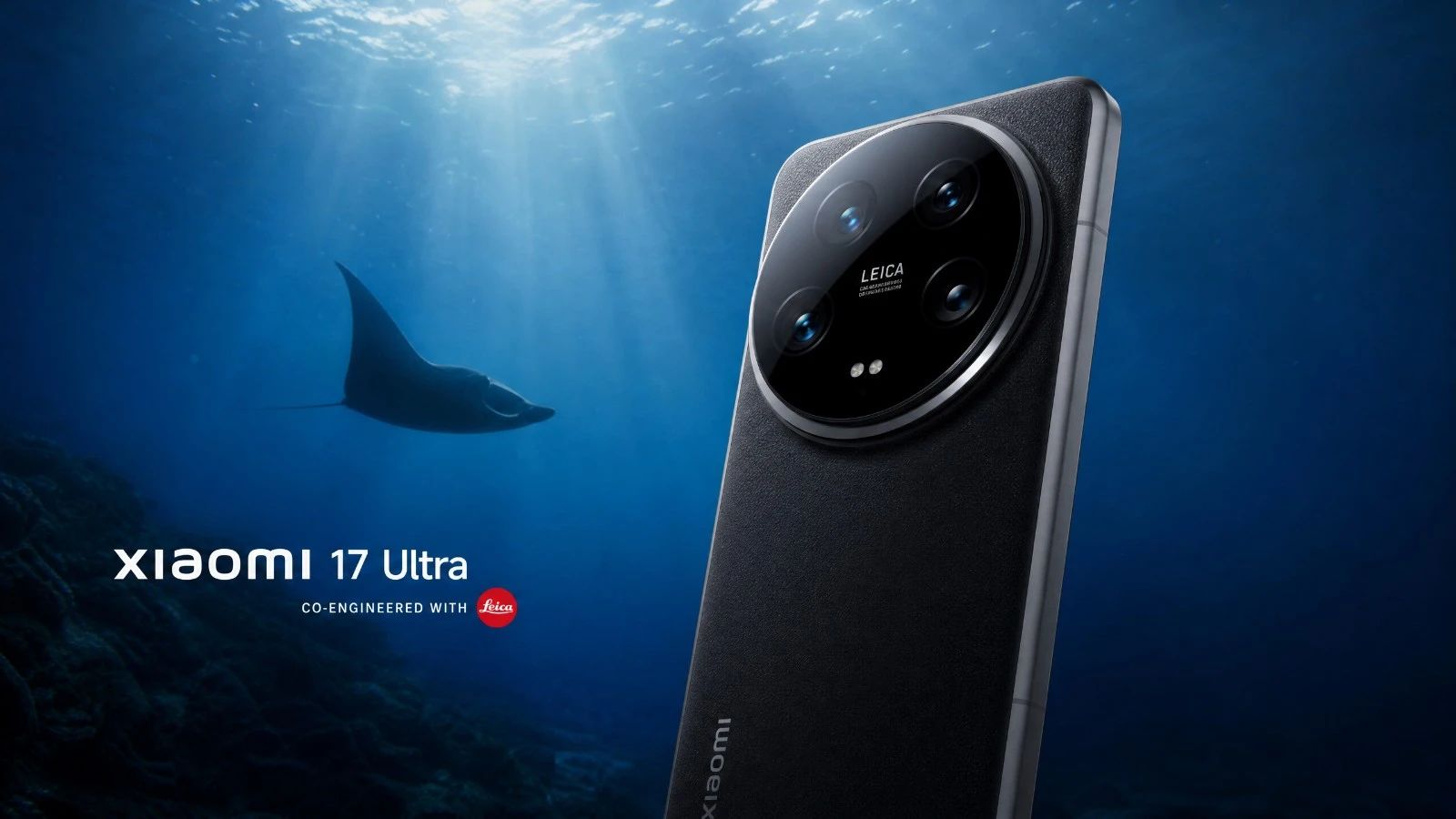
Is the Xiaomi 17 Ultra good for underwater photography?
The Xiaomi 17 Ultra offers solid performance in underwater photography, especially thanks to its 1-inch Leica sensor. However, its tendency to overheat in tropical waters is a point of concern. It requires careful management of your sessions.
Which housing is available for the Xiaomi 17 Ultra in diving?
For the Xiaomi 17 Ultra, the Divevolk SeaTouch 4 Max housing is necessary. Note that for Xiaomi Ultra models, the Platinum version is required for optimal compatibility and worry-free use.
Does the Xiaomi 17 Ultra shoot RAW underwater?
Yes, the Xiaomi 17 Ultra is capable of capturing images in RAW format. This is a real plus for post-production. It gives you great freedom to rework your underwater shots.
How long does the battery last for a day of 3 dives with the Xiaomi 17 Ultra?
The battery life of the Xiaomi 17 Ultra is a topic. Its tendency to overheat can limit sessions. For 3 dives, you will need to closely monitor the temperature and potentially plan breaks or recharges between dives, especially in warm waters.
Should I use an anti-fog treatment with this device?
Although this model has a chassis less prone to condensation than fully aluminum models, underwater temperature changes are still a factor. An anti-fog treatment (silica gel pack or anti-fog inserts) is highly recommended as a precaution before every dive.
How can I quickly transfer my photos and videos from this device?
This device features a fast USB-C port (USB 3.0 or 3.2). You can dump your heavy RAW files or video clips in seconds (100 to 800 MB/s) directly to a compatible external SSD or a computer.
Introduction
When we talk about underwater photography, the camera is only part of the equation. The real subject is your eye, your patience, and your understanding of the environment. But a good tool helps. We put the Xiaomi 17 Ultra to the test. Not in a studio, not in a pool, but where it counts: under water, in natural light. We dived with it and pushed it to its limits. We saw what it had in its gut, far from technical data sheets. What counts is the result in the field. Does it hold up against the wonders of our oceans? That is what we will see together. No fuss, just concrete facts.
Summary Verdict
Overall AquaExposure Score: 3.5/5
Criterion
Score (B1-B7)
Explanation
B1: Optics
4/5
1-inch Leica sensor, a solid foundation for image quality.
B2: RAW
4/5
RAW format is present, offering a good margin of maneuver in post-production.
B3: Storage
4/5
USB 3.2 (10 Gbps) for fast transfer of heavy files.
B4: Thermal
2/5
Tendency to overheat, especially in tropical waters after 25 minutes. A true concern.
B5: Battery
3/5
Decent battery life, but overheating management can impact long sessions.
B6: AF
3/5
High performance on the surface, but can show limits in low-light underwater conditions.
B7: Housing
4/5
Compatible with the Divevolk SeaTouch 4 Max Platinum, a reliable solution.
Ideal Profile: The passionate diver looking for superior image quality with a smartphone. You are ready to manage the thermal constraint. You prioritize the flexibility of the smartphone. You are used to post-production.
Block-by-Block Analysis
B1: Optics - Leica Vision Under Water
The Xiaomi 17 Ultra features a 1-inch sensor signed by Leica. This is a real asset. Under water, light is precious. This large sensor captures more photons. The details are there. The colors, even in natural light, have a beautiful depth. It is a pleasure to see what it is capable of producing. The quality of the lenses is also excellent. This is what makes the difference between a simple photo and an image that tells a story.
To go further: The Xiaomi 17 Ultra is equipped with a 1-inch Leica sensor. It offers an aperture and light management optimized for high-quality shots.
B2: RAW - Freedom of Creation
The RAW format is your personal laboratory. The Xiaomi 17 Ultra offers it. That is what matters to us. You do not want the camera to decide everything. RAW gives you the raw data from the sensor. You can correct the white balance. Adjust the exposure. Recover details in the shadows. This is the key to underwater images that stand out. Without RAW, you are limited. With it, the potential is immense.
To go further: The Xiaomi 17 Ultra allows capturing images in RAW format. This preserves all the sensor information for advanced post-production.
B3: Storage - Empty the Card Without Waiting
We take a lot of photos and videos under water. The files are heavy. Transfer is often a hassle. The Xiaomi 17 Ultra is equipped with a USB 3.2 port. It is fast. Very fast. 10 Gbps changes life. You empty your card in a blink of an eye. Less time waiting. More time diving. This is a technical detail. But it is a real comfort in the field. Especially after a busy day.
To go further: The Xiaomi 17 Ultra features a USB 3.2 port (10 Gbps). It ensures fast data transfers for heavy files.
B4: Thermal - The Achilles' Heel in Warm Waters
Here we touch on the real subject. The Xiaomi 17 Ultra heats up. Fast. Too fast in tropical waters. After 25 minutes, it can start to show signs of overheating. This is a problem. Especially if you make long dives. Or several dives in a row. You have to know it and manage it. This means shorter sessions. Or longer breaks between dives. It is a compromise. But it is what counts to not miss a photo.
To go further: The Xiaomi 17 Ultra has a tendency to overheat, particularly in tropical conditions. The internal temperature can reach critical thresholds after about 25 minutes of intensive use.
B5: Battery - Managing Energy Under Water
The battery life is decent. Without being exceptional. But overheating directly impacts the battery. A device that heats up consumes more. That is logical. So even if the battery holds up on paper. In practice, with the thermal constraint, you have to be vigilant. For a day of 3 dives, you may need to recharge it. Or limit your sessions. This is a point to anticipate. Especially if you are far from any outlet.
To go further: The battery life of the Xiaomi 17 Ultra is standard. However, thermal management can reduce its effective life during prolonged use under water.
Before each dive session, remember to check your external battery. Use our portable power bank comparator to choose the right power bank for your housing and autonomy needs.
B6: AF - Focusing, an Underwater Challenge
The autofocus of the Xiaomi 17 Ultra is high-performing on the surface. But under water, it is another story. The light is different. The contrasts are less marked. It can sometimes hesitate. Especially on fast subjects. Or in shadow zones. This is not redhibitory. But it requires anticipation. And sometimes, switching to manual focus. This is what counts to not miss the moment. The photographer's experience makes the difference here.
To go further: The autofocus of the Xiaomi 17 Ultra is fast in optimal conditions. Under water, its performance can vary depending on the brightness and ambient contrast.
B7: Housing - The Essential Protection
A smartphone under water does not go without a housing. For the Xiaomi 17 Ultra, the Divevolk SeaTouch 4 Max Platinum is the solution. It is a robust housing. Reliable. It protects your device and allows accessing key functions. The Platinum version is important for Ultra models. It ensures perfect compatibility. It is an investment. But it is what guarantees the safety of your phone and the success of your photos.
To go further: The recommended housing for the Xiaomi 17 Ultra is the Divevolk SeaTouch 4 Max Platinum. It offers waterproofing and ergonomics adapted to underwater photography.
Available housings: The Divevolk SeaTouch 4 Max Platinum is the housing to prioritize. It is specifically designed for Xiaomi's Ultra models. Do not skip the Platinum version. This is what ensures compatibility and safety of your device.
Field workflow: Prepare your sessions. Limit the duration of your shots if you are in warm waters. Check the temperature of the device between dives. Regularly empty your cards via USB 3.2. This avoids bad surprises and optimizes your time under water.
Points of attention: Overheating is the key point. Especially in tropical environments. Anticipate it. Manage it. The autofocus can be capricious in low light. Learn to master it or switch to manual. The rest is a question of practice.
Price: The Xiaomi 17 Ultra is an investment. The housing too. But it is the price to pay to have a high-performing tool and protect your equipment. Compare offers. And do not forget the cost of the housing in your budget.
Our Verdict
The Xiaomi 17 Ultra is a device with a definite potential for underwater photography in natural light. Its Leica sensor is a real asset. RAW is there. USB 3.2 is a comfort. But it has a flaw: its tendency to overheat. That is what counts. It requires adaptation on your part. If you are ready to manage this constraint, and if you are a diver who likes to tweak settings and post-process, then it can be an excellent companion. For others, it may be necessary to look elsewhere or wait for a next version. It is a good device, but not for everyone. That is the real subject.
Learn Underwater Photography with This Device
Do you have the Xiaomi 17 Ultra in hand? That is a good start. But the device does not do everything. The technique, the knowledge of the environment, the composition. That is what counts. Come and discover our training programs. Learn to master your device, to understand light under water, and to capture images that look like you. Visit AquaExposure training to go further. We are waiting for you under water.