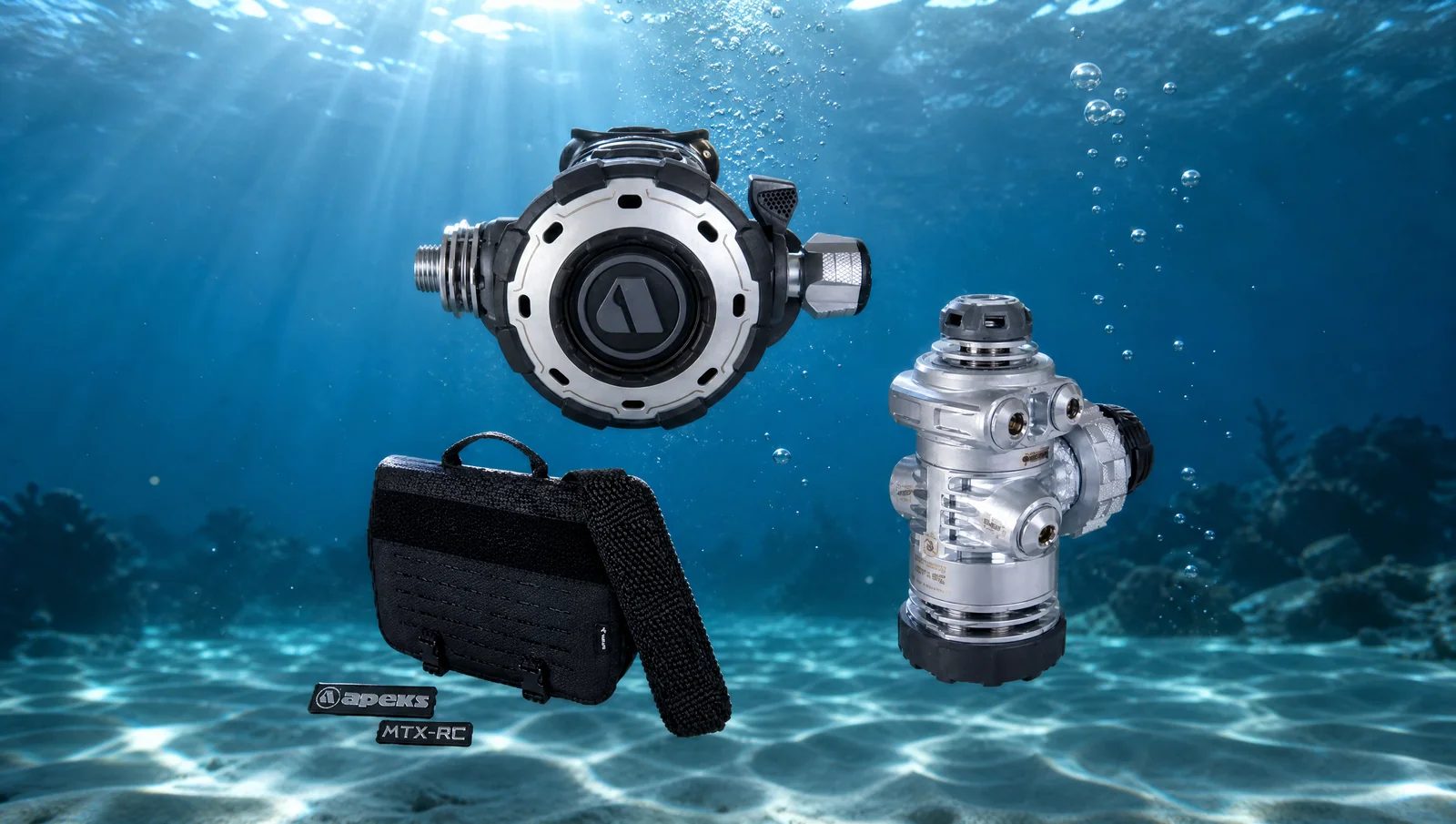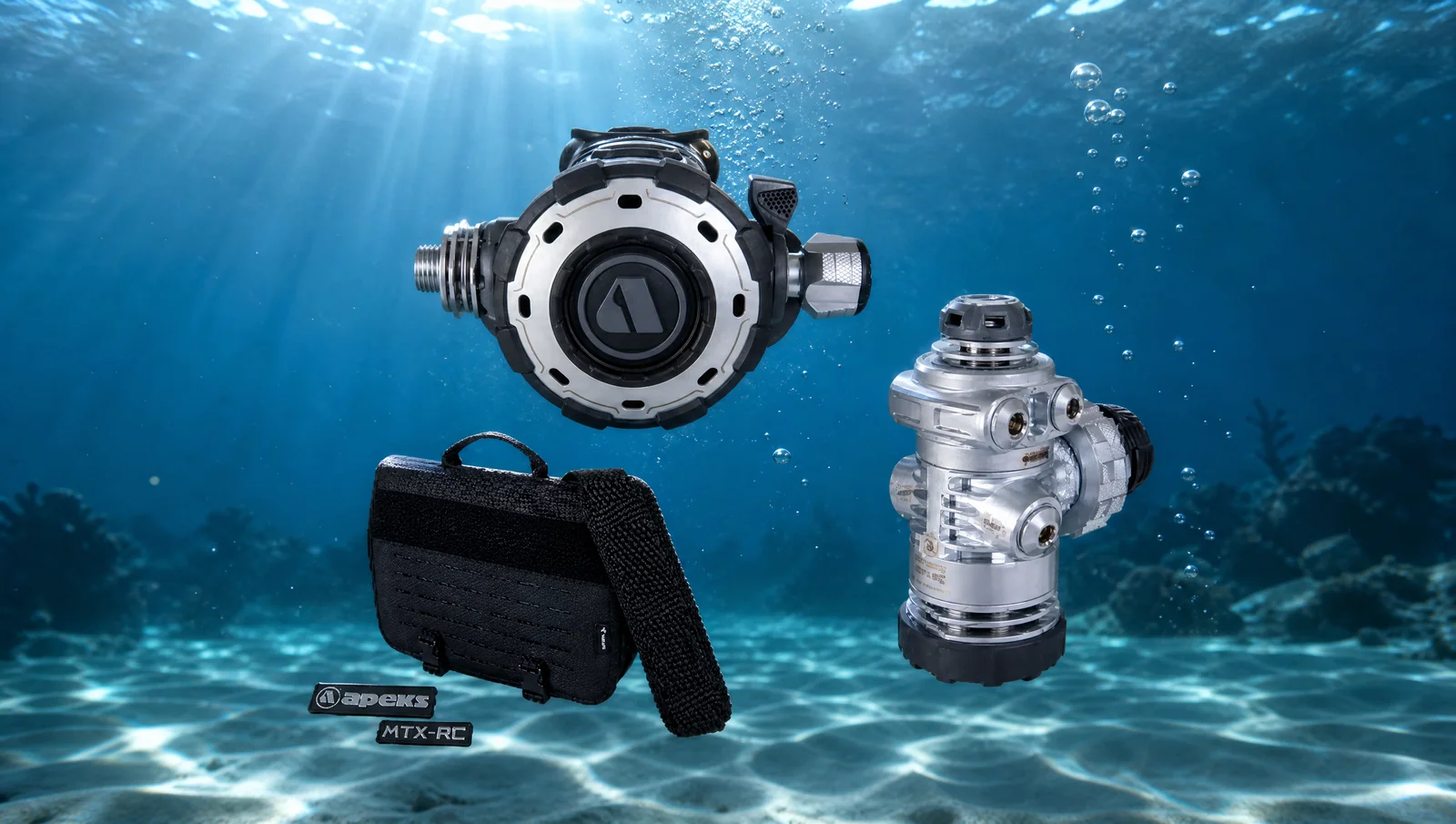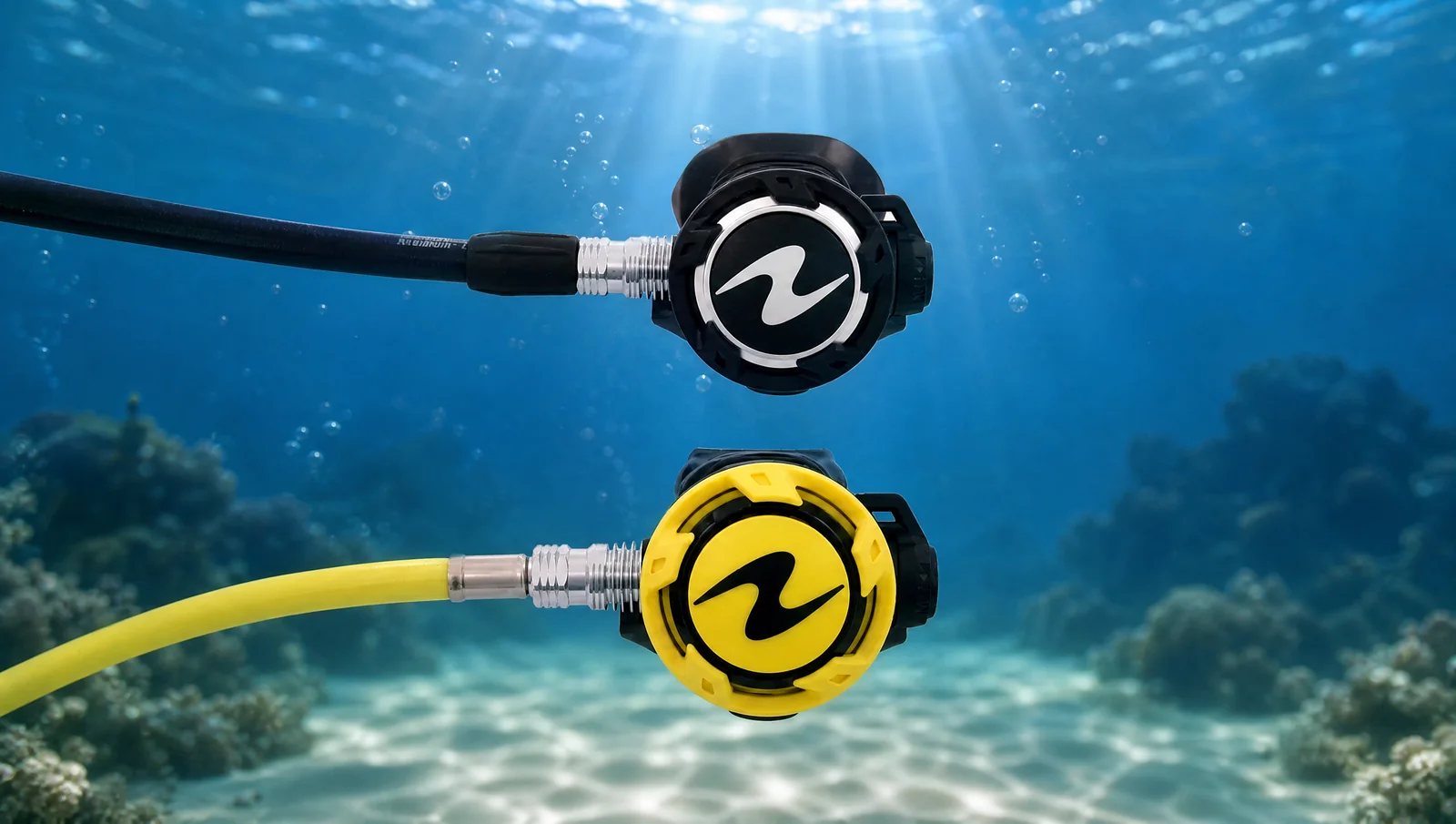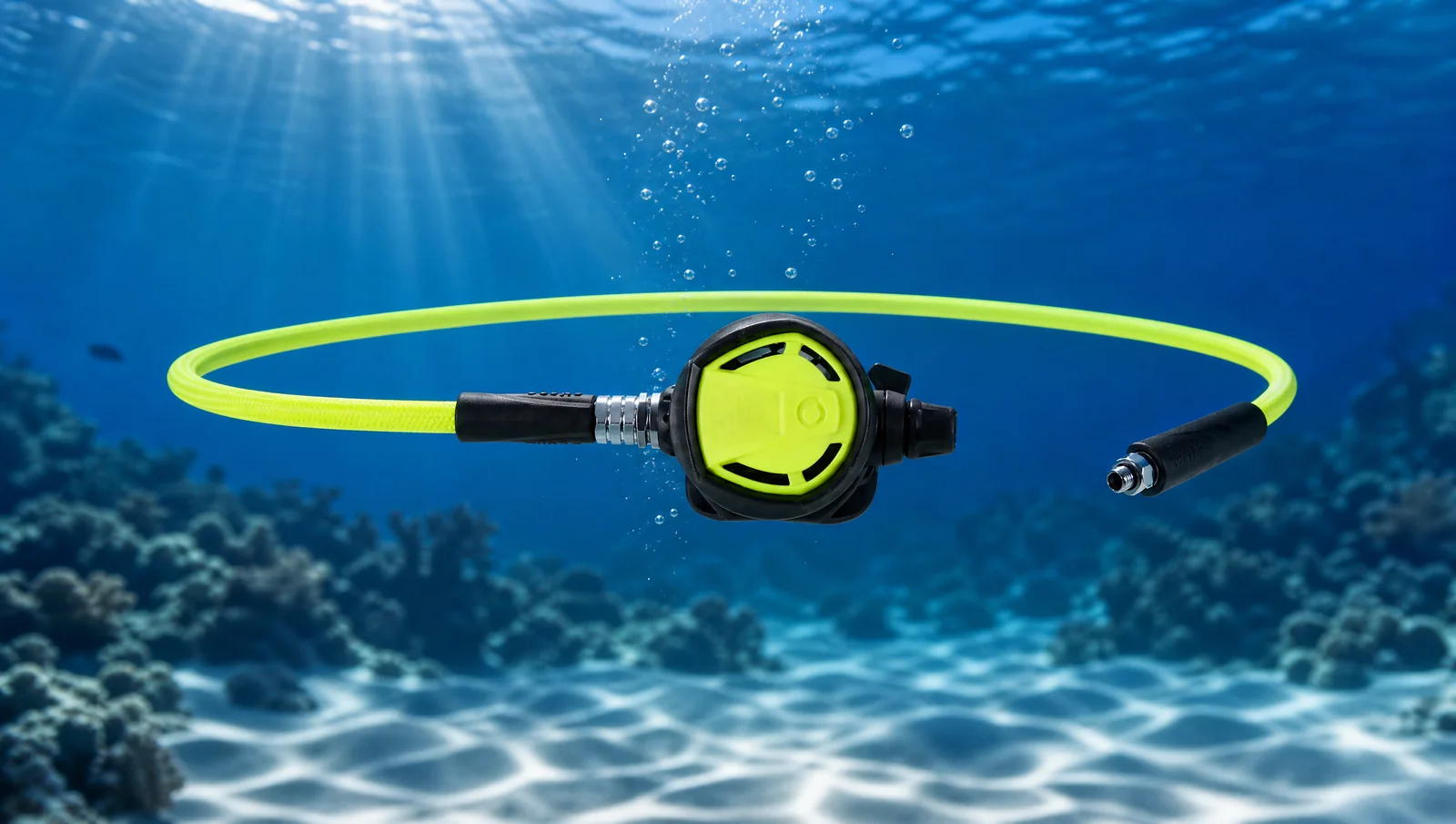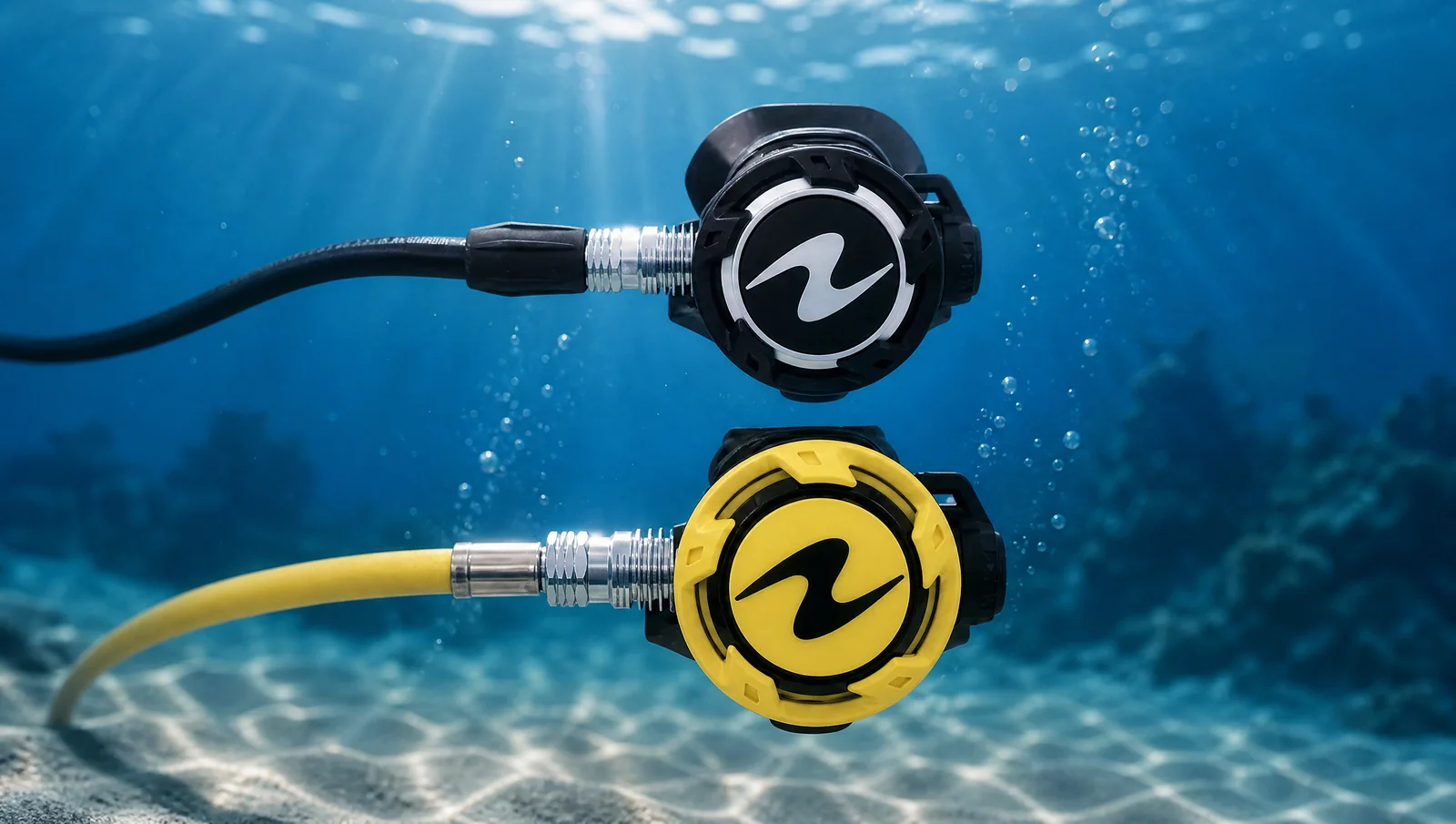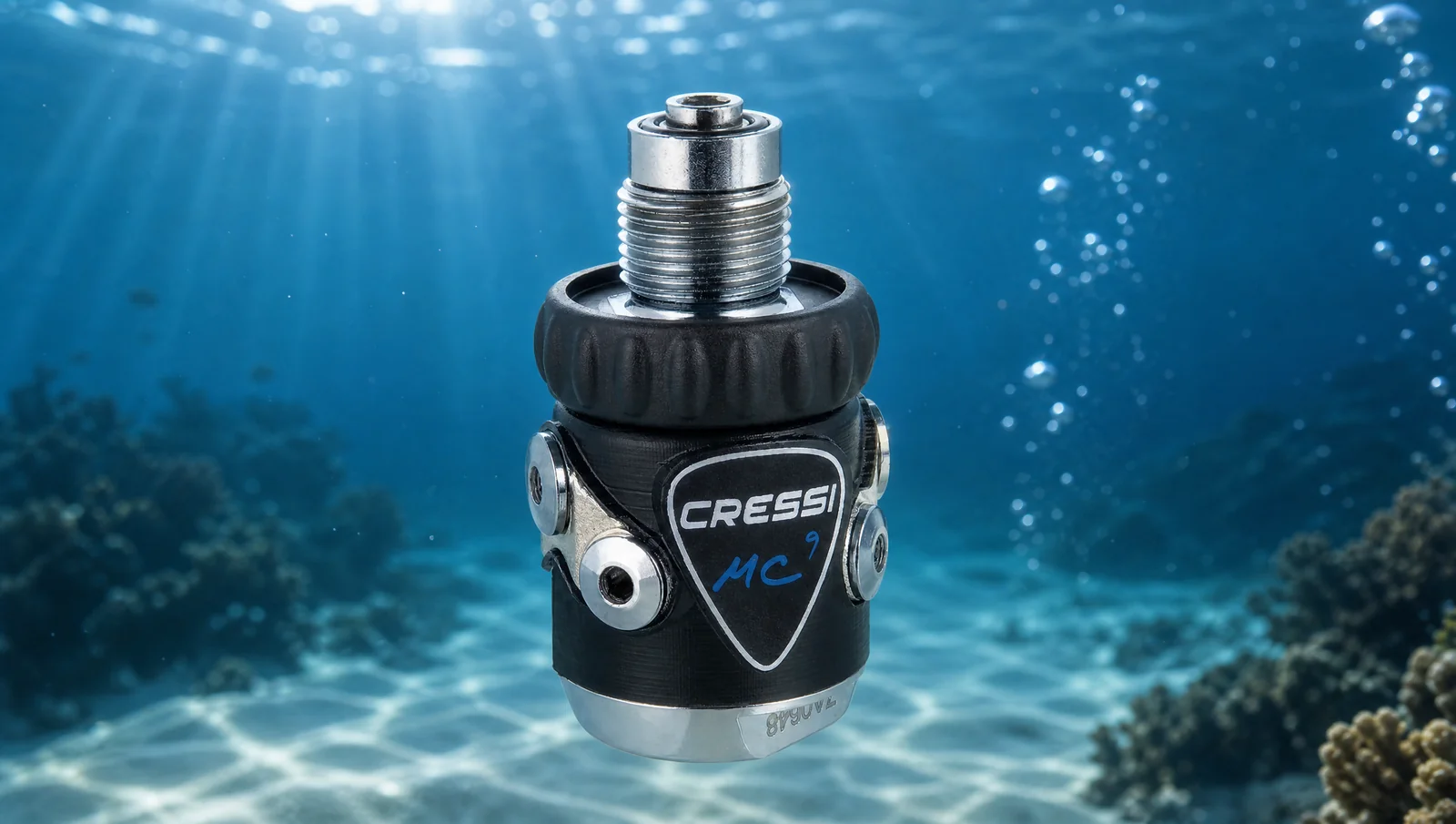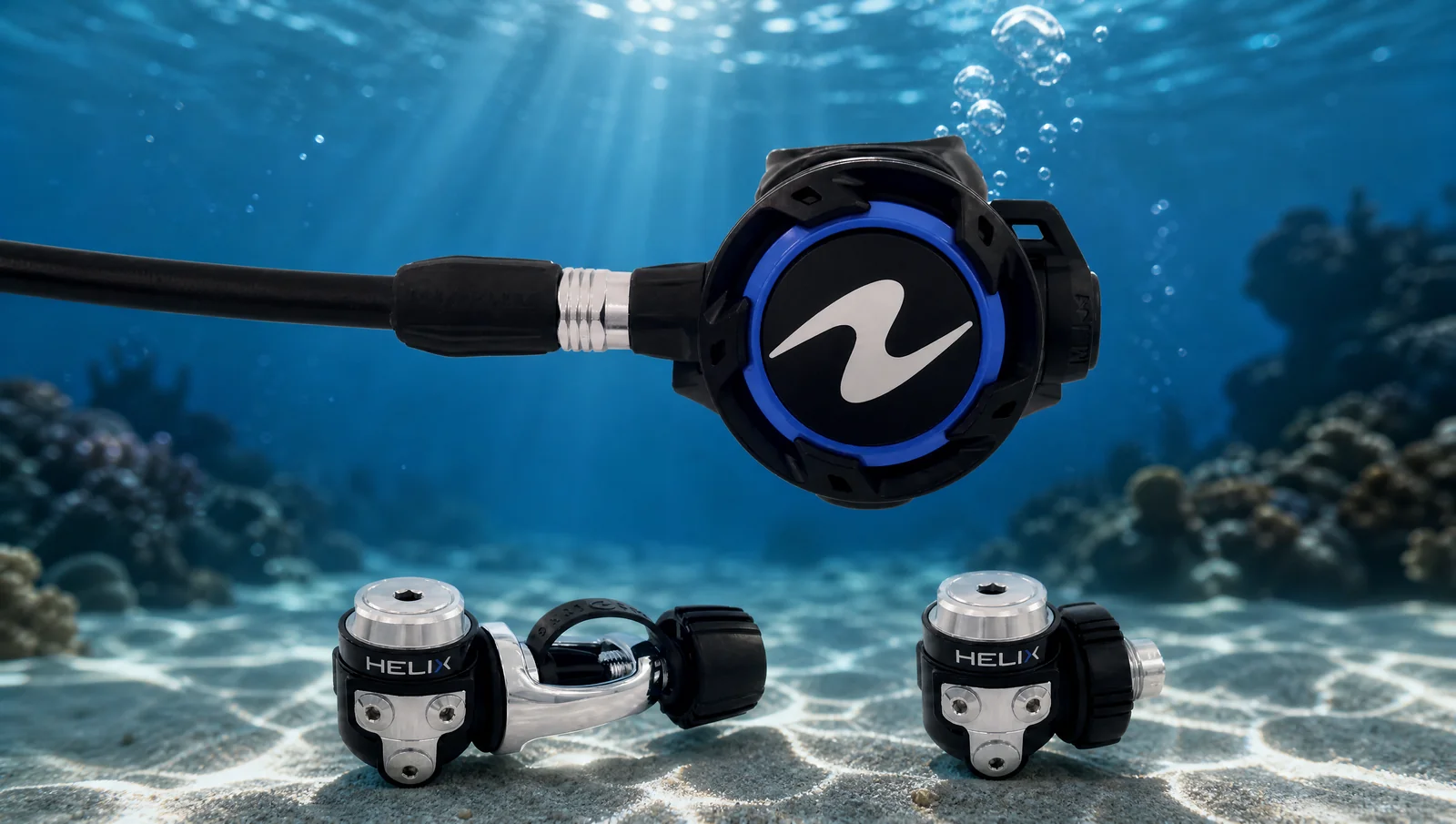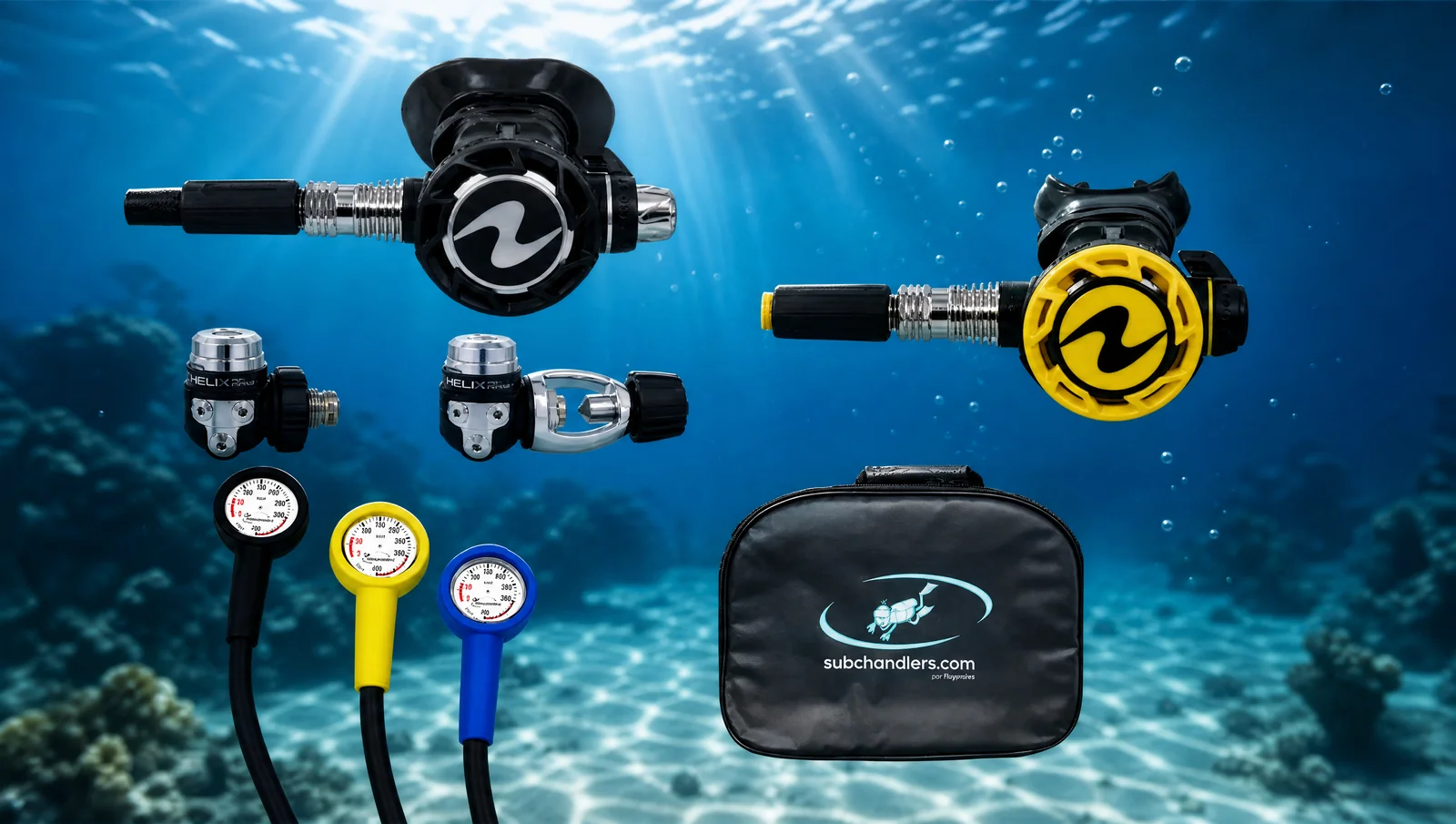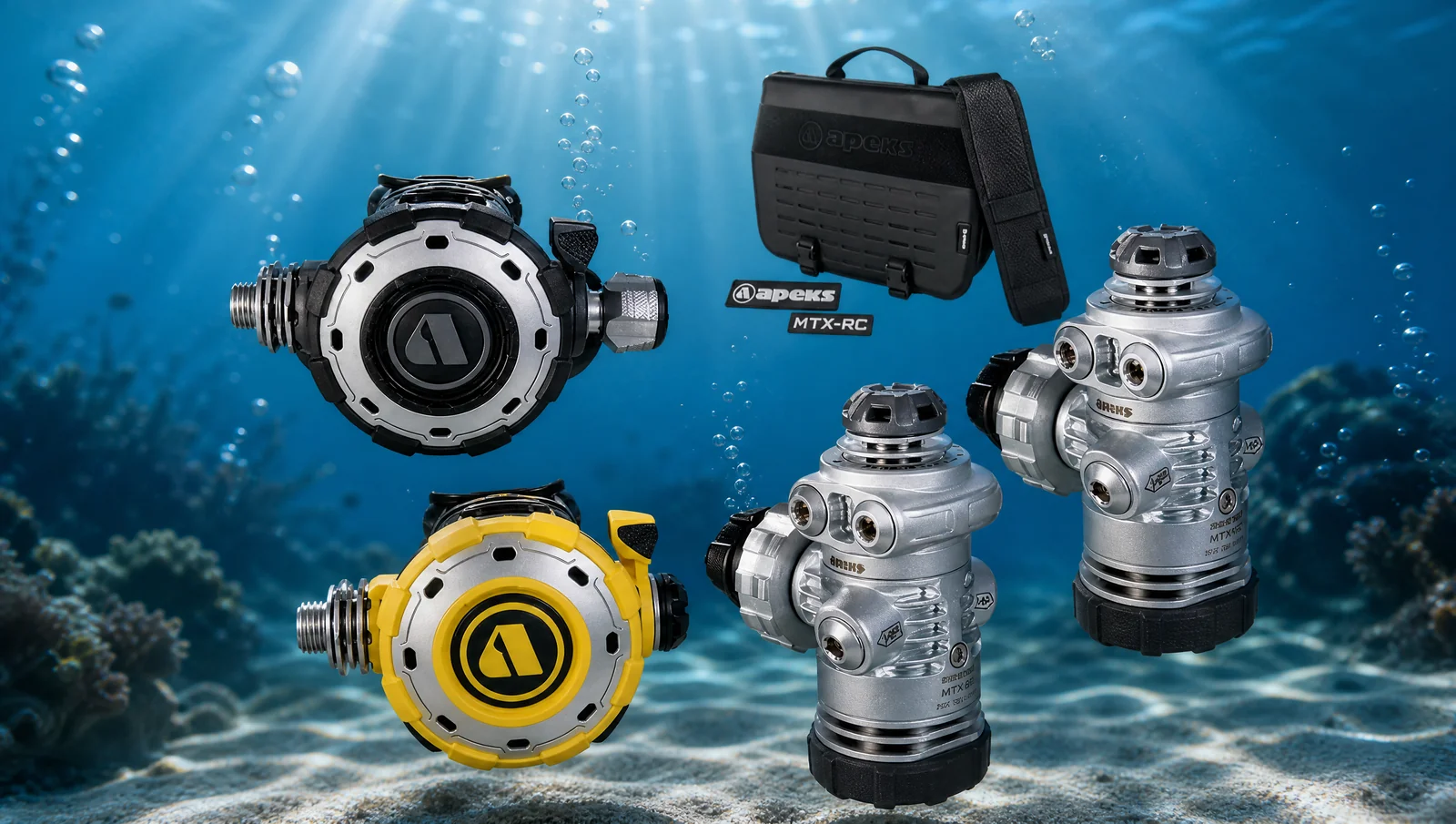
Pack détendeur MTX-RC DIN + Octopus
Pack / configuration
This tool is included with your AquaExposure account. Log in or join us to use it.
During my years teaching scuba diving, I have seen many divers feel overwhelmed when choosing their regulator. The regulator is the core of your life-support system underwater, delivering breathing gas smoothly at ambient pressure.
Your ideal regulator depends heavily on your diving environment. I created this database to catalog regulator offers, mapping commercial packages directly to verified manufacturer specifications.
Our fit algorithm calculates a personalized score across seven criteria: first-stage architecture, breathing comfort, port configuration, safety certifications, cold water capability, backup octopus inclusion, and data coverage.
DIN (threaded) is the safety standard in Europe. It handles higher pressures (up to 300 bar), is more compact, and protects the O-ring inside the valve. Yoke (clamp) connections remain popular in the Caribbean and Asia for lower pressures (232 bar).
Diaphragm regulators are completely sealed from the outside environment, making them ideal for cold or silty water. Piston regulators offer excellent gas flow performance, but only dry-sealed piston models are suitable for cold water.
A balanced regulator keeps breathing resistance constant and low, regardless of cylinder pressure or depth. Over-balanced models slightly increase gas flow at greater depths to compensate for the higher density of the breathing gas, providing outstanding comfort.
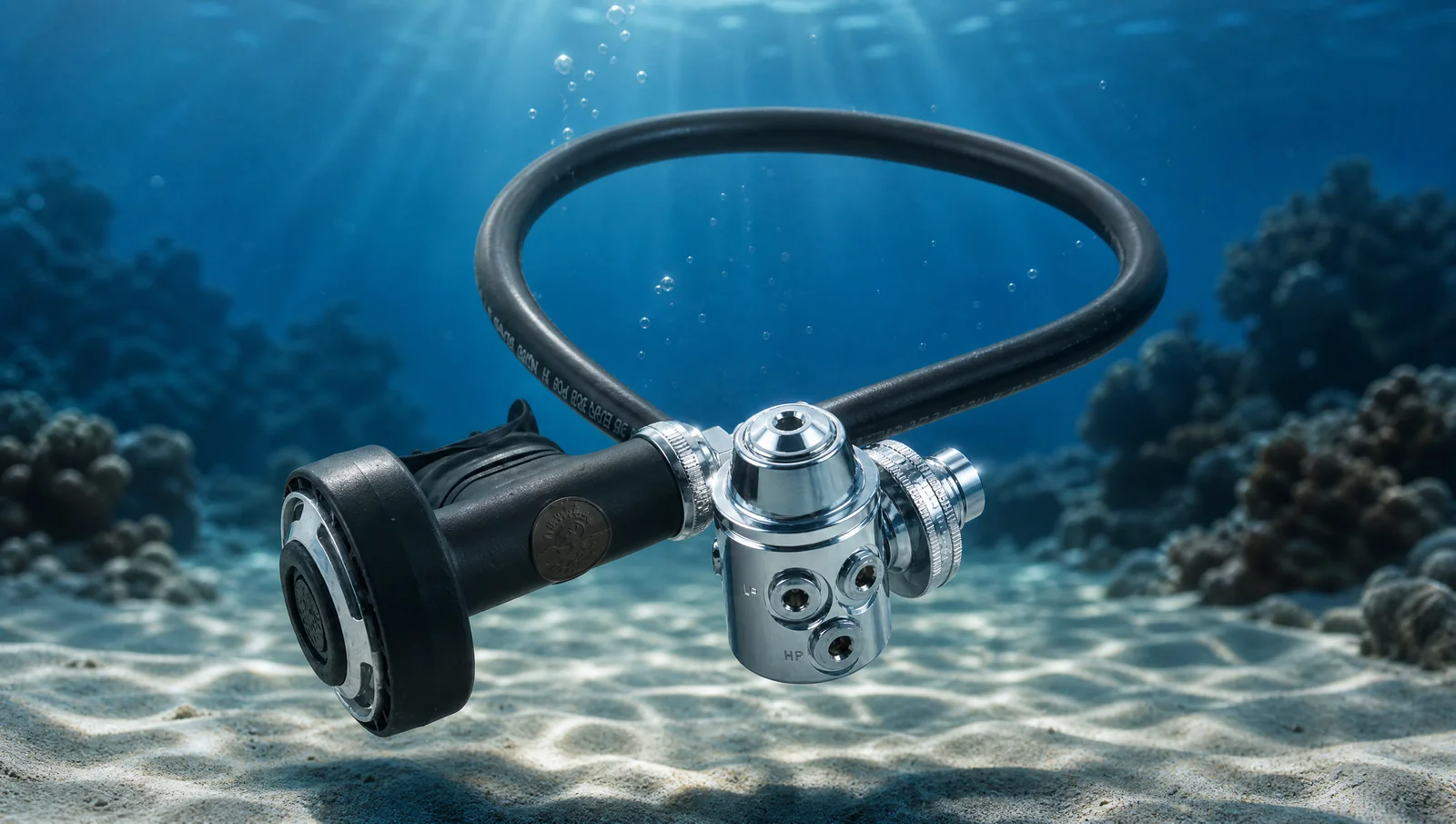
A standard setup requires at least 1 high-pressure (HP) port for your pressure gauge (or transmitter) and 3 low-pressure (LP/MP) ports for your primary second stage, octopus, and BCD inflator. For extra flexibility (drysuit inflator or backup gauge), choose a first stage with 2 HP ports and 4 LP ports.