Is it true that professionals use very expensive gear?
Yes, but after years of practice that allow them to exploit every setting. And even among recognised professional underwater photographers, many produce a large portion of their work with compact setups. Professional gear amplifies talent. It does not replace it.
My underwater photos are blurry. Is it the camera or me?
In 90% of cases, it is buoyancy or shutter speed. Unstable buoyancy creates motion blur that even the best optical stabilisation cannot correct. Check your position in the water first, not your camera.
How many photo dives should I do before upgrading my gear?
30 to 50 dives with the same setup, having actively worked on buoyancy, composition, and approach. Below that threshold, you have not yet exhausted what your current gear can offer.
Can a smartphone really replace a DSLR in a housing?
For the vast majority of web and social media use: yes. For large format prints or extreme macro: no, the DSLR retains structural advantages. But those cases represent a minority of underwater photographers.
Why does a heavy setup scare animals away?
A marine animal reads your presence in the water before you even press the shutter. It senses your stability, your volume, the vibrations you generate. A diver weighed down by a heavy setup and stressed by settings communicates a threat. A light, calm diver is accepted into the animal's space.
Why Equipment Doesn't Make a Submarine Photographer
The equipment does not make the underwater photographer because the key skills (composition, subject approach, light management, anticipation) develop through practice, not through purchase. A trained photographer takes better pictures with a 400 euro compact than a beginner with a 5000 euro camera.
This is an uncomfortable truth for the underwater photography equipment industry. But it is the truth.
The Argument They're Hiding From You
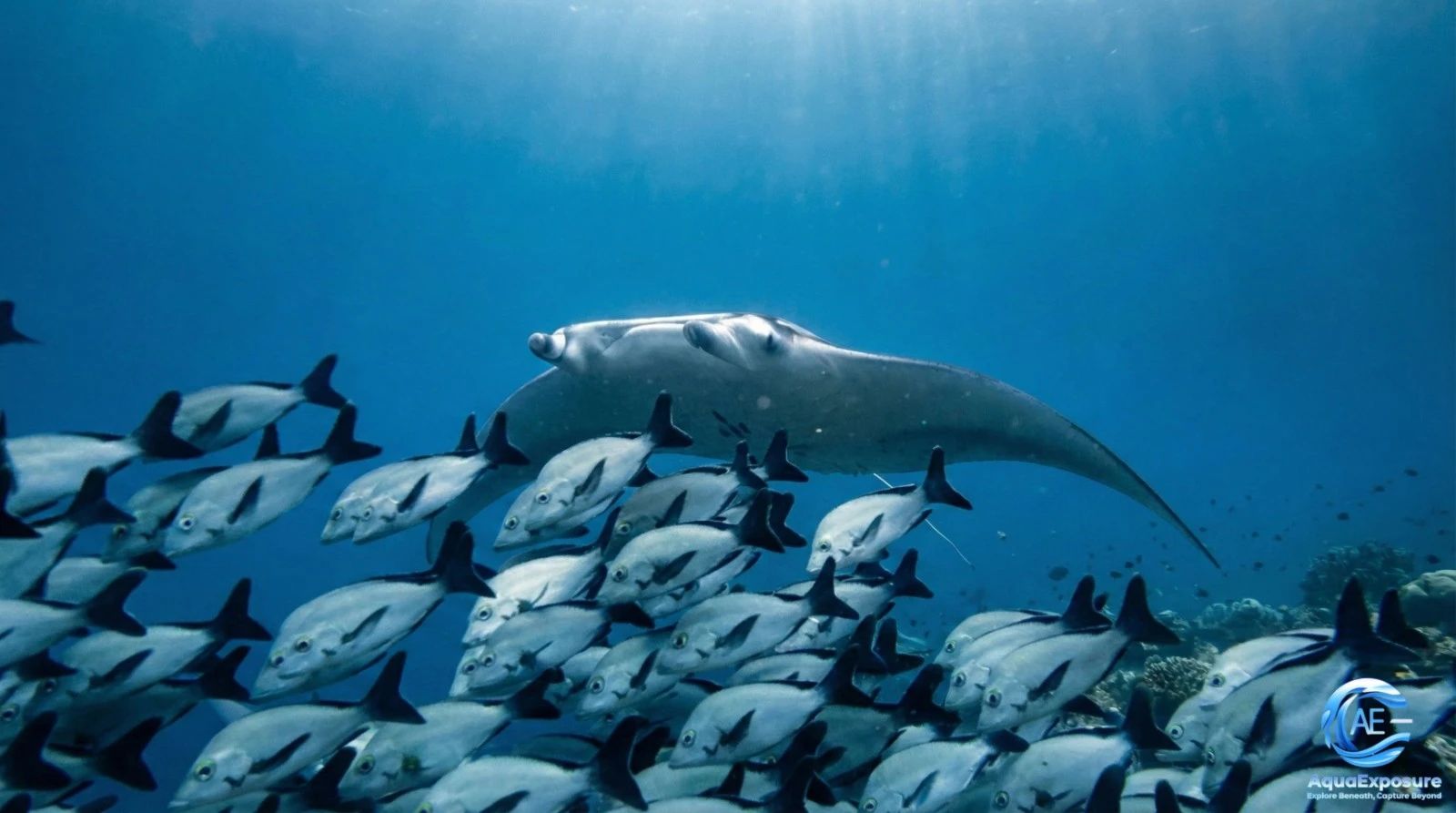
Imagine two divers. The first descends with a DSLR camera in a housing, two side strobes, and a 600-euro macro lens. The second descends with an iPhone in a DiveVolk housing, costing 300 euros. Twenty meters deeper, they both encounter a manta ray.
The first is busy balancing his setup, monitoring his strobes, and adjusting his exposure. The ray perceives him as a large, brightly lit threat. It changes its trajectory.
The second is stable, discreet, and silent. It waits. The ray passes at two meters. It triggers.
This scenario, I have witnessed dozens of times. And I have been both the witness and the actor in both roles.
The difference between the two images is not in the sensor. It is in the presence in the water.
What physics tells us
Underwater photography increases your air consumption by an average of 30%. This is not an opinion. It is a measurable reality. You are simultaneously managing your buoyancy, your equipment, your approach to the subject, your settings, and your safety. Your brain is overloaded.
The more complex your equipment, the greater this added weight becomes. A reflex camera setup + strobes + arms + housing weighs between 4 and 8 kilos underwater, depending on buoyancy. It alters your silhouette, your center of gravity, and the speed at which you can react.
An underwater animal perceives your presence in the water before you even press the shutter. It senses your stability, your approach speed, your volume, and the vibrations you generate. A diver carrying a heavy and stressed setup communicates something very different from a light and calm diver.
Lightweight equipment is not a compromise. It is a strategy.
The Four Skills That Truly Make a Difference
1. Neutral Buoyancy
This is the number one skill. Without perfectly controlled buoyancy, no camera will give you sharp images. Optical stabilization cannot compensate for a body that drifts two meters away from your subject.
Buoyancy is practiced in the pool, not in the sea. Take 200 photos of a diver in the pool before your next trip. You will leave with a mastery of your position that 10 dives in the sea could not have given you.
2. Approaching the Subject
The way you enter an animal's space determines whether it stays or flees. This skill has nothing to do with your equipment. It develops through observation, patience, and repetition.
The rules are simple to state but difficult to internalize: side approach or from below, never head-on. Slow and constant approach speed. No sudden movements of the hands or fins. Slow breathing. Waiting.
An animal that accepts you into its space will offer an image that no zoom can replicate.
3. Composition and Framing
These skills are developed on land, not underwater. A photographer who doesn't know how to frame a shot with their phone on the street won't frame better underwater with a 3,000 euro DSLR.
This is the entire premise of the 1000 terrestrial photos method that we teach, to automate these reflexes before entering the water.
4. Reading Natural Light
The water absorbs red wavelengths from the very first meters. At 5 meters, you lose 50% of the red. At 15 meters, there is almost none left. This is not a fault of your equipment. It's physics.
Understanding how light behaves underwater, at what time of day the sun penetrates at what angle, how to use a dark background to make a clear subject stand out - these are skills that apply to any equipment. And that transform any image into a memorable one.
The Myth of Professional Equipment Debunked
"With a better camera, my photos would be better."
I hear this phrase in every workshop I conduct. It is almost always wrong. Here's how to check it on yourself.
Take your 10 best underwater photos right now. Look at them honestly. List what is wrong with each one: is it the resolution? The sharpness? The colors? The angle of the shot? The composition? The animal too far away? The blurry animal?
In most cases, the problem is not solved by a better camera. It is solved by better buoyancy, a better approach, better framing, or better post-production.
If, after this honest analysis, you identify a specific lack that your current equipment cannot structurally address (an insufficient depth of field in macro, a dynamic range that is too narrow for a subject in backlighting), then, and only then, the question of equipment becomes relevant.
What the equipment actually does
I'm not saying that the equipment is unimportant. I'm saying that it's the last factor, not the first.
A better sensor will give you more flexibility in post-production. Better optics will allow for greater sharpness at wide apertures. An underwater housing with access to all settings will give you more control while diving.
But these advantages can only be exploited if you have already developed the four skills described above. Before that, a better camera will amplify your mistakes as much as your successes.
The progression in underwater photography looks like this:
1Mastered neutral buoyancy
2Ethical and effective subject approach
3Framing and composition automated by terrestrial practice
4Reading natural light
5Post-production: color restoration, exposure, contrast
6Only then: the equipment makes a marginal, visible difference
If you are at step 2, moving to step 6 does not save you four steps. It distracts you from the four steps you still need to complete.
Making an Honest Purchase Decision
If you are reading this article and wondering if you should upgrade your equipment, here are the questions to ask yourself:
Have you taken more than 30 photo dives with your current setup? If not, continue with what you have. The learning curve is not yet exhausted.
Have you identified a specific and repeated shortcoming with your equipment that it cannot overcome? Not "My photos aren't as good as I want them to be." But something specific: "I consistently miss focusing on subjects less than 15 centimeters away because my equipment doesn't have a sufficient macro mode."
Have you explored all the solutions that don't require a new purchase? Post-production, settings, approach technique, dive time, depth chosen.
If you have answered yes to all three questions, then investing in new equipment is justified. Otherwise, invest this budget in training or additional dives. The return on investment will be much higher.
I have spent around 6,000 euros on underwater photography equipment over five years. A camera with a housing, strobes, and lenses. Then I sold everything to switch to an iPhone in a DiveVolk housing.
Not because the iPhone is objectively better than a DSLR. But because the lightweight setup has made me more present in the water. I consume less air. I am more stable. The animals stay longer. And my images are better.
If I had known that at the beginning, I would have started with an affordable 300-euro waterproof compact camera and invested the rest in dives and courses. I would have progressed twice as fast for half the price.
This is exactly what we teach in the [AquaExposure training](/formation-photo-sous-marine]: the method before the equipment, the technique before the gear, being in the water before the budget.
Frequently Asked Questions
Is it true that professionals use very expensive equipment?
Yes, but after years of practice that allow them to exploit each parameter. And even among the recognized professional underwater photographers, many produce a large part of their work with compact setups. The professional equipment amplifies talent, it does not replace it.
If the equipment doesn't make a difference, why is it so expensive?
High-end equipment offers real technical advantages: better noise management at high sensitivity, wider dynamic range, more precise autofocus on fast-moving subjects, and brighter optics. These advantages are exploitable by advanced photographers. For a beginner, they are not noticeable.
My photos are blurry. Is it the camera or me?
In 90% of cases, it's buoyancy or shutter speed. Unstable buoyancy creates motion blur that even the best optical stabilization cannot correct. First, check your position in the water, not your equipment.
How many photo dives are needed before upgrading equipment?
30 to 50 dives with the same setup, actively working on buoyancy, composition, and approach. Below this threshold, you have not yet exhausted what your current equipment can offer you.
Can a smartphone really replace a DSLR underwater?
For the vast majority of web and social media uses: yes. For large-format prints or extreme macro photography: no, the DSLR retains structural advantages. However, these cases represent a minority of underwater photographers.