AquaExposure — Explore Beneath, Capture Beyond
AquaExposure
Homepage
Pricing
Menu
Homepage
PricingShopArticles
AquaExposure

Underwater photography excellence, accessible to everyone.

Stay in touch

[email protected]

Stay informed about our new courses and expeditions.

Support the project
Legal Notices·CGV·Confidentiality·

© 2026 AquaExposure. Ethically preserving the depths.

ADATA SE880: Ultra-compact performance for your portable backups.
Table of Contents
  • 01A miniature design for crowded dive bags
  • 02The speed of USB 3.2 Gen 2x2 for video streams
  • 03A Strategic Solution for the 3-2-1 Backup Rule
  • 04Robustness and usage limitations in a marine environment
  • 05AquaExposure's Opinion: A Compromise Between Price and Portability
MATERIEL 6 minBenjamin Coste

ADATA SE880: Ultra-compact performance for your portable backups.

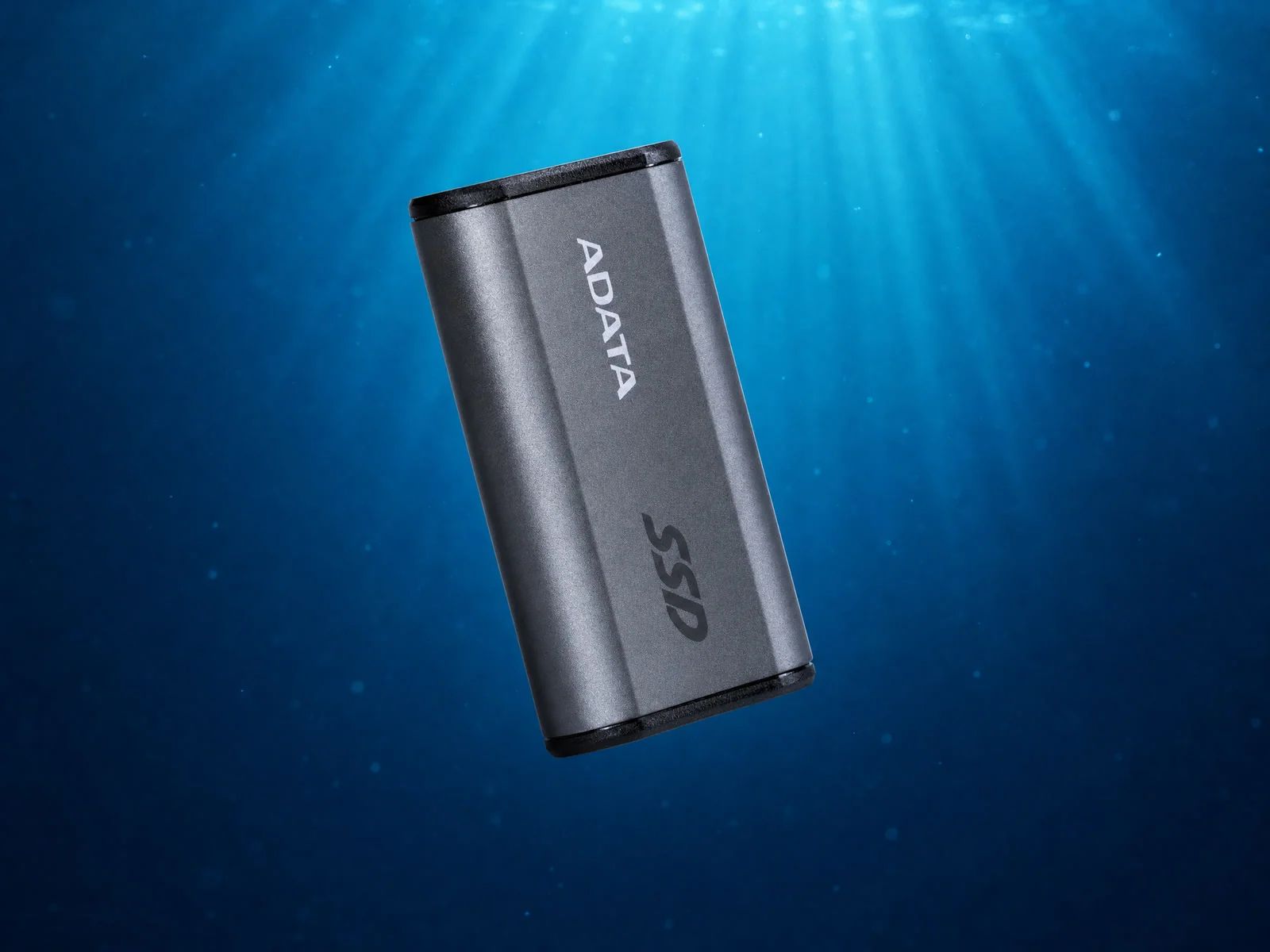
Review of the ADATA SE880- a super-light, 2000 MB/s external SSD- perfect for underwater photographers seeking an affordable backup solution.

To improve your mastery of your equipment and optimize your procedures while diving, discover our specialized training modules on AquaExposure training.

ADATA SE880: Ultra-compact performance for mobile backup

Between the still-damp dive bag and the hours of transfer time separating two dives, choosing a storage device becomes a crucial logistical issue. For an underwater photographer, the security of the images captured underwater is non-negotiable, but investing in completely submersible professional solutions is not always possible. The ADATA Elite SE880 positions itself in this search for a balance between budget and performance. This ultra-compact storage module promises to simplify the process of downloading memory cards, provided you can accept its structural limitations.

A miniature design for crowded dive bags

The ADATA SE880 is surprising for its reduced dimensions. With only 64.8 mm in length and 35 mm in width, this SSD is more compact than a standard credit card [2]. Its thickness of 12.25 mm allows it to be slipped into any compartment of a camera bag without unnecessary bulk. For photographers who are careful about the weight of their carry-on luggage, its 31 grams represent a real logistical advantage [1]. The aluminum casing provides structural protection consistent with its lightness.This extreme compactness requires a strict organization. On the deck of a cruise ship, where workspaces are often limited, such a small module can easily be misplaced. Designating a fixed location for it in its bag prevents accidental loss, which could compromise data security. The Titanium Gray finish remains understated, but its small size requires constant vigilance when handling it outdoors.

The speed of USB 3.2 Gen 2x2 for video streams

The technical promise relies on the USB 3.2 Gen 2x2 interface, capable of reaching theoretical transfer rates of 2000 MB/s for both reading and writing sequential data [1]. For a videographer downloading several tens of gigabytes of 4K footage after a dive, this speed represents a valuable time saving. However, this performance is dependent on the host hardware's compatibility. The USB 3.2 Gen 2x2 protocol is still not widely used on laptops, but is more common on high-end desktop configurations.

On a standard USB 3.2 Gen 2 port, such as those found on many MacBooks, transfer rates are limited to around 1000 MB/s [2]. Although this speed remains comfortable, the smoothness of the workflow will depend on the consistency of the entire technical chain. In mobile use, the writing speed allows you to empty a memory card in a few minutes, limiting the exposure of the equipment to the environmental risks of the boat.## Thermal Management and Technical Limitations in Tropical Climates

During large data transfers, the aluminum enclosure acts as a passive heat sink. This is a critical factor in tropical regions where the ambient temperature often exceeds 30 degrees Celsius. Independent technical analyses have revealed thermal throttling phenomena when the drive is heavily used for extended periods [2]. In such cases, the speed decreases to protect the internal components from overheating.

To optimize data transfer rates in warm environments, it is best to place the SSD on a flat, well-ventilated surface, away from any heat sources. Avoiding covering the drive during operation is a basic precaution. This sensitivity highlights that the ADATA SE880 is designed for bursts of fast transfers rather than serving as a permanent drive for heavy editing in extreme conditions.

A Strategic Solution for the 3-2-1 Backup Rule

The ADATA SE880 does not replace the rugged drives used during expeditions. Its price point, around 140 euros for the 2 TB version, makes it an ideal solution for a high-performance secondary backup [1]. In a serious backup strategy, often summarized by the 3-2-1 rule, this SSD perfectly fulfills its role as a second copy.The user can keep their original files on their computer and create a quick mirrored copy on the SE880. Once the transfer is complete, the drive should be stored in a safe place, ideally in a separate bag. Its capacity, available up to 4 TB, allows you to centralize the images from a trip without multiplying storage media. This centralization simplifies cataloging upon returning from the trip, while also providing the peace of mind necessary to enjoy subsequent dives.

Robustness and usage limitations in a marine environment

In terms of robustness, compromises are evident. Unlike other models from the brand, the ADATA SE880 does not have any official IP certifications [1]. It is not protected against fine dust, such as coral sand, nor against water splashes. For a diver, this lack of protection dictates the mode of use.

FeatureTechnical DetailImpact during diving
Water resistanceNo IP certificationMust remain in a dry area
Shock resistanceNot certifiedHigh risk in case of a fall
MaterialAluminum Titanium GrayGood heat dissipation, susceptible to scratches
ConnectivityUSB-C (cables included)Versatile for multiple devices
Weight31 gramsUltra-light for transportUsing this device in the water requires the use of a separate waterproof enclosure, such as a sealed pouch. It should never be left on a rinsing table or near wet equipment. Even a single drop of saltwater in the USB-C port could render data access impossible. ADATA includes two cables with the drive: a USB-C to C cable and a USB-C to A cable, making it easier to use with a wide range of devices [2].

AquaExposure's Opinion: A Compromise Between Price and Portability

The Diver Score of 4/10 reflects the status of a high-performing but fragile product for the marine environment. Considering its speed and compactness, this SSD is a technical achievement. It handles large volumes of data with a rare ease for an object of this size. The choice of this model should be motivated by a rigorous management of its environment.

In a dry cabin or at the hotel, the SE880 is very useful. However, for backups on a semi-rigid boat exposed to spray, models certified IP67 or IP68 are preferable. In summary, this SSD is an economical and fast option that requires external protection to survive the rigors of diving. When properly protected, it will remain unobtrusive until its transfer speed becomes essential.

To compare this model with all the references on the market, consult our portable SSD comparison tool and our complete selection of diving equipment.[1]: https://www.adata.com/us/consumer/category/ssds/external-solid-state-drive-SE880/ "ADATA Elite SE880 External SSD Product Page" [2]: https://www.techpowerup.com/review/adata-elite-se880-portable-ssd-1-tb/ "ADATA Elite SE880 1 TB Review - Tiny and Fast"

<!-- Suggested visuals: - Visual A: The ADATA SE880 SSD placed next to a credit card to emphasize its extreme compactness, on a textured navy blue background. Alt text: Ultra-compact ADATA SE880 portable SSD compared to a credit card to illustrate its small size. - Visual B: Close-up of the USB-C port on the Titanium Gray aluminum casing, with side lighting highlighting the metallic finish. Alt text: Detail of the USB-C port and the aluminum casing of the ADATA SE880 SSD. -->

Share

/blog/adata-se880-en

Table of Contents

  • 01A miniature design for crowded dive bags
  • 02The speed of USB 3.2 Gen 2x2 for video streams
  • 03A Strategic Solution for the 3-2-1 Backup Rule
  • 04Robustness and usage limitations in a marine environment
  • 05AquaExposure's Opinion: A Compromise Between Price and Portability

Questions about the Journal

Is the ADATA SE880 usable on a dive boat?

Yes, but only if you keep it in a waterproof housing or a completely dry area. This SSD does not have any IP certification for water or dust resistance.

Why is my data transfer rate limited to 1000 MB/s instead of the advertised 2000 MB/s?

To achieve a read/write speed of 2000 MB/s, your computer must have a USB 3.2 Gen 2x2 port. On a standard USB 3.2 Gen 2 port, the speed is halved.

Does the aluminum housing get hot during the transfer of 4K videos?

The aluminum housing helps to dissipate heat, but thermal throttling can occur during extended transfers in tropical climates.

Articles in the same category

Apeks Lifeline Spool 60m: Review, Features, and Scuba Diving Opinions (2026)

Apeks Lifeline Spool 60m: Review, Features, and Scuba Diving Opinions (2026)

Apeks Lifeline Spool 45m: Review, Features, and Scuba Diving Opinions (2026)

Apeks Lifeline Spool 45m: Review, Features, and Scuba Diving Opinions (2026)

Apeks Lifeline Spool 30m: Review, Features, and Scuba Diving Opinions (2026)

Apeks Lifeline Spool 30m: Review, Features, and Scuba Diving Opinions (2026)