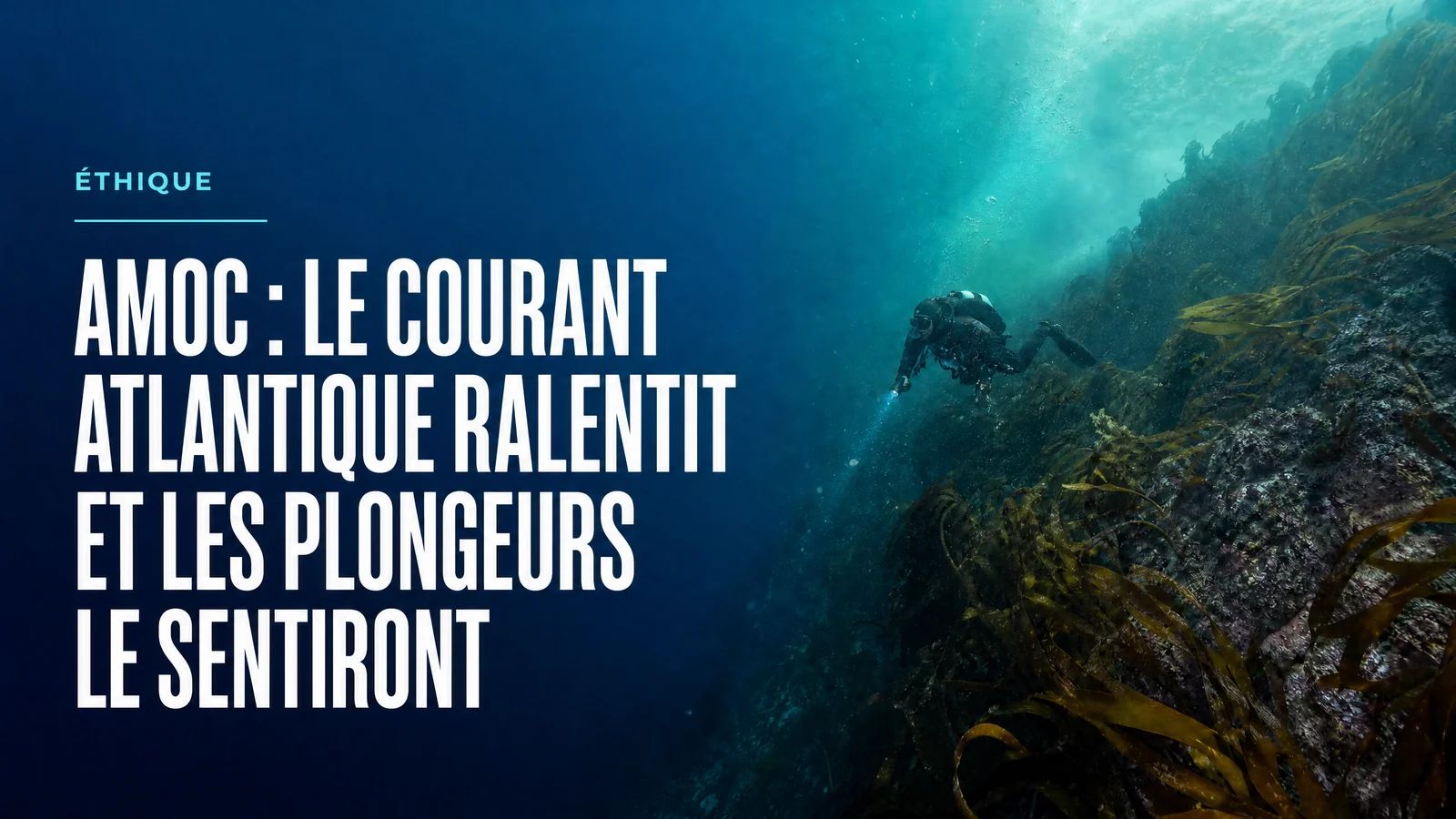
AMOC: The Atlantic current is slowing down, and divers will notice it
The AMOC, the Gulf Stream, will slow down by 51% by 2100. What this means for diving in Europe and the distribution of marine species.
AMOC: The Atlantic current is slowing down, and divers will notice it
There are diving mornings where you put on your wetsuit and wonder if the water will be colder than the previous week. There is no thermometer in hand, just a feeling - a shiver at the base of your neck when you immerse your face. In the Mediterranean as well as the North Atlantic, this diver's intuition could soon find a large-scale scientific explanation.
It is the great Atlantic circulation that carries heat from south to north. When it slows, it shifts water temperatures, currents and the distribution of marine life.
Why should a diving photographer care?
Because everything we photograph depends on temperature and currents. A slowdown slowly moves species and changes conditions on sites we thought were stable.
Are the effects already visible underwater?
They are gradual, on the scale of decades. But attentive divers already note unusual water temperatures and species shifting northward.
Should I worry about my next dive trip?
No. On the scale of a single trip, nothing changes tomorrow. The topic matters long term, it is not a reason to cancel a destination.
How can a photographer be useful?
By photographing the same sites and species year after year. A series over time is worth more, for science and for storytelling, than a single beautiful image.
A study published in the spring of 2026 by the Rosenstiel School of the University of Miami has put numbers on a phenomenon that oceanographers have been monitoring for years. The AMOC, the Atlantic Meridional Overturning Circulation, is slowing down. And the data now covers almost twenty years of continuous observations.
The AMOC, the giant conveyor belt of the Atlantic
To understand what is happening, you need to imagine a huge conveyor belt that crosses the Atlantic from south to north. At the surface, masses of warm water rise from the tropics towards Northern Europe. When this water reaches the seas of Norway and Greenland, it cools down, becomes denser, plunges to the depths, and then returns south along the seabed.
This current makes European winters breathable compared to those in Canada, despite being located at the same latitudes. Without the AMOC, Paris would have the climate of Montreal. Brussels would resemble Quebec in January.
The engine of this loop is density. Cold and salty water is heavy. It sinks. And by sinking, it pulls the rest of the conveyor belt behind it. The problem is that this engine starts to cough.
Twenty years of data, a consistent decline
The Miami team did not work on theoretical simulations. They compiled almost two decades of direct observations, physical measurements taken in the ocean, cross-referenced with the CMIP6 climate models.
The decline is consistent across a wide band of the Atlantic, from 16.5 degrees North (the subtropics) to 42.5 degrees North (roughly the level of New York) along the western edge of the basin. This is not a localized phenomenon. It is a general trend.
The projections combining observations and models indicate a reduction of approximately 51% in the AMOC's strength by 2100. The figure that is striking is that this estimate exceeds by 60% what climate models predicted when they ran without the observational data. In other words, the measured reality worsens the forecasts.
The main mechanism has been identified. The Greenland ice cap is melting. This meltwater, which is fresh and low in salinity, mixes with the surface waters in the North Atlantic. Being less salty and less dense, it no longer sinks as before. The conveyor belt has lost its driving force.
In parallel, Ifremer launched the CROSSROAD campaign, an in-situ measurement program to refine the understanding of the AMOC in the Eastern Atlantic. Scientists know that the signal is real. The question is no longer whether it slows down, but at what speed.
What this actually changes for diving in Europe
A weakening ocean current is not just a matter for climate scientists. For anyone who puts their head underwater in Europe, the consequences are felt in everyday life.
The water temperature will fluctuate. The AMOC is the carrier of tropical heat towards our coasts. A slower conveyor belt means fewer calories transported north. Dive sites along the Atlantic coast (Brittany, Basque coast, Galicia, Ireland) could experience temperature decreases in the medium term, even though global warming pushes in the opposite direction. The likely result is increased instability. More pronounced temperature differences from one season to the next, from one year to the next.
Species will redistribute. Temperature dictates the geography of life underwater. A decrease of one degree over a decade is enough to cause certain southern species to retreat and to modify breeding areas. Moonfish, Mediterranean barracudas, and schools of sergeantfish do not follow administrative borders. They follow the isotherms. If the isotherms move, the fauna follows.
Local currents will change their behavior. The AMOC is not a single current. It is a system that influences surface currents throughout the Atlantic. Altering the speed of the conveyor belt means changing the coastal currents that depend on it. For divers, this translates into less predictable current conditions in certain areas, shifting weather windows, and dive plans that need to be adjusted more frequently.
The storms will intensify. A weakened AMOC disrupts heat transfer between the tropics and high latitudes. Models predict more frequent storms in the Eastern Atlantic, changes in precipitation patterns, and uneven sea level rise along different coastlines. For divers planning trips or vacations, the reliable season window may become narrower.
What this means for us, underwater
One could read this as just another bad news story in an already crowded newsfeed. It would be missing the point.
What the Miami study shows is not an imminent collapse. It is a slow, documented, and measurable regime shift. The kind of transformation that is not apparent from dive to dive, but that becomes clear when comparing dive logs over ten years. The species present at a site in 2016 will not all be there in 2036.
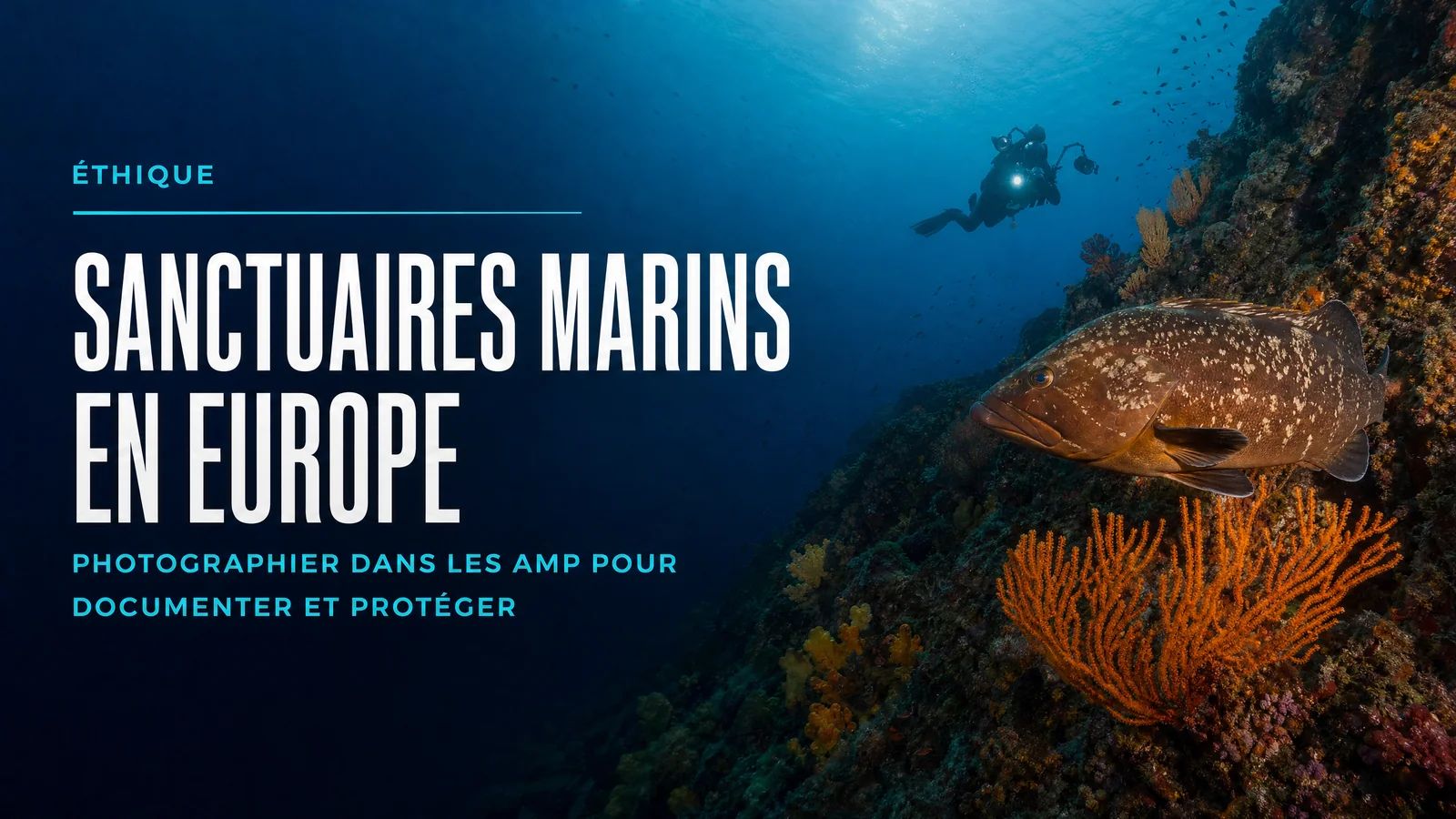
For those of us who photograph underwater, each image becomes a marker in time. A photo of a brown grouper in Banyuls in May 2026 is a data point. Not just a beautiful image. It's a record of what was there, at that temperature, in that current, on that day.
Documenting does not replace political action or scientific research. But it creates a record. And a record, when it is sufficiently dense and honest, eventually weighs in on discussions.
The cold morning water on the back, that initial shiver of diving, might be the first sign. The rest is the work of sensors, satellites, and campaigns like CROSSROAD. We have our eyes and our lenses. That's already a lot.
Frequently Asked Questions
What exactly is the AMOC?
The AMOC (Atlantic Meridional Overturning Circulation) is the major ocean current system in the Atlantic. It transports warm tropical water to northern Europe at the surface, then returns cold water to the south at depth. This is what makes the European climate milder than that of North America at the same latitudes. Its driving force is based on the density of cold, salty water that sinks into the North Atlantic.
Will the Gulf Stream stop?
The Gulf Stream is a surface current primarily driven by winds. It will not stop. However, the AMOC, of which the Gulf Stream is a part, is slowing down. This distinction is important. The surface current will persist, but the transport of heat towards Europe will be reduced. The consequences will be felt in marine temperatures, species distribution, and weather conditions, not in the existence of the current itself.
Is the Mediterranean also affected?
Indirectly, yes. The Mediterranean has its own circulation system, but it exchanges water with the Atlantic through the Strait of Gibraltar. Changes in temperature or salinity in the Atlantic near Gibraltar have an impact on the Mediterranean waters. The Mediterranean is already warming faster than the average global rate. The slowdown of the AMOC could alter the Atlantic inflows and exacerbate the instability of underwater conditions.
How can divers contribute?
By documenting. Each dated and geolocated photo, each observation of unusual species, each temperature measurement noted in a diving log, contributes to a collective record. Citizen science programs such as those of the Marine Species Observatory or coastal monitoring networks use diver observations to track migrations and changes in distribution. Photographing with rigor is already participation.
Understanding currents, light, and marine conditions is the foundation of a compelling underwater photograph. Our underwater photography course will guide you through this process, from technique to observation.