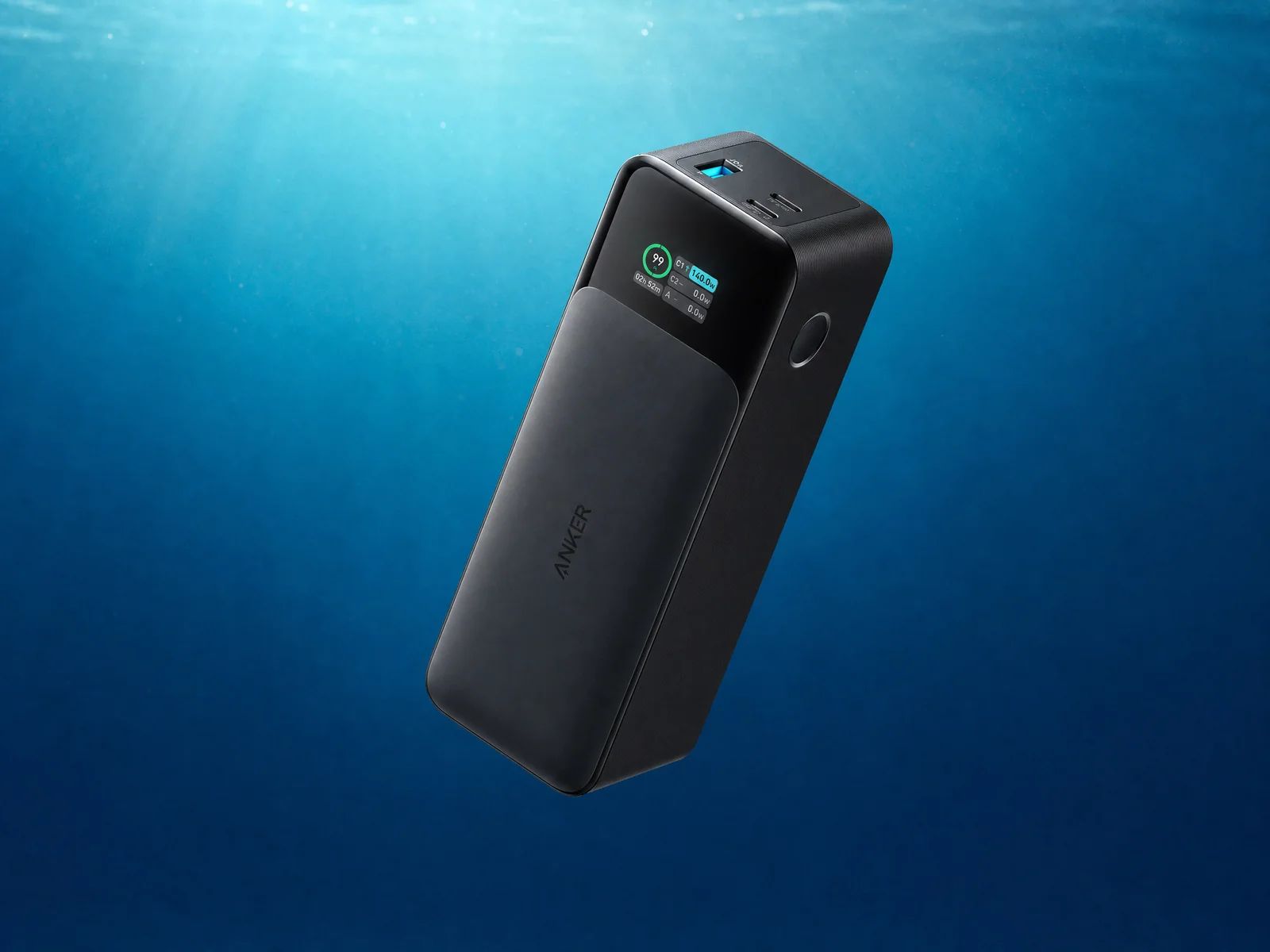
Discover the Anker 737 PowerCore 24K- a 86.4 Wh battery delivering 140W. Performance analysis for underwater photography and air travel.
To improve your mastery of your equipment and optimize your procedures while diving, discover our specialized training modules on AquaExposure training.
On the deck of a cruise ship or during a transfer between two archipelagos, power management becomes a priority for the photographer. The hours spent away from a wall outlet require careful equipment choices. You need to rely on a power source that can revive a laptop to download memory cards or keep mirrorless cameras running. It is in this context of demanding mobility that the Anker 737 Power Bank, also known as the PowerCore 24K, stands out as a strategic tool [1].
This battery doesn't just store electricity. It offers a fast-charging approach that changes the way you manage time between dives. With a capacity of 24,000 mAh and a power output of up to 140 W, it meets the needs of creators who cannot wait for several hours in front of an outlet that is often in use. We will examine here how this device fits into the daily life of a diver and the precautions necessary to optimize its use.
The battery features three distinct ports. Both USB-C ports are bidirectional and support fast charging. The USB-A port is limited to 18W. It remains useful for smaller accessories such as dive computers or focus lights. The internal design utilizes high-density cells, which allow it to maintain a portable form factor despite its 86.4Wh capacity.
| Feature | Technical Detail |
|---|---|
| Nominal Capacity | 24,000 mAh |
| Total Energy | 86.4 Wh |
| Maximum Output Power | 140W (USB-C PD 3.1) |
| Maximum Input Power | 140W |
| Number of Ports | 3 (2x USB-C, 1x USB-A) |
| Weight | 632 g |
| Dimensions | 155.8 x 54.6 x 49.65 mm |
| Safety System | ActiveShield 2.0 |
The interface also displays the health of the battery cells and the number of charge cycles completed. It's important to note that this screen consumes a small amount of the stored energy. Leaving the display on continuously requires approximately 0.36 W. This consumption can reduce battery life by 15% over a 24-hour period without active use. We recommend allowing the screen to turn off automatically to conserve battery power during extended expeditions.
Anker has integrated the ActiveShield 2.0 system to protect the components in confined environments. This device adjusts the power by continuously measuring the temperature. This monitoring prevents overheating during intensive charging in tropical climates. With a weight of 632 grams and a dense casing, the device offers reassuring resistance to frequent handling in a gear bag.Its robust construction makes it a reliable companion for transporting to dive sites. While the unit is not waterproof, its build quality can withstand the stresses of travel. The weight is justified by the energy density and the built-in protection systems that ensure the longevity of the lithium-ion cells.
The issue of transporting lithium batteries is crucial for all international travelers. The Anker 737 has a total energy capacity of 86.4 Wh. This figure is below the 100 Wh threshold defined by the general IATA guidelines for transport in the cabin [3]. According to AquaExposure's specifications, this model complies with standard transportation regulations.
The transport of lithium batteries is strictly prohibited in checked baggage. The Anker 737 must be transported exclusively in the cabin with you. Although the 100 Wh limit is an international standard, each airline may apply stricter restrictions. It is essential to verify the applicable rules with the airline and the relevant authorities at the time of departure [4]. Acceptance of a battery on an airplane should never be considered a permanent guarantee. Technical compliance remains subject to the assessment of security personnel and local regulations.
The maximum power output of 140W requires the use of cables and devices that are compatible with the Power Delivery 3.1 standard. Without this equipment, the charging speed will be limited to lower standards. Certain specific incompatibilities exist. The DJI Mini Pro drone or some Lenovo Legion computers, which require proprietary charging profiles, may not function optimally with this model. To achieve a full charge in approximately 52 minutes, the use of a high-power wall charger is essential. With a standard charger, this recharge time will be significantly longer.
The Anker 737 PowerCore 24K represents an effective solution for those who refuse to compromise on charging speed. It transforms the limitation of battery life into a technical parameter that can be carefully monitored. By complying with airline transport regulations and equipping yourself with the appropriate accessories, it becomes a central component of your digital equipment.When the equipment stops demanding constant attention, the essential aspects finally come to the forefront. It is this peace of mind that allows you to focus on the changing light beneath the surface. The satisfaction lies in the ability to return to the water to capture the moment without fearing a critical failure at the crucial time.
To compare this model with all the products on the market, consult our external battery/power bank comparator and our complete selection of diving equipment.
[1]: https://www.anker.com/products/a1289 "Anker 737 Power Bank (PowerCore 24K)" [2]: https://service.anker.com/article-description/Introduction-to-the-Anker-737-Power-Bank-24K-A1289 "Introduction to the Anker 737 Power Bank 24K" [3]: https://www.iata.org/en/youandiata/travelers/batteries/ "IATA - Passenger Baggage - Lithium Batteries" [4]: https://www.faa.gov/hazmat/packsafe/lithium-batteries "FAA - PackSafe - Lithium Batteries"
<!-- PROPOSITIONS DE VISUELS : Premier visuel : Underwater view of the Anker 737 placed on a mounting table, next to a hybrid camera housing and a USB-C cable. The OLED screen is lit and displays a high power output. The lighting is bright and clean. Alt text: Anker 737 external battery displaying its charging data on its OLED screen next to a camera. -->Second image: A close-up of the USB-C port on the battery, with a connector inserted, set against a background suggesting the deck of a boat. The texture of the casing is highlighted. Alt text: Detail of the charging ports on the Anker 737 PowerCore 24K battery, in a travel environment.
This battery delivers up to 140W through its USB-C ports. This power allows you to charge most modern laptops, such as MacBook Pro models, at their maximum charging speed.
With an energy output of 86.4 Wh, it falls below the general limit of 100 Wh set by IATA. It must be transported exclusively in the passenger cabin. Final compliance depends on the specific rules of each airline and the authorities at the time of departure.
A full charge takes approximately 52 minutes. This charging time requires the use of a wall charger and a compatible cable that supports the Power Delivery 3.1 technology with a power output of 140W.