Table of Contents
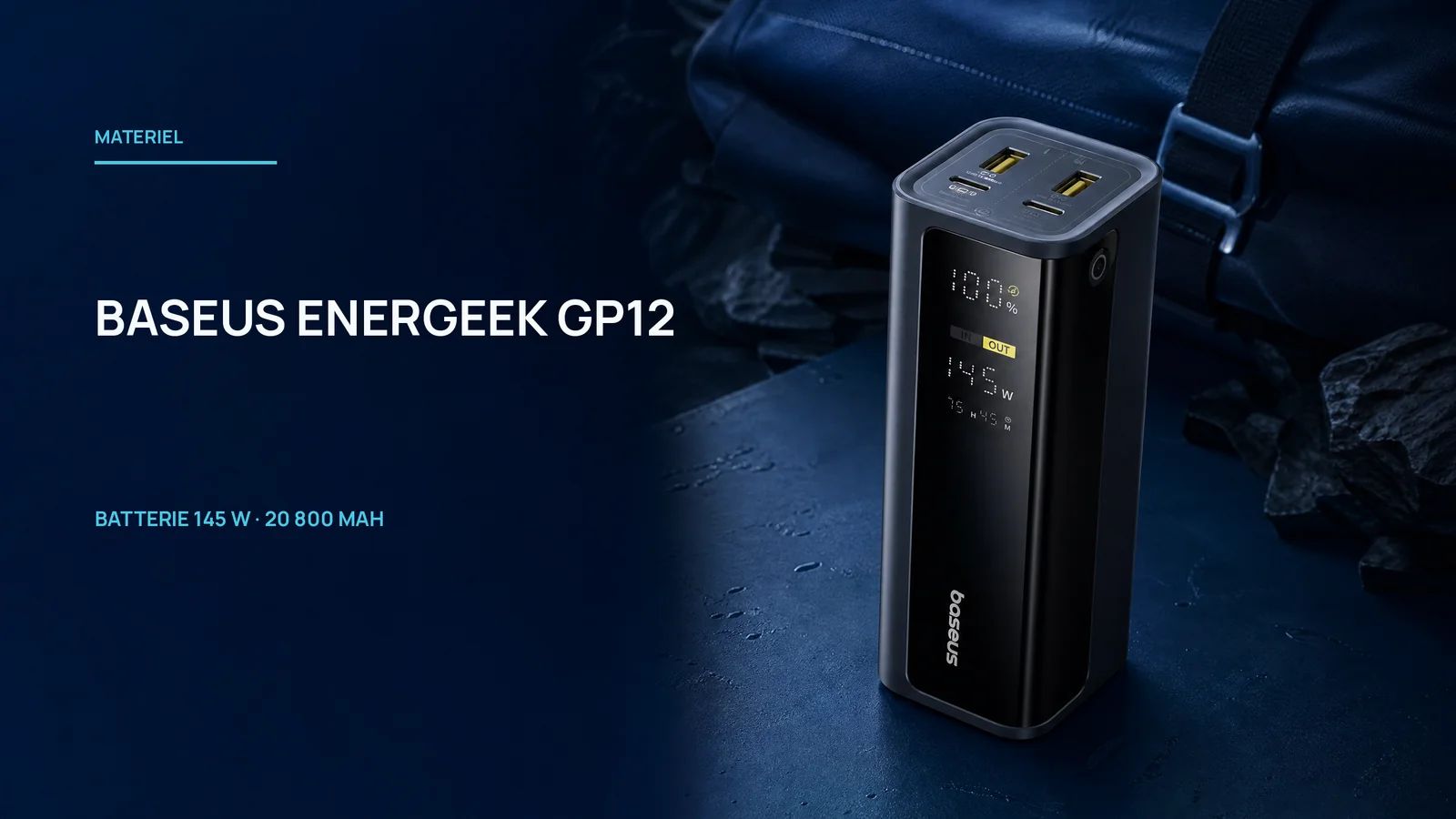
Analysis of the Baseus EnerGeek GP12 145W power bank for underwater photography. A compact 75 Wh power source with a precise control display.
Share
/blog/baseus-energeek-gp12-en
Table of Contents
- 01A dense energy reserve for demanding equipment.The Baseus EnerGeek GP12 boasts a capacity of 20,800 mAh, which is 74.88 Wh [1]. This capacity is strategically chosen because it falls below the 100 Wh limit set by international aviation regulations [3]. This reserve allows for multiple charges of a mirrorless camera or action camera without the administrative restrictions associated with higher capacities. It is still essential to check the rules of the airline and authorities at the departure point. Acceptance in the cabin is never guaranteed.
- 02The Power of Power Delivery 3.1 in ActionThe real strength of this unit lies in its ability to deliver a total output power of 145W. The main USB-C port uses the Power Delivery 3.1 standard, capable of providing up to 100W on its own [1]. For users of MacBook Pro or portable gaming consoles, this means fast charging, identical to what is achieved with an original power adapter.
- 03A precise control interface for thermal management
- 04Port Flexibility and Simultaneous Charging
- 05Who is this battery suitable for?This model is primarily intended for divers who use power-hungry equipment. If your dive bag contains a laptop for editing, a full-size underwater housing, and several video lights, the 145W power output justifies the extra weight. It is well-suited for liveaboard trips where extended battery life away from the cabin's power outlets is a welcome convenience.
- 06Technical Limitations and Actual Compatibility
- 07ConclusionThe Baseus EnerGeek GP12 145W combines professional power with respect for airline regulations. However, it is essential to verify the rules with the airline and authorities before departure, as acceptance in the cabin is never guaranteed [3]. It compensates for its weight with complete transparency and exemplary reliability. When power management fades into the background, what remains is the essential: a changing light, a sense of quiet, and that simple desire to return to the water.
Questions about the Journal
Can a MacBook Pro be charged using the Baseus EnerGeek GP12?
Yes, this battery features a USB-C port that is compatible with the Power Delivery 3.1 standard, delivering up to 100W. This allows you to power a MacBook Pro or other high-power laptop at full speed.
Is the battery allowed in the airplane cabin?
With an energy output of 74.88 Wh, it falls below the 100 Wh limit set by IATA. It must be carried in carry-on luggage. It is necessary to check the regulations with the airline and the authorities at the departure point. Its acceptance is never guaranteed.
How long does it take to fully recharge the unit?
With its 65W input, the Baseus EnerGeek GP12 power bank can be fully recharged in approximately 90 minutes when using a compatible wall charger and cable.

