Cenotes of Tulum and Playa del Carmen: natural light photography technique, best freshwater sinkholes, logistics and conservation ethics. Guide by a diving instructor.
For open cenotes (with direct sky access), Open Water certification is sufficient. For semi-open cenotes or gallery sections, a Cavern Diver course is required by most local centers. Snorkeling photographers have access to nearly all cenotes without any certification.
A waterproof smartphone case or GoPro are ideal for beginners: lightweight, maneuverable in tight passages, and perfectly capable of capturing light rays. For more creative control, a waterproof compact like the Olympus TG or an action camera with wide-angle lens delivers excellent results without the bulk of a mirrorless in housing.
Dos Ojos is the most photogenic for light rays (easy access, crystal-clear water year-round). The Pit is spectacular with its halocline and depth, but reserved for experienced divers. Cenote Angelita is unique with its sulfur cloud. Casa Cenote offers mangrove roots in half-submerged light, ideal for split-shot photography.
Technically possible but counterproductive in most situations. Cenotes are photogenic precisely because of natural sunlight. A strobe destroys the light-ray effect and creates backscatter on suspended particles. Exception: macro on specific subjects in areas without visible rays.
November to April: clearest water (dry season, less rainfall means fewer tannins), and sunrays penetrate most effectively in the morning (9am to noon). The rainy season (May-October) can cloud coastal cenotes, but purely underground ones stay crystal clear all year.
Fees range from €15 to €45 depending on the cenote. Cenote Azul and Casa Cenote are budget-friendly (free snorkeling access). Dos Ojos and The Pit require a licensed local guide, which raises the cost but guarantees safety in semi-cavern environments.
Extremely fragile. Stalactites and stalagmites took thousands of years to form and break with the lightest contact. Absolute rule: perfect neutral buoyancy, fins raised in all galleries, zero contact with walls. Never touch mangrove roots or limestone formations.
To learn how to get the most out of your gear underwater, discover the AquaExposure training.
Mexico's cenotes are the most extraordinary playgrounds for natural light underwater photography: sunbeams piercing crystal-clear freshwater and creating cathedrals of light you will find nowhere else on earth. This guide gives you the keys to photograph them effectively, ethically, and without a strobe.
A cenote (from the Maya word "d'zonot", sacred well) is a natural freshwater pool formed by the collapse of a limestone ceiling over an underground river. The Yucatan counts approximately 6,000 of them, connected by the world's longest known underwater river network.
For the photographer, this creates a unique context: freshwater is more transparent than seawater (less salt, fewer suspended particles in good cenotes), and the openings in the ceiling create columns of golden sunlight that cut through the water like spotlights.
During a workshop in Brussels in 2024, one of my students returned from a trip to Tulum with blurry, flat photos taken with a 400-euro underwater strobe. His problem was not the equipment. He had switched off the most spectacular natural light available and replaced it with a flat artificial substitute. Cenotes are photographed with the sun, not against it.
Located 25 km north of Tulum, Dos Ojos (the two eyes) is the ideal entry-level cenote for photography. Two main chambers connected by a gallery, crystal-clear water year-round, and spectacular light rays between 9am and 11am.
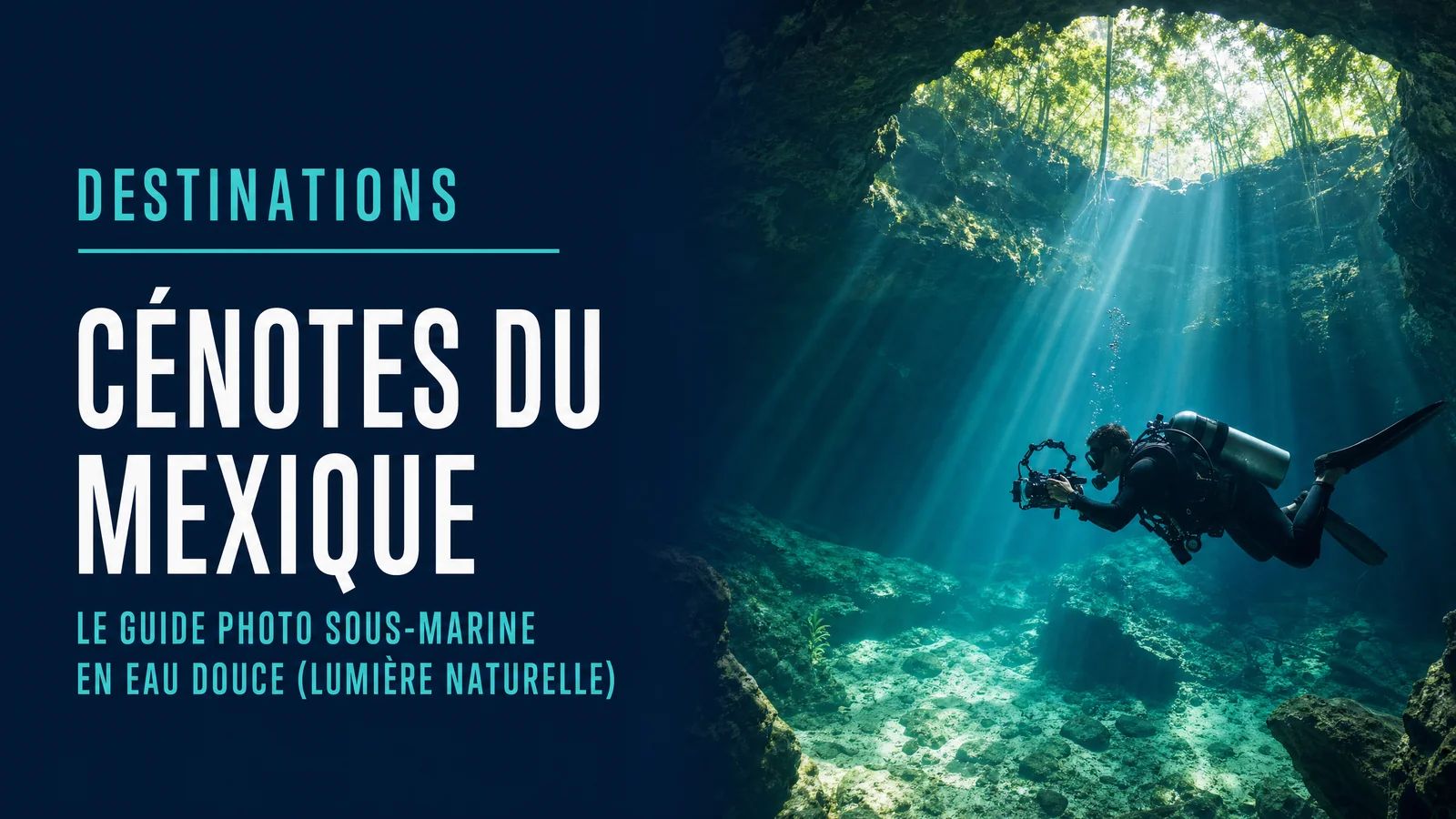
Best angle: position yourself under the opening, aim upward and slightly sideways. A diver or snorkeler ascending in the light beam creates a silhouette that adds scale. Maximum depth: 12 meters. Open Water accessible.
Still in the Tulum area, The Pit descends to 120 meters. You will not go that deep, but around 30 meters you will encounter the most photographed phenomenon in all cenotes: the halocline. This is the contact zone between freshwater and saltwater. It creates a slightly hazy, undulating layer that distorts light in a surreal way.
Photographing the halocline requires careful focus: focus on the boundary between the two water types, not on a subject beyond. A wide-angle format allows you to include the halocline in the foreground with a diver in the background. Advanced Open Water minimum recommended.
Angelita is the least tourist-visited cenote and the most spectacular for atmospheric photography. Around 27 meters, a hydrogen sulfide cloud (produced by decomposing organic matter) floats like a false bottom. Submerged trees emerge from this phantom cloud.
The ideal shot: descend to the cloud, rise one meter above it, photograph a diver "walking" on the cloud in silhouette against the surface. The image is surreal and 100% natural.
Casa Cenote is unique: it connects to the sea through mangroves. The water is slightly brackish, and mangrove roots plunge into the water from the banks. The half-above-water, half-underwater split shot is the must-have image here: the lower half shows roots and fish underwater, the upper half shows the mangrove canopy above.
Accessible by snorkeling, ideal if you are not a certified diver.
Light rays require exposing for the bright background, not for the foreground subject. In practice:
If you use a smartphone, activate manual mode or use your housing's app to control exposure. Tap on the dark area of the subject, not on the bright background.
The classic cenote composition: a diver or snorkeler in silhouette inside a light ray, seen from below. To nail this image:
The silhouette and backlight technique principles apply here with maximum effectiveness: the background is permanently bright, the subject permanently dark. Composition does all the work.
The halocline is a photographic element in its own right. It creates an optical distortion similar to shattered glass. To use it effectively:
In a cenote, buoyancy is not optional. Limestone formations (stalactites, stalagmites) are millennia old and break with the slightest contact. Silt kicked up by fins can cloud a gallery for hours. Non-negotiable rules:
Tulum is the ideal base for cenotes. Dos Ojos, Gran Cenote, Cenote Angelita and Cenote Sac Actun (the longest known network) are all accessible by bicycle or scooter. Local guides are numerous and generally excellent.
Book in advance during high season (December-March): the best guides fill up early. Arrive at opening time (before 8:30am when possible) to catch the light rays before the crowds arrive.
More than one hour's drive to the Tulum cenotes, but Playa gives access to Cenote Azul (affordable, bright, good for beginners) and the Puerto Morelos area which has less-visited cenotes.
An underwater strobe. Photogenic cenotes have natural light that makes a strobe not just unnecessary but counterproductive. If you are traveling light, leave the flash at the hotel. Read our guide on classic travel photography mistakes before packing.
The Yucatan's underground river network is the peninsula's water tower. Millions of people depend on this water. Sunscreen, body oils and chemicals we bring in directly contaminate this aquifer.
Absolute rules before entering any cenote:
Limestone formations do not grow back. A broken stalactite is broken forever. The rule in all cavities: arms along the body, never reaching toward walls.
Cenotes perfectly illustrate the natural light photography philosophy: the most beautiful underwater light does not come from an 800-euro housing. It enters through a limestone ceiling opening at ten in the morning.
They are also an excellent school for backlight and silhouette composition: here, the bright background is permanent and the subject is always in silhouette. There is no cheating. If the composition holds, it is solid.
The 2026 underwater photography destinations offer few environments this unique. The Yucatan is a destination to put on your list before increasing tourism makes the best cenotes inaccessible during morning light hours.
Check our seasonal guide by destination for the optimal window based on your travel dates.
To build your natural light technique before the trip, the AquaExposure underwater photography course specifically covers high-contrast environments (backlight, caverns, raking light zones) directly applicable to cenote photography.
AquaExposure receives no affiliate commission from cenotes, dive centers or accommodations mentioned in this article. Recommendations are based on field experience and the photographic quality of each site.


