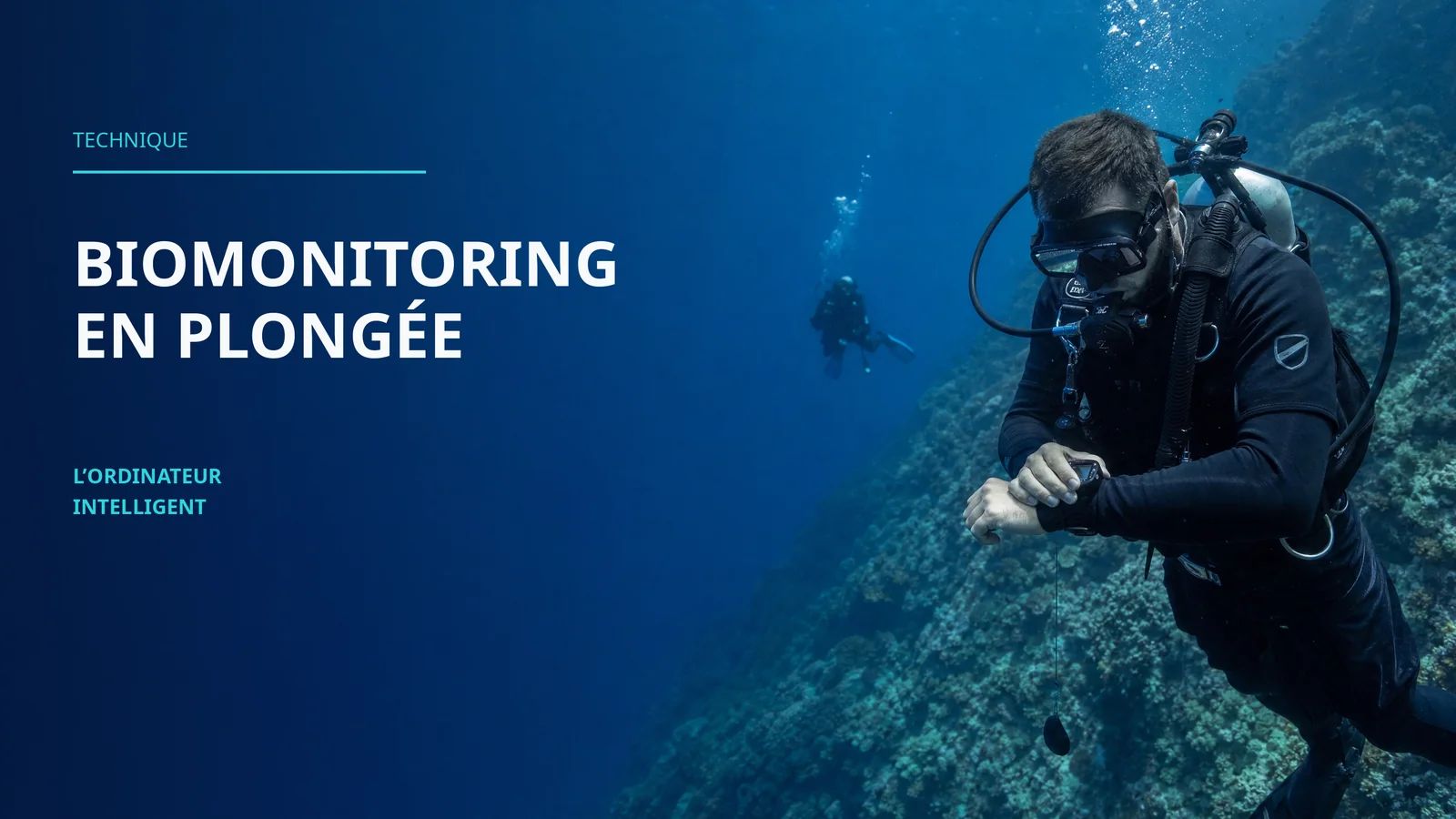
Sensors integrated into the wristband measure heart rate, blood oxygen saturation (SpO2), and sometimes heart rate variability, exactly like a smartwatch. The difference lies in the environment: these sensors are adapted to function under pressure, in cold water, and through a wetsuit.
Why are underwater photographers more exposed to decompression sickness?
Concentration on a subject makes you forget time and depth. A photographer adjusting an angle makes repeated ascents and descents, stays longer at certain depths, and often exceeds ideal dive profiles. These micro depth variations increase the risk.
Are dive computers with biomedical sensors already reliable?
The sensors themselves are reliable for raw measurement (heart rate, SpO2). What remains experimental is the integration of this data into decompression algorithms. DAN Europe is working on scientific validation. For now, the data is informational, not yet prescriptive.
Which manufacturers offer dive computers with biomonitoring?
Several manufacturers integrate optical heart rate sensors into their high-end models. Garmin, with its smartwatch experience, and Shearwater, a reference among technical divers, are at the forefront. Features vary by model, and this technology is evolving rapidly.
DAN Europe and biomonitoring: the intelligent diving computer
There is an object that every diver consults dozens of times per dive - an object that displays the depth, time, and decompression settings - and that, for decades, has known nothing about the person wearing it. Your dive computer knows everything about the water around you, but nothing about what is happening inside your body. This is exactly what DAN Europe wants to change.
Connected watch and diving computer
For the past few months, several manufacturers have integrated biomedical sensors into their dive computers. These include heart rate sensors, pulse oximeters (SpO2), and, in some models, cardiac variability monitoring. These are the same sensors that you find in an Apple Watch or a Garmin running watch, but adapted for underwater conditions.
DAN Europe sees this convergence as the next major advancement in decompression safety. The idea is simple to understand: current decompression models treat all divers in the same way. They calculate the stages based on depth and time, without taking into account the diver's actual physical condition at that precise moment.
Or, two divers of the same age and build can react very differently to the same dive, depending on their level of fatigue, hydration, stress, or simply on the quality of their sleep the night before.
What biomonitoring could change
With real-time physiological data, a diving computer could theoretically adjust its decompression calculations based on the diver's actual condition. An abnormally high heart rate could trigger an additional stage. A decrease in oxygen saturation could generate an early warning.
We are not yet at that stage in terms of commercially validated products. Sensors are present in some models, but integration with decompression algorithms remains experimental. DAN Europe is working on the scientific validation of these approaches, and their researchers (Guy Thomas, François Burman) train professionals on the challenges of this transition.
Why it interests underwater photographers
Underwater photographers are among the most exposed divers to decompression accidents. The reason is simple: when you are focused on a subject, you forget the time. You stay at a given depth for longer, make repeated ascents and descents to adjust an angle, and regularly exceed the ideal dive profiles that classic algorithms assume.
A computer capable of detecting that your body is reacting negatively to the current dive, before you experience the first symptoms, could make the difference between a prolonged and safe dive and an accident that could have been avoided.
The journey is still long between the first integrated sensors and a truly predictive biomonitoring system. But the direction is set, and for us divers, this is an evolution that deserves close attention.
While we wait for our computers to learn to understand us, there is a proven method for safe diving: training, caution, and the habit of asking yourself "Am I feeling okay?" before each dive. Sensors will never replace this question.
Frequently Asked Questions
How does biomonitoring work on a diving computer?
Integrated sensors on the wrist measure heart rate, oxygen saturation (SpO2), and sometimes heart rate variability, just like a smartwatch. The difference lies in the environment: these sensors are designed to function under pressure, in cold water, and through a wetsuit. The data is displayed in real-time on the computer screen during the dive.
Why are underwater photographers more exposed to decompression accidents?
Focusing on a subject makes you forget about time and depth. A photographer who adjusts their angle makes repeated ascents and descents, remains at certain depths for longer, and often exceeds ideal diving profiles. These small variations in depth accumulate and increase the risk of bubble formation in the blood.
Are dive computers with biomedical sensors already reliable?
The sensors themselves are reliable for measuring raw data (heart rate, SpO2). What remains experimental is the integration of this data into decompression algorithms. DAN Europe is working on the scientific validation of this approach. Currently, the biomedical data is informative, not yet prescriptive in calculating the levels.
Which manufacturers offer computers with biomonitoring?
Several manufacturers now integrate optical heart rate sensors into their high-end models. Garmin, with its experience in connected watches, and Shearwater, a leading brand for technical divers, are at the forefront. The features vary depending on the models, and this technology is evolving rapidly.
Safety diving starts with training. Discover our underwater photography training where photographic technique and responsible practice go hand in hand.