In March 2026, while most of us were planning our next diving liveaboard or adjusting the white balance on our compact cameras, diplomats from dozens of countries gathered in Kingston, Jamaica. The purpose of the meeting was anything but touristic. They were there to decide whether humanity would start scraping the ocean floor to extract metals.
The Council of the International Seabed Authority (ISA) was in session from March 9 to 20. And what was at stake concerns all of us, even those who never go below 30 meters.
Polymetallic Nodules: What They Are and Why Everyone Wants Them
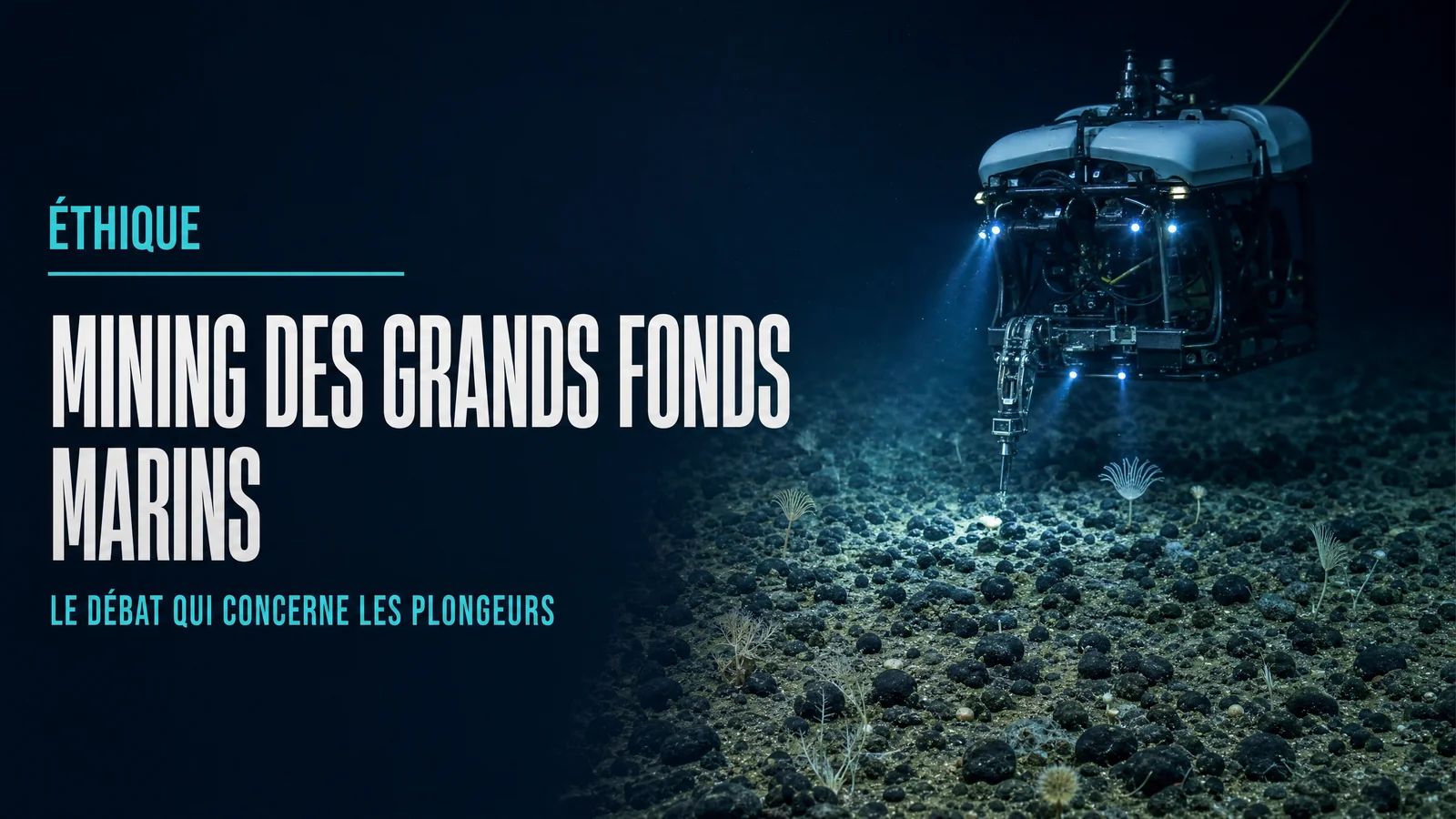
Imagine blackish, fist-sized potatoes sitting on abyssal plains between 4,000 and 6,000 meters deep. These polymetallic nodules are mineral concretions that form over millions of years, layer by layer, around a nucleus (often a shell fragment or a shark tooth).
What makes them valuable is their composition. Manganese, nickel, cobalt, copper. Precisely the metals the energy transition needs to manufacture batteries for electric cars, offshore wind turbines, and solar panels.
The most coveted area is called the Clarion-Clipperton Zone, in the central Pacific. A territory the size of Europe, carpeted with these nodules, at depths where sunlight has never reached.
The Debate: Arguments For and Against Extraction
This is a debate where both sides have solid arguments, and that is what makes it so difficult to settle.
Those in favor of extraction point out that global demand for cobalt and nickel is skyrocketing. That land-based mines, particularly in the Democratic Republic of Congo, create enormous social and environmental problems (child labor, deforestation, river pollution). That the nodules are "just sitting there" on the seafloor, and picking them up would be less destructive than digging into a mountain. That refusing deep-sea extraction means perpetuating mining injustices on land.
Those calling for a moratorium respond that "just sitting there" is a dangerous shortcut. These nodules are not inert. They are the substrate for unique biological communities, adapted to extreme conditions over geological timescales. The industrial vacuum systems needed to collect them scrape the bottom, destroy habitat, and create sediment plumes that disperse over tens of kilometers, smothering filter-feeding organisms well beyond the direct extraction zone.
Both positions are documented. Both deserve to be heard. What is certain is that the decision cannot be made in haste.
40 Countries, 930 Scientists: The State of the Moratorium in 2026
The Kingston session in March 2026 confirmed an underlying trend. Forty countries now support a moratorium, a precautionary pause, or a ban on deep-sea mining. Among them: France, Germany, Brazil, Chile, Spain, and several Pacific island states for whom the ocean is quite literally the national territory.
In parallel, over 930 scientific experts from 70 countries have signed appeals warning of the irreversible damage extraction would cause. Not 930 activists. 930 researchers, oceanographers, biologists, and geologists, published in peer-reviewed journals.
On the French side, Ifremer, the National Museum of Natural History, and the French Office for Biodiversity have all expressed serious reservations. Greenpeace runs active campaigns, but the institutional scientific voice points in the same direction, which is rarer and more significant.
Yet the ISA has already approved 31 exploration contracts. Exploration, not exploitation. But the line between the two is thin, and some companies (The Metals Company leading the charge) are pushing for a rapid transition to the commercial phase.
A study published in Nature Ecology and Evolution in 2026 added another layer of complexity to the debate. Even a poorly calibrated moratorium could have hidden biodiversity costs if the protected zones do not correspond to the actual hotspots of abyssal life. In other words, protecting is not enough. Protection must be done intelligently, which requires mapping ecosystems we still understand very poorly.
Alternatives to Deep-Sea Extraction
The debate would look different if nodules were the only possible source of these metals. But they are not.
Urban recycling. End-of-life batteries contain the exact same metals as the nodules. Cobalt and lithium recycling rates improve every year, with hydrometallurgical processes now reaching 95% recovery in laboratory settings. The challenge is industrial and economic, not technological.
Demand reduction. Battery chemistry is evolving fast. LFP batteries (lithium iron phosphate), which use neither cobalt nor nickel, already represent over 40% of the global market. Sodium-ion batteries are entering mass production. Dependence on "critical" metals is not inevitable, it is a transitional state of technology.
Materials innovation. Researchers are working on cobalt-free cathodes, solid electrolytes, and battery architectures that bypass the problem entirely. The race for seabed materials could become obsolete before extraction even begins.
None of these alternatives is perfect. None is ready to replace 100% of demand tomorrow morning. But taken together, they raise a legitimate question: is it reasonable to destroy irreplaceable ecosystems for metals we may no longer need in fifteen years?
What This Means for Us, Underwater
You might think that abyssal plains at 5,000 meters have nothing to do with recreational diving or underwater photography. That is an illusion of distance.
Marine ecosystems are interconnected. Sediment plumes generated by extraction travel with the currents. Deep-sea species participate in biogeochemical cycles that regulate the health of the entire water column, including the shallow reefs where we dive. Disturbing the abyss means pulling on a thread when nobody yet knows where it is attached.
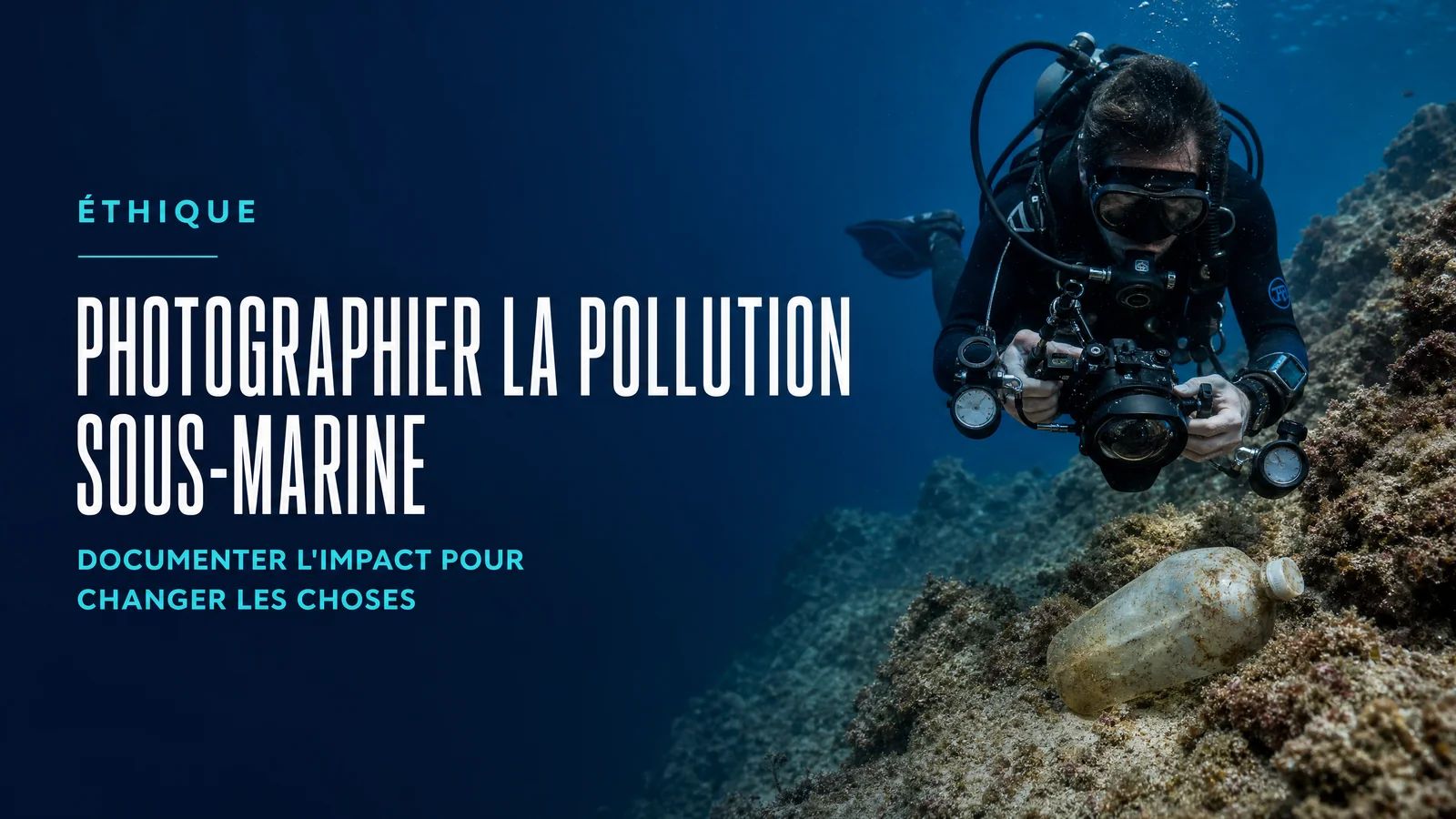
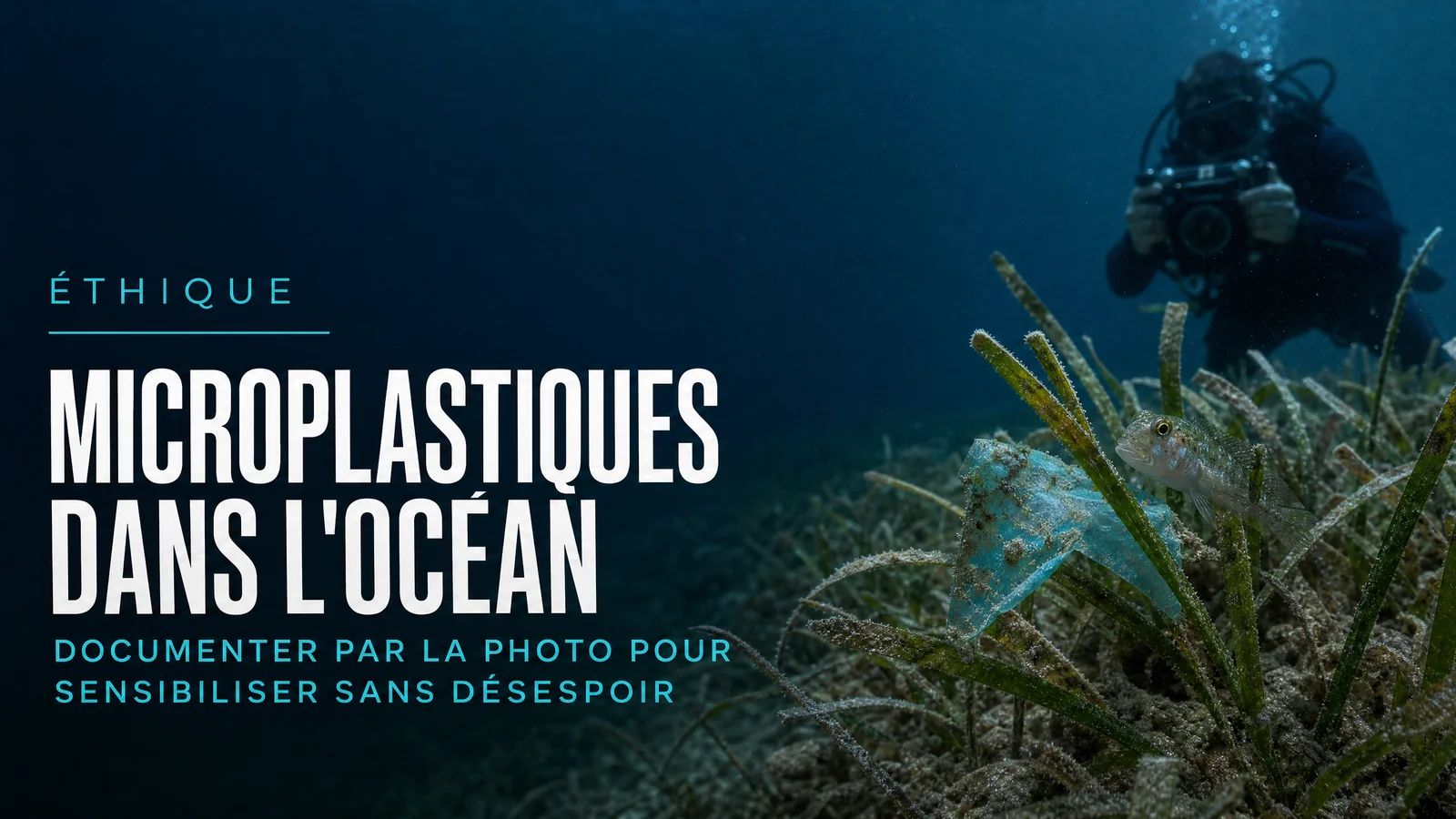
For underwater photographers, there is a more personal angle. We document a world in rapid transformation. The marine discoveries of 2026 show that we are only just beginning to inventory what lives in the deep sea. Destroying these habitats before understanding them is erasing pages from a book nobody has read yet.
Thermotolerant corals show us that marine life has extraordinary adaptive capacities, but only if given the time and space. Deep-sea mining offers neither.
And then there is the question of consistency. You cannot advocate for ethical underwater photography while ignoring what is happening at the industrial scale. Understanding the debate, following its evolution, talking about it around you: that is already a concrete act. No banner needed.
FAQ
What Is the ISA and What Is Its Role in Deep-Sea Mining?
The International Seabed Authority (ISA) is an intergovernmental body created by the United Nations Convention on the Law of the Sea. Based in Kingston, Jamaica, it is responsible for regulating all mining activity in international waters (beyond the exclusive economic zones of states). The ISA has approved 31 exploration contracts to date, but has not yet authorized commercial extraction. That decision is at the heart of the current debates.
Are Polymetallic Nodules Essential for the Energy Transition?
Not necessarily. Nodules contain cobalt, nickel, manganese, and copper used in batteries, but alternatives are advancing rapidly. LFP batteries (without cobalt or nickel) already represent over 40% of the market. Battery recycling achieves high recovery rates. The question is whether the climate emergency justifies destroying millennial ecosystems when technological solutions are evolving faster than expected.
Why Should Divers Care About Abyssal Mining?
Because marine ecosystems function as a connected network. Deep-sea disturbances (sediment plumes, habitat destruction, altered biogeochemical cycles) progressively affect the entire water column. Divers and underwater photographers are direct witnesses of the ocean's condition. Understanding systemic threats allows for better documentation, better communication, and better decisions about what deserves protection.
Does the Moratorium Have a Chance of Succeeding?
The balance of power is shifting. Forty countries support a moratorium or precautionary pause, and 930 scientists from 70 countries have signed in favor. But the ISA operates by consensus, meaning a small number of countries favorable to extraction can block any progress. The Kingston session in March 2026 did not produce a definitive decision. The upcoming meetings will be decisive, and citizen and scientific pressure remains the primary lever for influencing the timeline.
The deep ocean remains the last great wild territory on the planet. If you want to learn to document marine life with respect and rigor, our underwater photography training gives you the technical and ethical foundations to turn every dive into testimony that matters. The AquaExposure training let you start from home, and the field sessions in Belgium add real-world practice.