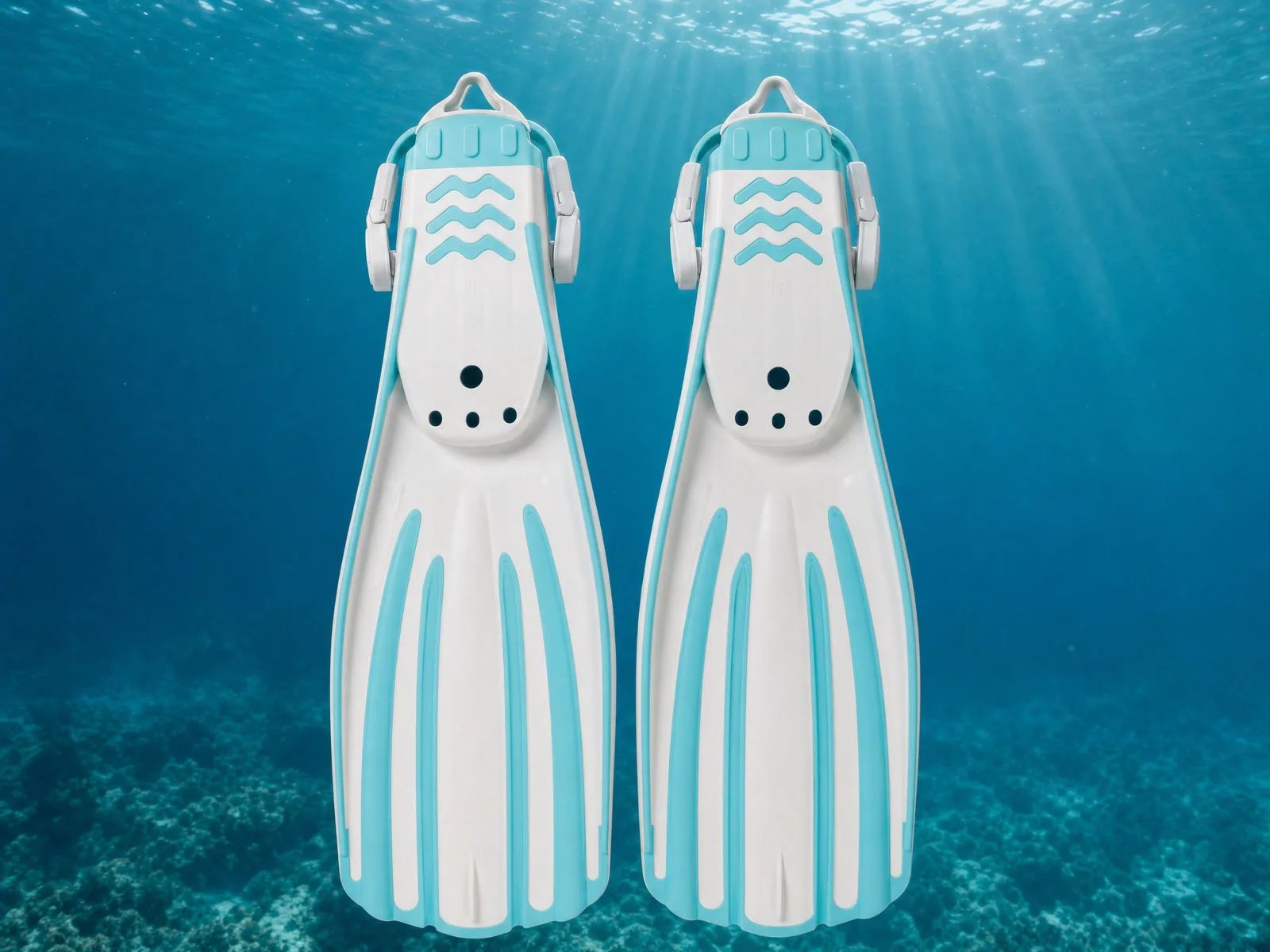
In the discussions among diving club members, where the issue of the carbon footprint of leisure equipment is becoming as commonplace as discussing the depth of the next dive, a fin made entirely from certified recycled plastic naturally attracts curiosity. Fourth Element offers a serious response to this growing demand from environmentally conscious divers with the Rec Fin. We will analyze it honestly.
This detailed evaluation report is based on our documentary analysis conducted on August 6, 2026. Our ranking system maintains its neutrality, and no affiliated links are active on our website.
To analyze the performance of this eco-friendly, adjustable model in a standardized way, we evaluate it based on five criteria with equal weighting. No field tests were conducted by us for this particular pair. This overall score of 4.25 out of 5 reflects its theoretical design quality and does not guarantee individual comfort.
Type and Usage (Score: 4.5 / 5)
The Fourth Element Rec Fin is a diving fin designed for recreational use and cold water, intended for intermediate divers who want to combine performance with environmental responsibility. Its construction using recycled TPR is certified and traceable.
The average weight of approximately 850g per fin is reasonable for a robust, cold-water adjustable fin. Its medium stiffness rating of 3 out of 5 allows it to cover a wide range of uses in recreational diving.
Sails and Propulsion (P2: 4/5)
The hydrodynamic fin with 4 channels, made from recycled TPR, provides an excellent flutter kick and versatile performance, also offering good results with a frog kick, a back kick, and a helicopter turn. This multi-stroke profile is the main advantage of the Rec Fin.
Imagine a bicycle manufacturer that uses recycled aluminum of aerospace quality for its racing frames. Whether the metal is recycled or virgin, it has exactly the same mechanical properties once melted and shaped. The Rec Fin's recycled TPR sail applies the same principle. The mechanical performance is identical to that of a virgin TPR, with the added benefit of a significantly reduced carbon footprint.
The recycled, certified TPR offers mechanical durability equivalent to virgin TPR, according to the manufacturer's data. Its neutral buoyancy makes it suitable for recreational diving and use in cold water.
The Fourth Element Rec Fin stands out as one of the most comprehensive adjustable fins on the market, combining certified environmental responsibility, versatile propulsion, and superior robustness. It fully deserves its high overall rating.
Data collected on August 6, 2026. This evaluation sheet was written based on technical data and user feedback, without individual field testing conducted by us.