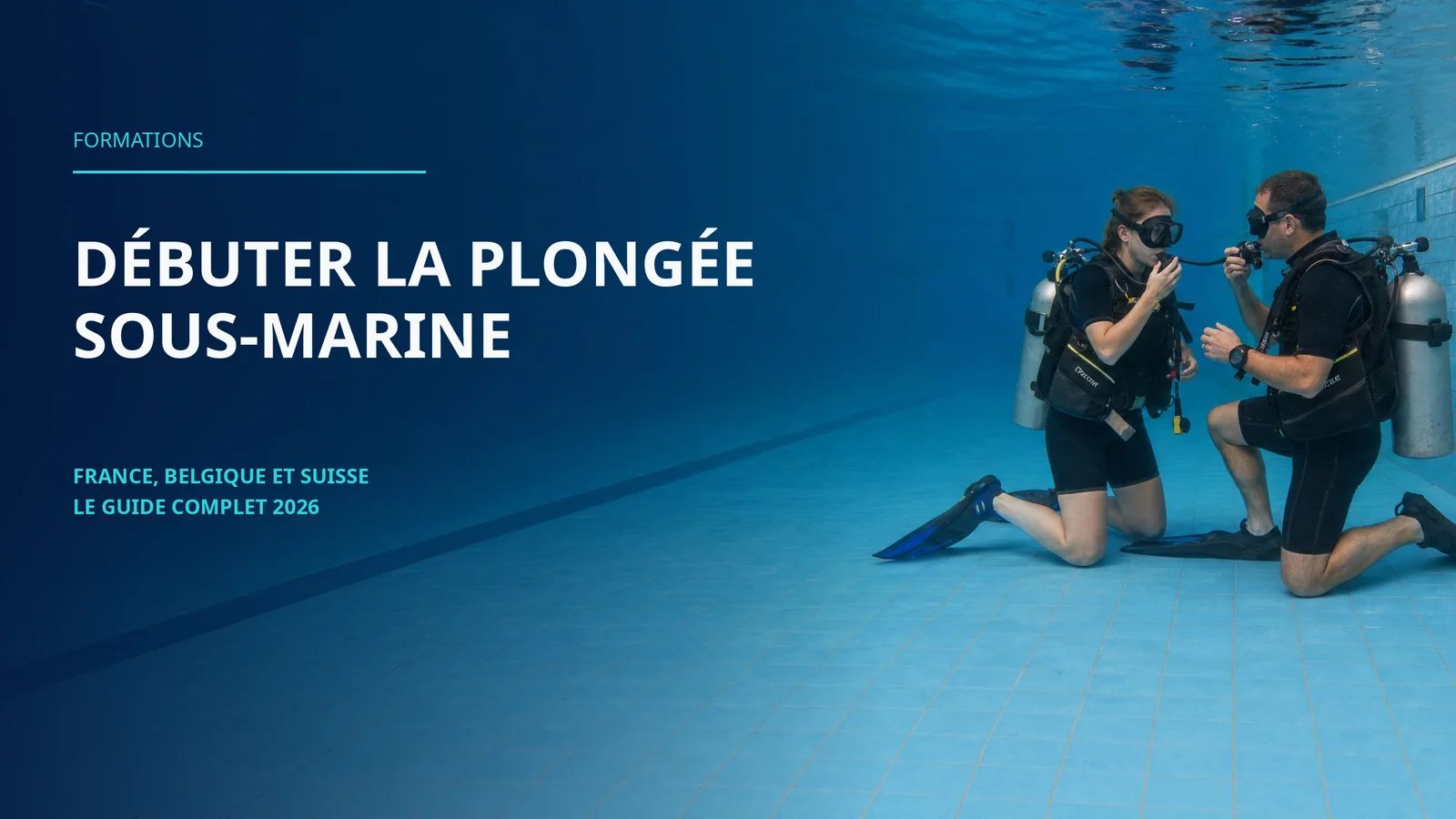
Getting Started with Scuba Diving in France, Belgium and Switzerland: The Complete 2026 Guide
Want to learn scuba diving? FFESSM, LIFRAS or FSSS: everything you need to know to get started in France, Belgium and Switzerland. Practical guide by a pro.
Officially, 8 years old for juniors (12m max). Realistically, 12 to 14. Below that, it is complicated because children do not understand serious instructions. There is no upper limit (I have seen people aged 85 diving).
Do I need a medical certificate?
Yes, a mandatory medical questionnaire. A signed medical certificate is only required if you have a medical history. If you are in good health, a declaration of no contraindication is sufficient (10 euros).
How much does it cost to learn?
300 to 500 euros for the complete training (discovery plus level 1). Equipment rental: 40 to 70 euros per day. Annual license: 50 to 120 euros. Diving is not expensive once you get started.
The Real Question Everyone Asks: "Can I actually learn to dive?"
Yes. Absolutely. Even my 72-year-old mother-in-law dives, and she's had a lifelong phobia of water. If she can do it, you can do it. Period.
My first dive was in France. I was 15, at Lac de Paladru in Isere. I was terrified, the wetsuit was squeezing me, I was cold (welcome to the reality of the Alps), and I swore I'd never go back. Three weeks later, I had my FFESSM Level 1 certification, and I was hooked.
Except here's the thing: learning to dive in France, Belgium, or Switzerland is completely different from learning in the Maldives, where I spent five years as an instructor. The cold water, the local training programs, the certifications, all of it changes the game. And that's exactly what I'm going to explain here.
In Two Sentences: How Do You Start Diving in the French-Speaking World?
Find a club affiliated with FFESSM (France), LIFRAS (Belgium), or FSSS (Switzerland), do a discovery session in a pool or shallow water (it's free or about 30 euros), then follow the course for Level 1 certification (PADI Open Water or local equivalent) in 3-4 days (around 300-500 euros). After that, you'll be able to dive autonomously to 18 meters.
There you go. It's that simple.
My Story: From Blue-Blooded Fear to 5,000+ Dives
I wasn't born a diver. I learned by accident at 15 because my class had to do a natural sciences internship. Today, I'm 37 and I've spent more time underwater than in my own house (my girlfriend finds this concerning).
But I remember every detail of that first day:
The wetsuit (why do they call it a "wetsuit" when you feel like you're drowning?)
The green lake water at 8 meters (the terrible visibility that makes you claustrophobic)
My instructor saying "let's go" with the benevolent smile of someone who's forgotten that being human means naturally panicking at depth
And you know what? It completely changed my life.
First, I discovered there's an entire world beneath the surface. A real world. Not a photo, not a Netflix documentary, but a reality I was seeing with my own eyes. Then I met incredible people. Then I quit my boring job to become an instructor in the Maldives. Then I created AquaExposure to teach others how to photograph underwater.
Diving changed everything.
Jacques Cousteau used to say: "The sea, once it casts its spell, holds one in its net of wonder forever." He was right. And today, thanks to French-speaking federations, getting started is more accessible than ever.
That's why I want you to do it too, without the 500 misconceptions holding you back.
FFESSM, LIFRAS, FSSS: Your Country's "Sporting Codes"
You're going to hear a lot of confusing jargon. Here's what you need to know:
FFESSM (France) - French Federation of Underwater Studies and Sports
The FFESSM is the official body in France. It's like the institutional backbone of French diving.
Levels: - Level 1: up to 18m, with a supervisor - Level 2: up to 20m, with supervisor or autonomous - Level 3: up to 40m, autonomous (this changes your life) - Level 4: dive leader (you become the person in charge)
Where to dive: Everywhere. The Gorges du Tarn, Lac d'Annecy, the English Channel (oh god, it's cold), the Mediterranean.
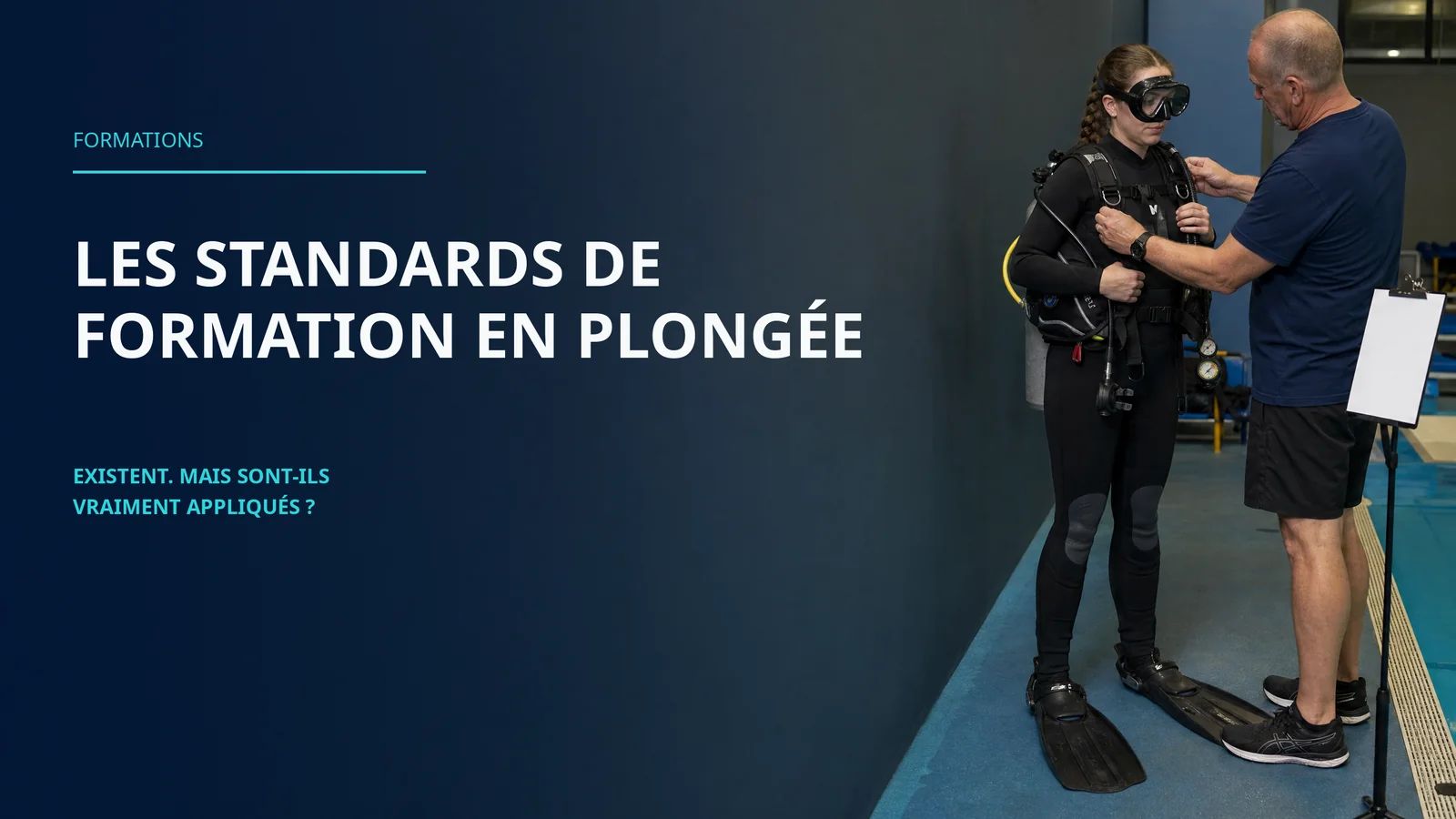
The FFESSM is rigid, traceable, and has its own rules. It's serious. That means when you dive with them, you know it's done properly, that the instructors have followed proper training, and that nobody's going to sell you a bogus certification.
LIFRAS (Belgium) - French-Speaking League for Underwater Research and Activities (Belgian version)
OK, I have to admit the name is confusing. LIFRAS is Belgian, modeled on the French structure, but independent.
Where to dive: The Hensies Quarries (a real freshwater mine, surreal), the lakes, the North Sea (even colder than the English Channel, which is saying something).
LIFRAS is more local, more accessible. The people are friendly. Much less bureaucratic than FFESSM.
FSSS (Switzerland) - Swiss Federation of Underwater Sports
The FSSS is the premium version. You know, Switzerland, always a bit chic.
Levels: Also similar, with internationally recognized certifications.
Where to dive: Lake Geneva, Lake Zurich, Lake Neuchatel. The water is cold even in summer. Very deep in certain spots. Swiss lakes are magnificent and terrifying at the same time.
PADI, SSI, and the Others: The "International" Option
You'll also see PADI and SSI certifications. These are international organizations, based in the USA. They're not against the law in Europe, far from it.
PADI (Professional Association of Diving Instructors): - More commercial, more widespread globally - Levels are called "Open Water Diver," "Advanced Open Water," etc. - Cost: around 300-600 euros for Open Water - Advantage: your certifications are valid everywhere (Egypt, Thailand, Caribbean)
SSI (Scuba Schools International): - Similar to PADI, also commercial - Cost: around 250-500 euros - Advantage: also recognized worldwide
Honestly? If you're starting in France, Belgium, or Switzerland and plan to stay in Europe, go with FFESSM or LIFRAS. It's more local, cheaper, and the people are genuine enthusiasts, not just salespeople.
If you know you'll be diving in the Maldives, Egypt, or Asia, PADI is more practical because it's recognized everywhere. It's your international card.
But listen: all three are valid. You can't go wrong choosing any of them. They're just different paths.
The Great Debate: Cold Water vs. Warm Water
Here's something nobody tells you clearly.
Cold water (France, Belgium, Switzerland: 8-15°C depending on the season): - You need a thick wetsuit (5-7mm) - You'll be cold. Very cold. - Visibility is often poor (2-10m depending on the site) - It's technically harder, but more formative - You learn to manage the cold, the panic, the difficult conditions - It makes you a better diver
Warm water (Maldives, Caribbean, Egypt: 25-30°C): - You wear shorts and a t-shirt - It's magical, it's clear, it's beautiful - The fish are colorful and come say hello - It's easy, so you learn the movements in a more relaxed way - But you don't develop the reflex of "I need to manage discomfort"
Honestly, I'd like you to start in cold water. Not because it's fun (it's not fun), but because it forces you to be rigorous. When you go to the Maldives and the water feels like a heated pool, you'll have total confidence.
I remember: my first dive in truly warm water in the Maldives (29°C), I felt like I was floating. "That's it?" I was expecting a struggle. Nope. It was vacation.
Costs by Country: The Honest Breakdown
Item
France
Belgium
Switzerland
Pool discovery
0-30 euros
20-40 euros
30-50 euros
Level 1 (training)
250-400 euros
300-450 euros
400-550 euros
Annual license
50-100 euros
30-80 euros
60-120 euros
Full equipment rental
40-60 euros/day
40-60 euros/day
50-70 euros/day
Guided dive (club)
30-60 euros
30-60 euros
40-80 euros
Basic equipment purchase
500-800 euros
500-800 euros
600-900 euros
Basic equipment: mask, snorkel, fins, buoyancy control device (BCD). Not the suit, not the tank.
The REAL cost to get started: - Training + 3 certification dives = 350-500 euros - You'll rent equipment for at least 6 months
The REAL cost if you continue (year 1): - License: 50-120 euros - 10-15 guided dives: 400-900 euros - Eventually, starting to buy gear: 200-400 euros
Conclusion: Diving isn't expensive. A month of gym membership costs more than a complete training course.
Equipment: What You Actually Need to Wear by Temperature
In cold water (France/Belgium/Switzerland, except July-August): - 5-7mm wetsuit (or 7mm semi-dry) - Buoyancy control device - Weight belt - Fins - Mask and snorkel - Regulator - Air tank - Dive computer (highly recommended)
In freshwater/lakes: - Add a hood (5mm) or wetsuit hood - Lakes are colder than the sea
In warm water (if you travel): - 2-3mm wetsuit (just to avoid sunburn) - Everything else stays the same
Full equipment costs 1,500-3,000 euros if you buy it. But you won't during the first 6 months. Renting = smart.
Age: When Can You Start?
Children can start diving with a Junior certification from age 8 (in France, that's FFESSM Junior 1, up to 12m). But honestly, 12-14 is better. At that age, they understand instructions, they have enough strength to handle the equipment, and they don't panic as quickly.
There's no upper age limit. My 72-year-old mother-in-law has a certification. She dives to 20m without any problem. She breathes better underwater than on the surface (she has lung issues).
The Real Obstacles: What ACTUALLY Holds You Back
"I'm scared." Of course you're scared. Everyone is scared. Your instructor knows it. Good schools will put you in a pool first, then in shallow water, then take you down gradually. You're not going to be thrown to 20m on the first day. That's action movie marketing.
"I'm not in shape." Irrelevant. Diving isn't CrossFit. It's more about finesse and technique than strength. I know people with heart conditions who dive (with a medical certificate). I know overweight people who dive. Buoyancy is controlled through balance, not muscles.
"I'd be claustrophobic underwater." That's a real fear. But ironically, many claustrophobic people find that being underwater is easier because you're in an "infinite space" (the water), not in a box. Try a discovery session. You'll know quickly.
"It's dangerous." Less dangerous than driving a car. Statistics show that recreational diving done properly (with good training) has a very low accident rate. What kills divers is mostly stupidity (ignoring instructions, diving alone, doing Nitrox without training) or undetected medical issues.
Medical Certificate: Do I Need One?
Yes. In all French-speaking countries, you must fill out a medical questionnaire before your first dive. Honestly, you need a medical certificate signed by a doctor if you have:
Heart problems (past or present)
Asthma (even mild, it's important)
Ear or sinus problems
Diabetes
Pregnancy
History of seizures
If you have none of that, a simple declaration of no contraindication is enough.
Cost: 30-50 euros for a diving medical exam.
How Long for Certification?
Level 1 (FFESSM/LIFRAS/FSSS): 3-4 days - Day 1: Theory + pool exercises - Day 2: Progressive pool work - Day 3-4: "Open water" dives (shallow sites, lakes, small ocean sites)
PADI Open Water: Similar, 3-4 days
After that: You can dive freely (with a buddy, not alone) to 18-20m depending on your level.
So there you go: from zero to certified diver in less than a week.
How to Choose Your Club/School?
Here's what I look for:
1Equipment: Do they have good gear? Not rusty stuff from 1987?
2Instructor: Do they look happy? Do they explain things or just bark orders?
3Small groups: Max 4 people per instructor. If it's 8 people, run.
4Training site: Pool first? Good sign.
5Transparent pricing: Do they explain the cost or is it vague?
6Certification value: Is it FFESSM/LIFRAS/FSSS/PADI/SSI? Not some homemade certification from a random tourist spot.
Pro tip: Call the club and ask questions. Annoy them. Good clubs love that. Bad clubs will make you feel uncomfortable.
FAQ: The 6 Questions You're Really Asking
1. At what age can I start?
Officially, 8 years old for juniors (12m max). Realistically, 12-14 years old. Below that, it's complicated because children don't fully grasp serious instructions. No upper limit (I've seen 85-year-olds dive).
2. Do I need a medical certificate?
Yes, a mandatory medical questionnaire. A signed medical certificate is only needed if you have pre-existing conditions. If you're healthy, a simple declaration of no contraindication suffices (10 euros).
3. How much does it cost to learn?
300-500 euros for the complete training (discovery + Level 1). Equipment rental: 40-70 euros/day. Annual license: 50-120 euros. Diving isn't expensive once you get started.
4. Cold water or warm water to learn?
Cold water. Seriously. It makes you a better diver. Warm water is for afterward, for treating yourself.
5. Can I dive with my kids?
Yes, but with training adapted to their age. Junior Level 1 (8-12 years, 12m max), then Level 1 (12+, 20m). You dive together, and it's a wonderful family adventure.
6. How long before I get my certification?
3-4 intensive days, or 4-6 weeks if you do weekends. After that, you're a certified recreational diver with autonomy (with a buddy, not solo).
A Last Word from the Guy Who Chose Diving
I stayed as an instructor in the Maldives for 5 years. I certified hundreds of people. You know what I learned? That everyone can dive. Not just super-athletes. Not just young people. EVERYONE.
The fear? It's normal. It's even a good sign. Scared people pay attention. Blindly confident people? Those are the ones we have to watch.
And you know what? After 3-4 dives, the fear disappears. It gives way to magic.
So go for it. Find a club. Try it. Become a diver.
The ocean is waiting for you.
Benjamin Coste, founder of AquaExposure
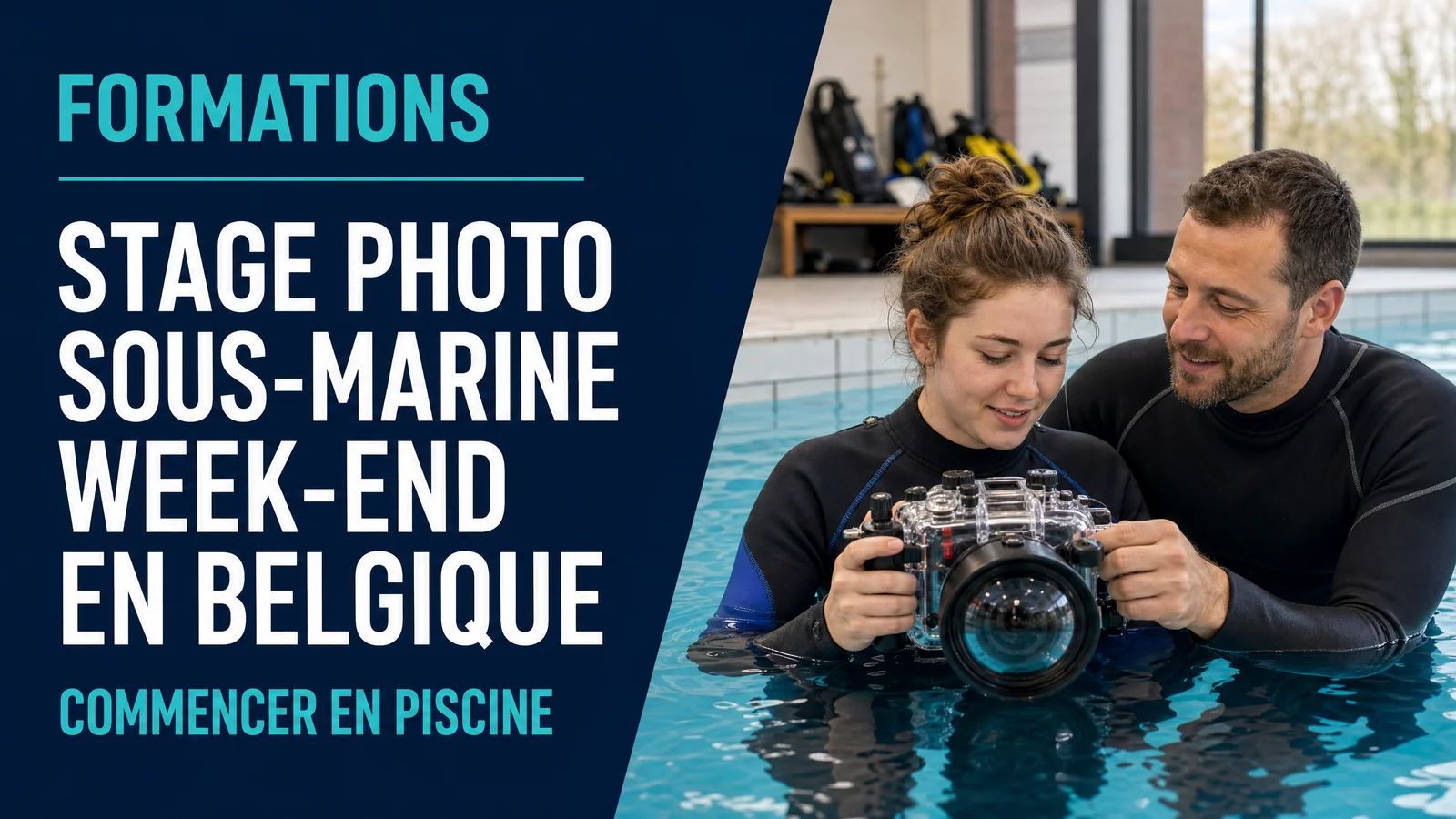
*Got your certification and now want to know how to take beautiful photos and videos underwater? The AquaExposure course is made for you: it starts from the basics, it's available in French, and the first module is free on aquaexposure.com - PADI, FFESSM, SSI or SDI: the honest comparison to progress after your first level. - Underwater Photo and Video Course at AquaExposure - When diving is mastered, the image takes over. What the course covers.