Not directly. The ILS is weather-resistant but not waterproof. To use it for diving, you will need a dedicated housing adapted to each lens. As of today, neither GoPro nor third-party manufacturers have announced a solution.
Which Micro 4/3 lenses would be most useful underwater?
A wide-angle (such as 7-14mm or fisheye) for pelagics and underwater landscapes, and a macro (such as 60mm) for small subjects. The lack of autofocus requires lenses with a smooth and precise manual focus ring.
Should I wait for the ILS or buy the MISSION 1 PRO now?
If you dive regularly, the MISSION 1 PRO with its 60-metre housing is usable immediately. The ILS will not be available until the third quarter of 2026, and without a confirmed underwater housing. The PRO is the rational choice today.
Why is the lack of autofocus a problem underwater?
Underwater, reduced visibility and constant subject movement make manual focusing difficult. Through a housing, manipulating the focus ring loses precision. For fast-moving subjects, autofocus is nearly indispensable.
GoPro with Interchangeable Lenses: What's Missing Before You Dive
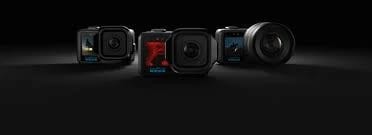
When I saw the MISSION 1 PRO ILS announcement, I had two reactions. The first: wow, GoPro just created the world's smallest interchangeable-lens body with a 1-inch sensor and 8K. The second, immediate: what about the housing?
Because that's where everything hinges for us.
What the ILS brings on paper
The MISSION 1 PRO ILS uses a Micro 4/3 (MFT) mount. That's the same standard as Panasonic, Olympus/OM System, and dozens of lens manufacturers. With adapters, it can even accept optics from other mounts.
For the underwater photographer, the possibilities are dizzying: a macro lens for nudibranchs, a wide-angle for pelagics, a fisheye for caves and wrecks. All on an ultra-compact body with the same 1-inch sensor and GP3 processor as the PRO.
Except.
The housing problem: a major technical obstacle
First, the ILS is not waterproof. It's weather-resistant, period. To go underwater, you need a housing.
Second, a housing for an interchangeable-lens camera is not a simple waterproof enclosure. It must integrate a port system adapted to each lens: flat port for macro, dome port for wide-angle. Port dimensions depend on the diameter, length and focal length of the mounted lens.
Third, the MISSION 1 PRO ILS has no autofocus. The mount has no electronic contacts. All focusing is manual. Underwater, with gloves (when the temperature calls for them) and a housing between your fingers and the focus ring, that's a serious technical challenge.
What GoPro needs to do (and fast)
For the MISSION 1 PRO ILS to become a viable tool in underwater photography, GoPro needs to offer:
A dedicated housing with a modular port system, allowing you to switch from a macro lens to a wide-angle without changing the entire housing. A reliable, precise mechanism for controlling manual focus through the housing. And all of this before the initial excitement fades.
Third-party manufacturers like Isotta, Nauticam or Seafrogs could also rise to the challenge. But history shows it typically takes 6 to 12 months between a new body's release and the availability of a quality third-party housing.
In the meantime: what you can do right now
If the MISSION 1 PRO ILS has you dreaming, here's my advice as an instructor:
Invest in the MISSION 1 PRO (the fixed-lens model) with the 60-metre housing. You'll get 95% of the image quality, native waterproofing to 20 metres, and an ecosystem that works right out of the box. Keep an eye on housing announcements for the ILS.
And in the meantime, remember: the best camera is the one you've mastered. Not the newest. Not the most expensive. The one you've taken on your first 100 photo dives.
Choosing your gear also means knowing what truly matters. Module 2 - Equipment and Simplicity helps you build a setup suited to your level and goals, without overspending. Discover it at aquaexposure.com.
FAQ - GoPro MISSION 1 PRO ILS and interchangeable lenses
Can the GoPro MISSION 1 PRO ILS be used underwater?
Not directly. The ILS is weather-resistant but not waterproof. To use it while diving, you'll need a dedicated housing adapted to each lens. As of today, neither GoPro nor third-party manufacturers have announced a solution. This is the main barrier for the underwater community.
Which Micro 4/3 lenses would be most useful underwater?
A wide-angle (such as a 7-14mm or fisheye) for pelagics and underwater landscapes, and a macro (such as a 60mm) for small subjects like nudibranchs and shrimp. The lack of autofocus requires lenses with a smooth, precise focus ring, which rules out some entry-level models.
Should you wait for the ILS or buy the MISSION 1 PRO now?
If you dive regularly, the MISSION 1 PRO with the 60-metre housing is ready to use today. The ILS won't be available until the third quarter of 2026, and no underwater housing has been confirmed. Unless you're willing to wait 12 months or more for a complete ecosystem, the PRO is the rational choice right now.
Why is the lack of autofocus a problem underwater?
Underwater, reduced visibility and constant subject movement make manual focusing particularly difficult. Through a housing, manipulating the focus ring loses precision. For fast subjects like pelagics, autofocus is nearly essential. Manual focus remains viable for macro and static subjects, but demands significant skill.