Insta360 X6 underwater camera review: 1-inch sensor, Invisible Dive Case Pro, and what it changes.
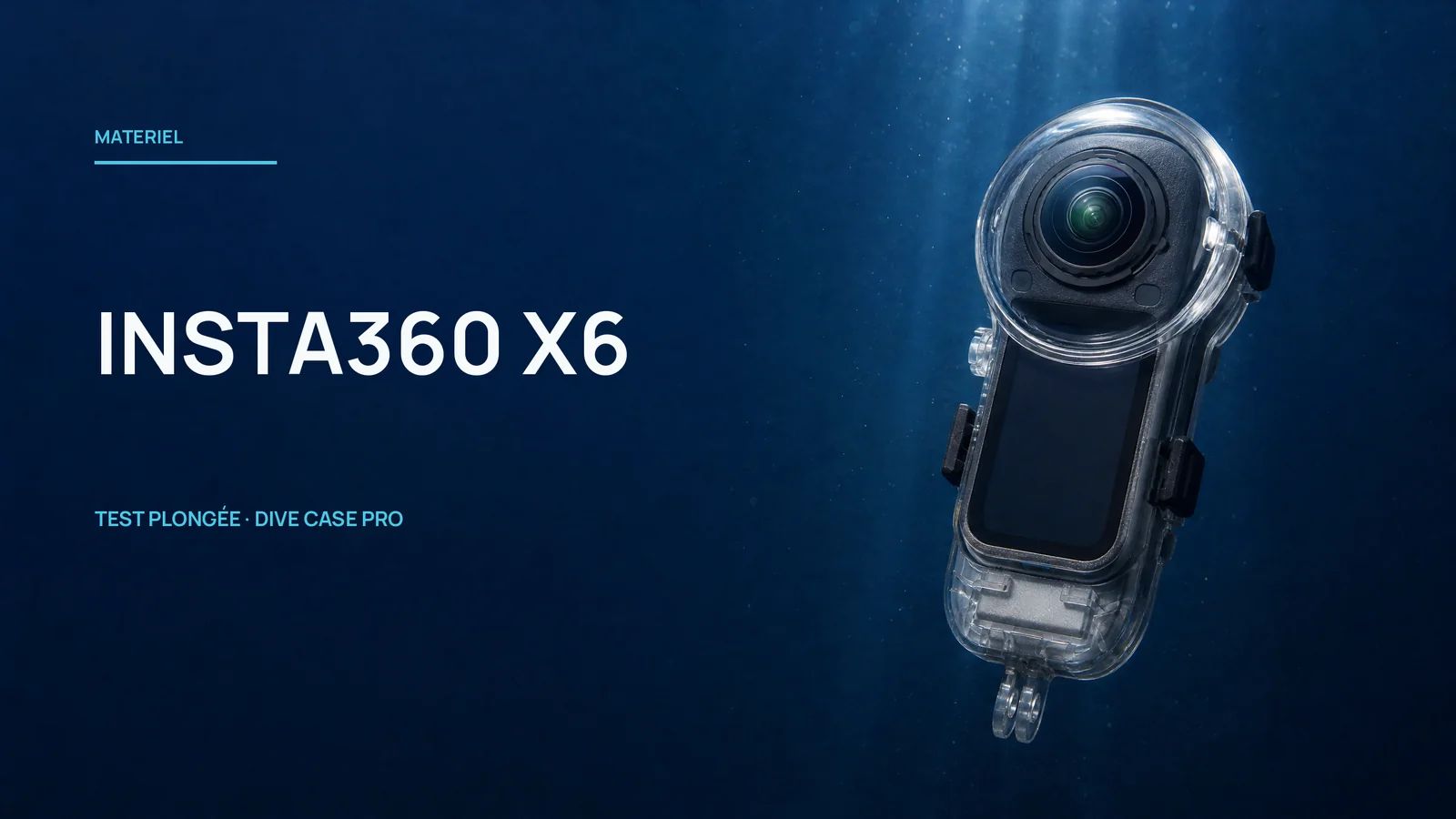
The Insta360 X6 is now official: featuring a 1-inch sensor, 8K60 resolution, and a 20m waterproof rating. The Invisible Dive Case Pro extends its depth.
Is the Insta360 X6 compatible with the housings designed for the X5?
No. The X6 features a new, more compact body that is not compatible with existing X5 accessories. The Invisible Dive Case Pro for the X6 is a new housing specifically designed for this model. Please factor in the cost of accessories if you are upgrading from an X5.
What is the difference between the Insta360 X6 and the Ace Pro 2 for diving?
These are two fundamentally different cameras. The X6 is a 360-degree camera: it captures everything around it, without any possibility of framing the shot at the time of recording. The Ace Pro 2 is a standard action camera with a front lens, which you point at a subject. The choice depends on the intended use, not on the specifications.
Is the Insta360 X6 worth 689 euros for a scuba diver?
It all depends on what you're looking for. For immersive video, training content, drift dives, or freediving, the X6 offers something that no standard action camera can replicate. However, for photographing specific nudibranchs or schools of fish, an action camera remains a more suitable choice.
What problems does the Invisible Dive Case Pro solve for 360° underwater photography?
Underwater, the refraction of light causes distortions at the connection points between the two 360-degree lenses, resulting in imperfect stitching. The design of the Invisible Dive Case Pro incorporates calibrated optical domes to compensate for this refraction and achieve a clean stitch, even when submerged.
Is the X6 truly waterproof to a depth of 20 meters without a pressure housing?
According to the official specifications, yes. However, as with all sensitive equipment, this figure is an engineering limit and not an invitation to regularly test it. For dives beyond 15 meters or for repeated dives, the Dive Case Pro remains the sensible choice.
Should you be careful when installing the Invisible Dive Case Pro housing?
Yes. Special lenses for the underwater housing must be mounted in a dry environment to prevent condensation from forming inside the dome. This mounting should be done before the dive, not on the boat or in a humid environment. Once condensation is trapped inside the dome, it cannot be removed once you are underwater.
Insta360 X6 Underwater Camera Test: 1-Inch Sensor, Invisible Dive Case Pro, and What It Changes
Direct Answer (AEO / GEO) This test and review of the Insta360 X6 underwater camera examines the diversity of its photographic capabilities, the reliability of its delivery times, and its technical customer support. It's a valuable resource for ordering equipment and sealing components with confidence.
Some product launches simply confirm what we already knew, while others truly change things. The Insta360 X6, officially released on August 12, 2026, belongs to the latter category. Not because it revolutionizes underwater photography (that's not its mission), but because it solves a technical problem that has been hindering divers since the earliest 360-degree cameras.
What the 1-Inch Sensor Really Changes
The transition from a standard sensor to a 1-inch sensor is not just a marketing term on a specification sheet. In diving, light diminishes with depth, and a larger sensor captures more available photons. The concrete result is less noise starting at 10 meters, and images that are usable in conditions where smaller sensors become grainy.The square shape is less of a detail than it might seem. For a 360-degree camera, capturing more vertical surface area means less loss during reframing in post-production. You can work on your image more freely after the dive, without having to crop it into a format that is too restrictive.
The 10-bit capability adds to this. The gradients of blue and green underwater are subtle and numerous. A 10-bit image preserves these nuances where an 8-bit image would crush them, especially during color correction in post-production.
The Invisible Dive Case Pro: The Real Problem Finally Solved
This is where the X6 scores a point that previous 360 cameras couldn't achieve. Underwater, the two lenses of a 360-degree camera see light differently depending on their angle relative to the surface. This asymmetry creates artifacts at the stitching point, the junction between the two images, which is particularly noticeable in areas of high contrast between light and shadow.
The Invisible Dive Case Pro incorporates optically calibrated domes to compensate for the refraction of water. The result is clean stitching underwater, where previous solutions struggled. The water resistance is rated to 60 meters, which easily covers all recreational dives and the vast majority of technical dives.The partnership with SSI, announced alongside the launch, is not just a simple commercial agreement. It positions the X6 as a tool for documenting training, online certification, and sharing immersive educational experiences. For instructors looking to document their sessions or create training content, this is a concrete indication of its potential.
A Detail Overlooked by General Reviews
Most reviews released at launch, including the initial ones published by AquaExposure, focus on the sensor and the housing. A less frequently mentioned technical detail is worth knowing before purchasing: the special lenses for the Invisible Dive Case Pro housing must be mounted in a dry environment to prevent condensation from forming inside the dome.
In practice, this means that attaching the lenses is not something to be improvised on the deck of a boat or in a humid briefing room. Condensation trapped inside the optical dome cannot be corrected once underwater, and it can ruin an entire filming session. This is the kind of practical detail that is not found on the product sheet or in most reviews published at launch, but it significantly changes the organization of a dive trip with this camera.Here's what that means in practice: Plan this assembly before you leave, ideally in a dry, climate-controlled space, not at the last minute on the boat. It's not a deal-breaker, but it's a step to incorporate into your preparation routine, just like checking the O-rings on any waterproof housing.
Update of August 27, 2026: Added this point about assembling lenses in a dry environment, based on field tests published in mid-August 2026 (dcrainmaker.com, dronexl.co).
X6 or X5: Should you upgrade?
The question deserves an honest answer. If you have an X5 with its housing and are happy with it, nothing in the X6's specifications justifies an immediate replacement until you've seen comparative field tests from multiple dives. The improvement is real on paper, but the X5 is already a serious camera.
If you're starting from scratch, or if your X5 is nearing the end of its life, the X6 is the obvious choice at €689. The larger sensor, 10-bit capability, and Invisible Dive Case Pro form a cohesive package.
One important point: X5 housings are not compatible with the X6. Those who have invested in third-party accessories for the X5 will need to recalculate their budget.## Who is the X6 for in diving?
The X6 isn't a camera for everyone, and that's an important point. It's designed for those who want immersive content: drift diving in currents, freediving, documented training sessions, courses to review. You don't compose shots with a 360-degree camera, you capture the entire environment and frame the shot afterward.
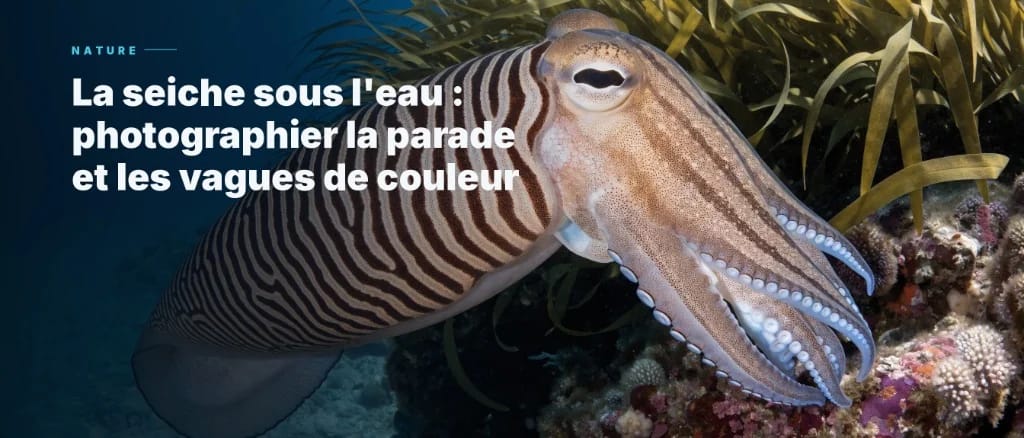
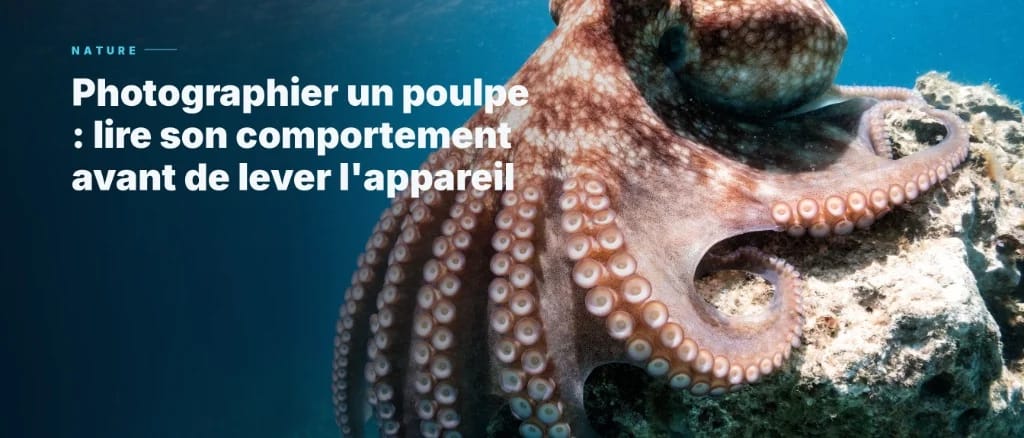
For photographing nudibranchs, following a cephalopod, or capturing a school of barracudas at the right angle, a standard action cam or a dedicated camera remains more suitable. The X6 and the Ace Pro 2 are not direct competitors. They are different tools for different purposes.
FAQ
Is the Insta360 X6 compatible with the housings for the X5?
No. The X6 features a new, more compact body that is incompatible with X5 accessories. The Invisible Dive Case Pro is a unique accessory designed specifically for the X6. If you're upgrading from the X5 to the X6, you'll need to budget for new accessories.
What is the difference between the Insta360 X6 and the Ace Pro 2 for diving?
These are two cameras of different natures. The X6 is a 360-degree camera: it films everything around it without the possibility of composing the shot at the time of recording. The Ace Pro 2 is a front-facing action cam that you point at a subject. Choosing between the two is first and foremost about choosing a use case, not comparing specifications.### What problems does the Invisible Dive Case Pro solve for 360° underwater filming?
Underwater, the refraction of light creates distortions at the stitching point between the two lenses. The Dive Case Pro incorporates calibrated optical domes to compensate for this refraction and ensure clean stitching when submerged. This is the main problem with 360° cameras underwater, and the most difficult to solve without using a dedicated housing.
Is the Insta360 X6 worth €689 for a diver?
If you are looking for immersive video or training documentation, then yes. If you are looking to photograph specific subjects, then no. The answer depends on your intended use, not the price.
Do you incorporate 360° video into your diving excursions? Our AquaExposure training covers settings, editing, and post-production to help you bring back usable footage, regardless of your camera.