AquaExposure
HomepageTrainingToolsArticles
AquaExposure

© 2026 AquaExposure. Ethically preserving the depths.

AquaExposure
Homepage
Pricing
Menu
Homepage
PricingShopArticles
AquaExposure — Explore Beneath, Capture Beyond
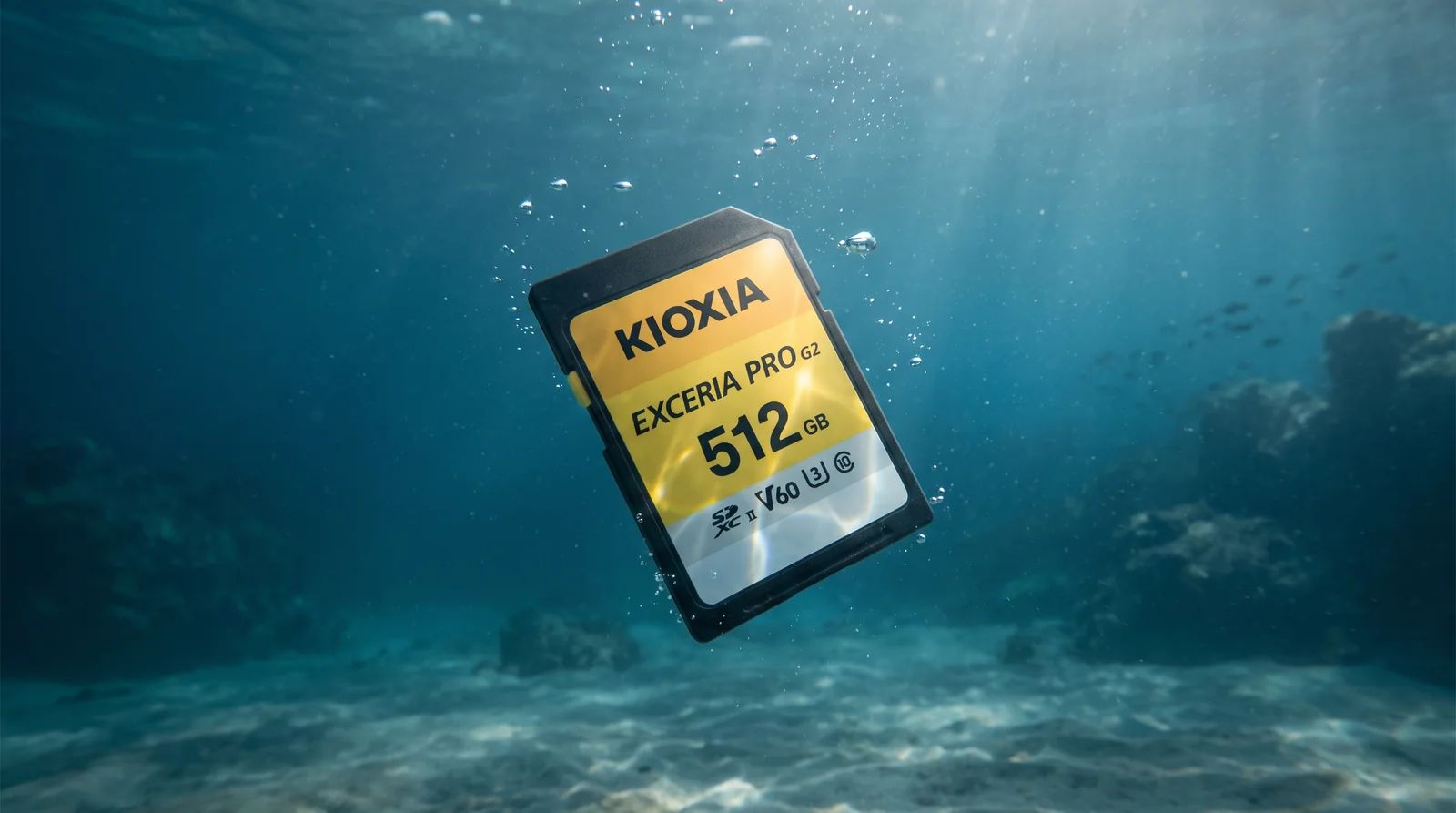
Kioxia Exceria Pro G2 V60: Reliable performance for underwater photography.
Table of Contents
  • 01A BiCS FLASH 3D architecture for videoAt the heart of this card is Kioxia's BiCS FLASH 3D technology- a vertically stacked flash memory structure. This architecture improves the stability of data transfers during extended write sessions [1]. For an underwater videographer shooting in 4K or 6K All-Intra, this consistency is crucial to avoid stuttering. The stacking of layers reduces the distance between components, minimizing latency and promoting low power consumption, which helps preserve battery life during an expedition. AquaExposure's scores place this model at 9.3 out of 10, reflecting its ability to handle large data streams. The UHS-II interface delivers read speeds of up to 300 MB/s, allowing you to quickly review your images after a dive [2].
  • 02Physical Safety with Integrated FuseOne of the most innovative features of the Exceria Pro G2 line is the integration of an internal electrical fuse. This physical protection prevents the risk of overheating or ignition in the event of an electrical fault within the housing [2]. In the confined environment of a pressure housing, where heat dissipation is limited, this safety feature provides extra peace of mind against unpredictable failures. The robustness extends to resistance against electrostatic discharge and X-rays, according to the ISO7816-1 standard [2]. While microSD versions from the brand are often certified IPX7, this SDXC model does not have that certification. The card is resistant to handling with wet hands, but it should never be considered submersible. It is important to remain vigilant on deck, as a drop of saltwater could damage the contacts of the UHS-II interface.
  • 03Performance and variations depending on capacityIt is important to check the specifications according to the chosen capacity to avoid any disappointment. The Exceria Pro G2 V60 range is available in 128 GB, 256 GB, and 512 GB [1]. The 128 GB version has a maximum write speed of 170 MB/s, compared to 250 MB/s for the higher capacity models [2]. While this difference does not affect the V60 certification, it may slow down the buffer clearing during rapid bursts of photos. For a wildlife photographer capturing the movement of a pelagic predator, choosing the 256 GB or 512 GB models is a wise choice to maintain smooth shooting.
  • 04Real-world Use with Modern Hybrid CamerasThe Kioxia Exceria Pro G2 V60 is designed for videographers using high-performance hybrid cameras that require V60 certification for high-speed recording modes. It is suitable for 4K video at 120 frames per second or 6K formats. The stable data transfer rate allows you to focus on framing without worrying about a disruptive error message. The AquaExposure reliability score of 9.5 out of 10 reflects the confidence placed in Kioxia, a company inheriting the expertise of Toshiba Memory. For a diver traveling long distances, this level of reliability is a key factor in making a choice. It is often wiser to distribute your risk across multiple 256 GB cards than to rely on a single card with a large capacity, especially when equipment is subjected to harsh conditions due to pressure and humidity.
  • 05Thermal Resistance and Maintenance in a Marine EnvironmentThe marine environment imposes invisible constraints. Salt is the enemy, and when it dries, it can oxidize the gold contacts on the memory card. Special attention must be paid to drying your hands before opening the memory compartment. It is useful to keep a dry cloth handy to remove any residual moisture. Caution is advised, as corrosion is generally not covered by the warranty. The operating temperature range of -25°C to 85°C remains a major advantage for expeditions in cold waters. The heat generated by video recording in an underwater housing can quickly raise the internal temperature. BiCS FLASH 3D technology offers better thermal tolerance than traditional architectures, avoiding performance drops that could ruin a dive session.
MATERIEL 6 minBenjamin Coste

Kioxia Exceria Pro G2 V60: Reliable performance for underwater photography.

Analysis of the Kioxia Exceria Pro G2 V60 card. Discover its UHS-II performance, fuse protection, and waterproof limits for 4K and 6K video.

To improve your mastery of your equipment and optimize your procedures while diving, discover our specialized training modules on AquaExposure training.

Kioxia Exceria Pro G2 V60: Reliable performance for underwater photography

Between a still-damp camera bag and the deck of a boat where salt threatens every component, choosing the right storage becomes a matter of safety. The Kioxia Exceria Pro G2 SDXC UHS-II V60 offers a balanced solution for creators seeking to combine professional speeds with a controlled budget. This card belongs to a technical lineage that prioritizes consistent reliability over fleeting performance, providing a solid foundation for those exploring the underwater world with a demanding hybrid housing. Speed is only useful if it is accompanied by absolute data integrity.

A BiCS FLASH 3D architecture for videoAt the heart of this card is Kioxia's BiCS FLASH 3D technology- a vertically stacked flash memory structure. This architecture improves the stability of data transfers during extended write sessions [1]. For an underwater videographer shooting in 4K or 6K All-Intra, this consistency is crucial to avoid stuttering. The stacking of layers reduces the distance between components, minimizing latency and promoting low power consumption, which helps preserve battery life during an expedition. AquaExposure's scores place this model at 9.3 out of 10, reflecting its ability to handle large data streams. The UHS-II interface delivers read speeds of up to 300 MB/s, allowing you to quickly review your images after a dive [2].

Physical Safety with Integrated FuseOne of the most innovative features of the Exceria Pro G2 line is the integration of an internal electrical fuse. This physical protection prevents the risk of overheating or ignition in the event of an electrical fault within the housing [2]. In the confined environment of a pressure housing, where heat dissipation is limited, this safety feature provides extra peace of mind against unpredictable failures. The robustness extends to resistance against electrostatic discharge and X-rays, according to the ISO7816-1 standard [2]. While microSD versions from the brand are often certified IPX7, this SDXC model does not have that certification. The card is resistant to handling with wet hands, but it should never be considered submersible. It is important to remain vigilant on deck, as a drop of saltwater could damage the contacts of the UHS-II interface.

Performance and variations depending on capacityIt is important to check the specifications according to the chosen capacity to avoid any disappointment. The Exceria Pro G2 V60 range is available in 128 GB, 256 GB, and 512 GB [1]. The 128 GB version has a maximum write speed of 170 MB/s, compared to 250 MB/s for the higher capacity models [2]. While this difference does not affect the V60 certification, it may slow down the buffer clearing during rapid bursts of photos. For a wildlife photographer capturing the movement of a pelagic predator, choosing the 256 GB or 512 GB models is a wise choice to maintain smooth shooting.

FeatureKioxia Exceria Pro G2 V60 Specification
Bus InterfaceUHS-II
Speed ClassV60 / U3 / Class 10
Max Read Speed300 MB/s
Max Write Speed250 MB/s (256-512 GB) / 170 MB/s (128 GB)
Memory TechnologyBiCS FLASH 3D
Physical SecurityBuilt-in fuse, ESD protection, X-ray protection
Operating Temperature-25 °C to 85 °C
Warranty5 years limited

Real-world Use with Modern Hybrid CamerasThe Kioxia Exceria Pro G2 V60 is designed for videographers using high-performance hybrid cameras that require V60 certification for high-speed recording modes. It is suitable for 4K video at 120 frames per second or 6K formats. The stable data transfer rate allows you to focus on framing without worrying about a disruptive error message. The AquaExposure reliability score of 9.5 out of 10 reflects the confidence placed in Kioxia, a company inheriting the expertise of Toshiba Memory. For a diver traveling long distances, this level of reliability is a key factor in making a choice. It is often wiser to distribute your risk across multiple 256 GB cards than to rely on a single card with a large capacity, especially when equipment is subjected to harsh conditions due to pressure and humidity.

Thermal Resistance and Maintenance in a Marine EnvironmentThe marine environment imposes invisible constraints. Salt is the enemy, and when it dries, it can oxidize the gold contacts on the memory card. Special attention must be paid to drying your hands before opening the memory compartment. It is useful to keep a dry cloth handy to remove any residual moisture. Caution is advised, as corrosion is generally not covered by the warranty. The operating temperature range of -25°C to 85°C remains a major advantage for expeditions in cold waters. The heat generated by video recording in an underwater housing can quickly raise the internal temperature. BiCS FLASH 3D technology offers better thermal tolerance than traditional architectures, avoiding performance drops that could ruin a dive session.

Choosing a memory card is the final link in the creative chain. The Kioxia Exceria Pro G2 V60 successfully offers cutting-edge technology at an affordable price. It demonstrates that performance is nothing without proven electrical safety and thermal stability. It is a tool that fades into the background, allowing you to focus entirely on creativity, providing the assurance that every captured pixel will be faithfully preserved. By investing in a reliable storage medium, you give yourself the freedom to focus on what is most important: the fragile beauty of the underwater world.Once the equipment stops demanding your attention, you are finally left with what brought you here: a changing light, a settling silence, and that simple desire to return to the water.

To compare this model with all the products on the market, consult our SD and microSD card comparison tool and our complete selection of diving equipment.

[1]: https://europe.kioxia.com/en-europe/personal/news/2026/20260129-1.html "Kioxia Europe - BiCS FLASH 3D Technology" [2]: https://apac.kioxia.com/en-apac/personal/sd-card/exceria-pro-g2-v60.html "Kioxia Global - EXCERIA PRO G2 SDXC V60 Specifications"

<!-- [VISUAL 1] Description: Close-up of a Kioxia Exceria Pro G2 SD card placed on a light-colored wooden table next to an open hybrid camera housing, with soft side lighting highlighting the gold connectors of the UHS-II interface. Alt text: Kioxia Exceria Pro G2 SDXC UHS-II V60 memory card next to a hybrid camera.

[VISUAL 2] Description: Photograph of an underwater photographer handling their equipment on the deck of a dive boat, inserting the Kioxia card into its slot before placing the camera into its waterproof housing. Alt text: Inserting a Kioxia Exceria Pro G2 card into a camera before a dive. -->

Share

/blog/kioxia-exceria-pro-g2-v60-en

Table of Contents

  • 01A BiCS FLASH 3D architecture for videoAt the heart of this card is Kioxia's BiCS FLASH 3D technology- a vertically stacked flash memory structure. This architecture improves the stability of data transfers during extended write sessions [1]. For an underwater videographer shooting in 4K or 6K All-Intra, this consistency is crucial to avoid stuttering. The stacking of layers reduces the distance between components, minimizing latency and promoting low power consumption, which helps preserve battery life during an expedition. AquaExposure's scores place this model at 9.3 out of 10, reflecting its ability to handle large data streams. The UHS-II interface delivers read speeds of up to 300 MB/s, allowing you to quickly review your images after a dive [2].
  • 02Physical Safety with Integrated FuseOne of the most innovative features of the Exceria Pro G2 line is the integration of an internal electrical fuse. This physical protection prevents the risk of overheating or ignition in the event of an electrical fault within the housing [2]. In the confined environment of a pressure housing, where heat dissipation is limited, this safety feature provides extra peace of mind against unpredictable failures. The robustness extends to resistance against electrostatic discharge and X-rays, according to the ISO7816-1 standard [2]. While microSD versions from the brand are often certified IPX7, this SDXC model does not have that certification. The card is resistant to handling with wet hands, but it should never be considered submersible. It is important to remain vigilant on deck, as a drop of saltwater could damage the contacts of the UHS-II interface.
  • 03Performance and variations depending on capacityIt is important to check the specifications according to the chosen capacity to avoid any disappointment. The Exceria Pro G2 V60 range is available in 128 GB, 256 GB, and 512 GB [1]. The 128 GB version has a maximum write speed of 170 MB/s, compared to 250 MB/s for the higher capacity models [2]. While this difference does not affect the V60 certification, it may slow down the buffer clearing during rapid bursts of photos. For a wildlife photographer capturing the movement of a pelagic predator, choosing the 256 GB or 512 GB models is a wise choice to maintain smooth shooting.
  • 04Real-world Use with Modern Hybrid CamerasThe Kioxia Exceria Pro G2 V60 is designed for videographers using high-performance hybrid cameras that require V60 certification for high-speed recording modes. It is suitable for 4K video at 120 frames per second or 6K formats. The stable data transfer rate allows you to focus on framing without worrying about a disruptive error message. The AquaExposure reliability score of 9.5 out of 10 reflects the confidence placed in Kioxia, a company inheriting the expertise of Toshiba Memory. For a diver traveling long distances, this level of reliability is a key factor in making a choice. It is often wiser to distribute your risk across multiple 256 GB cards than to rely on a single card with a large capacity, especially when equipment is subjected to harsh conditions due to pressure and humidity.
  • 05Thermal Resistance and Maintenance in a Marine EnvironmentThe marine environment imposes invisible constraints. Salt is the enemy, and when it dries, it can oxidize the gold contacts on the memory card. Special attention must be paid to drying your hands before opening the memory compartment. It is useful to keep a dry cloth handy to remove any residual moisture. Caution is advised, as corrosion is generally not covered by the warranty. The operating temperature range of -25°C to 85°C remains a major advantage for expeditions in cold waters. The heat generated by video recording in an underwater housing can quickly raise the internal temperature. BiCS FLASH 3D technology offers better thermal tolerance than traditional architectures, avoiding performance drops that could ruin a dive session.

Questions about the Journal

Is the Kioxia Exceria Pro G2 V60 memory card truly waterproof for diving?

Unlike its microSD version, the Kioxia Exceria Pro G2 in the SD format does not have an official IPX7 waterproof certification. It is resistant to splashes and humidity, but it must absolutely remain in a waterproof housing or a dry environment to prevent any corrosion of the UHS-II contacts.

What are the performance differences between 128 GB and 512 GB storage capacities?

There is a noticeable difference in write speeds. The 256 GB and 512 GB models achieve a write speed of 250 MB/s, while the 128 GB version is limited to 170 MB/s. This difference can affect performance when shooting rapid bursts of photos or when transferring large files.

Can I record video in 8K with this V60 certified memory card?

The V60 certification guarantees a constant read/write speed of 60 MB/s, which is sufficient for 4K and 6K All-I recording. For high-speed 8K recording, a V90 card, such as the Exceria Pro G2 V90, is recommended to avoid any risk of recording interruption.

Articles in the same category

Metalsub Inox Tech 1.5 mm Stainless Steel Reel with Stainless Snap - Review, Features, and Scuba Diving Opinions (2026)

Metalsub Inox Tech 1.5 mm Stainless Steel Reel with Stainless Snap - Review, Features, and Scuba Diving Opinions (2026)

Metalsub 1.5mm Dive Reel with Brass Snap Spool: Review, Features, and Scuba Diving Opinions (2026)

Metalsub 1.5mm Dive Reel with Brass Snap Spool: Review, Features, and Scuba Diving Opinions (2026)

Mares XR Regular SMB Deco Buoy: Review, Visibility, and DSMB Parachute Opinions (2026)

Mares XR Regular SMB Deco Buoy: Review, Visibility, and DSMB Parachute Opinions (2026)

AquaExposure

Underwater photography excellence, accessible to everyone.

Stay in touch

[email protected]

Stay informed about our new courses and expeditions.

Support the project
Legal Notices·CGV·Confidentiality·

© 2026 AquaExposure. Ethically preserving the depths.