Can you photograph freely inside a marine protected area?
It depends on the protection level of the zone. In a no-take reserve, diving and photography are often permitted but regulated (limited diver numbers per day, no anchoring, minimum distance from certain species). In a reinforced protection zone, rules vary according to local bylaws. Always check the specific regulations of the MPA before diving.
Does the High Seas Treaty change anything for recreational divers?
Not directly in the short term. The BBNJ Treaty (which entered into force on 17 January 2026) concerns international waters beyond exclusive economic zones, at depths and distances inaccessible to recreational divers. Its impact will be indirect: more protected areas on the high seas means better-preserved marine populations that also migrate toward the coastal reefs where we dive.
Which new MPAs are accessible to divers in 2026?
Several recent additions are worth noting. Indonesia and Thailand have created 284 new coastal and marine areas. Ghana declared its first MPA (Greater Cape Three Points). In Papua New Guinea, the Western Manus MPA becomes the largest in the country. And Australia is reviewing its Commonwealth marine parks, with possible extensions around Osprey and Bougainville reefs in the Coral Sea.
Do you need a special permit for underwater photography in an MPA?
For amateur and personal photography, no in the vast majority of cases. Commercial photography or professional filming, however, often requires prior authorisation from the MPA manager. Rules vary by country and protection status. In France, the environmental code governs activities within the different categories of marine protected areas.
How do you know if a dive site is inside an MPA?
Several tools exist. The Protected Planet website (protectedplanet.net) maps all MPAs worldwide. In France, the OFB marine protected areas portal is the reference. Your local dive centre knows the applicable regulations. And dive planning apps are increasingly integrating this data.
Where can you learn to photograph responsibly underwater?
AquaExposure teaches underwater photography with a strong emphasis on ethics and respect for the environment. The training covers dive positioning, buoyancy for photography, and approach distances for different species. All without flash or artificial lighting, in natural light conditions.
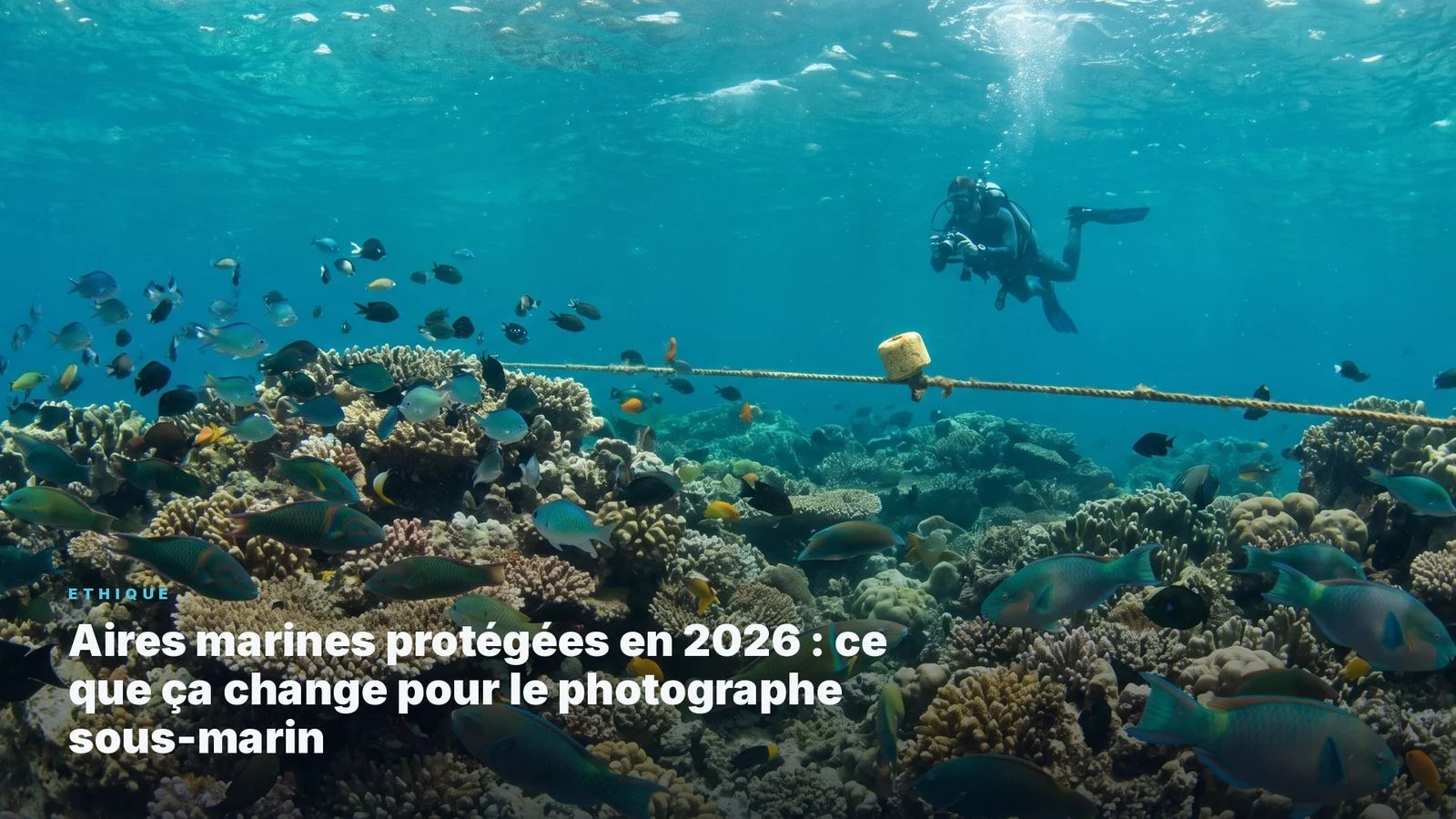
There is a figure that has been circulating since 8 June, World Ocean Day. Ten percent. One ocean in ten, if you will, is now covered by a marine protected area. And since 17 January 2026, an international treaty governs, for the first time, the 65% of the ocean that belongs to no one.
For those of us who descend below the surface with a camera, these two pieces of news are not abstract. They change destinations, the rules of the game, and perhaps also the meaning of what we do with our images.
Ten percent of the oceans protected: where do we really stand?
The 10% threshold was announced during World Ocean Day 2026, driven by the UN and relayed by every marine conservation organisation. It is a third of the 30x30 target (protecting 30% of the oceans by 2030), and it took decades to get there.
But the figure tells an incomplete story. Of these 10%, only 3.5% are fully or highly protected. The rest covers zones where restrictions are partial, sometimes very partial. Some European MPAs still permit bottom trawling, which amounts to protecting a forest while leaving bulldozers to operate inside it.
For the diving photographer, the nuance matters. An MPA is not a guarantee of preserved biodiversity. It is a legal framework whose effectiveness depends on local enforcement.
The High Seas Treaty: what concretely changes
The BBNJ Treaty (Biodiversity Beyond National Jurisdiction), adopted in 2023 after twenty years of negotiations, entered into force on 17 January 2026. It is the first legally binding framework for the conservation of biodiversity on the high seas, those two-thirds of the ocean that lie beyond the exclusive economic zones of states.
In practice, the treaty enables the creation of marine protected areas on the high seas (which was not legally possible before), imposes environmental impact assessments for activities in international waters, and establishes a benefit-sharing mechanism for marine genetic resources.
For responsible diving, the impact is indirect but real. Marine populations better protected offshore ultimately strengthen biodiversity on the coastal reefs we visit. Sharks, manta rays, the large pelagics we photograph in the Maldives do not respect legal boundaries. Protecting them on the high seas also means protecting them at our dive sites.
Photographing in an MPA: what is permitted, what is not
Rules vary considerably depending on the type of protection and the country. A few principles run through most regulations.
Personal underwater photography is generally authorised in MPAs open to diving. Commercial photography (documentaries, paid publications) often requires a specific permit from the protected area manager. In the United States, NOAA issues specific permits for commercial or educational photography involving protected species.
What is universally prohibited or strongly discouraged: touching the substrate, chasing an animal for a photo, modifying the environment (moving a coral, digging in the sand), anchoring on the reef, taking anything away. These rules are not new for those who practise ethical underwater photography, but inside an MPA they carry the force of law, with fines attached.
One detail many people miss: some MPAs limit the number of divers per day at a given site. In high season, this means booking well in advance, particularly at flagship spots in Indonesian, Thai or Australian marine parks.
The new MPAs to explore in 2026
The year 2026 has seen several significant additions to the world map of protected areas.
Indonesia and Thailand have created 284 new coastal and marine areas, strengthening the protection of some of the planet's richest reefs. For the underwater photographer, these two countries were already unmissable destinations. Increased protection should improve the condition of sites in the medium term.
Ghana declared its first MPA with the Greater Cape Three Points, after more than fifteen years of effort. It is a strong signal for West Africa, still under-represented on the global MPA map.
In Papua New Guinea, the Western Manus Marine Protected Area becomes the largest in the country. Papua New Guinea is one of the territories richest in marine biodiversity, and photographically one of the most spectacular for anyone seeking endemic species and pristine reefs.
Australia is reviewing its Commonwealth marine parks, with dive operators pushing to extend sanctuary zones around the Osprey and Bougainville reefs in the Coral Sea, Lord Howe Island, and Geographe Bay in Western Australia. The dive tourism industry there is worth €3.7 billion. Operators have understood that their business depends on healthy oceans.
The underwater photographer's role in documenting MPAs
There is something I have been observing for several years now. Every time a conservation programme wants to show the state of a reef, it ends up looking for images. Images that document the before and after. Images that make visible what scientific reports describe in numbers.
The Ocean Census identified 1,121 new species in one year, a pace accelerated in large part by the quality of onboard imaging. Citizen science programmes like FathomVerse (MBARI) use photos from ordinary divers to train AI to recognise marine species. And the Green Fins certification, now recognised by SDI, integrates photographic documentation into its environmental monitoring criteria.
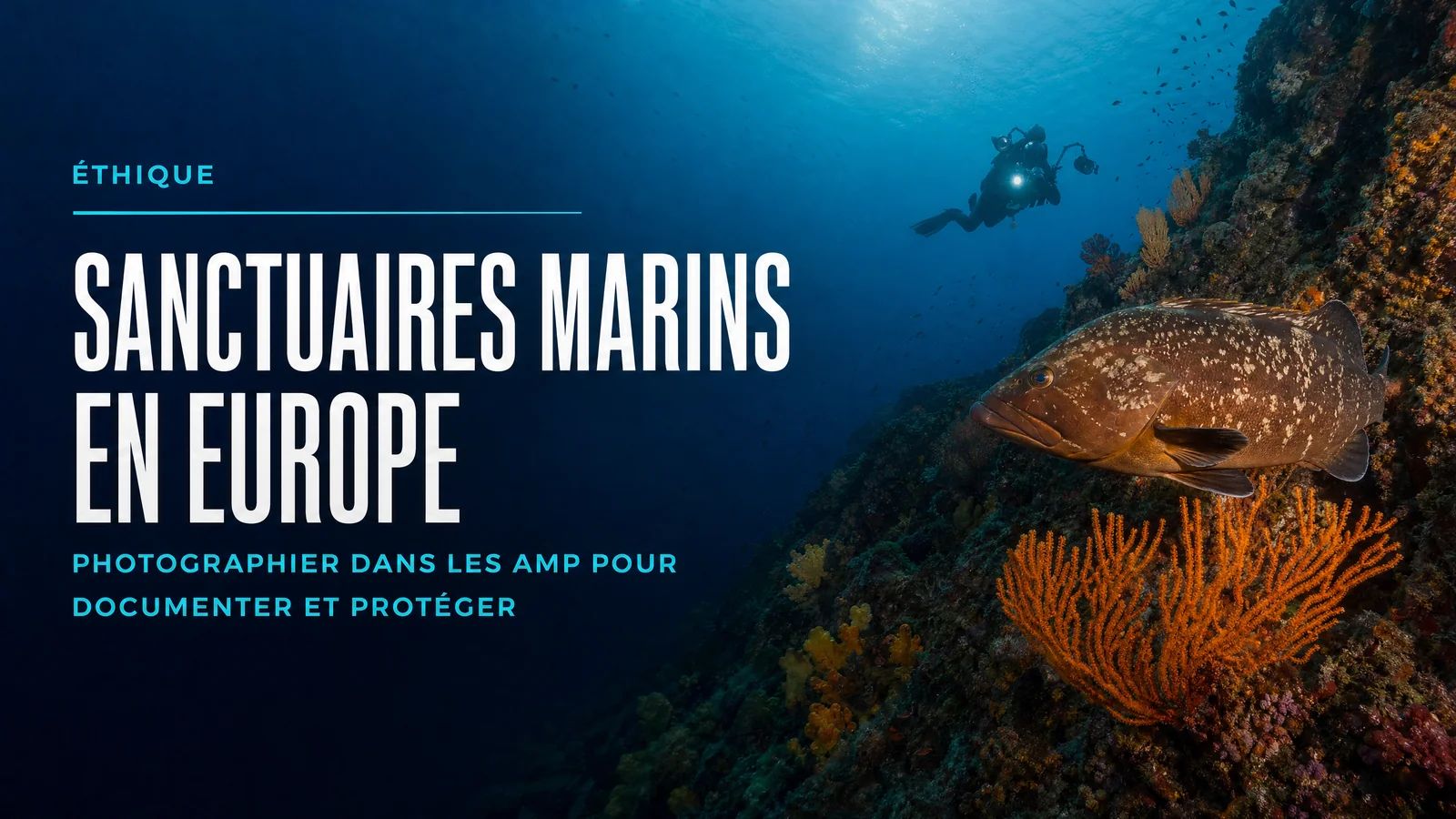
Every diver who takes photos underwater is participating, knowingly or not, in a broader documentary effort. Inside an MPA, this effort takes on an additional dimension: images become evidence of the state of the environment, monitoring tools, sometimes arguments for extending or strengthening protection.
This is not a reason to consider yourself a scientist. It is one more reason to photograph cleanly: good buoyancy, respectful distances, no stress imposed on animals, no fin-kicking on the substrate. The rules of AquaExposure training are not arbitrary constraints. They are the conditions for our images to have value, beyond our own enjoyment.
What 30x30 means for the future of underwater photography
The 30x30 target (30% of oceans protected by 2030) remains ambitious. Going from 10% to 30% in four years would require an unprecedented rate of MPA creation. Negotiations are stalling on questions of financing, governance, and the tension between protection and resource exploitation.
If the target is reached, even partially, it means more zones where marine life is recovering. More dive sites where biodiversity is improving rather than degrading. And more rules to know before putting your head underwater with a camera.
For the underwater photographer, the equation is simple. The more protected zones there are, the more subjects there are to photograph. And the more rules there are to respect in order to deserve access to them.
That may be the most honest contract the ocean offers us.
Marine Protected Areas in 2026: What It Changes for the Underwater Photographer | AquaExposure