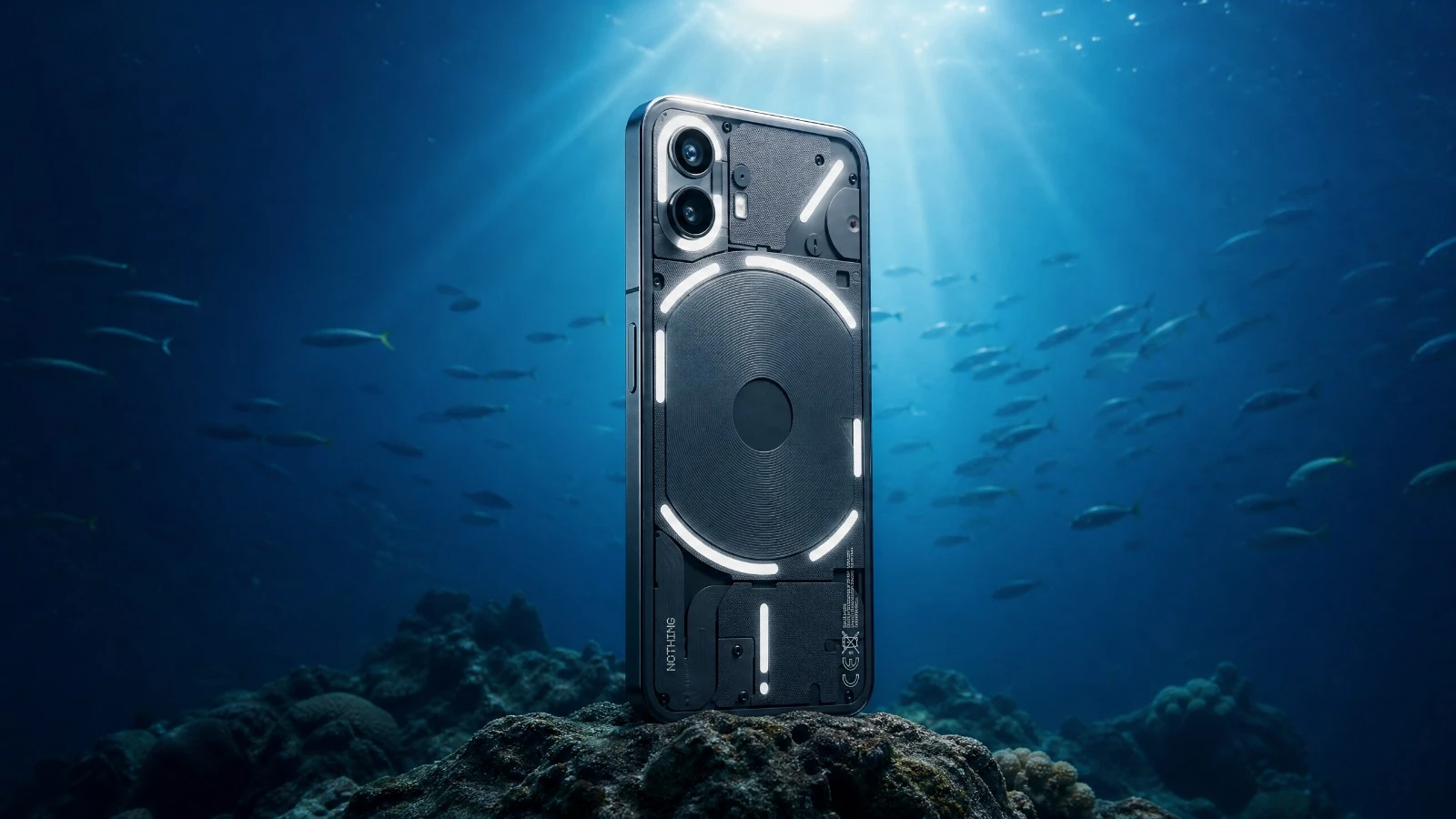
Underwater photo test of the Nothing Phone 2 in natural light. AquaExposure score: 2.9/5. Cases available. Read before buying!
Nothing Phone 2 underwater photography: our 2026 review.
When it comes to underwater photography with a smartphone, finding the right balance is key. The Nothing Phone 2, with its unique design and promise of a clean Android experience, caught our attention. But what happens when you take it underwater, far from city lights? We don't rely on marketing materials. We're going to see what this phone truly has to offer in capturing marine life in natural light. This test is here to give you a clear, straightforward view of its actual capabilities once submerged.
The Verdict in Summary
Overall score: 2.9/5
| Criterion | Score | What it means |
|---|---|---|
| Optics & sensor | 3.2/5 | A solid main sensor, but the ultrawide lens is lacking. |
| RAW & color | 3.1/5 | RAW format is available, which is a real plus, but the color accuracy lacks refinement. |
| Storage & transfer | 2.7/5 | The storage is good, but file transfer is slow. |
| Thermal management & condensation | 2.0/5 | The glass back and powerful processor pose challenges underwater. |
| Battery | 2.8/5 | A decent capacity, but battery life can be a concern in real-world use. |
| Underwater autofocus | 3.0/5 | Autofocus is functional, but lacks advanced technologies for murky water. |
| Housing | 0.0/5 | The lack of a dedicated housing is a major issue for reliability. |
Ideal Profile: The Nothing Phone 2 is for the occasional diver who wants to get started with underwater photography without making a significant investment. It requires compromises, but can deliver good results with patience and a good understanding of natural light.
Block-by-block analysis
B1 - Optics & Sensor: 3.2/5
The Nothing Phone 2 features a main Sony IMX890 sensor with 50 MP. This is a respectable-sized sensor (1/1.56") with an aperture of f/1.88. In natural light, this helps capture light even at a few meters' depth. Optical image stabilization (OIS) is present, which is a good feature to avoid blurry images. The ultrawide lens uses a Samsung JN1 sensor with 50 MP (1/2.76") and an aperture of f/2.2. It is smaller and less performant, but it has the advantage of being able to take macro shots at 4 cm, which is interesting for small subjects.
For more details: The main Sony IMX890 sensor (1/1.56", 1.0µm pixels) is a solid choice. The Samsung JN1 ultrawide-angle lens (1/2.76", 0.64µm pixels) is less impressive. Stabilization is OIS+EIS. The native ISO range is not clearly documented for optimal low-light performance.
B2 - RAW & Colorimetry: 3.1/5
The real key for underwater photography is RAW format. The Nothing Phone 2 does offer a RAW (DNG) mode through its Expert mode. This is a major advantage for correcting the inevitable blue tint that occurs underwater. The bit depth isn't specified, but we can expect 10 or 12 bits, which is sufficient for good post-processing. However, manual white balance in video doesn't seem to offer precise Kelvin locking, which makes it difficult to achieve consistent color rendering. There are no advanced video codecs like Log or ProRes, nor any partnerships with recognized colorimetry brands. It uses a generic processing approach.
For more details: The RAW DNG format is available. The bit depth is estimated to be 10-12 bits. Manual white balance in video does not include Kelvin locking. Video codecs are H.264/H.265. No specific color profile or partnership is supported.
B3 - Storage & Transfer: 2.7/5
With storage options up to 512 GB, the Nothing Phone 2 offers ample capacity for a day of diving. The key point is that there is no slot for an external memory card. Once the storage is full, you have to transfer files. And that's where the problem lies. The USB Type-C port is version 2.0, which means very slow transfer speeds (480 Mbps). Emptying a full card of RAW files and videos can take a long time, especially if you are on a boat between dives. This is a real hindrance to an efficient workflow.
For more details: Internal storage up to 512 GB, without microSD card expansion. USB Type-C 2.0 connector (480 Mbps). Transferring large amounts of data is slow.
B4 - Thermal & Condensation: 2.0/5
The Nothing Phone 2 is built with a glass back and an aluminum frame. It looks elegant, but underwater, this can be a problem. These materials are good thermal conductors. The Snapdragon 8+ Gen 1 processor is powerful, but it generates heat. Inside a waterproof case, this heat is trapped, which can lead to rapid overheating of the phone and, more seriously, condensation inside the case, blurring your photos. Some users have already reported issues with overheating during normal use. In cold water, the thermal shock between the hot phone and the cold water further increases this risk. This is a major point of concern.
For more details: Aluminum and glass frame. Snapdragon 8+ Gen 1 processor. High risk of overheating and condensation in underwater environments, especially in cold water. IP54 resistance (splash-proof), no shock certification.
B5 - Battery: 2.8/5
The Nothing Phone 2 has a battery capacity of 4700 mAh. On paper, this seems adequate. However, in practical use, the intensive use of the screen, sensor, and processor for photos and videos consumes a lot of power. User reports mention inconsistent battery life and rapid discharge. For a day with multiple dives, it will be necessary to be vigilant and likely plan for recharges between dives. The battery chemistry is not specified as being next-generation (Si-C or semi-solid), and the lifespan cycles are not documented for sustained performance in extreme conditions.
For more information: Lithium-ion battery, 4700 mAh. No advanced chemistry is documented. Battery life varies depending on usage, with reports of rapid discharge. Lifespan cycles are not documented.
Before each diving session, remember to check your external battery. Use our portable battery comparator tool to choose the right power bank for your dive equipment and desired battery life.
B6 - Underwater autofocus: 3.0/5
The autofocus on the Nothing Phone 2 relies on PDAF (Phase Detection Autofocus) technology for both the main sensor and the ultrawide lens. This is an effective surface-level technology. Underwater, in natural light, it works, but it's less performant than systems with LiDAR or ToF, which physically measure distance and are more reliable in murky water or with low contrast. There is no mention of Focus Peaking, a helpful aid for manual focusing. The ultrawide lens has the advantage of being able to focus at 4 cm, which is a plus for macro photography, but without clear visual assistance, it's harder to master.
"For more details: Phase Detection Autofocus (PDAF) on both sensors. No LiDAR or Time-of-Flight (ToF). No documented focus peaking feature. The ultrawide lens has a minimum focusing distance of 4cm."
B7 - Box: 0.0/5
The biggest drawback of the Nothing Phone 2 for diving is the lack of a dedicated waterproof case. A custom-designed case guarantees perfect waterproofing and ergonomic access to the controls. Without it, you are forced to use universal cases. These are less reliable, often bulkier, and access to the phone's functions is limited (often via generic buttons or imprecise touch membranes). This is a risk that cannot be ignored in an underwater environment. The lack of specific support for this device is a real obstacle for any serious diving use.
"For more information: No dedicated rigid cases are available for the Nothing Phone 2. This requires the use of universal cases, which come with associated limitations in terms of reliability and ergonomics."
What you need to know before buying.
Containers
As we have seen, there is no dedicated rigid case for the Nothing Phone 2. Your only option is to use universal cases. Brands like Divevolk offer solutions that adapt to many smartphones. However, always check the compatibility of the dimensions and, most importantly, how you will interact with the screen underwater. Generic touch membrane or button systems are often less intuitive than direct access or SeaTouch systems.
Terrain workflow
The Nothing Phone 2 can be used for underwater photography, but you need to adapt your workflow. The slowness of the USB 2.0 transfer means that you won't be able to quickly empty your phone between dives if you have a lot of RAW files and videos. Plan to do this in the evening, at the hotel. Thermal management is also something to watch out for. Avoid excessively long sessions, especially in warm water, to minimize the risk of overheating and condensation. Remember to disable Wi-Fi, Bluetooth, and mobile data once underwater to save battery power and reduce heat generation.
Key Considerations
The Nothing Phone 2 is not designed for diving. Its IP54 rating protects it from splashes, but not from submersion. The risk of overheating is real, especially if you are filming in 4K. The lack of a dedicated waterproof case is a serious reliability issue. If you care about your phone and your memories, this is not something to take lightly. The autofocus quality, while decent, does not compete with devices that have more advanced technologies for underwater environments. The absence of Kelvin locking in video is also a limitation for those seeking precise colorimetry.
Prix
The Nothing Phone 2 is positioned in the upper mid-range segment. Its new price is around €550-€600. At this price, it's important to carefully weigh the pros and cons. If your budget is limited and you are willing to make compromises, it could be a good entry point. However, if underwater photography is a serious passion, there are more suitable options available, even though they may be more expensive. Buying used might be an option if you're looking for a device dedicated solely to diving, but the risks related to waterproofing and battery life remain the same.
Our Verdict
The Nothing Phone 2 is an interesting device on the surface, with a design that doesn't go unnoticed. However, underwater, it's a different story. It has some advantages, such as its main sensor and the ability to shoot in RAW format, which is a real plus for post-production. But its limitations are significant: the USB 2.0 port, the delicate thermal management, and most importantly, the lack of a dedicated waterproof housing. This is a device that requires compromises and constant vigilance. For an occasional diver who wants to have fun and learn, it might be suitable. But for regular and demanding use, you'll need to look elsewhere. The real issue in diving is reliability and performance under extreme conditions, and on these points, the Nothing Phone 2 shows its limitations.
Frequently Asked Questions
Should an anti-fog treatment be used with this device?
Yes, absolutely. With its aluminum conductive frame, the risk of condensation (due to cold water below 15 degrees Celsius) is significant. The use of an anti-fog treatment (silica packet or inserts) inside the housing is mandatory before each dive.
To learn more: Overheating and fogging of smartphones underwater: the physics of the housing -- explains thermal mechanics, dew point, and the silica gel protocol.
How can I quickly transfer my photos and videos from this device?
The wired connection of this device is limited to the USB 2.0 standard (approximately 35-40 MB/s). To quickly transfer your RAW files or video clips, prioritize fast wireless transfers using the ecosystem's features (AirDrop on iOS, Quick Share on Android) or by removing the memory card if the enclosure allows it.
- Is the Nothing Phone 2 good for underwater photography?
- The Nothing Phone 2 offers decent performance for underwater photography in natural light, especially with its main sensor. Its RAW mode is an advantage. However, limitations such as USB 2.0 and the lack of a dedicated waterproof case hinder its potential. It's an acceptable choice for beginners, but not suitable for advanced requirements.
- What waterproof case for the Nothing Phone 2 for diving?
- Currently, there is no dedicated rigid waterproof case specifically for the Nothing Phone 2. You will need to turn to universal cases, such as those from Divevolk, which are compatible with a wide range of smartphones. Be sure to check the dimensions and button compatibility before purchasing.
- Does the Nothing Phone 2 support RAW format when underwater?
- Yes, the Nothing Phone 2 allows you to capture images in RAW (DNG) format through its Expert mode. This is a key feature for post-production in underwater photography, offering greater flexibility to correct white balance and colors after the dive.
- What is the battery life for a day of 3 dives with the Nothing Phone 2?
- With its 4700 mAh battery, the Nothing Phone 2 can last a full day of 3 dives if you manage its usage carefully. Disable unnecessary functions and use airplane mode between dives. Overheating can also affect battery life. Bring an external battery pack to recharge on the surface.
Learning Underwater Photography with This Camera
You have the Nothing Phone 2 and want to master underwater photography? It's possible! Join our AquaExposure training programs to learn composition techniques, natural light management, and post-processing methods tailored to your equipment. Whether you are a beginner or looking to refine your skills, our courses will give you the keys to enhance your underwater shots. Visit our AquaExposure Training to learn more.
Share
Table of Contents
- 01The Verdict in Summary
- 02Block-by-block analysis
- 03B1 - Optics & Sensor: 3.2/5
- 04B2 - RAW & Colorimetry: 3.1/5
- 05B3 - Storage & Transfer: 2.7/5
- 06B4 - Thermal & Condensation: 2.0/5
- 07B5 - Battery: 2.8/5
- 08B6 - Underwater autofocus: 3.0/5
- 09B7 - Box: 0.0/5
- 10What you need to know before buying.
- 11Containers
- 12Terrain workflow
- 13Key Considerations
- 14Prix
- 15Our Verdict
- 16Frequently Asked Questions
- 17Should an anti-fog treatment be used with this device?
- 18How can I quickly transfer my photos and videos from this device?
- 19Learning Underwater Photography with This Camera
Questions about the Journal
Can I use the photographs from this journal?
All images are protected by copyright. For any commercial or editorial use, please contact us via our form.
How can I be notified of new articles?
Follow us on social media or join the Sentinels Circle to receive our immersion stories before anyone else.
Do you offer hands-on workshops?
Yes, we organize masterclasses and field expeditions for members of our school. Check the Training page for details.