Table of Contents
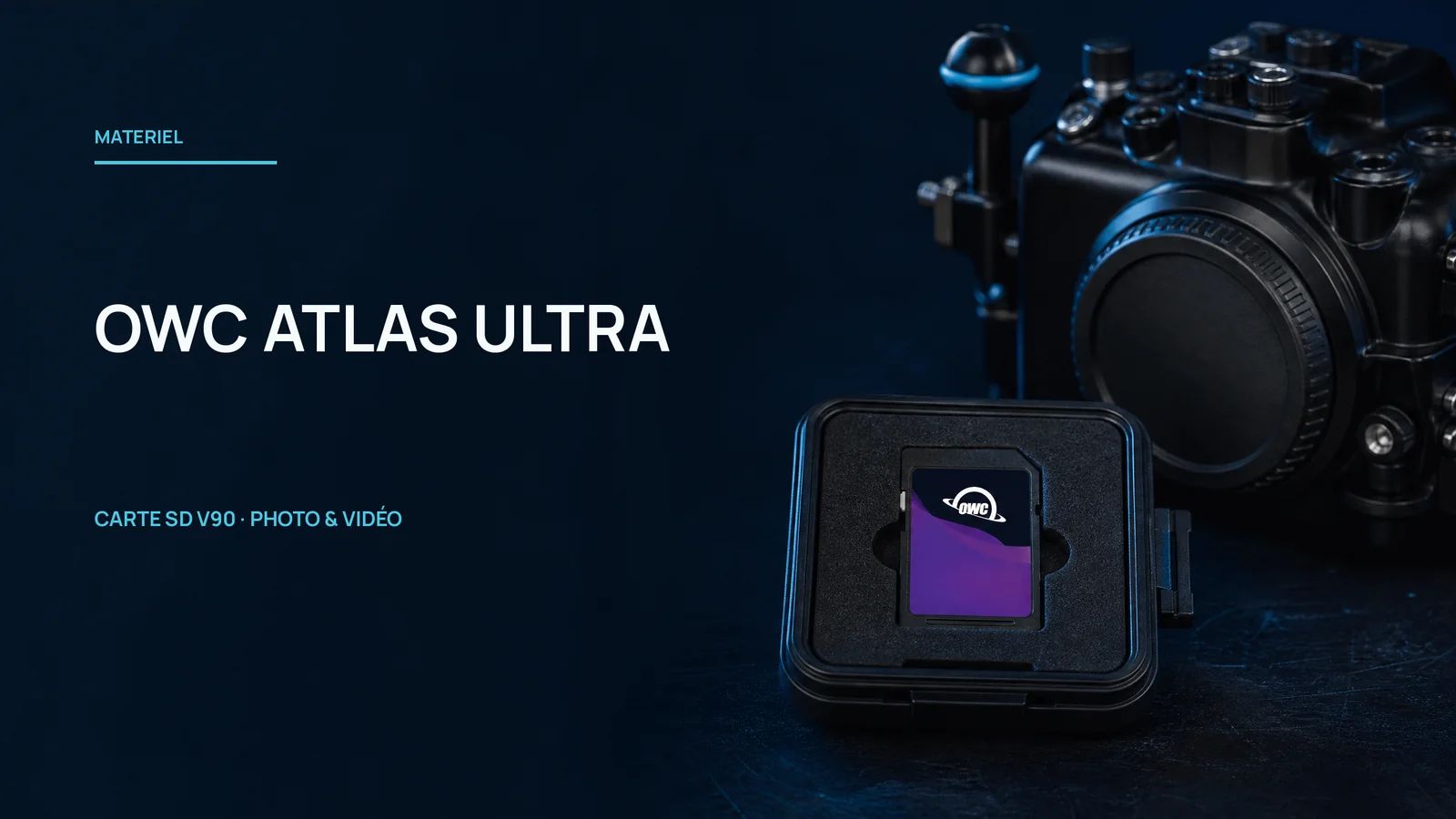
Technical analysis of the OWC Atlas Ultra V90 SDXC card- 310 MB/s read speeds, IP67 certification, and Innergize maintenance tools for 8K underwater video.
Share
/blog/owc-atlas-ultra-en
Table of Contents
- 01Critical speeds for high-resolution videoThe performance of a memory card is measured by its ability to maintain a consistent data flow without ever saturating the camera's buffer. The OWC Atlas Ultra boasts peak speeds of up to 310 MB/s for reading and 295 MB/s for writing [2]. These figures place this model among the fastest solutions in the UHS-II standard, facilitating the rapid transfer of large amounts of data to an editing workstation. This speed is a significant advantage during surface intervals, when time is limited to back up footage from the previous dive before returning to the water.
- 02A physical design engineered for the marine environment.The marine environment imposes severe mechanical and environmental constraints. Humidity, salt, and repeated handling with wet hands are all risk factors for electronic components. The OWC Atlas Ultra addresses these challenges with a robust design certified to IP67 [1]. This standard indicates that the card is completely protected against dust ingress and can withstand accidental immersion in one meter of water for a period of thirty minutes. This protection provides a significant safety margin during handling on deck, where even a single drop of saltwater can cause fatal corrosion of the contacts.
- 03The Innergize Ecosystem: Essential Proactive MaintenanceThe lifespan of a memory card depends on the health of its flash memory cells. OWC has developed the Innergize software to support the lifecycle of its products. This tool allows you to monitor the actual wear of the memory, providing an accurate diagnosis before a failure occurs [1]. Having reliable information about the health of your storage device is a crucial advantage before embarking on an expedition to a remote area where replacing equipment is impossible.
- 04Professional Compatibility and WorkflowThe OWC Atlas Ultra is designed to integrate into demanding workflows. Its compatibility is officially validated with a wide range of professional housings, including Sony Alpha, Canon EOS R, Nikon Z, and Fujifilm systems [2]. It also supports the BRAW format used by Blackmagic Design cameras, making it a versatile option for hybrid productions that combine different types of sensors. The card's thermal tolerance is another key feature for outdoor shoots. The components are certified to operate stably without the risk of excessive overheating. The Atlas Ultra range is available from 64 GB to 512 GB [1].
- 05Important Considerations and Technical Limitations
- 06ConclusionThe peace of mind you experience in the field comes from the confidence you have in your equipment. The OWC Atlas Ultra SDXC V90 combines top-of-the-line speed, essential for the most demanding video formats, with physical robustness that can withstand the humidity found on boats. By integrating software maintenance tools, OWC offers a comprehensive approach to data security that goes beyond simple recording. When your equipment becomes reliable enough to fade into the background, the photographer can fully focus on observing the light and movement of the water.
Questions about the Journal
What are the advantages of the IP67 certification for an underwater photographer?
The IP67 certification guarantees complete protection against dust and resistance to accidental immersion in one meter of water for thirty minutes. This standard provides crucial safety when handling equipment on the deck of a boat, where water splashes and ambient humidity can threaten the integrity of storage housings.
Why is the use of an external hard drive enclosure (OWC) recommended with the Atlas Ultra?
While the card works with any UHS-II reader, accessing the advanced features of the Innergize software requires a reader from the OWC Atlas product line. This tool allows you to monitor the wear of the memory cells, update the firmware, and restore original performance through a deep cleaning of the flash components.
Is the OWC Atlas Ultra card compatible with the Blackmagic RAW format?
Yes, this card is officially validated for recording in BRAW (Blackmagic RAW) format at a 4K resolution. Its V90 certification guarantees a sustained minimum write speed of 90 MB/s, which allows you to handle the large data streams from compact cinema cameras without risking any loss of images.

