Table of Contents
Technical analysis and reasons for excluding the Beuchat duckbill stage regulator, 1.50m. Clownfish. Why this model is excluded from the recommended AquaExposure selection- high air pocket design.
Share
/blog/parachute-de-palier-bec-de-canard-1-50m-poisson-clown-beuchat-en
Table of Contents
- 01Technical Analysis and Positioning of the Beuchat Parachute de palier bec de canard 1.50 m Poisson Clown
- 02Why is this model excluded from the AquaExposure comparison tool?
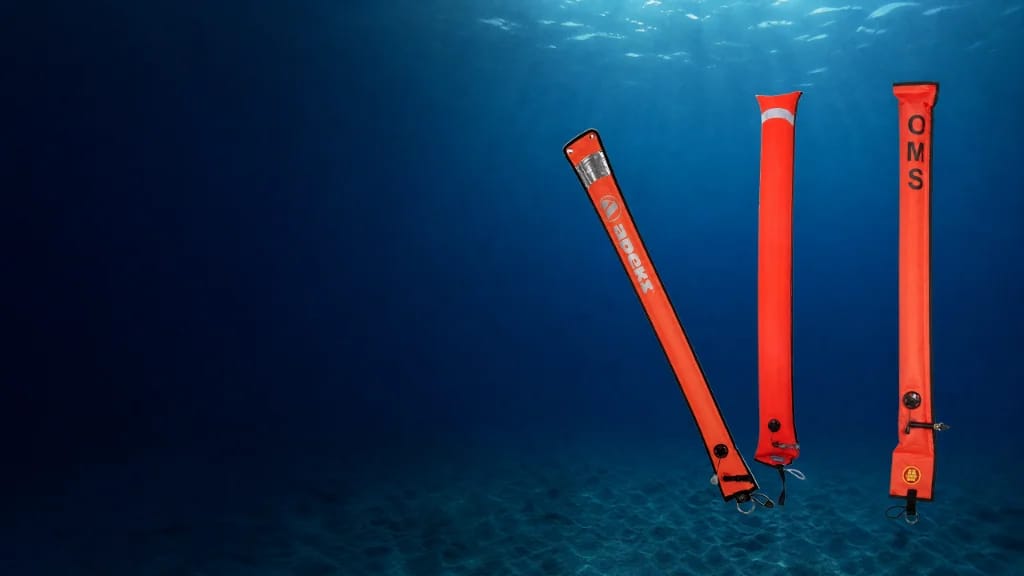
- 03Reason for Exclusion: Decorative design with a high-air pocket.Decorative shapes, animal silhouettes, or air pockets at the top create a dangerous hydrostatic imbalance. During ascent, the physical expansion of the air trapped in a raised protrusion causes the buoy to tilt horizontally. At the surface, the parachute lies flat on the water instead of remaining upright, ruining its fundamental role as a marker.
- 04Concrete Risks in Real Diving Situations
- 05Summary Table of the AquaExposure Doctrine| Criteria Examined | Performance on this Model | AquaExposure Recommendation | |---|---|---| | Primary Visibility | Not optimal specification | Choose an orange safety or high-visibility pink model. | | Tube Geometry | Non-linear shape | Choose a vertical, waterproof, straight tube with a calibrated valve. | | Weighting and Line | Standard format | Choose an unweighted finger spool with a double-ender stainless steel shackle. | | Editorial Status | **Excluded from the comparison** | Select a model from our recommended list. |
- 06Verdict and Recommended Alternatives
Questions about the Journal
Why does AquaExposure not recommend this model?
This model is excluded from our selection because: It has a high-air pocket design, which does not guarantee optimal safety at the surface.
What color of surface marker buoy (SMB) should I choose for maximum safety?
AquaExposure strongly recommends using a high-visibility orange or pink surface marker buoy (SMB) for maximum contrast against the water.
Are weighted skits dangerous for the environment?
Yes, a lead weight striking the seabed can break coral and damage Posidonia seagrass beds.
What is the safest inflation system?
A closed or semi-closed tube with a non-return valve and a calibrated overpressure valve is the safest standard.

