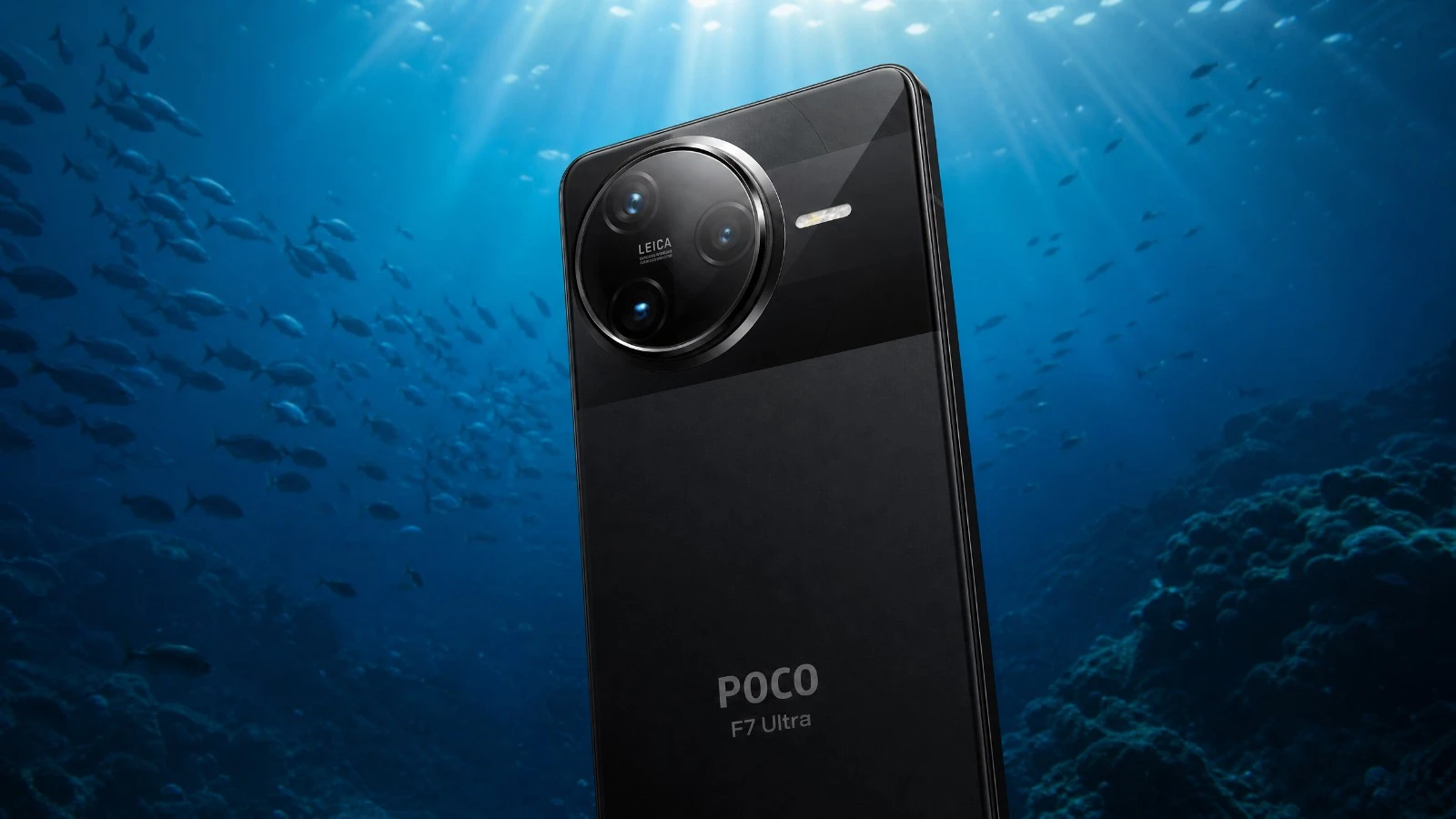
Poco F7 Ultra underwater camera test in natural light. AquaExposure score, review, and available cases. Read before you buy!
Poco F7 Ultra for underwater photography: our 2026 review.
Are you about to take the plunge with your Poco F7 Ultra to capture your dives? Good idea. But before you make the big leap, there are things you need to know. In the field, you see all sorts of things. Some smartphones excel, while others struggle. The Poco F7 Ultra is somewhere in between. It has its strengths, certainly, but also some points to be aware of. We'll break it down together, without sugarcoating, so you know exactly what to expect underwater. No marketing jargon, just real-world experience. We're talking about natural light, the real underwater environment, not a studio. Ready to dive into the details?
The Verdict in Summary
The Poco F7 Ultra is a device that can accompany you underwater, but it won't perform miracles. It's a good companion for beginners or for occasional snapshots. The real issue is its USB 2.0 port. This is a significant limitation, and we have to be honest about that.
Overall score: 2.5/5
| Criterion | AquaExposure Score |
|---|---|
| B1 Optics | 3/5 |
| B2 RAW | 3/5 |
| B3 Storage | 2/5 |
| B4 Thermal | 3/5 |
| B5 Battery | 3/5 |
| B6 Autofocus | 3/5 |
| B7 Waterproof Housing | 2/5 |
Ideal Profile: The occasional diver who wants to capture a few photos during their vacation, without having to deal with heavy and expensive equipment. Someone who values simplicity and doesn't need a professional-level workflow.
Block-by-block analysis
B1 Optics
The camera on the Poco F7 Ultra is decent for a smartphone in its category. In natural light, you will get sharp images and accurate colors, provided the conditions are good. It doesn't compete with the massive sensors of phones like the Vivo X100 Ultra, which is obvious. But for photos of colorful fish or shallow coral reefs, it does the job. The image quality is there, but not exceptional.
To delve deeper: The Poco F7 Ultra uses standard-quality lenses for a smartphone. It doesn't incorporate specialized optics like the Zeiss lenses found in the Vivo X100 Ultra, which limits its performance in low light or when capturing very fine details.
B2 RAW
The Poco F7 Ultra allows you to shoot in RAW format. This is a key feature for post-production. You will have more flexibility to adjust the white balance and recover details in the shadows or highlights. This is what matters when giving your images a second life. But be aware that RAW files are large.
For more information: The RAW format of the Poco F7 Ultra offers sufficient color depth for extensive editing. However, the file size can quickly fill up the internal memory.
B3 Storage
The internal storage of the Poco F7 Ultra is sufficient for a few dives. But the real issue is data transfer. The Poco F7 Ultra is equipped with a USB 2.0 port. This is very slow. If you have a lot of RAW photos and videos, downloading from your memory cards will be a challenge. This is a major point to consider. Devices like the Vivo X100 Ultra, with their USB 3.2 ports, are in a completely different category for this purpose.
For more information: The Poco F7 Ultra uses a USB 2.0 port, with a theoretical data rate of 480 Mbps. Wi-Fi 7 can help with wireless transfers, but it remains less reliable and more energy-intensive underwater.
B4 Thermal
The Poco F7 Ultra is made of plastic and glass. This is a good compromise for heat dissipation. Unlike the Nothing Phone 2 with its transparent back, it doesn't suffer from rapid overheating issues. It holds up well. You can chain your dives together without too much worry on this front. The Motorola Edge 50 Fusion, with its leather chassis, is even better in this regard, but the Poco F7 Ultra performs quite well.
"For more details: The plastic and glass frame of the Poco F7 Ultra offers adequate heat dissipation. Overheating remains a risk in a sealed casing, especially during prolonged 4K video recording."
B5 Battery
The battery life of the Poco F7 Ultra is average. For a day of three dives, you will need to be mindful of your power consumption. Disable Wi-Fi, Bluetooth, and all background applications. This is what matters most for maximizing battery life. Consider bringing an external battery pack to recharge between dives if you want peace of mind.
For more information: The battery capacity of the Poco F7 Ultra is standard for a smartphone. Intensive use of the camera and screen underwater can significantly reduce battery life.
Before each diving session, remember to check your external battery. Use our portable battery comparator tool to choose the right power bank for your dive equipment and desired battery life.
B6 Autofocus
The autofocus on the Poco F7 Ultra is responsive on the surface. Underwater, it does its job, but don't expect the precision of a dedicated camera. It can sometimes struggle with fast-moving subjects or in low-contrast conditions. Focus peaking isn't always reliable. This is something to consider if you are targeting very dynamic subjects.
To delve deeper: The autofocus system of the Poco F7 Ultra relies on classic phase detection and contrast technologies. It does not benefit from LiDAR sensors or advanced AI systems, as found in some flagship devices.
B7 Enclosure
Finding a housing for the Poco F7 Ultra is the real challenge. You will need to look for universal housings. Brands like Divevolk or Weefine offer solutions. Make sure the housing is well-suited to the size of your phone and that it allows you easy access to the photo and video functions. This is a key point for a good user experience.
To learn more: Universal cases offer good protection, but they can sometimes limit access to certain specific features of the phone. Check compatibility with third-party apps like Blackmagic Camera if you plan to use them.
What you need to know before buying.
Before deciding to buy the Poco F7 Ultra for underwater use, there are a few things to consider. First, the housings. As mentioned, these will be universal housings. It's important to carefully check compatibility and ergonomics. Next, the on-site workflow. With USB 2.0, transferring your files will be slow. Very slow. Be prepared to be patient or use Wi-Fi 7 for transfers, but this isn't ideal underwater. The points of concern are potential overheating during long video recordings and limitations in autofocus performance with fast-moving subjects. As for the price, the Poco F7 Ultra is affordable, making it an interesting option for those on a tight budget.
Our Verdict
The Poco F7 Ultra is a smartphone that can accompany you underwater for taking photos in natural light. It's not the best, far from it, but it's also not the worst. Its value for money is what matters to many people. If you are an occasional diver who just wants to capture beautiful memories without making a significant investment, it might be suitable. However, if you are looking for performance, workflow speed, and versatility, you will need to look elsewhere. The USB 2.0 port is its Achilles' heel. It's a choice that should be made with careful consideration.
Frequently Asked Questions
Should an anti-fog treatment be used with this device?
Although this model has a chassis less prone to condensation than all-aluminum models, temperature differences underwater remain a factor. An anti-fog treatment (silica gel packet or inserts) is strongly recommended as a precaution before each immersion.
To learn more: AquaExposure training (/en/blog/surchauffe-buee-smartphone-caisson-sous-marin) -- explains thermal mechanics, dew point, and silica gel protocol.
How can I quickly transfer my photos and videos from this device?
The wired connection of this device is limited to the USB 2.0 standard (approximately 35-40 MB/s). To quickly transfer your RAW files or video clips, prioritize fast wireless transfers using the ecosystem's features (AirDrop on iOS, Quick Share on Android) or by removing the memory card if the enclosure allows it.
Is the Poco F7 Ultra good for underwater photography? The Poco F7 Ultra can be used for underwater photography in natural light, but it has limitations. Its USB 2.0 port is a real bottleneck for transferring large files. It might work for occasional use, but for more serious results, there are better options available.
What housing for the Poco F7 Ultra for diving? For the Poco F7 Ultra, you will need to use universal housings from brands like Divevolk or Weefine. Make sure the housing supports the dimensions of your phone and offers easy access to the buttons for taking photos and videos.
Does the Poco F7 Ultra shoot in RAW underwater? Yes, the Poco F7 Ultra is capable of capturing images in RAW format. This is a positive point for post-production, as it gives you more flexibility to correct exposure and white balance. However, transferring these RAW files will be slow due to the USB 2.0 connection.
What battery life can you expect for a day of 3 dives with the Poco F7 Ultra? With good battery management and by disabling unnecessary functions, the Poco F7 Ultra can last for a day of 3 dives. However, overheating can be an issue, especially in a waterproof case. It's recommended to bring a power bank to recharge between dives if you want to be on the safe side.
Learning Underwater Photography with This Camera
You have your Poco F7 Ultra and want to master underwater photography? That's an excellent goal. Every device has its own specific features, and yours is no exception. To get the most out of your Poco F7 Ultra underwater, and to understand the basics of natural light, composition, and post-production, we have what you need. Visit our learning platform for courses tailored to your level and equipment:(https://www.aquaexposure.com/en/lms)
To go further, discover our underwater smartphone housing comparator to find the best gear.
Share
Table of Contents
- 01The Verdict in Summary
- 02Block-by-block analysis
- 03B1 Optics
- 04B2 RAW
- 05B3 Storage
- 06B4 Thermal
- 07B5 Battery
- 08B6 Autofocus
- 09B7 Enclosure
- 10What you need to know before buying.
- 11Our Verdict
- 12Frequently Asked Questions
- 13Should an anti-fog treatment be used with this device?
- 14How can I quickly transfer my photos and videos from this device?
- 15Is the Poco F7 Ultra good for underwater photography? The Poco F7 Ultra can be used for underwater photography in natural light, but it has limitations. Its USB 2.0 port is a real bottleneck for transferring large files. It might work for occasional use, but for more serious results, there are better options available.
- 16What housing for the Poco F7 Ultra for diving? For the Poco F7 Ultra, you will need to use universal housings from brands like Divevolk or Weefine. Make sure the housing supports the dimensions of your phone and offers easy access to the buttons for taking photos and videos.
- 17Does the Poco F7 Ultra shoot in RAW underwater? Yes, the Poco F7 Ultra is capable of capturing images in RAW format. This is a positive point for post-production, as it gives you more flexibility to correct exposure and white balance. However, transferring these RAW files will be slow due to the USB 2.0 connection.
- 18What battery life can you expect for a day of 3 dives with the Poco F7 Ultra? With good battery management and by disabling unnecessary functions, the Poco F7 Ultra can last for a day of 3 dives. However, overheating can be an issue, especially in a waterproof case. It's recommended to bring a power bank to recharge between dives if you want to be on the safe side.
- 19Learning Underwater Photography with This Camera
Questions about the Journal
Can I use the photographs from this journal?
All images are protected by copyright. For any commercial or editorial use, please contact us via our form.
How can I be notified of new articles?
Follow us on social media or join the Sentinels Circle to receive our immersion stories before anyone else.
Do you offer hands-on workshops?
Yes, we organize masterclasses and field expeditions for members of our school. Check the Training page for details.