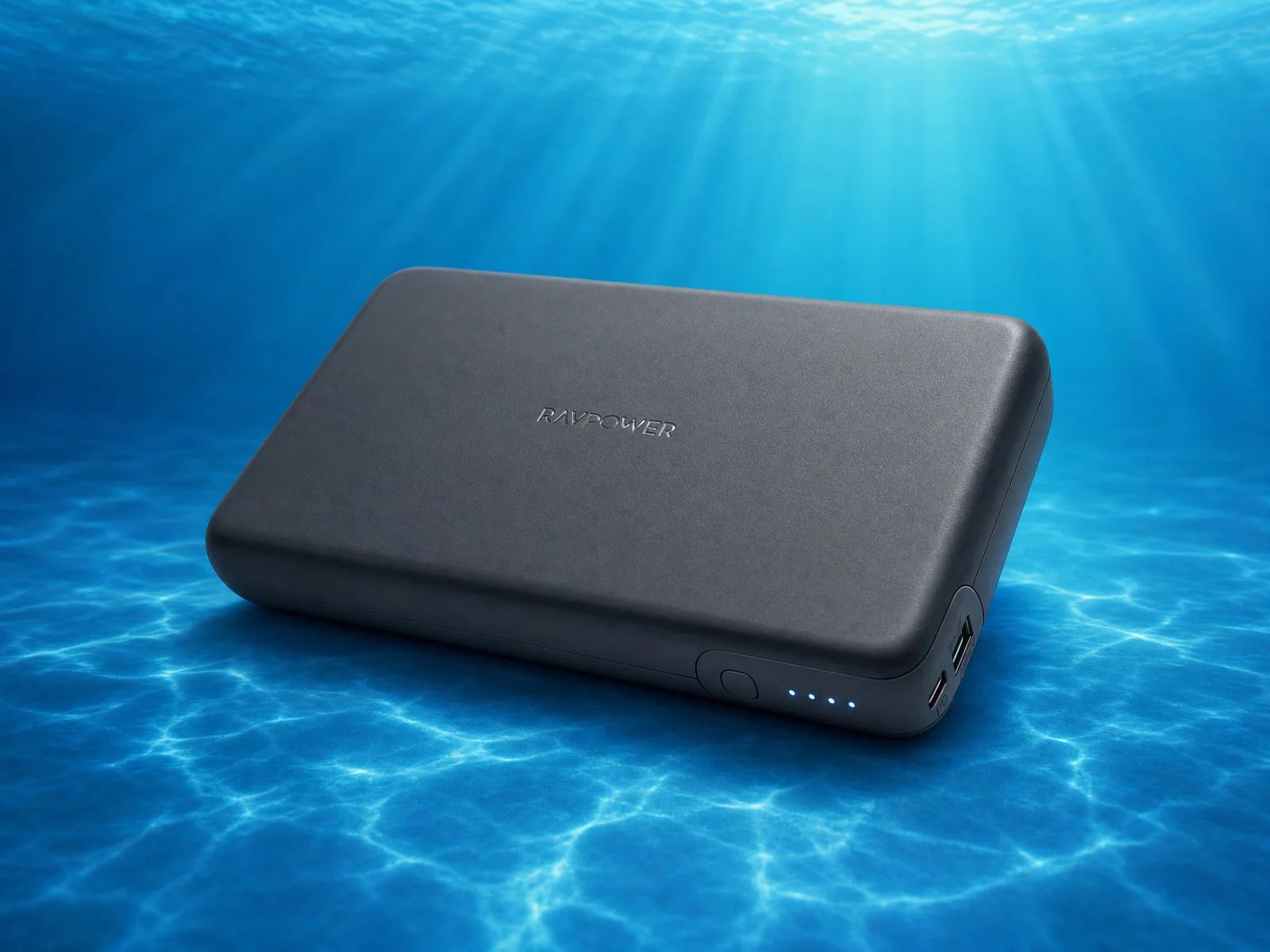
Is the RAVPower PD Pioneer 90W power bank allowed on airplanes?
With an energy capacity of 108 Wh, this battery exceeds the standard limit of 100 Wh. Its transport in the cabin requires the prior approval of your airline, and it is strictly prohibited in checked baggage. It is important to verify the applicable regulations with the airline and authorities at the time of departure, as its acceptance is never guaranteed.
Can it charge a MacBook Pro at full speed?
Yes, its USB-C port provides up to 90W of power output. This allows for efficient charging of most modern laptops that support the Power Delivery protocol.
How long does it take to recharge the battery itself?
With its 60W input, a full charge takes approximately two and a half to three hours using a compatible wall charger.
To improve your mastery of your equipment and optimize your procedures while diving, discover our specialized training modules on AquaExposure training.
RAVPower PD Pioneer 90W: Raw power for remote expeditions
When venturing away from the coast for an expedition or staying on a liveaboard dive boat where power outlets are scarce, power management becomes a priority. For underwater photographers, every minute on the surface is a race to download memory cards and revive depleted batteries. This is where the RAVPower PD Pioneer 30000mAh 90W comes in, offering a massive power reserve for those who cannot afford to run out of power far from any electrical infrastructure.
A 30,000 mAh capacity for extended battery life
The main advantage of this power bank lies in its raw capacity. With a 30,000 mAh capacity, this model uses LG 21700 lithium-ion cells known for their reliability [1]. This reserve allows for multiple charging cycles without needing to find a power outlet. For a diver using a smartphone and an action camera, this represents approximately six full charges, covering a week of intensive diving if limited to these small devices.In a professional setting, this battery offers a total energy capacity of 108 Wh [2]. This figure places the battery in a specific category of travel equipment. In terms of performance, it can provide approximately one and a half full charges to a 13-inch MacBook Pro. The AquaExposure score for raw battery life is high, making this battery a valuable backup power source when access to electricity is intermittent.
The Power of Power Delivery at 90 W
Capacity alone is not enough if the transfer speed cannot keep up with the demands. The RAVPower PD Pioneer stands out with its USB-C port that delivers up to 90 W [3]. This power allows you to charge tablets as well as demanding laptops. The technical specifications confirm that charging a laptop occurs with a fluidity comparable to that of a standard wall charger, an advantage for processing your images between dives.
It is important to note a nuance in the management of this power. If you use the USB-C port and the USB-A port simultaneously, the power distribution changes. The USB-C port then drops to 65 W, while the USB-A port provides 18 W, for a total of 83 W [1]. The battery itself charges quickly, accepting 60 W input, which allows you to fully recharge it in less than three hours with a high-performance power adapter [3].
Exceeding the 100 Wh Limit: The Challenge of Air TravelThe RAVPower PD Pioneer has an energy capacity of 108 Wh, which places it above the standard 100 Wh limit set by the IATA for air transport [2] [4]. This exceeds the limit and changes how you need to travel. Unlike smaller models, this battery does not automatically qualify for transport in the cabin.
It is essential to obtain prior approval from your airline before departure. Most airlines allow batteries between 100 and 160 Wh, but this permission remains at their discretion and must be confirmed during check-in [4]. This battery is strictly prohibited in checked baggage. It must be transported exclusively in the cabin, protected against short circuits. You must always verify the applicable rules with the airline and authorities at the time of departure. Never assume that its acceptance is guaranteed. The rules of the airline and the relevant authority always prevail. Checking the regulations for each trip is the only way to avoid confiscation at security.
Ergonomics and daily energy managementRAVPower prioritized simplicity and durability. The plastic casing protects the cells from minor impacts that are inevitable in a camera equipment bag. With dimensions of 150 x 87 x 25 mm and a weight of 540 grams, it easily fits into a side pocket of a backpack [1]. The interface is limited to four LED indicators that display the charge level in increments of 25%. While a digital display would offer more precision, these diodes allow for a quick check of the remaining charge. The pass-through charging function is valuable. It allows you to connect the battery to the mains and simultaneously connect a device to it, which is ideal in a boat cabin where outlets are scarce.
A Balance Between Performance and Budget
In a market where high-performance batteries are expensive, this model offers a competitive price. For approximately 70 euros, the ratio of capacity to price is one of the most attractive in the industry for divers [1]. The AquaExposure rating for quality and price is excellent, provided you accept the limitations of the capacity. It is not a complex product with advanced features, but a robust tool that provides a large amount of power. The quality of the integrated LG cells ensures a long lifespan for this equipment.
Who is this battery suitable for?This model is designed for underwater photographers embarking on independent expeditions or extended stays on boats. If your equipment includes a laptop for editing and multiple hybrid housings, the 30,000 mAh battery capacity becomes an essential safeguard. It is also useful for long journeys where access to power sources is limited. However, it may be less suitable for divers who only take day trips, as the weight and administrative requirements would be an unnecessary burden compared to a 10,000 mAh model.
Limitations and Compatibility
The RAVPower PD Pioneer has certain limitations. Its thermal sensitivity requires that it not be covered during charging at 90W, especially in tropical climates. Because the plastic casing is not waterproof, it must remain in a dry bag on a boat. Finally, the Power Delivery 3.0 protocol ensures broad compatibility, but the maximum power output requires a cable marked with an E-marker on the USB-C port.
ConclusionThe RAVPower PD Pioneer 90W is a substantial solution for those who prioritize battery life over lightness. It focuses on providing consistent power and a reassuringly large capacity. For the isolated photographer, this black power bank becomes much more than just an accessory. It represents the certainty of being able to process images and prepare for the next dive, even far from any network. Once the necessary formalities with the airline and authorities have been completed, it becomes an tireless travel companion, provided that the safety regulations in force at the time of departure are respected.
[1]: https://the-gadgeteer.com/2021/02/04/ravpower-pd-pioneer-30000mah-2-port-power-bank-review/ "RAVPower PD Pioneer 30000mAh 2-Port Power Bank Review" [2]: https://device.report/manual/2032932 "RAVPower RP-PB232 User Manual" [3]: https://www.notebookcheck.net/RAVPOWER-PD-Pioneer-30-000mAh-2-Port-Power-Bank-review.553419.0.html "RAVPower PD Pioneer 30,000mAh 2-Port Power Bank Review" [4]: https://www.iata.org/contentassets/6fea26dd84d24b26a7a1fd5788561d6e/passengers_travelling_with_lithium_batteries.pdf "IATA - Provisions for Dangerous Goods Carried by Passengers"Here's the translation:
This section covers essential equipment for underwater photography, focusing on power solutions.
Powering Your Underwater Photography Gear
Underwater photography requires a significant amount of power for cameras, lights, and other accessories. Running out of battery power mid-dive can be a frustrating and potentially dangerous experience. Therefore, having a reliable power source is crucial.
One solution is to use external batteries. For example, the RAVPower PD Pioneer 90W power bank is a popular choice for charging laptops and other devices. It's compact and powerful enough to provide extended battery life for your underwater equipment.
[Image 1: A studio shot of a RAVPower battery placed next to an open MacBook Pro displaying underwater photos, on a light-colored wooden desk. The battery is on the right, and a USB-C cable is connected. The lighting is bright and professional.] Alt text: RAVPower PD Pioneer 90W external battery charging a laptop on a photographer's desk.
When choosing an external battery, consider its capacity, charging speed, and compatibility with your equipment. It's also important to ensure that the battery is properly sealed and protected from water damage.
[Image 2: A gloved hand (wearing a black neoprene glove) holds a RAVPower battery on the deck of a boat, with the blurred ocean in the background. The focus is on the illuminated LED indicators.] Alt text: A diver's hand holding a RAVPower 30000mAh battery on a dive boat.
Remember to always test your power solutions before your dive to ensure they are working correctly. Proper planning and preparation are key to a successful and enjoyable underwater photography experience. Consider consulting with experienced underwater photographers or dive shops for recommendations on the best power solutions for your specific needs. You can also find helpful information and advice from resources like AquaExposure and from photographers like Benjamin Coste.
RAVPower PD Pioneer 90W: Raw power for long expeditions. | AquaExposure