Table of Contents
SanDisk Extreme PRO V2 review for diving- 2000 MB/s, IP65 protection, and reliability tips from AquaExposure to secure your RAW files.
Share
/blog/sandisk-extreme-pro-v2-en
Table of Contents
- 01Who is this SSD for?The SanDisk Extreme PRO V2 is designed for creators who work with large amounts of data in mobile environments. For those returning from a dive with 50-megapixel RAW files or 4K video footage, the time saved is a significant advantage. The faster the transfer speed, the less time the drive is exposed on a boat deck, where the risks of dropping it or getting splashed with water are real. This responsiveness allows you to quickly clear the memory cards for the next dive.
- 02RAW Performance and WorkflowThe technical performance relies on speeds reaching 2000 MB/s [1]. However, this figure requires a specific interface, USB 3.2 Gen 2x2. If your computer only supports the standard USB 3.2 Gen 2, your transfer speeds will be limited to around 1050 MB/s. While this speed remains performant, it's half the theoretical speed of the hardware. It's crucial to verify the compatibility of your transfer chain to avoid being limited by an inadequate port.
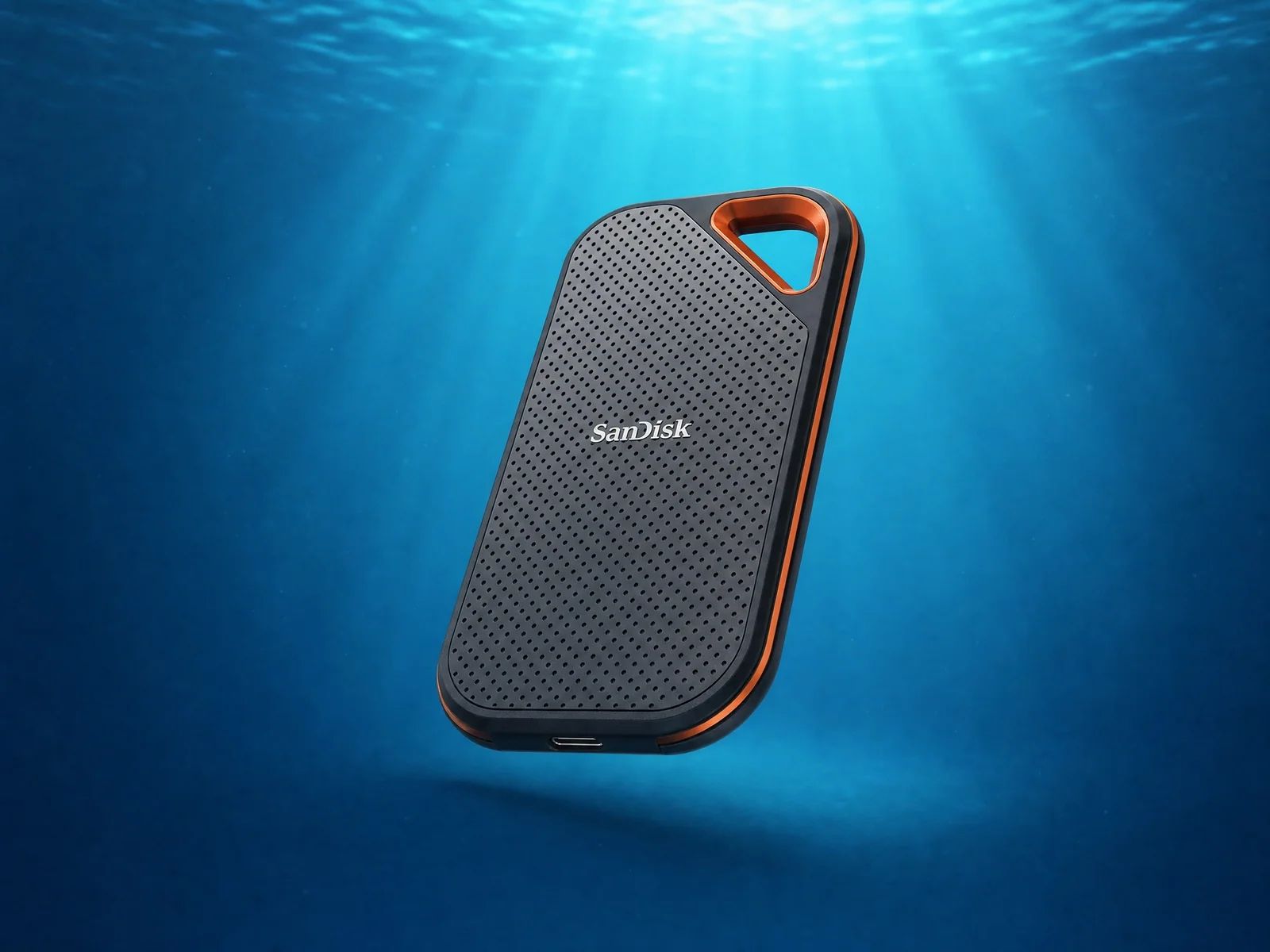
- 03Protection and Environmental LimitationsThe forged aluminum frame acts as an efficient heat sink during intensive data transfers [3]. Surrounding this rigid core, a silicone housing protects against impacts and drops of up to 3 meters onto concrete or a ship's deck. However, the IP65 rating only guarantees protection against dust and water splashes [1]. This SSD is not submersible. An accidental drop into a rinse tank or saltwater could be fatal if liquid enters the USB-C port.
- 04Data Security and Reliability
- 05Conclusion Regarding Use on Expeditions
- 06FAQ
- 07Can the SanDisk Extreme PRO V2 fall into the water? No, this drive has an IP65 certification. It is resistant to splashes and dust, but submersion could permanently damage it. Always keep it in a waterproof pouch on the boat.### Why isn't my SSD reaching the advertised 2000 MB/s? To achieve these speeds, your computer must have a USB 3.2 Gen 2x2 port. If you are using a standard USB 3.2 Gen 2 port, the speeds will be limited to approximately 1000 MB/s.
- 08Do I really need to update the firmware on my SanDisk drive? Yes, it is essential. Reliability issues were documented in 2023 for the 2 TB and 4 TB models. The update corrects these defects and secures your data.
- 09References
Questions about the Journal
Can the SanDisk Extreme PRO V2 fall into the water?
No, this drive has an IP65 certification. It is resistant to splashes and dust, but submersion could permanently damage it. Always keep it in a waterproof pouch on the boat.
Why isn't my SSD reaching the advertised 2000 MB/s?
To achieve these transfer speeds, your computer must have a USB 3.2 Gen 2x2 port. If you are using a standard USB 3.2 Gen 2 port, the speeds will be limited to approximately 1000 MB/s. Please check the specifications of your computer.
Do I really need to update the firmware on my SanDisk drive?
Yes, it is essential. Reliability issues were documented in 2023 for the 2 TB and 4 TB models. This update corrects these defects and secures your data.

