AquaExposure
HomepageTrainingToolsArticles
AquaExposure

© 2026 AquaExposure. Ethically preserving the depths.

AquaExposure
Homepage
Pricing
Menu
Homepage
PricingShopArticles
AquaExposure — Explore Beneath, Capture Beyond
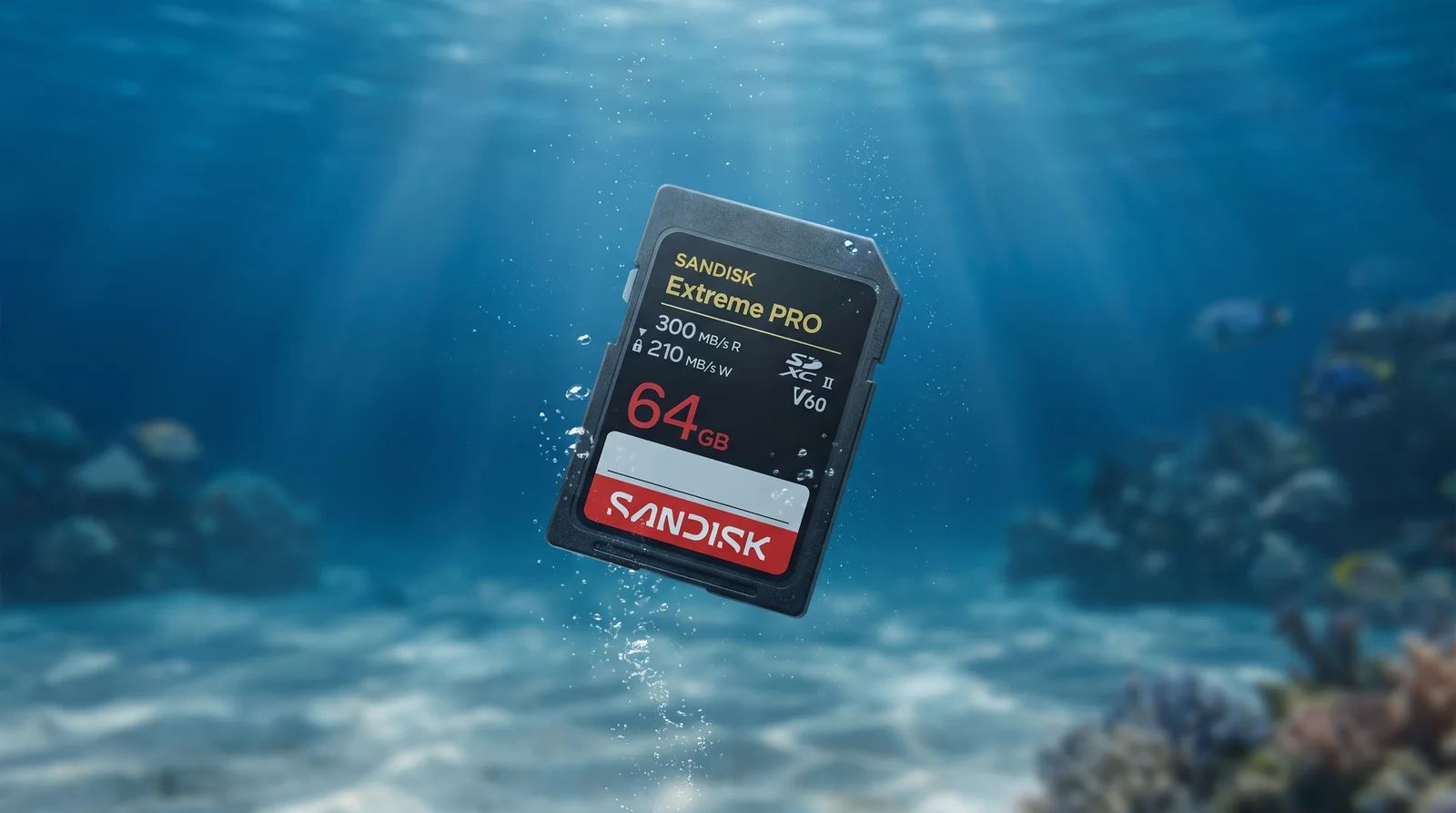
SanDisk Extreme PRO SDXC UHS-II V60: Ensuring 6K video recording reliability in underwater environments.
Table of Contents
  • 01Performance and High-Resolution Data Management
  • 02Mechanical and Thermal Resilience in a Marine EnvironmentWorking on a boat exposes equipment to real mechanical and environmental risks. A memory card that slips from your fingers on a wet deck or that is subjected to the vibrations of an engine must be able to withstand the impact without compromising the data. The SanDisk Extreme PRO V60 was designed with this physical resilience as a priority.
  • 03AquaExposure Scores and Reliability Analysis
  • 04Who is this card for?
  • 05Limitations and precautions for use
  • 06References
MATERIEL 6 minBenjamin Coste

SanDisk Extreme PRO SDXC UHS-II V60: Ensuring 6K video recording reliability in underwater environments.

Technical analysis of the SanDisk Extreme PRO V60- a rugged SDXC card, IP68 certified, designed for 6K video and burst photography in wet environments.

To improve your mastery of your equipment and optimize your procedures while diving, discover our specialized training modules on AquaExposure training.

SanDisk Extreme PRO SDXC UHS-II V60: Ensuring 6K Recording Reliability Underwater

Between a damp camera bag, the deck of a dive boat, and the hours of transfer time between dives, some equipment choices are less about reading a technical specification and more about relying on them when it really matters. The SanDisk Extreme PRO SDXC UHS-II V60 belongs to this category of tools that fade into the background, allowing the creative process to take center stage. In the demanding world of underwater photography and videography, this card offers a compelling solution for both videographers and photographers.

Performance and High-Resolution Data Management

Capturing high-resolution files, especially in 6K or 4K All-Intra formats, places constant pressure on the recording medium. The Video Speed Class 60 certification ensures a sustained minimum write speed of 60 MB/s [1]. This threshold guarantees that no frames will be lost during extended recordings. This is an essential safeguard, especially knowing that some underwater encounters happen only once.In terms of maximum speeds, the range delivers solid results. The read speed reaches 300 MB/s across all capacities, which accelerates the transfer of footage to an editing station [1] [2]. In terms of write speed, performance is segmented by the internal architecture. While models ranging from 256 GB to 2 TB reach up to 250 MB/s, the 64 GB and 128 GB versions are limited to 210 MB/s [2]. The adoption of the UHS-II interface allows this card to handle significant data streams, providing increased responsiveness between shots.

For underwater wildlife photographers, the 250 MB/s write speed on the high-capacity models ensures smooth buffer memory management. During extended bursts in RAW format, the card quickly absorbs data, allowing you to regain control more quickly after intense action. This responsiveness is an advantage for capturing the precise movement of an animal or a change in light. The range now extends up to 2 TB, offering valuable storage capacity during trips where backup options are limited [2].

Mechanical and Thermal Resilience in a Marine EnvironmentWorking on a boat exposes equipment to real mechanical and environmental risks. A memory card that slips from your fingers on a wet deck or that is subjected to the vibrations of an engine must be able to withstand the impact without compromising the data. The SanDisk Extreme PRO V60 was designed with this physical resilience as a priority.

The IP68 certification is a significant advantage. It ensures complete protection against dust intrusion and resistance to prolonged immersion in water [1]. The testing protocols include a 72-hour immersion in fresh or salt water, which is reassuring for handling the card with wet hands [2]. This durability is further enhanced by resistance to drops of up to 6 meters, mechanical shocks, and X-rays from airports [1] [2]. The card operates normally at temperatures ranging from -25°C to 85°C.

AquaExposure Scores and Reliability Analysis

The scores assigned to this equipment serve as a reference point for divers. These figures are a synthesis of the technical consistency and reliability observed through available research data. They reflect the card's position in the professional storage media market.

AquaExposure CriteriaScore
Overall Performance9.4 / 10
Reliability and Durability9.5 / 10The performance score of 9.4 highlights the efficiency of the UHS-II interface. The reliability score of 9.5 recognizes the physical robustness of the card and the guarantees offered. The product benefits from a lifetime limited warranty and includes two years of access to the RescuePRO Deluxe software for file recovery [1] [2].

Who is this card for?

The SanDisk Extreme PRO V60 is aimed at users who want to exceed the limitations of UHS-I without investing in the higher cost of V90 cards. It represents a sensible choice for videographers who primarily shoot in 4K or 6K.

It is particularly recommended for the following user profiles: Videographers who require stable files in All-Intra mode. Wildlife photographers who frequently use burst shooting. * Travelers who want to consolidate their captures onto 1TB or 2TB cards.

Choosing the V60 means opting for lasting performance and increased hardware security against the elements.

Limitations and precautions for use

It is important to be realistic about the actual capabilities of the equipment. Using a UHS-II card requires a compatible reader to take advantage of the 300 MB/s transfer speeds. On an older reader, the card will function, but its performance will be limited.The IP68 rating, while reassuring, does not make the card indestructible. The water resistance applies to accidents and exposure to splashes. Under no circumstances should an SD card be submerged without protection to diving depths. The hydrostatic pressure would damage the internal components. A point of vigilance concerns the electrical contacts. In a saline environment, air saturated with salt can promote slight oxidation. We recommend regularly checking the condition of these contacts and storing the card in its protective case after use.

Finally, maximum write performance is reserved for capacities greater than 256 GB. For wildlife photographers, choosing these models ensures that the buffer will never be the limiting factor during a critical moment.

Once the equipment no longer demands our attention, we are finally left with what brought us here: a changing light, a silence that settles in, and the desire to return to the water. The SanDisk Extreme PRO V60 guarantees that these moments will remain safely preserved.
References

To compare this model with all the references on the market, consult our SD and microSD card comparator and our complete selection of diving equipment.[1]: https://www.sandisk.com/products/memory-cards/sd-cards/sandisk-extreme-pro-sdxc-uhs-ii-v60 "SanDisk Extreme PRO SDXC UHS-II V60 - Official Product Page" [2]: https://www.aquaexposure.fr/recherche/cartes-sd-microsd-2026 "AquaExposure - Search database for memory cards (August 2026)"

sandisk-extreme-pro-v60-en

Table of Contents

  • 01Performance and High-Resolution Data Management
  • 02Mechanical and Thermal Resilience in a Marine EnvironmentWorking on a boat exposes equipment to real mechanical and environmental risks. A memory card that slips from your fingers on a wet deck or that is subjected to the vibrations of an engine must be able to withstand the impact without compromising the data. The SanDisk Extreme PRO V60 was designed with this physical resilience as a priority.
  • 03AquaExposure Scores and Reliability Analysis
  • 04Who is this card for?
  • 05Limitations and precautions for use
  • 06References

Questions about the Journal

What is the actual difference between the V60 and V90 versions of the SanDisk Extreme PRO?

The V60 version offers a good balance of performance, with a guaranteed write speed of 60 MB/s, which is sufficient for 6K and most 4K All-Intra video. The V90 reaches 90 MB/s for 8K recording, but the V60 offers storage capacities up to 2 TB, whereas the V90 is limited to 512 GB or 2 TB, depending on the recent series.

Does the IP68 certification protect the card from saltwater during a dive?

The IP68 rating guarantees resistance to prolonged immersion. SanDisk tests its cards for 72 hours in fresh or salt water. This protection applies to surface incidents or ambient humidity. For underwater use, the card must remain inside the camera's waterproof housing.

Why do write speeds vary depending on the storage capacity of the card?

The internal architecture of the memory chips explains this difference. Models ranging from 256 GB to 2 TB achieve a write speed of 250 MB/s, while the 64 GB and 128 GB versions are limited to 210 MB/s. This technical distinction is important to consider for the fastest burst photo shooting.

Articles in the same category

xFROG DSMB Closed 150 cm: Test- Visibility- and Reviews of the xFROG DSMB Parachute (2026)

xFROG DSMB Closed 150 cm: Test- Visibility- and Reviews of the xFROG DSMB Parachute (2026)

XDEEP 130cm SMB Deco Buoy- Test, Visibility, and Review of the DSMB Parachute (2026)

XDEEP 130cm SMB Deco Buoy- Test, Visibility, and Review of the DSMB Parachute (2026)

XDEEP DSMB Closed Narrow 140 cm: Review, Visibility, and Opinions on the XDEEP DSMB Parachute (2026)

XDEEP DSMB Closed Narrow 140 cm: Review, Visibility, and Opinions on the XDEEP DSMB Parachute (2026)

AquaExposure

Underwater photography excellence, accessible to everyone.

Stay in touch

[email protected]

Stay informed about our new courses and expeditions.

Support the project
Legal Notices·CGV·Confidentiality·

© 2026 AquaExposure. Ethically preserving the depths.