How do I know if a dive centre is Green Fins certified?
The official Green Fins website offers a directory of member centres, sorted by country and level (Bronze, Silver, Gold). Each centre is assessed annually on its actual practices. Before booking a dive trip, checking the directory is a simple reflex that makes a real difference for the reefs.
How much does Green Fins certification cost for a diver?
The Green Fins Diver course is available for 20 euros and open to all levels. The Green Fins Dive Guide course is entirely free for professionals. Financial accessibility was built in from the start so that cost is never a barrier to adopting responsible practices.
Why did SDI endorse Green Fins in 2026?
SDI recognises that responsible diving can no longer remain an individual initiative. By endorsing Green Fins, SDI integrates measurable environmental standards into its network of centres and instructors. This endorsement creates a ripple effect across other agencies and transforms good practices into a norm.
How can underwater photography be more responsible?
Never touch or move an animal for a better angle. Master your buoyancy to avoid all contact with the reef. Choose guides who respect subjects and do not rake the sand. Limit flash use near sensitive animals. The best photos show natural behaviour, not stressed animals.
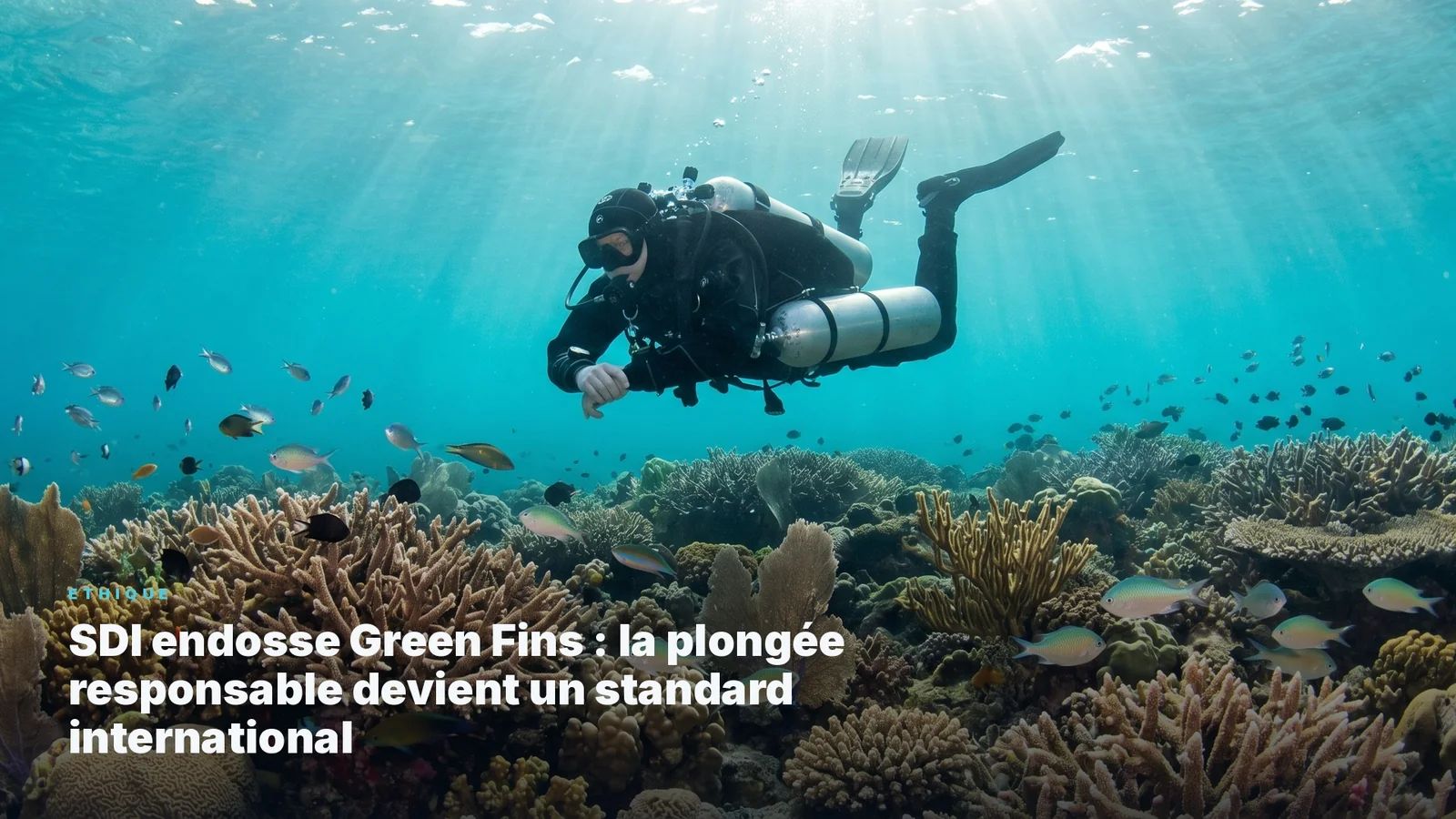
SDI partners with Green Fins: responsible diving becomes an international standard
For a long time, responsible diving was a matter of individual goodwill. An instructor who reminded people not to touch the coral, a centre that refused to feed the fish, a diver who controlled their buoyancy a little better than the others. Important gestures, but scattered, without a common framework or objective measurement.
That time may be coming to an end. In April 2026, SDI (Scuba Diving International) officially endorsed the environmental standards of Green Fins, and this partnership tells a broader story than a simple press release.
What Green Fins is (and what it is not)
Green Fins is an environmental management programme coordinated internationally by the Reef-World Foundation in partnership with the United Nations Environment Programme. It is not a marketing label you buy and stick on your shopfront. It is a concrete assessment system.
Member dive centres are evaluated annually on their actual environmental practices: how they brief their clients, how they manage their moorings, how they handle waste, how their guides behave underwater in relation to the reef. Each centre receives a score and a ranking (Bronze, Silver, Gold) based on assessment results.
The Green Fins Diver course is accessible to all divers for 20 euros, and the Green Fins Dive Guide course is free for professionals. Financial accessibility is not a barrier.
Why SDI's endorsement changes things
SDI is one of the largest diver training agencies in the world. When an agency of that size says publicly "we recognise and support Green Fins standards", it is a signal that goes beyond a simple statement of intent.
It means that SDI-affiliated centres are now encouraged to adopt Green Fins practices as a minimum standard. It means that in SDI instructor training, Green Fins environmental practices could eventually become a mandatory module rather than an optional add-on.
And above all, it creates a ripple effect. If SDI endorses Green Fins, the other agencies (PADI already has its partnership, SSI is watching) find themselves in a position where not adopting a comparable environmental standard becomes increasingly difficult to justify.
What this changes for divers
For a diver choosing a dive centre on holiday, Green Fins offers an objective selection criterion. A Gold Green Fins centre is not simply a centre that says "we love nature". It is a centre whose practices have been assessed and validated by an independent body.
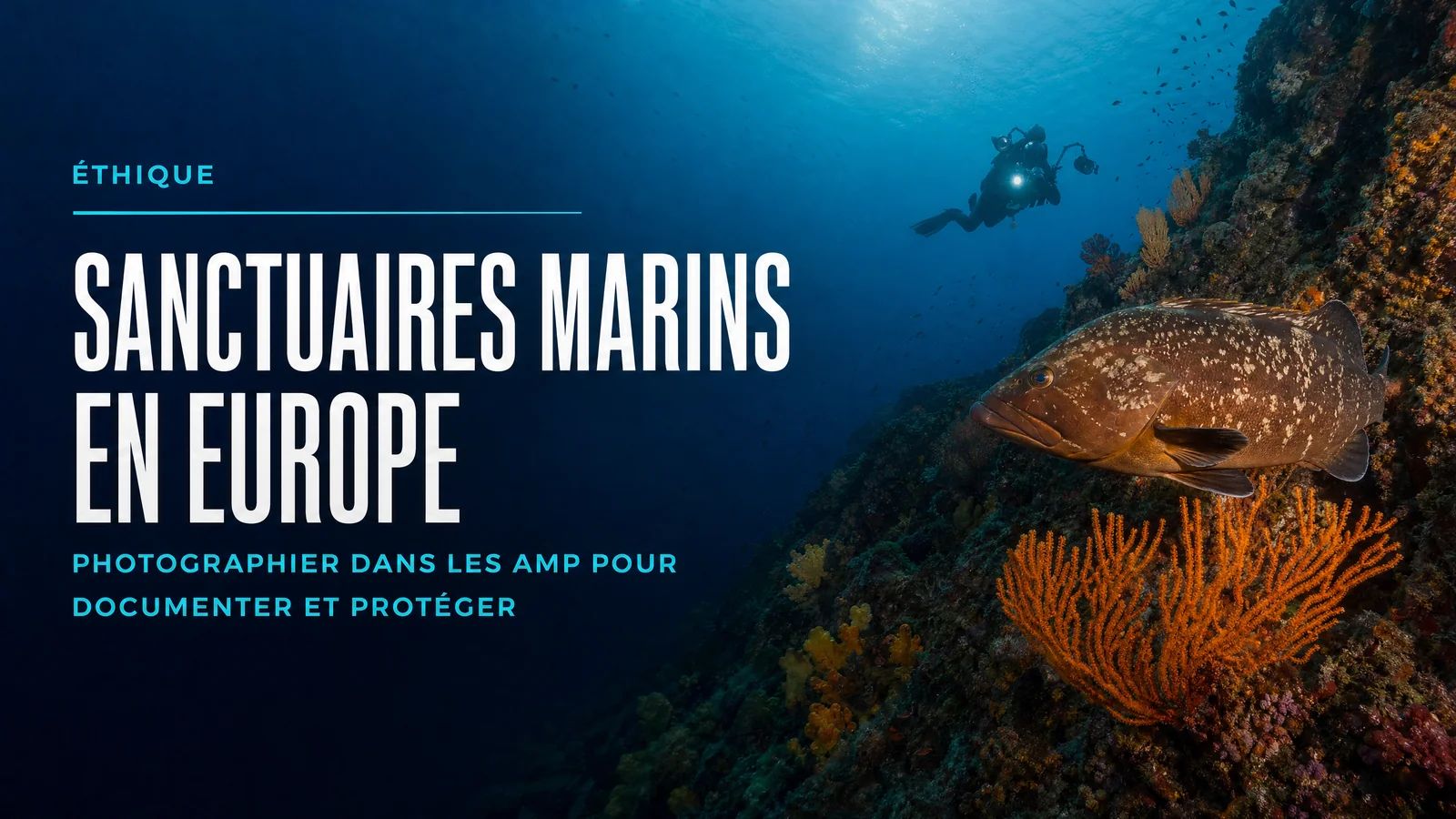
For underwater photographers in particular, choosing a Green Fins centre also means choosing guides who respect subjects. Who do not touch animals to reposition them for a better angle. Who do not rake the sand to flush out a seahorse. Who understand that the best underwater photo is one where the subject behaves naturally, because nobody disturbed it.
The direction being taken
SDI's endorsement of Green Fins is part of a broader movement. Dive tourism, long considered a low-impact activity ("we're just looking"), is beginning to recognise that looking can also leave marks. Fins scraping coral, bubbles disturbing a sleeping turtle, a group of 20 divers on the same fragile site: the impact exists, even if it is less visible than a trawl net.
The good news is that the solution is not to stop diving. It is to dive better. And when an international agency says that "diving better" means measurable, assessed standards, we are heading in the right direction.
Reefs do not need saving with grand speeches. They need us to stop damaging them with small gestures. And that is within reach of every single dive.
FAQ
How do I know if a dive centre is Green Fins certified?
The official Green Fins website offers a directory of member centres, sorted by country and level (Bronze, Silver, Gold). Each centre is assessed annually on its actual practices. Before booking a dive trip, checking the directory is a simple reflex that makes a real difference for the reefs.
How much does Green Fins certification cost for a diver?
The Green Fins Diver course is available for 20 euros and open to all levels. The Green Fins Dive Guide course is entirely free for professionals. Financial accessibility was built in from the start so that cost is never a barrier to adopting responsible practices.
Why did SDI endorse Green Fins in 2026?
SDI recognises that responsible diving can no longer remain an individual initiative. By endorsing Green Fins, SDI integrates measurable environmental standards into its network of centres and instructors. This endorsement creates a ripple effect across other agencies and transforms good practices into a norm rather than an option.
How can underwater photography be more responsible?
Never touch or move an animal for a better angle. Master your buoyancy to avoid all contact with the reef. Choose guides who respect subjects and do not rake the sand. Limit flash use near sensitive animals. Document without disturbing: the best photos show natural behaviour, not animals stressed by the photographer.
Responsibility is part of our DNA. Our underwater photography training teaches photographic technique and the good practices that protect the environments we love to explore.