Table of Contents
Discover the TeamGroup PRO+ 2TB microSDXC card. A massive and robust storage solution for your 4K videos during extended dive trips.
Share
/blog/teamgroup-pro-plus-en
Table of Contents
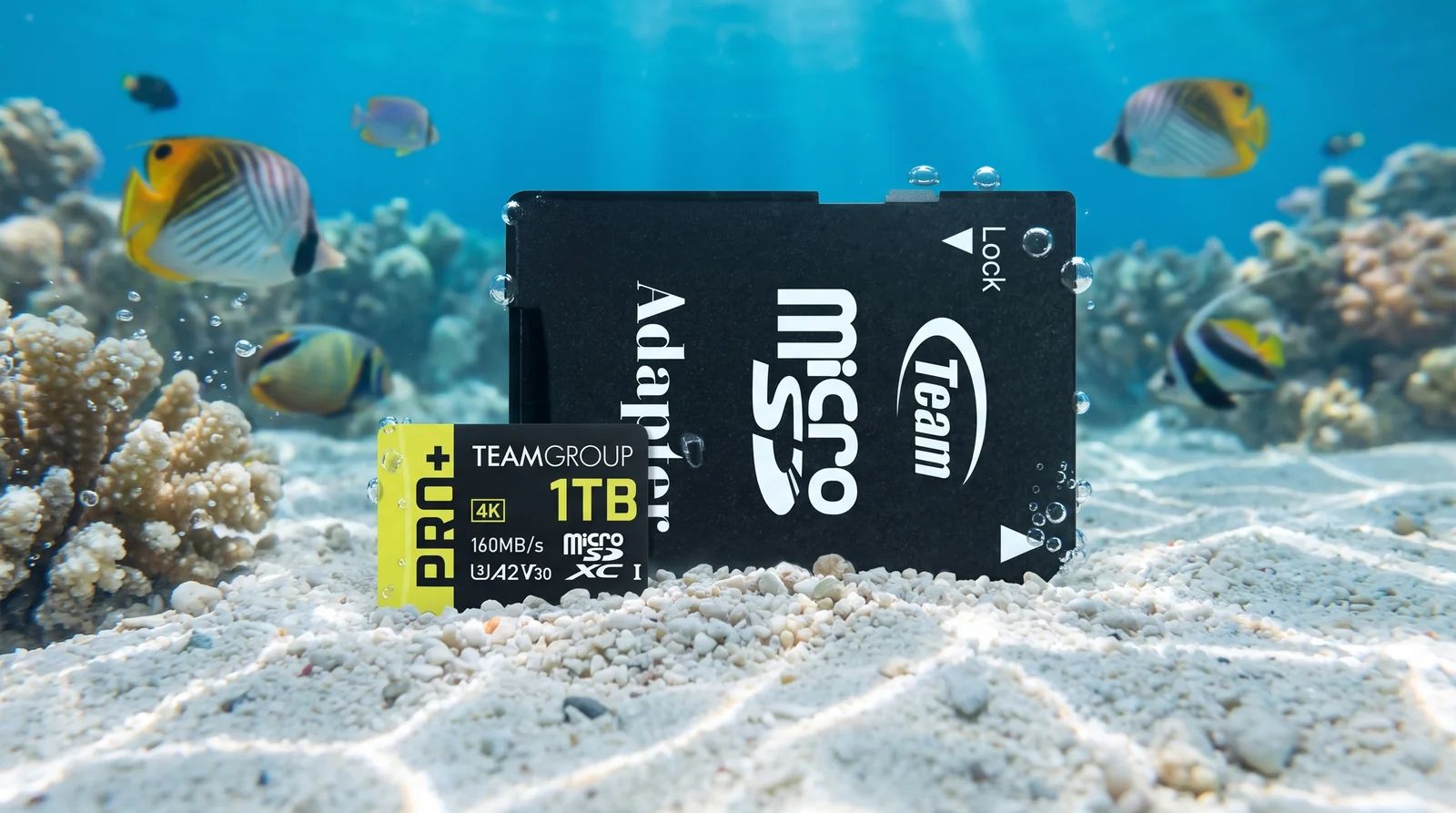
- 01Record capacity for seamless operationThe TeamGroup PRO+ stands out with this 2TB version, a capacity that is still rare in the microSD card market as of August 2026 [1]. This abundance of storage allows you to shoot in 4K UHD at high frame rates without worrying about the minutes counting down on your camera's screen. In scuba diving, where every encounter can be unique, never being interrupted by a low storage warning provides a significant advantage. File management then becomes a task for the end of the day rather than an urgent issue between dives, leaving more time for equipment preparation.
- 02Performance Enhanced by TechnologyIn terms of performance, TeamGroup claims theoretical peak speeds of 160 MB/s for reading and 110 MB/s for writing for models with a capacity of 256 GB or greater [1]. However, it's important to note a technical detail. Achieving these speeds requires a card reader that is compatible with the brand's proprietary technology. Without this specific equipment, performance levels typically remain within the standard limits of the UHS-I bus, which is approximately 100 MB/s for reading and 90 MB/s for writing [2].
- 03Robustness designed for field use.The underwater environment is unforgiving of carelessness. The TeamGroup PRO+ was designed to withstand harsh conditions, a crucial feature for equipment transported in waterproof bags that are often handled roughly. The manufacturer guarantees protection against water, dust, and impacts [1]. While the technical documentation does not specify a particular IP rating, this level of resistance provides peace of mind during daily handling on a boat.
- 04Who is this card for?
- 05Limitations and technical compatibility
- 06A choice dictated by exploration.The TeamGroup PRO+ microSDXC card doesn't aim to break speed records. Its strength lies in its 2TB capacity, which frees the diver's mind. Being able to record every moment of a dive without worrying about the storage capacity allows you to focus on the light filtering through the surface and the behavior of the observed species.
Questions about the Journal
What is the actual maximum capacity of the TeamGroup PRO+?
The TeamGroup PRO+ series offers storage capacities ranging from 128GB up to a record 2TB, allowing you to store dozens of hours of 4K video without needing to change storage media.
Is the memory card truly waterproof for diving?
The manufacturer guarantees water resistance, but without a specific IP rating. It is resistant to splashes and humidity, but it must absolutely remain inside a waterproof housing during dives.
What speeds can you realistically expect to achieve?
If the technical specifications state a read speed of 160 MB/s, standard UHS-I usage tests show stabilized read speeds of around 100 MB/s and write speeds of 90 MB/s.

