The quest for perfect instrumentation below the surface is a path paved with technical compromises, unsuccessful attempts, and constant questioning.
We tirelessly seek the ideal balance between absolute readability in particulate-rich waters and the processing power needed for complex decompression calculations.
All of this while maintaining a physical size that doesn't turn your forearm into an airliner dashboard.
For divers with smaller wrists, this search often feels like a frustrating dead end, filled with oversized models that slip on the wetsuit.
Manufacturers have long associated technical diving with bulky housings, assuming that a giant screen was the only valid solution to the demands of depth and safety.
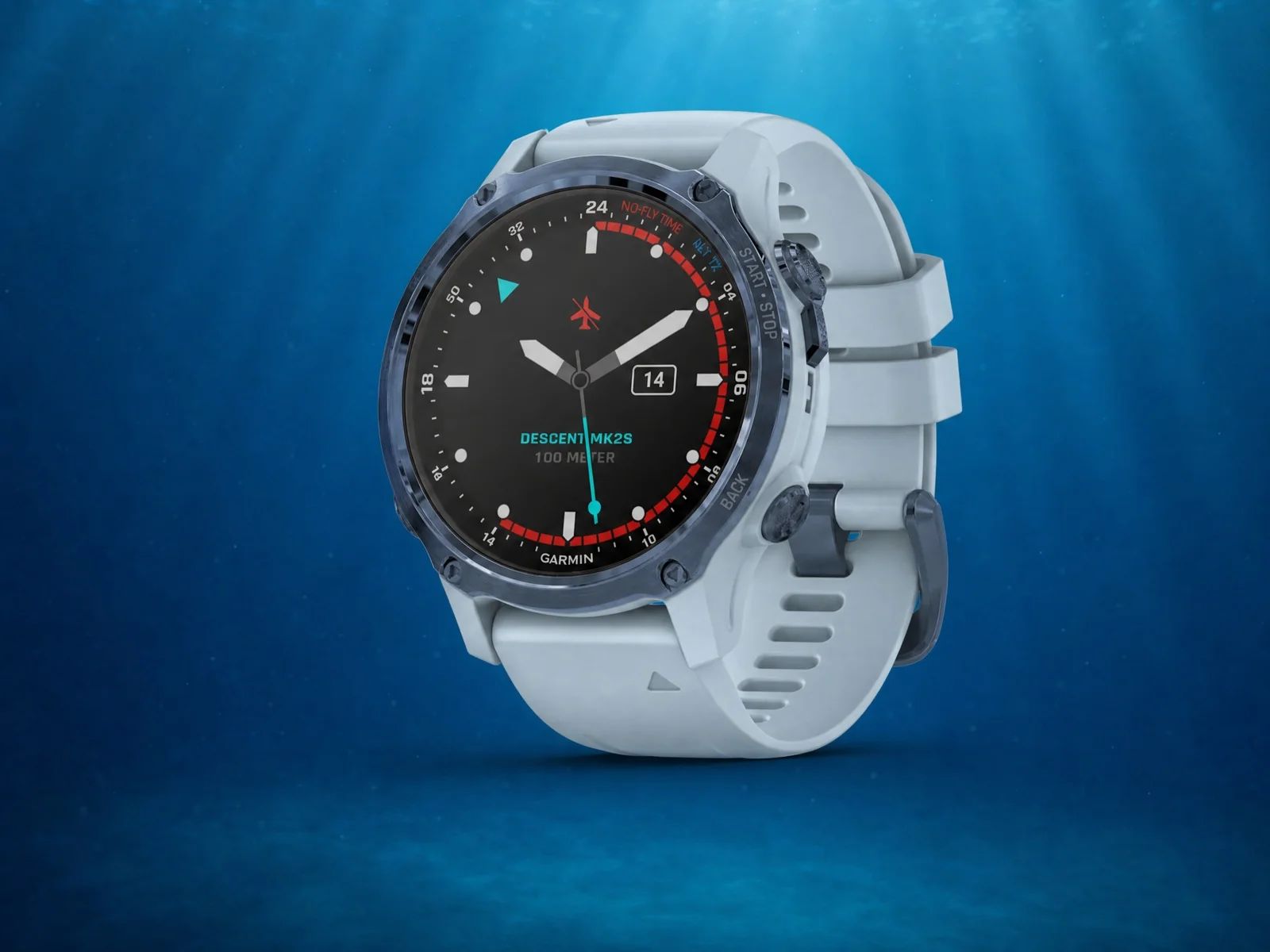
The Garmin Descent Mk2S addresses this ergonomic flaw directly, attempting to reconcile raw processing power with understated elegance.
Designed with an extremely compact 43-millimeter case, it promises to retain the entire Trimix and CCR software engine from the higher-end models, without sacrificing a single line of code from its algorithm.A dive computer is the critical tool that manages the user's decompression safety, a silent guardian of our tissue saturation.
This review aims to determine whether this drastic reduction in size compromises underwater readability and whether this instrument truly deserves its place on your most demanding dives.
2. Summary Verdict
Overall score: 4.6/5
Criterion
Score
What this means
O1 Algorithm
5.0/5
The Bühlmann ZHL-16C model with Gradient Factors offers complete transparency and surgical precision in personalization.
O2 Air & Multi-Gas
5.0/5
A formidable machine that handles up to twelve gases and the rebreather mode without hesitation.
O3 Screen & Ergonomics
3.9/5
The five physical buttons are perfect underwater, but the small screen size requires excellent vision.
O4 Battery Life
4.6/5
The high-performance lithium battery guarantees thirty hours of dive time with a very reliable percentage gauge.
O5 Connectivity
4.5/5
Automatic Bluetooth synchronization with the Garmin digital ecosystem is close to perfection.
O6 Compass & Instruments
5.0/5
The integrated three-dimensional electronic compass is among the most accurate instruments on the market today.
O7 Robustness
4.6/5
The scratch-resistant sapphire glass and certification to one hundred meters ensure exceptional durability against the elements.
3. Detailed Analysis
O1 Algorithm and Decompression Stops
The mathematical core of a dive computer defines its true value during demanding dives, where approximation has no place.The Garmin Descent Mk2S relies on the Bühlmann ZHL-16C algorithm, an absolute benchmark that has proven itself in the most hostile and deepest environments on the planet.
This implementation receives the maximum score of 5/5 for its algorithmic model because it offers complete transparency to the user, avoiding proprietary "black boxes" that obscure the actual calculations.
The Gradient Factors are fully adjustable, allowing you to fine-tune the conservatism and adapt the profile to your physiology.
This freedom of configuration (rated 5/5) is essential for planning sequential dives, liveaboard trips, or expeditions requiring precise management of overpressure.
The display of Time To Surface (TTS) and decompression ceiling is clear, sharp, and accurate, also earning a well-deserved score of 5/5.
Audible and vibratory alerts (5/5) complement this safety system, drawing your attention even when your mind is focused on a complex task underwater.
The overall reliability of the system (5/5) is impeccable, demonstrating that we are dealing with such a solid algorithmic foundation that even the most atypical decompression profiles are managed with unwavering mathematical rigor.
O2 Air and multi-gasThe management of breathing gas mixtures is the specific area where this small device reveals its true nature as a technical instrument, hidden beneath its appearance as a dress watch.
It achieves a perfect score of 5/5 for its ability to manage up to twelve different gases, including a bottom gas and eleven distinct decompression gases.
Whether you are diving with air, optimized Nitrox, or full Trimix (rated 5/5) to push the limits of narcosis, the computer performs the calculations flawlessly, switching from one mixture to another with exemplary smoothness.
The native CCR mode (5/5) is also present, offering complete flexibility for users of closed-circuit rebreathers who require constant monitoring of PO2.
Wireless air integration is completely absent on this model, a feature that is not penalized in our scoring system (not scored) but which directly results from the device's extreme compactness.
The absence of a sonar chip makes connecting to a transmitter physically impossible, a design choice made to reduce the watch's thickness.
O3 Screen and Ergonomics
This is where the compact format reveals its inherent limitations, justifying a score of 3.9/5 which reflects the inevitable compromises of miniaturization.
The Mk2S features a color matrix MIP (Memory In Pixel) display that scores 4/5 for its technology, recognized for its low power consumption.However, its very small size- only 1.2 inches in diameter (rated 3/5)- imposes undeniable visual limitations, condensing a massive amount of information onto a tiny surface.
The contrast near the surface is striking, offering good overall readability (3.5/5) even in bright sunlight, where other screens become unreadable.
But at depth, in the darkness or in murky waters, reading complex data like TTS or PO2 on such a small screen requires increased concentration and excellent eyesight.
Fortunately, the lack of a touchscreen forces Garmin to include five physical buttons (4/5), which are well-placed around the case.
These buttons respond perfectly even when wearing waterproof gloves or neoprene mittens, providing safe and intuitive navigation through the menus, even when dexterity is compromised by cold temperatures.
The data fields are fully configurable (5/5), allowing you to prioritize vital information according to your personal preferences and the specific requirements of your dive.
Battery Life
Power management is a major source of stress in technical diving, where instrument failure can have dramatic consequences for decompression procedures.
The Mk2S provides reassurance with a score of 4.6/5 in this category, proving that miniaturization has not sacrificed battery capacity.It features a rechargeable lithium-ion battery (3.5/5) that offers an impressive claimed runtime of thirty hours in dive mode (5/5), a remarkable performance for a housing of this size.
In practice, this ensures you can complete a full week of intensive underwater excursions without any concerns about running out of power while diving.
The displayed percentage gauge (5/5) provides a very, very precise reading of the remaining battery life, eliminating the potentially dangerous approximations of traditional bar icons.
The reliability of this battery in cold water (5/5) is also noteworthy- a critical factor for divers operating in winter quarries or glacial lakes where cold temperatures rapidly drain power.
O5 Connectivity
Integration within the digital ecosystem has been a historical strength of the brand, reflected by a score of 4.5/5 that recognizes the seamless user experience after diving.
Automatic Bluetooth (5/5) enables smooth and effortless synchronization with your smartphone as soon as you surface, transferring your dive profiles even before you remove your wetsuit.
The Garmin Dive app is excellent (5/5), offering a rich interface for analyzing your dive profiles, ascent rates, and precise GPS entry and exit points recorded on the surface.Firmware updates are performed Over The Air (OTA), a feature rated 5/5 that ensures your device always benefits from the latest software improvements without requiring cumbersome cables.
Data export is done via a proprietary open FIT format (3/5), which provides some flexibility for analysis on third-party software like Subsurface.
A universal native format would have been even more appreciated by the technical community.
O6 Compass and Instruments
Underwater navigation requires instruments of absolute precision, capable of guiding you through the murkiness of turbid water or across the deck of a disorienting shipwreck.
The Mk2S excels in this area with a perfect score of 5.0/5, confirming its status as a top-tier navigation tool.
The integrated three-dimensional electronic compass (5/5) is tilt-compensated, providing a reliable heading regardless of your wrist position.
Its readability is so direct that even with thick gloves, maintaining course becomes effortless.
The continuous temperature sensor (5/5) provides accurate data throughout the dive, which is essential for understanding thermoclines and adjusting your thermal protection during successive dives.
Dedicated freediving modes (5/5) complement this array of instruments, making this watch a versatile tool for all underwater disciplines, from summer snorkeling to deep spear fishing.The sensor responsiveness is immediate, fluid, and perfectly integrated into the user interface, providing a navigation experience with absolutely no lag.
O7 Durability
A dive computer must withstand impacts against tanks, corrosive salt water, the scorching sun on boat decks, and the crushing pressure of the deep sea.
The Mk2S scores 4.6/5 for its robust construction, proving that elegance does not exclude resistance to even the harshest conditions.
The housing is certified for use up to a depth of one hundred meters (4/5), which covers the vast majority of technical dives and guarantees a reassuring structural safety margin.
The scratch-resistant sapphire glass (5/5) protects the screen from external damage, a major advantage when handling decorative props or exploring tight wrecks with sharp metal edges.
Compliance with the European standard EN13319 is thoroughly documented (5/5), demonstrating the seriousness of the design and the tests that the device underwent before being released to market.
This ensures that you are diving with an instrument validated by rigorous standards.
O8 Price and Customer Service
Acquiring such a piece of equipment represents a significant financial investment, rated at 4.1/5 in our rating system, requiring careful consideration of your actual decompression needs.Priced between 850 and 1000 euros, the perceived value for money remains good (4/5) considering the software capabilities and versatility of the device.
Garmin's customer support network is extremely extensive (5/5), leveraging the infrastructure of a multinational consumer electronics company, which simplifies initial troubleshooting.
The standard two-year warranty (3.5/5) covers manufacturing defects, providing minimal peace of mind during purchase.
However, the after-sales service experience can sometimes be frustrating for technical divers accustomed to specialized brands.
You will encounter customer support representatives who are not specialists in diving, with variable response times and return shipping costs that are often your responsibility.
Replacement is still the standard procedure if a failure is recognized under warranty.
4. Who is this computer for?
The Garmin Descent Mk2S is specifically designed for technical divers or very advanced recreational divers who have slender wrists and refuse to be burdened by an oversized device.
It is intended for those seeking a versatile instrument that can accompany them in their daily urban life as well as during deep dives using Trimix.
This is a tool that combines work, repetition, and self-improvement.This is a welcome opportunity for smaller divers who want to avoid bulky dive computers that demand the mathematical precision of a configurable Bühlmann algorithm.
It achieves this without compromising on decompression safety.
Conversely, this computer isn't ideal for divers who consider wireless air integration as an essential requirement for managing their air consumption.
Similarly, if you suffer from presbyopia or regularly dive in environments with extremely poor visibility, such as cold water quarries.
In these conditions, the small screen size will be a major obstacle to quickly reading vital data.
5. Service and Support
The technical support of a life-support device is an essential component of its long-term value- a crucial safety net when equipment is subjected to the extreme stresses of the marine environment.
With Garmin, you enter the after-sales service network of a multinational consumer electronics company- a logistical machine of global scale.
This international presence ensures support in almost every country, making basic procedures and initial contact easier in case of malfunction.
In cases of recognized warranty claims, the brand's policy generally involves replacing the device with a new one.This ensures that you receive an instrument that is perfectly functional and has been tested in the factory.
This process can sometimes be frustrating for technical divers who are accustomed to direct communication with specialized technicians capable of understanding the nuances of a pressure sensor malfunction.
The initial customer service representatives are not diving specialists, which can lengthen diagnostic times and require multiple explanations from you.
Furthermore, the cost of returning equipment to repair centers is often borne by the user, a standard policy in consumer electronics but sometimes viewed negatively within the technical diving community.
These factual points should be considered when making your decision, although they do not call into question the inherent quality of the equipment provided or the reliability of the embedded algorithm.
6. Power Supply
Power management often dictates the pace of our underwater expeditions, requiring strict discipline to avoid a critical failure at the most inopportune moment.
The Mk2S is powered by a rechargeable lithium-ion battery, a solution that is increasingly becoming the industry standard, gradually replacing disposable batteries that are both polluting and inconvenient.This design provides an impressive thirty hours of battery life in dive mode- more than enough to cover a week of intensive diving with three to four dives per day- without requiring any intermediate recharges.
The practical implication is that you need to incorporate charging the computer into your daily routine, just like you do for your video lights, camera, or underwater heating systems.
The percentage-based battery indicator is remarkably accurate, eliminating the stress of unreliable battery bars that suddenly drop at depth.
It allows you to plan your dives with absolute certainty about the remaining power.
For everyday use as a smartwatch, the battery life extends for several days, making this device a reliable companion both on the surface and underwater- ready to switch to dive mode at any time.
7. Links to other models from the same brand
The Garmin range offers relevant alternatives for those whose needs differ from this ultra-compact format, providing solutions tailored to each diving philosophy.
If wireless air integration is an absolute necessity for your equipment setup, or if you prefer a larger screen for easier readability in low-visibility water.
I invite you to consult our detailed analysis of the higher-end model.You can find all the features of this larger and more comprehensive version by reading our Garmin Descent Mk2i Review.
This model also incorporates SubWave sonar technology for managing tank pressure.
For divers looking for a more advanced recreational approach with an exceptionally bright AMOLED screen, the G1 series or its newer iterations are also worth considering.
Explore our Garmin Descent G1 Review to understand how the brand applies its algorithmic expertise in various formats, tailored to the specific requirements of each underwater environment.