What is the approximate average price of the Oceanic Jetpack in 2026?
The average indicative price for 2026 is €349, calculated from a new retail range of €299 to €399. This figure is not a real-time selling price.
What is the lift capacity of the Oceanic Jetpack?
The consolidated datasheet indicates a buoyancy of 13.6 kg or 30 lbs. This value should be compared to the actual weight added for weights, tanks, thermal protection, and accessories being used.
Who is this model best suited for?
The Oceanic Jetpack is designed for travel and use in warm water- it's suitable for snorkeling as well. It's recommended for beginner to intermediate divers, primarily in warmer waters.
What should you check before making a purchase?
You need to check the harness, access to the dump valves, weight distribution, fit, condition of the D-rings, and how the BCD performs with all your gear attached.
To improve your mastery of your equipment and optimize your procedures while diving, discover our specialized training modules on the AquaExposure training.
Oceanic Jetpack Review: What you really need to consider before buying it
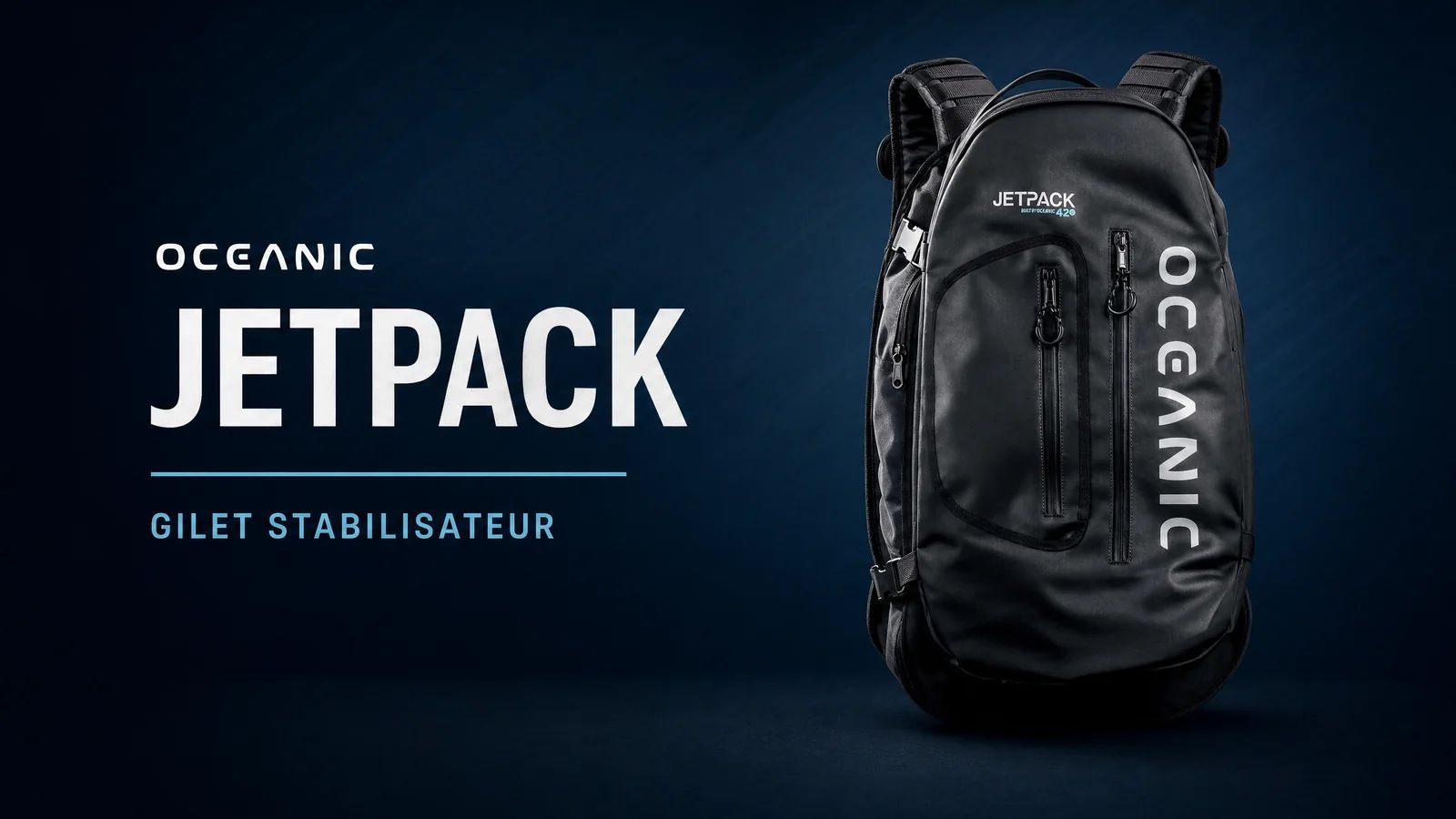
A BCD isn't good simply because it lists technical features. It becomes useful when it stops occupying the diver's mind. The Oceanic Jetpack falls into the back-inflate travel (convertible backpack) category and makes a specific promise: to serve a diving practice geared towards travel, warm water, and snorkeling. This guide doesn't replace a hands-on trial, but it helps you understand exactly what this model offers and what problems it doesn't solve. [1]
The question isn't whether this BCD is inherently performant, but rather whether it suits your regulator, thermal protection, weight system, accessories, and skill level. As a back-inflate design, this model places buoyancy in the back. It can free up the torso and support a more horizontal trim, but its stability on the surface needs to be tested with actual weights. [2] [3]
The verdict in summaryThe Oceanic Jetpack receives an overall AquaExposure score of 2.9/5. This rating should be considered within its category and not used as a universal truth. Its strengths are: converts to a 42L backpack, quick drying, lightweight, unique concept. Its main limitations are: only 2 D-rings, 100D material = limited durability, low buoyancy, no trim pockets. [1]
Criterion
Value
Overall AquaExposure Score
2.9/5
G1 Buoyancy
3.3/5
G2 Weighting
3.0/5
G3 Storage
2.5/5
G4 Harness
3.5/5
G5 Materials
3.0/5
G6 Versatility
2.0/5
Average Price (estimated 2026)
€349, calculated based on a new price range of €299 to €399
Suitable for
travel, warm water, snorkeling
Less suitable for
only 2 D-rings, 100D material = limited durability, low buoyancy, no trim pockets
Average Price (estimated 2026). The amount of €349 is an arithmetic average of the available new price range. It is neither a real-time price nor a commercial promise.
Detailed Analysis
G1 Buoyancy
The stated buoyancy is 13.6 kg, or 30 lb. This value should not be considered in isolation. It covers the negative buoyancy of the complete configuration, including the tank, gas, wetsuit, weights, and accessories. An insufficient value can reduce comfort at the surface. An excessive value does not automatically make a dive safer. [4]Unique concept: the buoyancy compensator converts into a travel backpack (42L). Very practical for travelers. Note: only 2 metal D-rings are included - insufficient for underwater photography or deploying a DSMB according to Benjamin's rule. This gives the Oceanic Jetpack a G1 score of 3.3/5. Trim and buoyancy control must be performed under the intended conditions, not just in shallow water. [1]
G2 Weighting System
The model features a droppable weight system with a stated capacity of 6 kg. It includes 0 trim pockets. This distribution can help adjust your position in the water, but it does not replace proper weighting. Weights should always remain manageable and appropriate for the environment. [3]
The G2 score of 3.0/5 reflects the carrying capacity and logic of this model. Before purchasing, verify the actual function of the weight pockets with your own weights and your usual wetsuit.
G3 Storage
The Oceanic Jetpack provides 1 storage pocket and 2 metal D-rings. The specifications describe these attachments as being made of stainless steel only. This information is important when carrying a surface marker buoy, a reel, a light or an underwater housing. [1]
The G3 score of 2.5/5 does not evaluate the volume of a pocket in absolute terms. It expresses the suitability between the available attachment points and accessories typically associated with travel, warm water diving, and snorkeling.
G4 HarnessThe harness is described as having adjustable straps and a lumbar support. The specifications mention 3 adjustment points. This is a useful indicator, but comfort also depends on your size, shoulder width, torso length, wetsuit, and how the tank sits on your back. [2]
The G4 score of 3.5/5 reflects the potential for adjustability in this design. A test dive should confirm that the straps don't pull, the waistband doesn't ride up, and the controls remain accessible when the vest is inflated.
G5 Materials
The declared weight is 2.84 kg, and the construction is specified as double-coated 100D nylon. The D-rings are made of metal. These details indicate expected durability, resistance to wear and tear, and ease of transport, but they alone cannot determine the longevity of a specific unit. [1]
The G5 score of 3.0/5 reflects this assessment of the materials used. The actual condition of a used BCD, including any servicing, inflators, and purge valves, should be checked independently of the year it was manufactured or the brand's reputation.
G6 Versatility
The configuration is advertised for travel, warm water diving, and snorkeling, with use in warm environments. The specifications indicate no declared compatibility with twin tanks and no declared sidemount compatibility. Therefore, its actual capabilities are neither twin tank nor sidemount configurations in this setup. [1]The G6 score of 2.0/5 indicates its ability to adapt to changes in diving practices, but it doesn't suggest that one model is suitable for everyone. A shift towards more technical diving may require a different system rather than simply adding accessories.
What you need to know before buying:
The first check concerns buoyancy. With a declared buoyancy of 13.6 kg, the Oceanic Jetpack needs to be tested with your actual configuration. A thicker wetsuit, a steel tank, saltwater, a housing, or a light can significantly change the required buoyancy. The right decision starts with a buoyancy check at the end of the dive, not based on a general rule. [4]
The second check concerns comfort. This model advertises adjustable straps and lumbar support. Wear it with your usual thermal protection, then check underwater how easy it is to breathe, access the purge valves, use the direct-system, and position the tank. A poorly fitted vest adds mental strain that a diver should be dedicating to their surroundings and dive buddy. [2]The third aspect to consider is its usability. Like a back-inflate system, this model positions the buoyancy chamber on the back. It can free up the upper body and promote a more horizontal trim, but its surface stability must be tested with actual weights. The listed features – converts to a 42L backpack, quick drying, lightweight, unique design – should be weighed against its limitations: only two D-rings, 100D material (limited durability), low buoyancy, and no trim pockets. A suggested average price of €349 in 2026 is simply for comparison and should never be a safety criterion.
Safety Reminder
The stated buoyancy, price, and rating do not replace a real-world test dive, a proper weight check, or appropriate training. Any modification to the tank, wetsuit, weights, or accessories requires re-evaluating the entire configuration. For back-inflate travel systems (convertible to a backpack), the correct approach is to understand the equipment before entrusting it with tasks it may not be able to handle alone. [2] [3] [4]
Our VerdictThe Oceanic Jetpack is suitable for travel, warm water diving, and snorkeling when the user's body type, weighting, and environment match the specifications. Its advantages include: it converts into a 42L backpack, dries quickly, is lightweight, and features a unique design. However, its limitations are: only two D-rings, 100D material which limits durability, low buoyancy, and no trim pockets. Therefore, the best purchase isn't necessarily based on the highest rating, but rather choosing a configuration that is understandable, comfortable, and appropriately sized for the type of diving you will actually be doing. [1]
The AquaExposure comparison tool should link to this review with the call-to-action "Read the full review.". In return, this review links back to the product card at this placeholder address: see the Oceanic Jetpack in the comparison tool.
The production slug of the comparison tool and the actual anchor for the product card must be confirmed before final publication.
Frequently Asked Questions
What is the estimated average price of the Oceanic Jetpack in 2026?
The estimated average price in 2026 is €349, calculated from a new retail range of €299 to €399. This figure is an estimate and not a real-time selling price.
What buoyancy does the Oceanic Jetpack offer?The consolidated specification indicates a buoyancy of 13.6 kg or 30 lbs. This value must be compared to the actual weight added, including weights, tank, thermal protection, and accessories used.
Who is this model best suited for?
The Oceanic Jetpack is designed for travel, warm water diving, and snorkeling. It is recommended for beginner to intermediate divers, primarily in warmer waters.
What should you check before purchasing?
You should verify the harness, access to purge valves, weight distribution, size, condition of the D-rings, and how the BCD performs with your complete gear configuration.
References
[1]: https://www.oceanicworldwide.com/jetpack-bcd "Oceanic Jetpack, manufacturer or distributor specification" [2]: https://scubapro.johnsonoutdoors.com/eu/fr-fr/blog/choisir-le-gilet-le-plus-approprie-votre-style-de-plongee "SCUBAPRO, choosing the BCD based on your diving style" [3]: https://www.divessi.com/fr/blog/scuba-diving-bcds-explained-2425 "SSI, stabilizers explained" [4]: https://8diving.com/halcyon-wing-size-lift-capacity-explained "Halcyon and Eight Diving, understanding the lift capacity of a wing"