What is the approximate average price of the Seac Pro 2000 in 2026?
The average indicative price for 2026 is €499, calculated from a new retail range of €449 to €549. This figure is not a real-time selling price.
What buoyancy does the Seac Pro 2000 offer?
The consolidated datasheet indicates a buoyancy of 16 kg or 35 lbs. This value should be compared to the actual weight added for weights, tanks, thermal protection, and accessories being used.
Who is this model best suited for?
The Seac Pro 2000 is designed for advanced recreational diving, travel, and underwater photography. It's recommended for divers of intermediate to advanced levels, primarily in warm or temperate waters.
What should you check before making a purchase?
You need to check the harness, access to the dump valves, weight distribution, fit, condition of the D-rings, and how the BCD performs with all your gear attached.
To improve your mastery of your equipment and optimize your procedures while diving, discover our specialized training modules on the AquaExposure platform.
Seac Pro 2000 Test: What You Really Need to Consider Before Buying
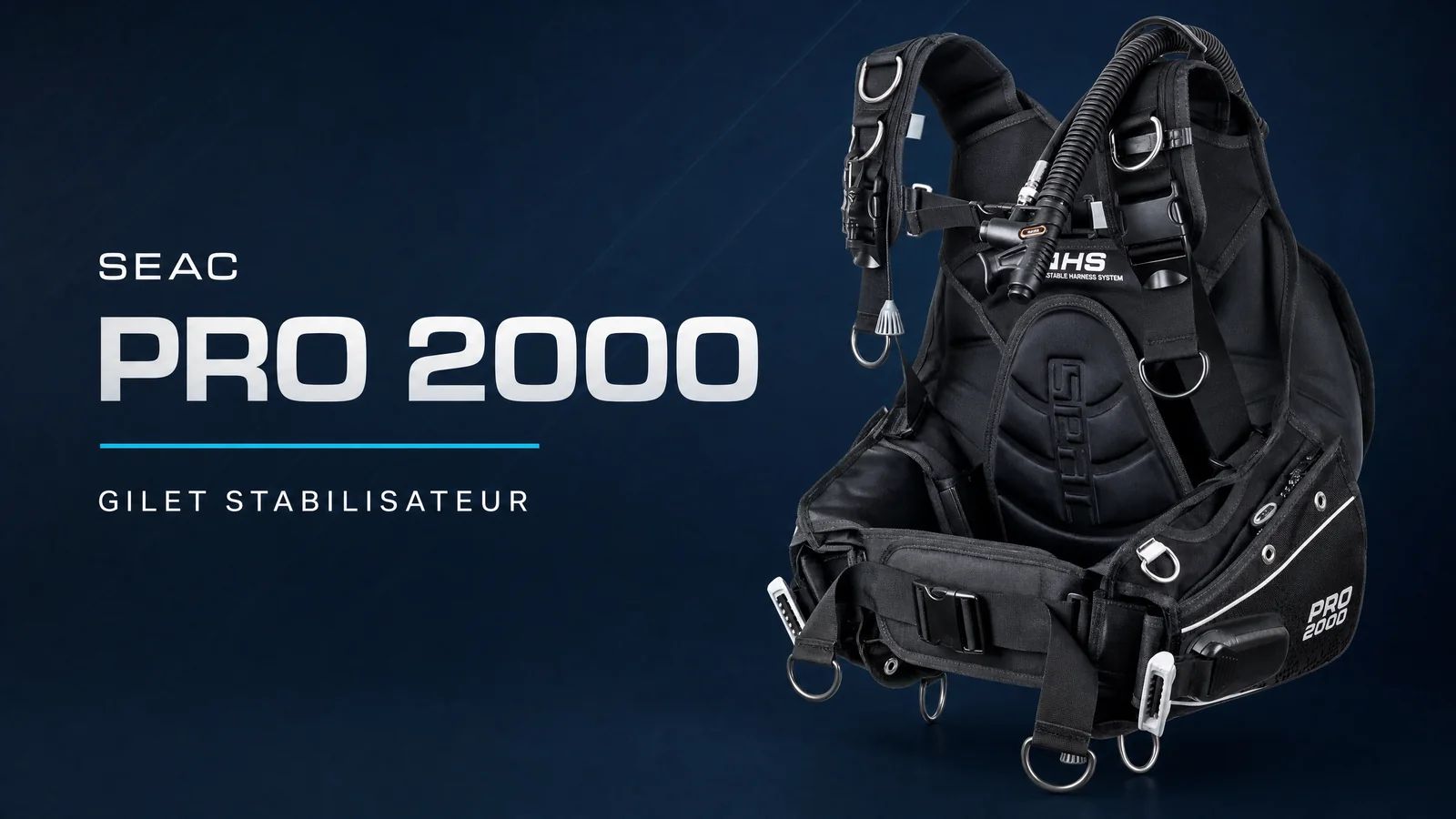
A BCD isn't good simply because it lists many technical features. It becomes useful when it stops occupying the diver's mind. The Seac Pro 2000 is in the back-inflate hybrid category and makes a specific promise: to serve a diving practice geared towards advanced recreation, travel, and photography. This guide doesn't replace a hands-on trial, but it helps you understand exactly what this model offers and what problems it doesn't solve. [1]
The question isn't whether this BCD is inherently good, but rather whether it suits your tank, thermal protection, weighting system, accessories, and skill level. As a back-inflate model, this design places buoyancy in the back. It can free up the torso and support a more horizontal trim, but its stability on the surface must be tested with actual weights. [2] [3]
The Verdict: In SummaryThe Seac Pro 2000 receives an overall AquaExposure score of 3.5/5. This rating should be considered within its category and not used as a universal standard. Its strengths include: 5 aluminum D-rings, included trim pockets, an accessible price, and recognized customer service from Seac. Its main limitations are: aluminum D-rings (less durable than stainless steel), a buoyancy of 35 lbs (limits use in cold water). [1]
Criterion
Value
Overall AquaExposure Score
3.5/5
G1 Buoyancy
3.7/5
G2 Weighting
3.8/5
G3 Storage
3.8/5
G4 Harness
3.8/5
G5 Materials
3.7/5
G6 Versatility
2.5/5
Average Price (estimated 2026)
€499, calculated based on a new price range of €449 to €549
Suitable for
advanced recreational diving, travel, photography
Less suitable for
aluminum D-rings (less durable than stainless steel), buoyancy of 35 lbs (limits use in cold water)
Average Price (estimated 2026). The amount of €499 is an arithmetic average of the available new price range. This is neither a real-time price nor a commercial promise.
Detailed Analysis
G1 Buoyancy
The stated buoyancy is 16 kg, or 35 lbs. This value should not be considered in isolation. It must account for the negative buoyancy of the complete configuration, including the tank, gas, wetsuit, weights, and accessories. An insufficient value can reduce comfort at the surface. An excessive value does not automatically make a dive safer. [4]The Pro 2000 is Seac's hybrid back-inflate BCD. It features five anodized aluminum D-rings, included trim pockets, and a buoyancy of approximately 35 lbs. It's a good alternative to back-inflate BCDs from major brands at a more accessible price. This Italian brand has a recognized customer service department. Based on this assessment, the Seac Pro 2000 receives a G1 score of 3.7/5. Proper trim and purge control must be performed under actual diving conditions, not just in a dry environment. [1]
G2 Weighting System
The model features a weight release system with a stated capacity of 8 kg. It includes two trim pockets. This distribution can help adjust buoyancy, but it does not replace proper weighting procedures. Weights should always be easily accessible and appropriate for the diving environment. [3]
The G2 score of 3.8/5 reflects the capacity and logical design of this model's weighting system. Before purchasing, verify the actual function of the pockets with your own weights and your usual wetsuit.
G3 Storage
The Seac Pro 2000 includes two storage pockets and five metal D-rings. The specifications describe these as five anodized aluminum D-rings. This information is important when carrying items such as a pony bottle, a reel, a light, or an underwater housing. [1]
The G3 score of 3.8/5 does not evaluate the absolute volume of a pocket. It expresses the suitability between the available attachment points and accessories commonly used for advanced recreational diving, travel, and photography.
G4 HarnessThe harness is described as having ergonomic straps and quick-release buckles. The specifications mention 3 adjustment points. This is a useful indicator, but comfort also depends on the size, shoulder width, torso length, wetsuit, and how the tank sits on your back. [2]
The G4 score of 3.8/5 reflects the potential for adjustability in this design. A test dive should confirm that the straps don't pull, the waistband doesn't ride up, and the controls remain accessible when the BCD is inflated.
G5 Materials
The stated weight is 2.8 kg, and the construction is specified as 420D nylon. The D-rings are made of metal. These details indicate expected durability, resistance to wear and tear, and ease of transport, but they alone cannot determine the longevity of a specific unit. [1]
The G5 score of 3.7/5 reflects this assessment of the materials used. The actual condition of a used BCD, including any repairs, inflators, and purge valves, should be checked independently of the year it was manufactured or the brand's reputation.
G6 Versatility
The configuration is advertised for advanced recreational diving, travel, and underwater photography, suitable for warm and temperate waters. The specifications indicate no declared dual-tank compatibility and no declared sidemount compatibility. Therefore, in this configuration, its actual use is neither for dual tanks nor for sidemount diving. [1]The G6 score of 2.5/5 indicates its ability to adapt to changes in diving practices, but it doesn't suggest that one model is suitable for everyone. An evolution towards a more technical style of diving may require a different system rather than simply adding accessories.
What you need to know before buying:
The first check concerns buoyancy. With 16 kg of declared buoyancy, the Seac Pro 2000 needs to be tested with your actual equipment configuration. A thicker wetsuit, a steel tank, saltwater, a housing or a light can significantly change the required buoyancy. The right decision starts with a buoyancy check at the end of the dive, not based on a general rule. [4]
The second check concerns comfort. This model advertises ergonomic straps and QR buckles. Wear it with your usual thermal protection, then check underwater how easy it is to breathe, access the purge valves, use the direct-system, and position the tank. A poorly fitted BCD adds a mental burden that the diver should be dedicating to the environment and their dive buddy. [2]The third aspect to consider is its usability. Like a back-mounted buoyancy compensator, this model places the buoyancy control in the back. It can free up the upper body and promote a more horizontal trim, but its surface stability should be tested with actual weights. The identified advantages – 5 aluminum D-rings, included trim pockets, an accessible price, and Seac's recognized customer service – must be weighed against its limitations: aluminum D-rings (less durable than stainless steel), and a buoyancy of 35 lbs (a limitation in cold water). The average indicative price of €499 for 2026 is simply a point of comparison and should never be considered a safety criterion.
Safety Reminder
The advertised buoyancy, price, and rating do not replace a trial dive, a weight check, or appropriate training. Any modification to the tank, wetsuit, weights, or accessories requires re-verifying the entire configuration. For hybrid back-inflate systems, the correct approach is to understand the equipment before entrusting it with responsibilities that it cannot handle alone. [2] [3] [4]
Our VerdictThe Seac Pro 2000 is suitable for advanced recreational diving, travel, and underwater photography when the diver's build, weighting, and environment match the specifications. Its advantages include 5 aluminum D-rings, integrated trim pockets, an accessible price, and a recognized Seac customer service department. Its limitations are the aluminum D-rings (less durable than stainless steel) and a buoyancy of 35 lbs (which may be limiting in cold water). Therefore, the best purchase is not necessarily based on the highest rating, but rather on choosing a configuration that is understandable, comfortable, and appropriately sized for the type of diving you will actually be doing. [1]
To compare this model with other equipment, please refer to our general guide to AquaExposure diving gear.
Links and Comparison Tool
The AquaExposure comparison tool should link to this review with the call to action "Read the full review.". In return, this review links back to the product card at this placeholder address: view the Seac Pro 2000 in the comparison tool.
The production slug of the comparison tool and the actual anchor of the card must be confirmed before final publication.
Frequently Asked Questions
What is the approximate average price for the Seac Pro 2000 in 2026?
The approximate average price for 2026 is €499, calculated from a new range of €449 to €549. This figure is an indicator and not a real-time selling price.
What buoyancy does the Seac Pro 2000 offer?The specifications indicate a buoyancy of 16 kg or 35 lbs. This value must be compared to the actual weight added for weights, tank, thermal protection, and accessories used.
Who is this model best suited for?
The Seac Pro 2000 is designed for advanced recreational diving, travel, and underwater photography. It is recommended for intermediate to advanced divers, primarily in warm to temperate waters.
What should you check before purchasing?
You should verify the harness, access to purge valves, weight distribution, size, condition of the D-rings, and how the BCD performs with your complete gear configuration.
References
[1]: https://www.seacsub.com/en/diving-equipment/bcds/pro-2000/ "Seac Pro 2000, manufacturer or distributor specifications" [2]: https://scubapro.johnsonoutdoors.com/eu/fr-fr/blog/choisir-le-gilet-le-plus-approprie-votre-style-de-plongee "SCUBAPRO, choosing the right BCD for your diving style" [3]: https://www.divessi.com/fr/blog/scuba-diving-bcds-explained-2425 "SSI, buoyancy compensators explained" [4]: https://8diving.com/halcyon-wing-size-lift-capacity-explained "Halcyon and Eight Diving, understanding the lift capacity of a wing"