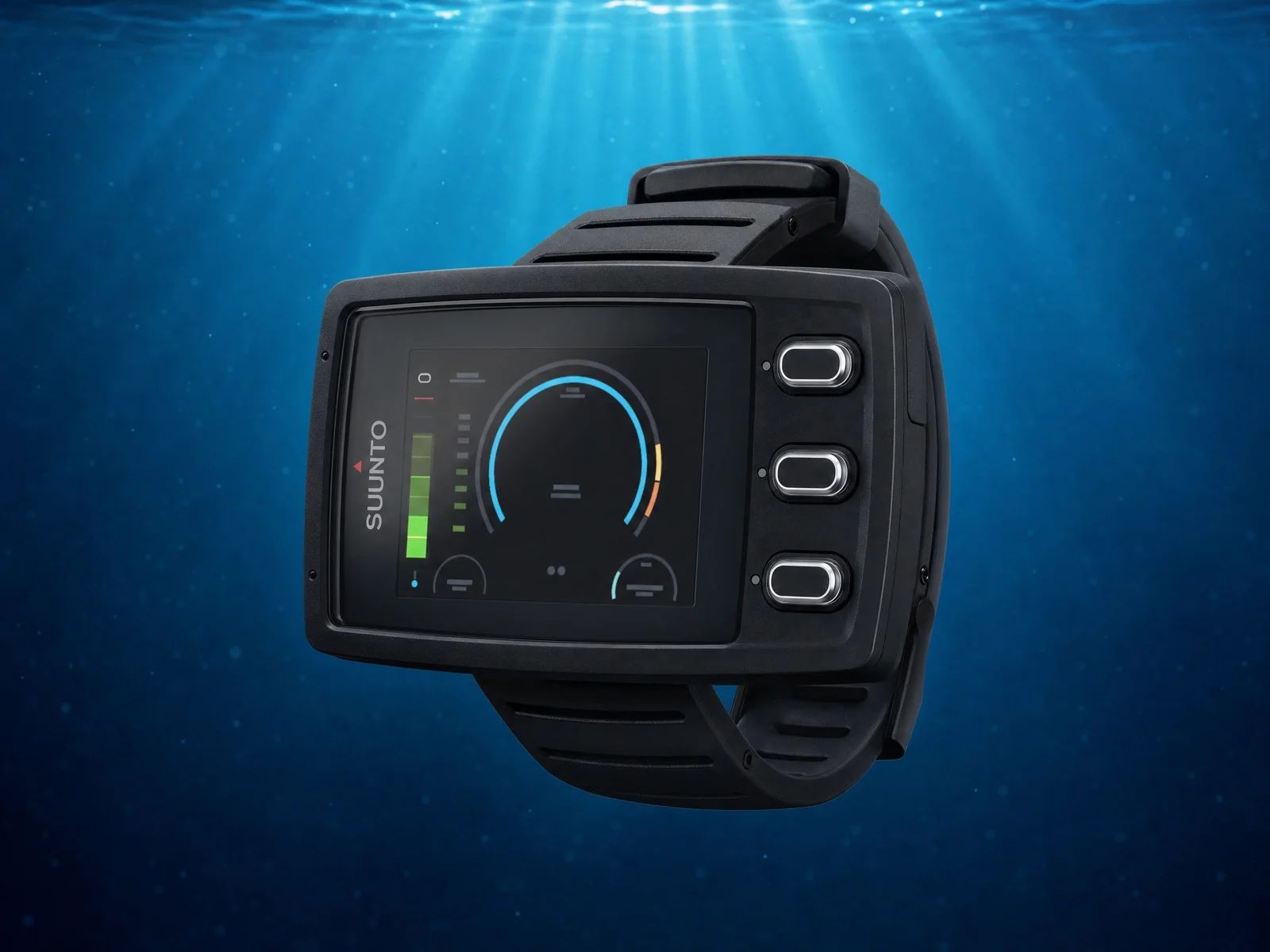
Comprehensive review of the Suunto EON Core, a compact color dive computer. Features include Bühlmann 16 GF algorithm, TFT display, multi-gas management.
Yes, since the software update 4.0, the Suunto Bühlmann 16 GF algorithm with gradient factors is available on the EON Core.
It uses a rechargeable battery that provides approximately 10 to 20 hours of dive time on average, and it is recharged using its proprietary magnetic cable.
Yes, it handles helium (up to 95%) and oxygen (up to 99%), and you can enable support for CCR diving through the Suunto app.
No, the interface is fully customizable. A beginner diver can choose to display only the essential data (Air/Nitrox), making it extremely easy to read underwater.
In the world of scuba diving, the dive computer is not just a fashion accessory. It's a measuring instrument that calculates our decompression requirements and monitors our safety every minute we spend underwater. Choosing a model with a color display often presents a dilemma between readability, bulk, and price.
I remember a dive in the autumn in the waters off Zeeland, which were very murky. Visibility was no more than a meter, and my students were struggling to decipher the information on their old, gray LCD screens. Next to them, my Suunto EON Core shone like a beacon in the dimness, clearly displaying the decompression limit. This experience convinced me that a good display is a direct factor in safety, reducing the mental load on the diver underwater.
With the Suunto EON Core, the Finnish brand offers a lighter version of its famous EON Steel. It replaces the heavy steel casing with a much lighter composite material that is more comfortable to wear on the wrist. But a beautiful display is not enough. We will analyze its technical capabilities underwater to see if it truly represents the ideal compromise for your dives.
| Overall Score: 4.4/5 | Criterion | Score | What it means |
|---|---|---|---|
| Algorithm & decompression stops | 5.0/5 | Choose between the Bühlmann 16 GF model or the Suunto Fused RGBM 2. Complete control over decompression. | |
| Air & multi-gas |
| 5.0/5 |
| Up to 10 configurable gases, full Trimix capability, and a CCR mode that can be easily activated. |
| Screen & ergonomics | 4.8/5 | Very large and customizable color TFT screen. Intuitive navigation with three buttons. |
| Battery life | 3.5/5 | Rechargeable battery offering 10 to 20 hours of dive time. Acceptable, but requires recharging during travel. |
| Connectivity & app | 4.2/5 | Very reliable Bluetooth for dive log. Updates via USB cable and computer. |
| Compass & instruments | 4.3/5 | High-performance electronic 3D compass. Includes a classic depth gauge mode. |
| Robustness & depth rating | 3.5/5 | Certified to a depth of 80 meters. Lightweight composite casing, but less robust than steel. |
| Price & customer service | 4.5/5 | Excellent value for money considering its multi-gas capabilities. Suunto's customer service network is impeccable. | * This computer is ideal for: Recreational divers who dive regularly, instructors, or those doing light technical diving who are looking for perfect readability without the bulk of a large metal device on their wrist. |
This is excellent news for regular divers. With the 4.0 firmware version, Suunto has officially integrated the Bühlmann 16 GF model into the EON Core. You can now abandon the original Fused RGBM 2 to configure your own Gradient Factors. This allows you to perfectly align your decompression profile with that of your fellow divers using equipment from other brands. The display of the ceiling and total ascent time is remarkably clear.
#
The Instructor's Perspective: A dive computer, such as the Suunto EON Core, is a diver's first line of defense, especially in underwater photography. The most common mistake is to focus so intently on a composition or subject that you lose track of time and experience unintentional depth changes, which accelerate tissue saturation.
Practicing underwater photography with peace of mind requires strict discipline: monitoring your parameters at a glance without losing sight of your subject, and adhering to your decompression stops in open water. This is one of the essential reflexes taught in the AquaExposure underwater photography course.
To compare the algorithms, readability, and battery life of each model, consult our dive computer comparison tool and our complete guide to buying dive computers.
© 2026 AquaExposure. All rights reserved. Reproduction prohibited without authorization.