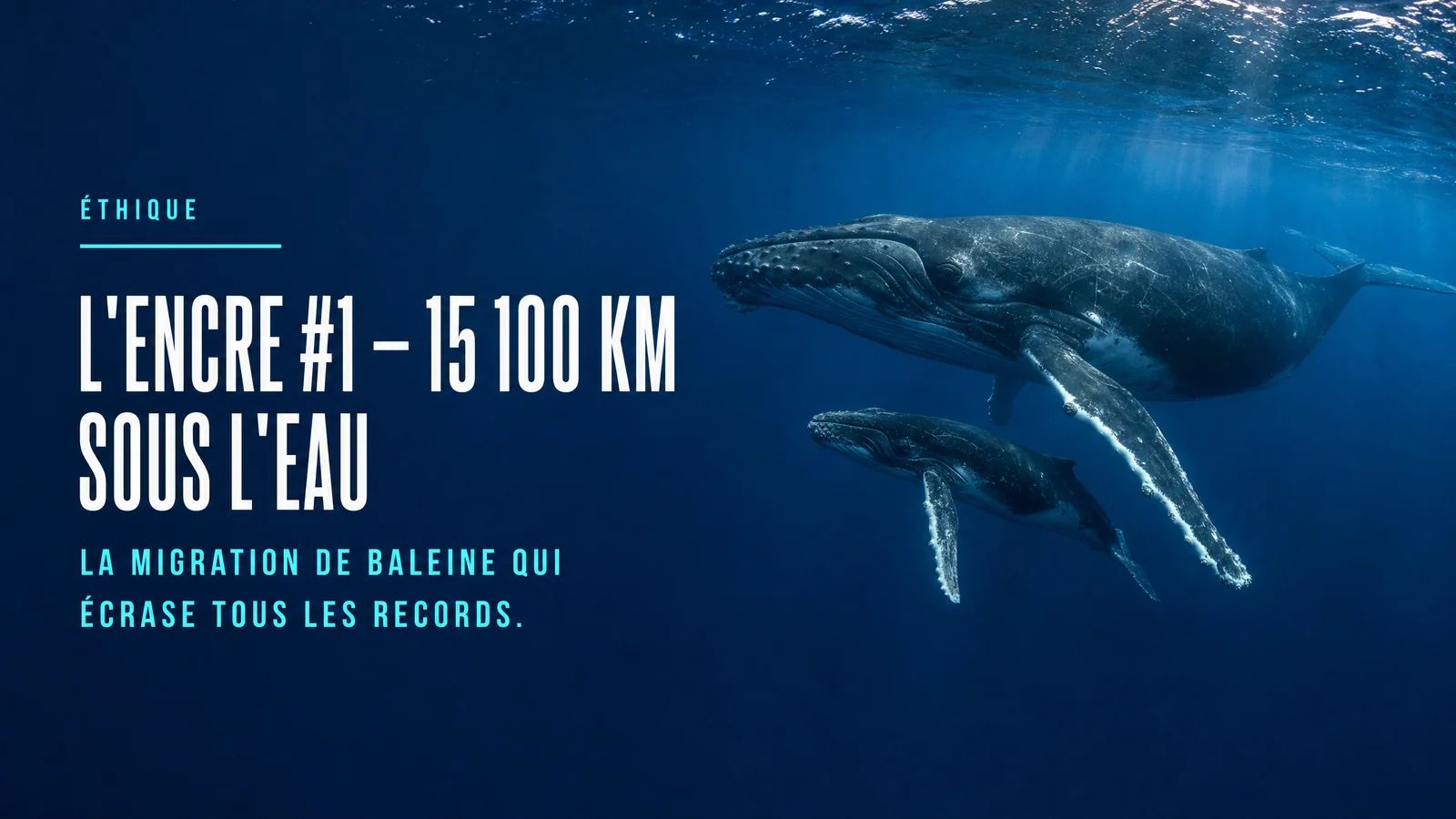
What is the longest whale migration ever recorded?
In 2026, a humpback whale was tracked over 15,100 km between Antarctica and the tropical Pacific. This record shatters previous ones and raises questions about migratory routes altered by climate change.
What is the new marine sanctuary in Papua New Guinea?
A protected area of more than 200,000 square kilometers (larger than the United Kingdom) created in 2026 to protect the coastal and pelagic marine ecosystems of the region, one of the richest in biodiversity in the world.
Why are nanoplastics a problem for the ocean?
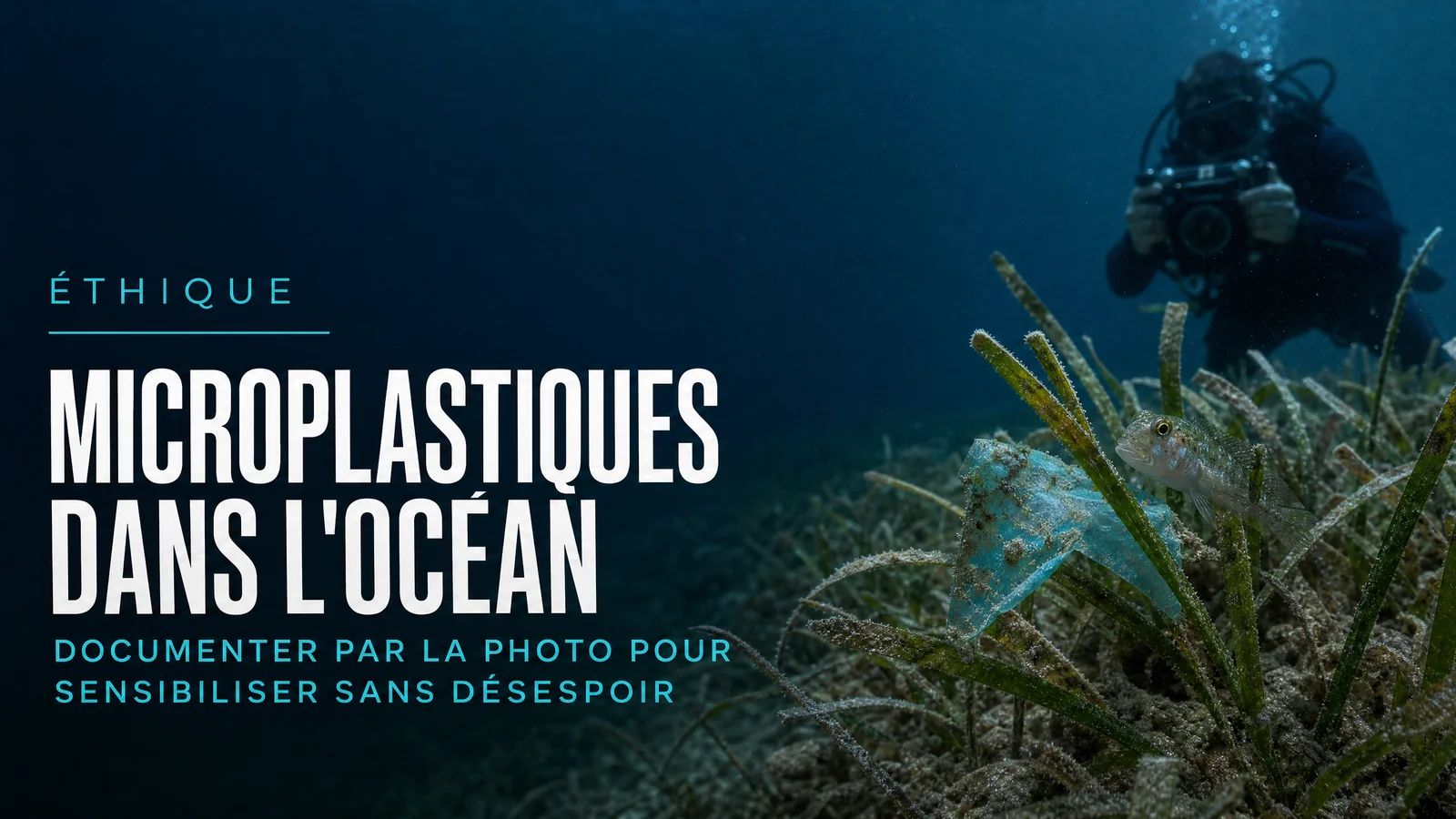
Unlike visible microplastics, nanoplastics are small enough to cross the cell membranes of marine organisms. Recent research shows they accumulate in tissues and disrupt biological functions.
To learn how to get the most out of your gear underwater, discover the AquaExposure training.
Veille Ocean, May 2026: A whale crossing two oceans, a sanctuary the size of the United Kingdom, and invisible plastic
"The sea, once it casts its spell, holds one in its net of wonder forever." Jacques-Yves Cousteau
There are weeks when the ocean sends its messages through distinct waves, without any apparent connection between them. An animal that sets a record for distance. A country that protects a marine area larger than its own land territory. A researcher who discovers how a tiny algae could solve a problem that billions of euros of technology have not yet been able to resolve. And a team that finally puts a number on something that no one wanted to count.
Four stories, four scales. All fallen in May 2026.
15 100 kilometers swimming, without GPS or map
The news was published on May 19 in Royal Society Open Science. Two humpback whales (Megaptera novaeangliae) have been formally identified as having traveled between the breeding grounds in eastern Australia and those in Brazil. The distance between the two observations is: 15,100 kilometers for one of them. This is the largest migration ever confirmed for an individual of this species, surpassing the previous record of a humpback whale that had connected Colombia to Zanzibar.
The method is as fascinating as the result. Researchers compared 19,283 images of caudal fins collected between 1984 and 2025, from both professional biologists and citizen scientists via the Happywhale platform. Identification was based on the unique patterns found on each caudal fin, similar to a fingerprint.
The intervals between observations (6 years for one whale, 22 years for the other) suggest that these are not regular migrations, but rather rare, perhaps unique, events in a lifetime. According to Phillip Clapham, former head of the NOAA whale research program, these interactions concern only 0.01% of the identified individuals.
But climate change could make these crossings less exceptional. The retreat of the Antarctic ice and the redistribution of krill (the main food source for these animals) are gradually changing the migration routes. What was once an individual achievement could become a trend.
Papua New Guinea creates a 200,000 km2 sanctuary
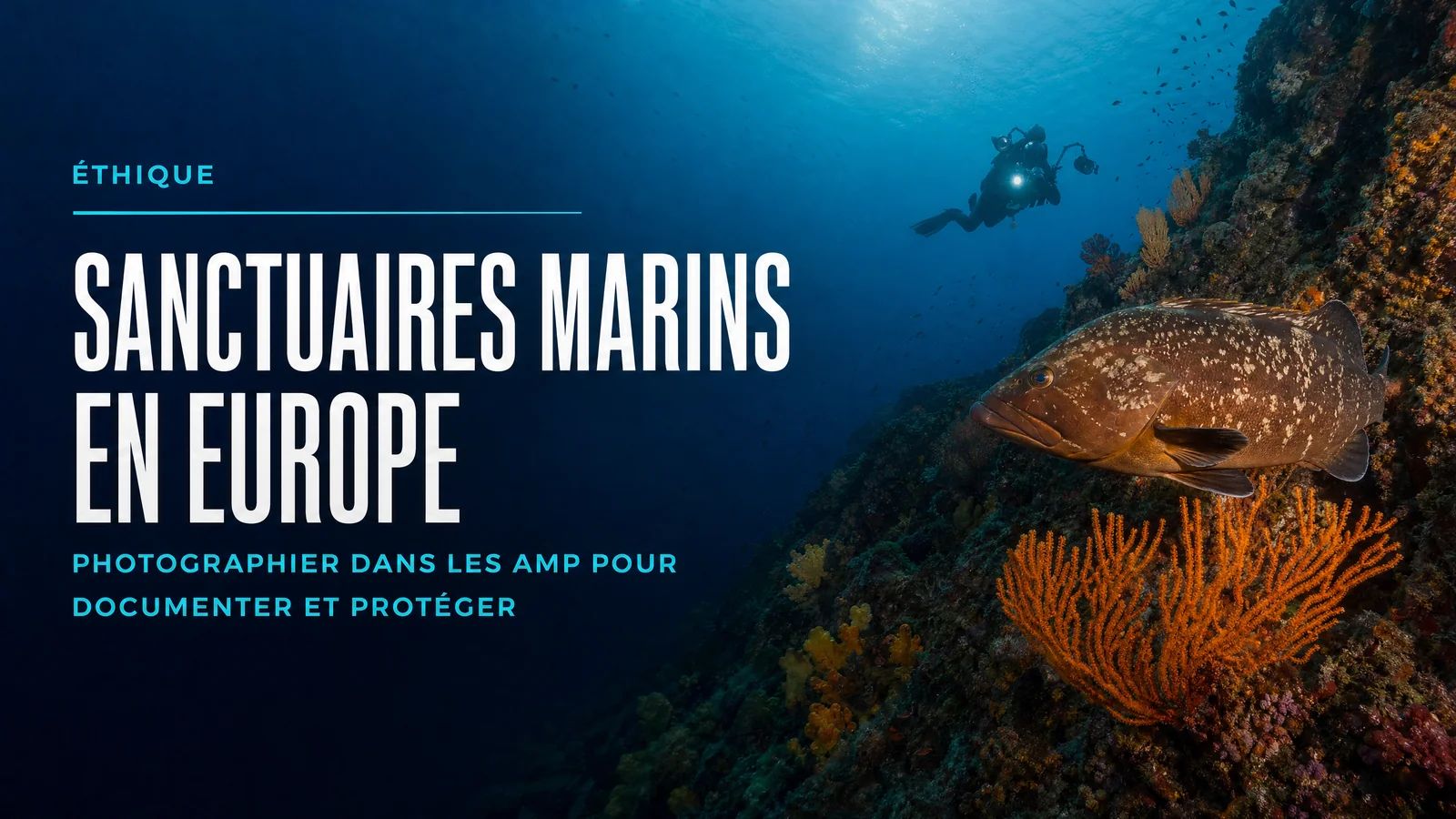
On May 13, 2026, Papua New Guinea announced the creation of the Western Manus Marine Protected Area, in the Bismarck Sea. Area: 200,000 km2. To put this figure into perspective, it is approximately the size of the United Kingdom. And it is a completely protected area, strictly "no-take": no extractive activities, no fishing is allowed within its limits.
The choice of this location is no accident. Western Manus is located at the heart of the Coral Triangle, the region with the highest marine biodiversity on the planet. The area protects critical habitats for threatened shark populations (hammerheads, wobbegongs) and constitutes a migratory corridor for humpback whales that pass through these waters seasonally.
What makes this announcement even more significant is that it fits into a larger network. The AMP of Western Manus joins the MOCOR (Melanesian Ocean Corridor of Reserves), a group of protected national and co-managed areas that cover Fiji, Vanuatu, and Papua New Guinea. The goal is to create a continuous corridor through the Pacific for migratory species.
On a global scale, the progress is real. By the end of 2025, 9.9% of the ocean benefited from a protected status. This is the highest annual increase in nearly a decade. We are still far from the 30x30 target (30% by 2030), but the trajectory is accelerating.
A modified algae that captures microplastics
At the University of Missouri, researcher Susie Dai published in May 2026 in Nature Communications the results of a study that could revolutionize water treatment. Her team designed a genetically modified algae strain capable of capturing microplastics in water.
The mechanism is elegant in its simplicity. The modified algae produces limonene, an oil that smells like orange and has the property of binding to hydrophobic plastic particles. When the algae encounters a microplastic, it adheres to it and forms a clump that is easy to filter. The bonus: the algae also cleans the wastewater while it grows.
The problem she addresses is enormous. Most water treatment plants filter out large debris, but microplastics pass through the mesh and end up in drinking water, in ecosystems, and ultimately in our bodies.
Susie Dai's long-term goal goes beyond simple cleaning. She aims to recycle collected plastic into safer bioplastics, in the form of composite films. The research is still in its early stages, but integration with existing processing stations is already being considered.
27 million tonnes of invisible plastic
And that's where things become more somber, without necessarily falling into catastrophe. Because the value of this discovery is precisely to provide a figure where there were only estimates.
Researchers have finally solved the mystery of the "missing plastic" in the oceans. For years, scientists have struggled to find the full extent of plastic produced by humans. A portion seemed to have disappeared. The answer is both simple and unsettling: this plastic has not evaporated. It has fragmented into nanoplastics, particles so small that they escape all conventional detection methods.
The published estimate, released in March 2026, is staggering: approximately 27 million tonnes of nanoplastics are floating in the North Atlantic alone. This is more than the combined mass of all visible micro and macroplastics in the oceans of the entire globe.
These particles travel through the food chain, from microorganisms to fish, and likely to us as well. The Ocean Conservancy has pointed out that 60% of the fish studied worldwide contain microplastics. Blue whales, for example, ingest up to 10 million particles per day during the feeding season.
The researchers' conclusion is clear: the nanoplastics already present in the ocean can never be removed. The only effective solution remains prevention, that is, preventing plastic from reaching the ocean before it degrades into unrecoverable particles.
What this means for us, underwater
For those of us who dive with a camera, these new developments are very real.
The record migration of humpback whales reminds us that the animals we photograph on a particular site may not actually "live" there. This hammerhead shark, observed in the Maldives, could have traveled from Australia. This turtle, observed in the Mediterranean, could have crossed the Atlantic. Photographing these animals is capturing a moment in a journey that exceeds our comprehension.
The creation of the Western Manus sanctuary is a concrete invitation. For underwater photographers looking for underexplored destinations, the Coral Triangle will become more accessible as conservation programs develop there. AMPs do not close the ocean to divers. They protect what has been photographed there.
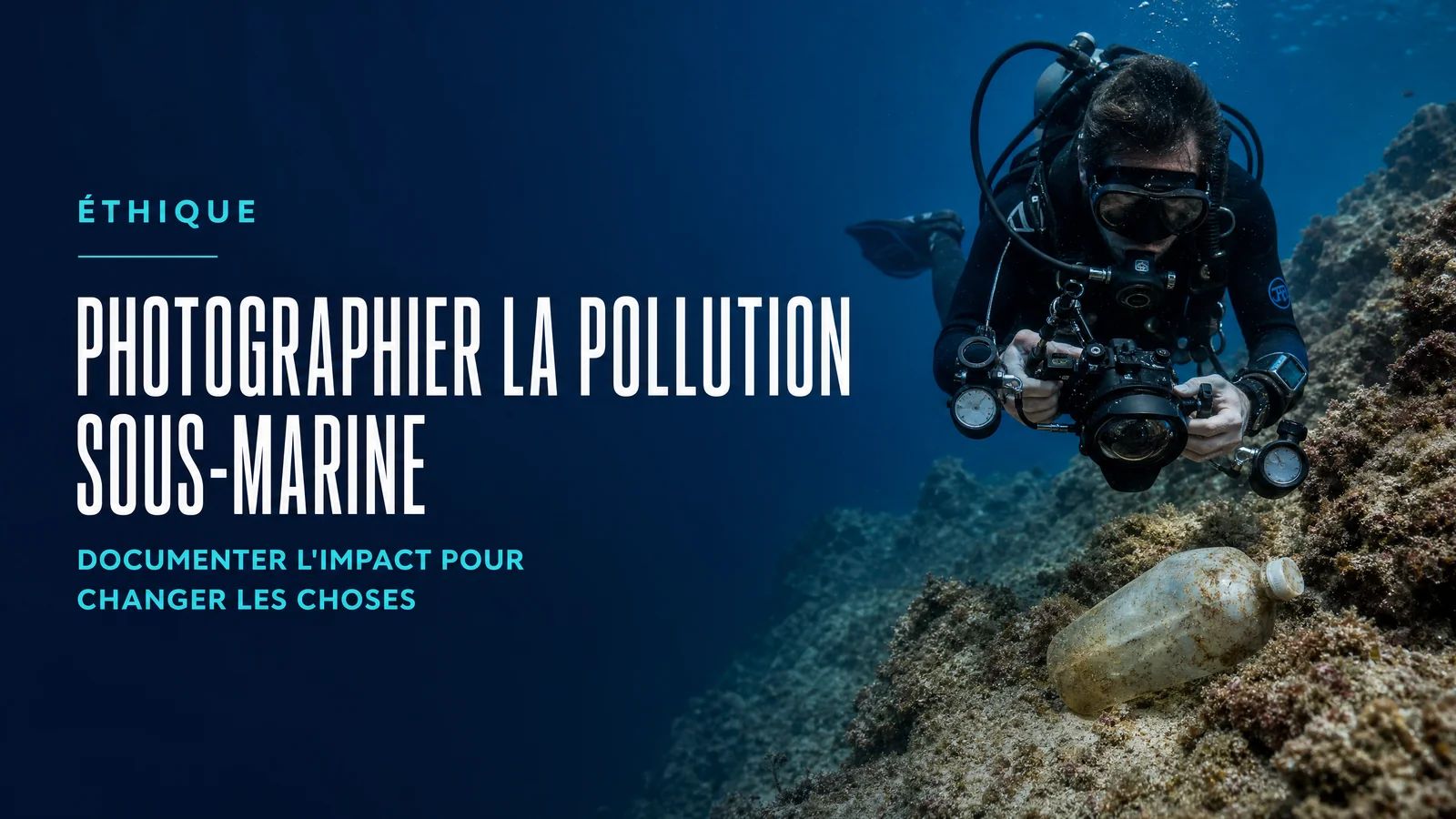
The issue of microplastics and nanoplastics is more personal. When we know that participatory science is changing the game in marine biology, we understand that every underwater image can serve as evidence. Documenting a healthy reef is just as valuable as documenting a degraded reef. The image becomes proof.
And then there's this algae that captures plastic by producing limonene. A microscopic organism, an oil that smells like orange, and a planetary problem that is starting to find a solution. We are still far from industrial deployment, but the direction is correct.
If these subjects inspire you to better understand the ocean before photographing it, the AquaExposure course includes modules on ethics and the approach to species. Because understanding what happens beneath the surface is also knowing what to look for in the viewfinder.
Frequently Asked Questions
Do humpback whales really migrate from Australia to Brazil?
This is confirmed by the study published in Royal Society Open Science on May 19, 2026. Two individuals were identified through photographic comparison of their caudal fins. The maximum distance between observations reached 15,100 km. These crossings remain extremely rare (0.01% of individuals), but their existence proves that the populations of humpback whales in the Southern Hemisphere are not as isolated as previously thought.
What is the Western Manus Sanctuary in Papua New Guinea?
It is a protected marine area of 200,000 km2 (the size of the United Kingdom) created on May 13, 2026, in the Bismarck Sea, at the heart of the Coral Triangle. The area is strictly "no-take": no fishing, no authorized extraction. It protects habitats of threatened sharks and migration corridors for humpback whales. It is part of MOCOR, a network of protected areas connecting Fiji, Vanuatu, and Papua New Guinea.
Is it true that algae can eliminate microplastics from the water?
In the lab, yes. Researchers at the University of Missouri published in May 2026 in Nature Communications the results of a genetically modified algae that produces limonene, an oil capable of binding to microplastics and forming filterable aggregates. The goal is to deploy this technology in water treatment plants, but the technology is still in the research stage.
What are nanoplastics and why can't they be cleaned?
Nanoplastics are plastic fragments so small (less than a micrometer) that they escape all conventional filtration methods. A study in March 2026 estimated that approximately 27 million tonnes of nanoplastics are floating in the North Atlantic alone. These particles cannot be recovered once they are dispersed. The only effective strategy remains to reduce the amount of plastic that enters the ocean.
The following is a translation of the French text:
The following is a translation of the French text:
A whale crossing two oceans, a country protecting 200,000 km² of water, an algae that eats plastic, and a number that gives you vertigo. Four reasons to keep your head under the water, with your eyes wide open.
The Ink #1 - 15 100 km underwater: the whale migration that shatters all records. | AquaExposure