What exactly is a photographer's role in marine conservation?
You are a witness, a documentarian, and a communicator. You capture the reality of the ocean, its beauty, but also its transformations and its wounds. Your images are evidence, data, and invitations to love and protect.
How do my images actually help science?
Your images and data (date, location, species observed) feed scientific databases like iNaturalist. Researchers use them to track species distributions, document ecological changes, and identify priority areas for conservation.
Can I really contribute to citizen science without being a marine biologist?
Absolutely. Citizen science relies on participatory collection. You don't need a degree. You just need curiosity, accuracy (noting the right information), and consistency (photographing the same place regularly).
You think you're just taking pretty pictures of colourful fish. But you're actually changing the world. No, that's not marketing. Science says so, and it's what completely transformed me as a photographer and diver.
I spent years in the Maldives as a diving instructor, and for a long time, I took photos solely to impress tourists over evening drinks. My images were beautiful, sure, but they served no purpose. It was entertainment, nothing more. Today, I've understood something fundamental: every underwater photo you capture can become a testimony, a piece of evidence, a call to action. And that's exactly what gives meaning to what we do.
What I'm going to share in this article is how to transform your photographic passion into genuine commitment to the ocean. You don't need to be National Geographic to make a difference. One of my students, a retired physiotherapist aged 65, takes turtle photos with her phone, and her images circulate in conservation newsletters. If she can do it, so can you.
The problem: we're documenting a world that's disappearing
Before talking solutions, we need to be honest about the context.
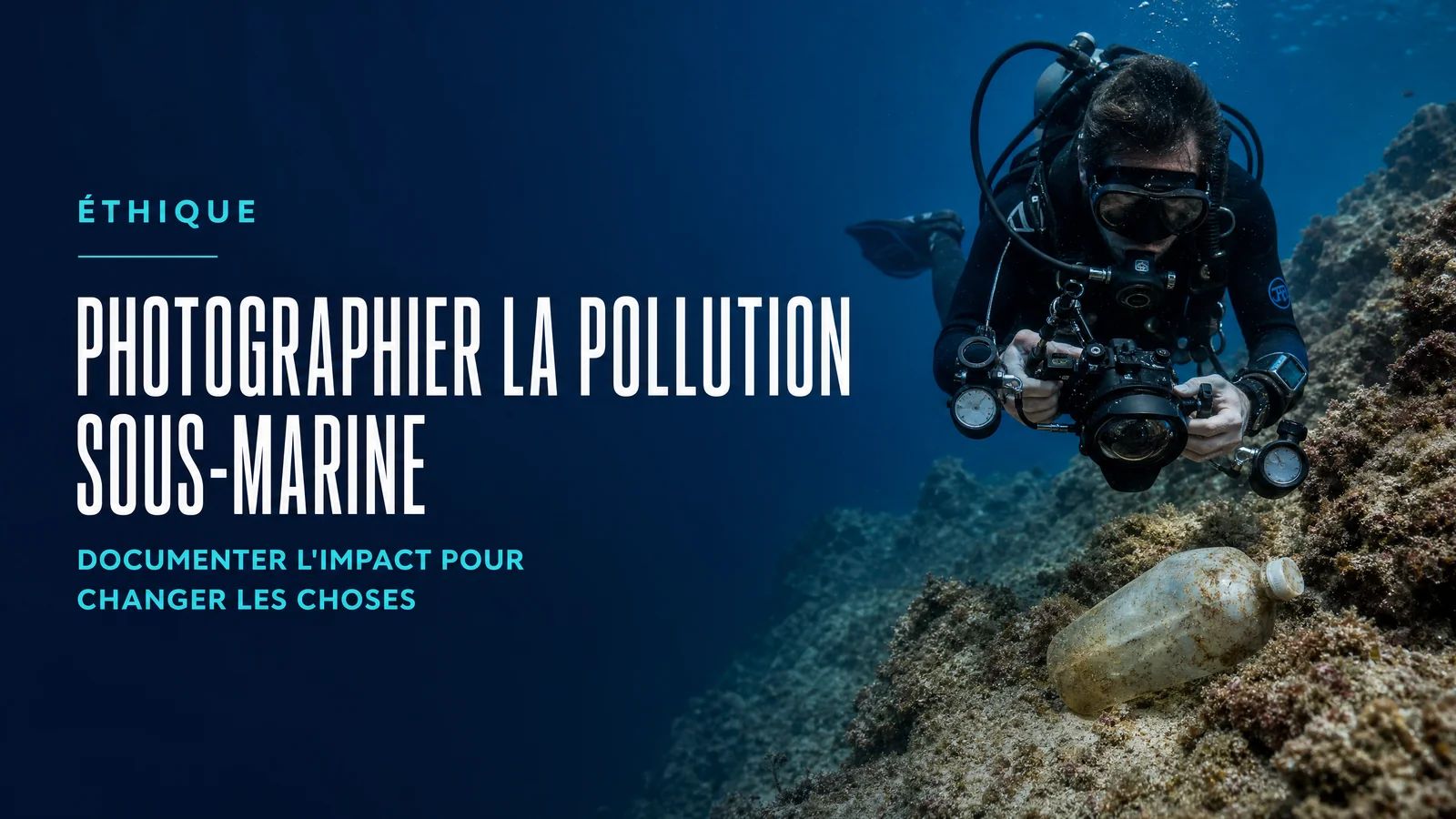
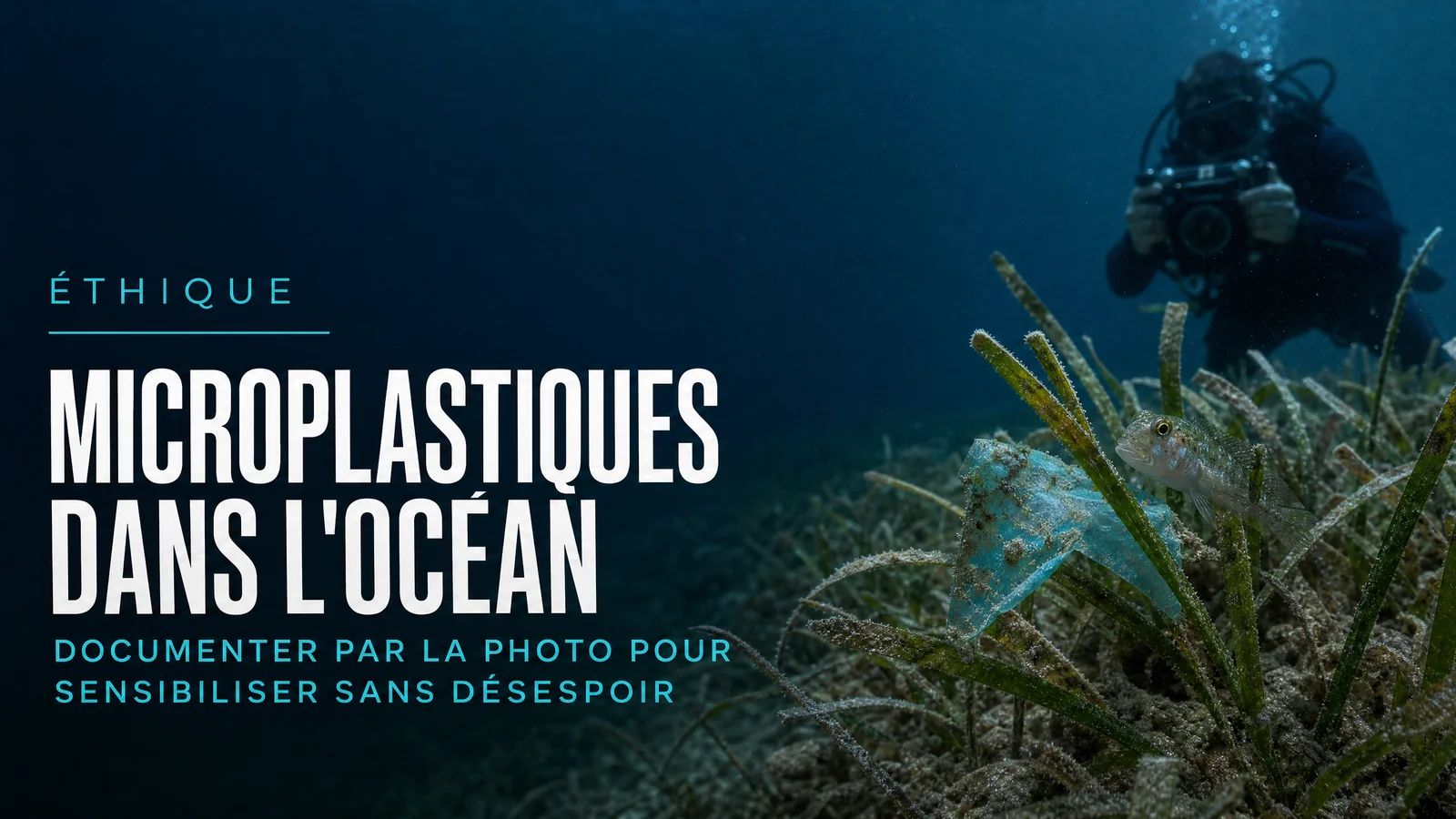
Three quarters of the planet's coral reefs are degraded or threatened. Every year, we lose entire ecosystems without the world even knowing. The newspapers talk about polar ice melt (that's important), but few people realise that underwater, it's like a silent alarm that's been ringing for thirty years.
The problem? Decision-makers, politicians, ordinary citizens can't see what's happening underwater. They simply can't. The ocean remains invisible to 99% of humanity. It's like trying to save a forest nobody has ever seen. Almost impossible.
That's where the underwater photographer's critical role comes in.
My mistakes: when I almost understood too late
I made stupid mistakes at the beginning. Here are three that still haunt me.
Mistake 1: Believing that taking beautiful photos was enough
I photographed one reef for years in the Maldives. I took spectacular images of coral, tropical fish, everything that shines. One day in 2015, I returned to the same spot after three years. The reef was dead. Bleached. A white desert where there used to be life.
I had 200 photos of that reef from before. But they had never been shared, analysed, or used. They were sleeping on a hard drive. I realised I had documented something precious without even knowing it, and I had lost the opportunity to use it as an alert.
Mistake 2: Keeping your images to yourself
For a long time, I thought my photos belonged to me. Of course, legally, they do. But ethically? I guarded them jealously, selling them to travel magazines that showed the ocean as an exotic destination, not as a vulnerable ecosystem.
One day, a researcher from the University of Bali asked if she could use my images of a certain nudibranch species for her scientific paper. Obviously, I said yes. Her article was cited more than 300 times. My photo was now part of a global conversation about biodiversity. That's when I understood: sharing my images means multiplying them.
Mistake 3: Thinking that engaged photography means aggressive activism
I confused "ambassador" with "enraged activist". I thought you had to be radical, publish shocking images, criticise everyone, tear down luxury hotels on social media. I tried it a few times. The result? I offended my friends, got blocked by a few hotels I had excellent relationships with, and convinced nobody.
People who block you never listen to you. People who love you do.
The revelation: why photography changes behaviour
It was Cristina Mittermeier who opened my eyes to this. She's the founder of SeaLegacy, an organisation that uses photography to create marine protected areas. Reading her interviews, I discovered something that changes everything: photography has a measurable impact on conservation behaviour.
Not just sentiment. Not just inspiration. A scientific, measurable impact.
Research by Markowitz et al. (2013) demonstrated that images of nature have an effect on people's conservation behaviours. Seeing an image of a magnificent coral reef isn't just beautiful - it's a call to action. It's a visceral reason to ask yourself: "Why do I want to protect this?" The answer: "Because I love it."
And as Jacques Cousteau put it so well: "People protect what they love. They love what they understand."
That's literally it. Your photo of a sea turtle looking at the camera (the one you took while diving off Taveuni) could be someone's first ever image of a sea turtle. And that image could change their life.
Paul Nicklen, the polar photographer for National Geographic, recounts that his images of polar bears on melting ice motivated governments to sign climate agreements. Governments. Because of his photos.
And Sylvia Earle? This woman discovered that showing the ocean authentically (not with a blue Instagram filter, but with its raw wild beauty) is what creates change. She says we need a "blue army" - people who document and share marine reality.
You might be thinking: "But I'm not Cristina Mittermeier or Paul Nicklen." Exactly. You're better positioned than they are. You're local, authentic, accessible. You're credible because you're not a superstar.
Revelation 2: What photography does for science
There's something I discovered by talking to researchers in Southeast Asia: your photos are scientific data.
Scientists lack data. Not enough money for expensive expeditions, not enough divers to monitor every coral reef site. But you? You go diving. You take photos. Those photos have a date, a location, an identified species.
In 2016, a photo I took of a pygmy seahorse at a specific location helped a researcher document the seasonal migration of that species. My photo. Simply because I had noted the place and date.
This is citizen science, and it's MASSIVE in marine conservation right now. Projects like iNaturalist use exactly your photos to create global biodiversity databases. Scientists access this data for free. They publish papers. Those papers change policies.
You're not just taking a pretty photo. You're creating a scientific archive of the living world.
The solution: becoming an ambassador of life (not a guru)
Here's what I've learned, and what I do now. It's simple, non-guru-ish, and it works.
1. Document with intention, not perfection
Forget "perfect" images. The best conservation photos aren't always the most technically beautiful. They're authentic. They tell a story. They show context.
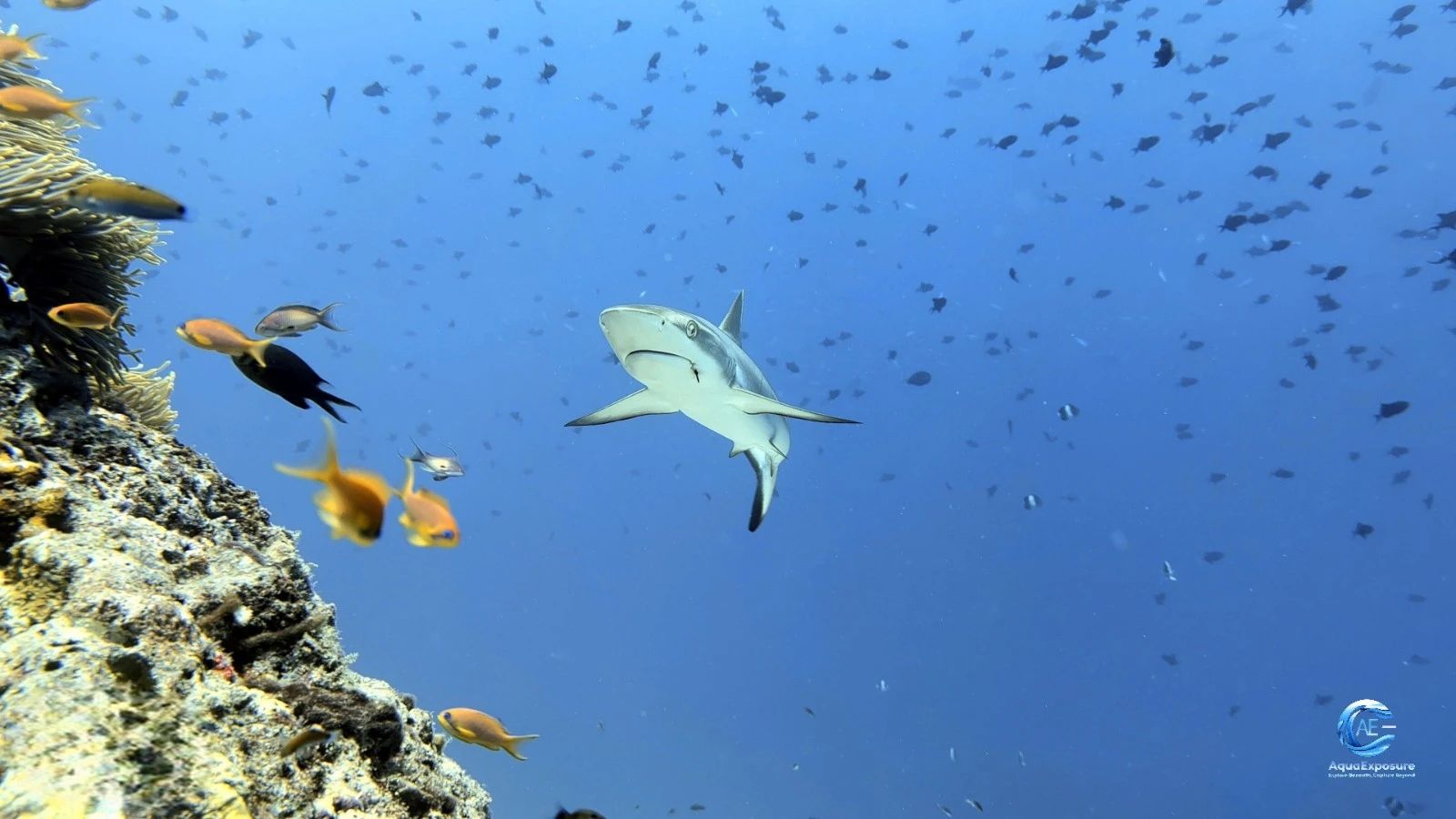
Photograph a clownfish, fine. But also photograph the anemone it lives in. Photograph the reef around it. Show the ecosystem, not just the subject.
I do this now in all my AquaExposure courses. I tell participants: "Your camera is a storytelling tool, not a selfie toy."
2. Share without hesitation, but thoughtfully
Sharing a photo doesn't mean losing it. It means multiplying it.
Create Instagram/TikTok accounts dedicated to marine documentation (not lifestyle)
Tag conservation organisations (@SeaLegacy, @OurOcean, etc.)
Submit your images to iNaturalist, Flickr Commons, WikiCommons
Connect with researchers on ResearchGate (yes, it's a real platform for this)
Send your images directly to local marine protection organisations
A dive guide I know in Indonesia shares his turtle photos on a local Facebook group. His images are now used by a local NGO for their annual report. He didn't ask for anything, he just shared. And now his images are part of a real conservation movement.
3. Tell the story behind the photo
A photo without context is beautiful but hollow. A photo with a story is a weapon for change.
When you publish your coral reef image, write: - When did you take it? - What did you observe at this site? - How has this site changed (or not) over the years? - What rare or threatened species did you document?
These details transform an Instagram photo into a testimony. And testimonies are what change minds.
4. Be ethical in how you photograph
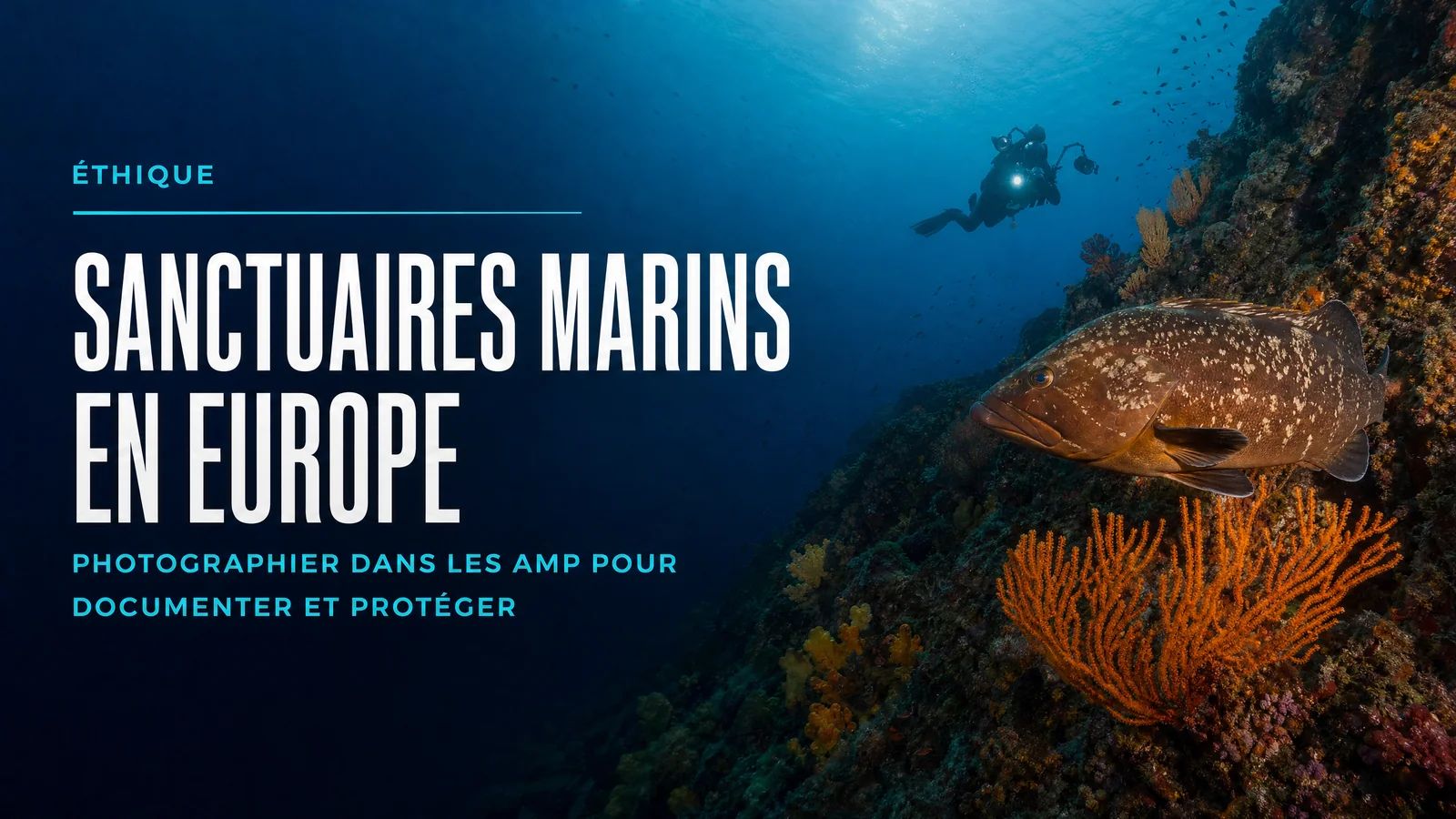
This is crucial. If you damage the ecosystem to take a photo, you've missed the point.
Don't touch the corals
Keep your distance from animals
Don't use powerful flash
Learn responsible diving practices
Teach your students that the photo comes after respect
At AquaExposure, it's the first rule I teach: the camera is the second tool. The first is ethics.
5. Get involved locally
Don't dream of being an international conservation superstar. Be the person who changes minds in your region.
I know a guy in Indonesia who photographed the same reef for two years. He showed his images to village residents, to children at school, to local hotels. Today, that reef is a fully protected community-managed marine conservation zone. How did it happen? One story at a time. One image at a time.
Why it's an ambassador, not an activist
There's a crucial difference.
An activist says: "You're stupid, you can't see the problem, stop harming the ocean."
An ambassador says: "Look at the beauty of this place. Look at this species. I love this world, and I want to share it with you. Do you want to love it too?"
The activist creates resistance. The ambassador creates connection.
And connection is what changes laws, policies, behaviours. Not anger. Love. Love is a better weapon than rage.
That's why I say "ambassador of life". You're not shouting at the world. You're showing the world something worth loving and protecting.
In practice: how to start today
You have a camera? You go diving? That's enough.
1This week, photograph something beautiful underwater. Note the date, the location, the depth.
1That same day, write a short story about that photo. Two or three sentences. Why does it matter? What did you observe?
1Tomorrow, share it. Instagram, Facebook, iNaturalist, anywhere. Tag a conservation organisation.
1Next week, find a researcher or local NGO and offer your services. "I dive regularly. I can photograph what you're studying."
That's it. You've started.
FAQ: Questions you're asking
What exactly is a photographer's role in marine conservation?
You are a witness, a documentarian, and a communicator. You capture the reality of the ocean - its beauty, but also its transformations and its wounds. Your images are evidence, data, and invitations to love and protect. You are the link between the invisible world underwater and decision-makers on land.
How do my images actually help science?
Your images and data (date, location, species observed) feed scientific databases like iNaturalist. Researchers use them to track species distributions, document ecological changes, and identify priority areas for conservation. A single well-documented photo can contribute to dozens of scientific publications.
Can I really contribute to citizen science without being a marine biologist?
Absolutely. Citizen science relies on participatory collection. You don't need a degree. You just need curiosity, accuracy (noting the right information), and consistency (photographing the same place regularly). iNaturalist has millions of amateur contributors doing precious scientific work.
What are the best practices for ethically photographing marine life?
(1) Don't touch corals or organisms. (2) Keep a respectful distance from animals - 4-5 metres minimum for sensitive species. (3) Avoid excessive use of flash, which disorients animals. (4) Respect responsible diving rules (no collecting, no litter, no fish feeding). (5) Continuously educate yourself about the ecosystems you photograph. (6) Share your knowledge with other divers.
How do I share my images ethically and safely?
Before publishing: (1) Check that you're not exposing sensitive locations or secrets of rare species. (2) Use metadata (date, location) responsibly - if it's a protected site, don't give exact coordinates. (3) Credit correctly and ask permission before reusing others' images. (4) Consider Creative Commons licences to facilitate scientific sharing. (5) Connect directly with organisations - they can advise on secure sharing.
What's the difference between being an ambassador and an activist for marine conservation?
An ambassador communicates through love, inspiration, and sharing. An activist often communicates through criticism and confrontation. Both are necessary, but the ambassador changes hearts and creates allies, while the activist raises awareness but can also create resistance. The ambassador says "Look at what we want to protect." The activist says "Stop destroying." Ideally, you're an ambassador first, which builds the foundation for action (activism) to become possible.
Final word: it's easier than you think
One of my students, a traveller who dives everywhere he goes, told me a few months ago: "Benjamin, it's really not complicated. I see a beautiful turtle, I photograph it. I share it on my phone. And then someone says 'Oh, look at that turtle, it reminds me we need to protect the ocean.' And there you go, I've changed someone."
He's right. It's not complicated.
You don't need to be perfect. You don't need professional equipment. You don't need a million followers. You just need to dive, to look with intention, to photograph with respect, and to share with honesty.
Your images can change the world. Because your love for the ocean is contagious.
So tomorrow, go diving. Take a photo. Share it. And become an ambassador of life.
The ocean is counting on you.
Benjamin Coste
Founder of AquaExposure. Former diving instructor. Turns divers into ambassadors of life.
*If you share this vision of the photographer as an ambassador of life, the AquaExposure training is built on this very foundation. Every module integrates the ethical dimension, not as a box to tick, but as a way of being in the water. First module free at aquaexposure.com - How your images can contribute directly to research and conservation. - Becoming a professional underwater photographer - If you want to make marine protection the driving force of your professional activity. - Access the full AquaExposure training
The Underwater Photographer as an Ambassador of Life: How Your Images Change the World | AquaExposure