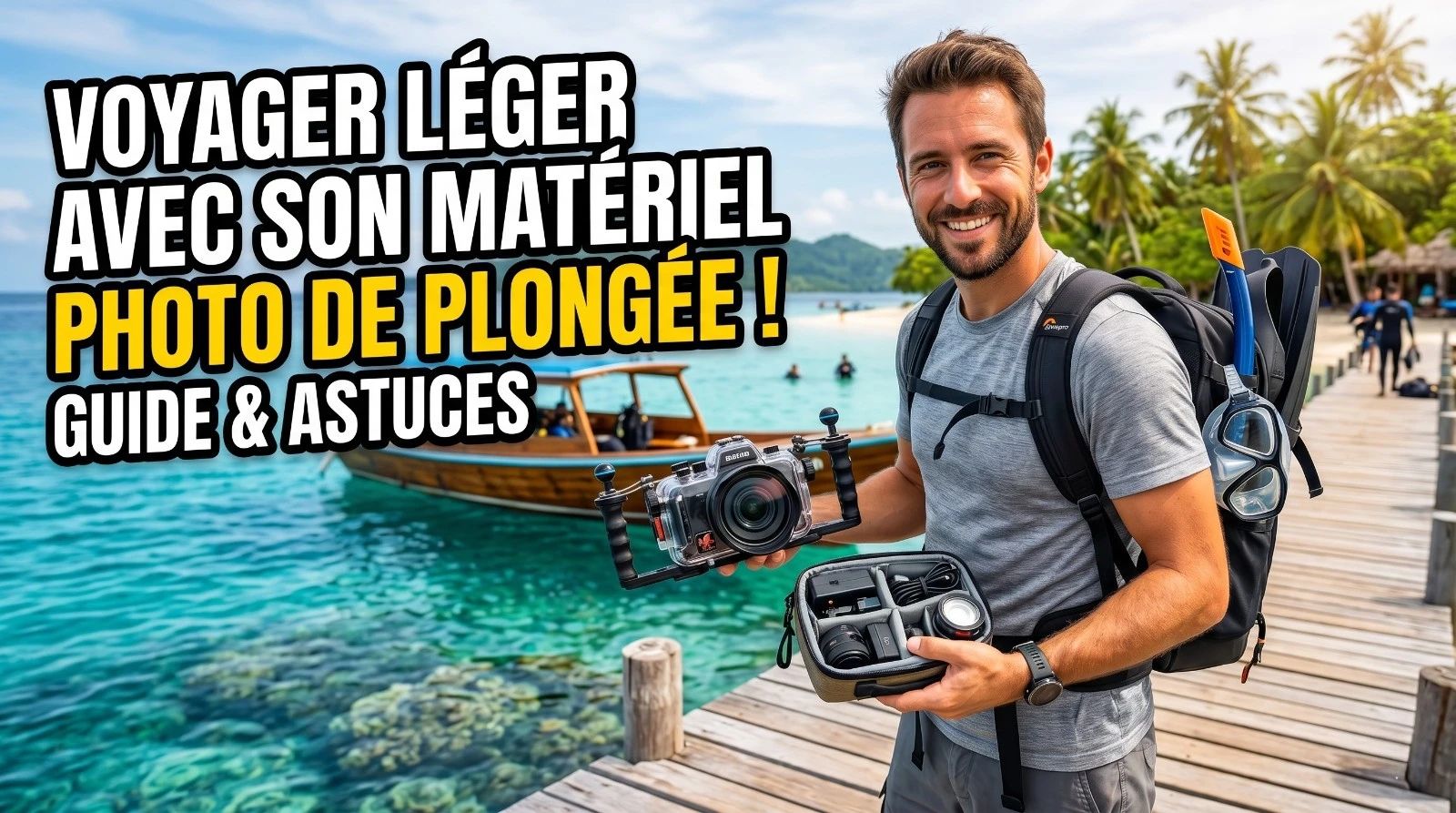
Yes, for smartphone or compact camera housings. A DSLR housing alone generally fits within standard carry-on weight limits (10 kilos). A full DSLR setup with arms and strobes needs to go in checked luggage in an appropriate hard case.
Should you remove the O-rings before air travel?
No, the O-rings do not need to be removed for transport. However, store your housing open (latch released) during transport to avoid prolonged mechanical stress on the seals.
What if my housing leaks on a trip and no spare parts are available?
Do not dive with that housing again. Contact the manufacturer, who can sometimes ship a part by express delivery. Look for a local dive center that might have rental equipment. And learn the lesson: a spare set of O-rings weighs 20 grams and fits in a jeans pocket.
Is it better to rent photo gear on location than to bring your own?
No, in the vast majority of cases. Rental housings available on site are rarely compatible with your specific camera, often poorly maintained, and will cost you diving time. Exception: if you travel with a very heavy setup and the destination specifically offers your type of housing.
Should you travel with a backup housing?
Unless it is a professional assignment lasting several weeks, no. A well-maintained housing with spare O-rings and a verification protocol is reliable. Carrying two housings doubles the weight and volume for marginal benefit.
How to protect your photo housing from impacts in your bag?
Wrap it in clothing in your backpack, or use a padded camera bag. Protect the optical port in particular, as it is the most fragile element. A clean sock slipped over the optical port is enough for most carry-on luggage.
Smartphone or DSLR for a dive trip?
For most one- to two-week trips, a smartphone in a housing is the smartest option: 600 grams all-in, fits anywhere in carry-on, no luggage allowance constraints, and more than sufficient quality. A DSLR setup suits professional projects or trips dedicated exclusively to photography.
Traveling Light with Your Dive Photography Gear: What to Keep, What to Leave
Packing your dive photography gear for travel comes down to bringing only what is irreplaceable at your destination, protecting that irreplaceable gear against impacts and moisture, and accepting to leave behind what can be rented or whose absence will not change much about your images. A smartphone in a DiveVolk housing, two spare sets of O-rings, a tube of silicone grease, and your charger: that is often enough to produce great images on a dive trip.
I arrived at this list after traveling with too much, then with too little, then with just the right amount.
Why Dive Photography Gear Creates a Specific Travel Problem
Land-based travel photography is relatively simple to optimize: one camera body, two lenses, a folding tripod. Everything fits in a 10-kilogram carry-on bag.
Underwater photography breaks this logic on three fronts.
Volume and weight. A DSLR housing with two arms and two strobes can weigh 6 to 8 kilograms in its transport case. A compact housing alone takes up the equivalent of a shoebox. Add O-rings, tools, multiple chargers, and additional optics, and you quickly exceed airline baggage allowances.
The fragility of key components. A faulty O-ring or a cracked lens port can neutralize all your gear for the entire trip. These components are rarely available at your destination, and replacing them takes several days if you can find a supplier at all. Protection is not optional.
The impossibility of renting locally. A DSLR can be rented anywhere. A waterproof housing compatible with your exact model, with the arms and ports matched to your lenses, is another matter entirely. In the vast majority of dive destinations, even the most popular ones, you will not find a housing that matches your setup for rent. What you do not bring, you will not have.
These three constraints define the logic of underwater photography travel: bring what is irreplaceable and lightweight, protect what is fragile, leave behind what is bulky and substitutable.
The Sort: What to Bring, What to Leave
What You Always Bring
Your camera and its housing. This is obvious, but worth stating: your housing is your core tool, not an accessory. Even if you travel light on everything else, the housing travels with you, preferably in your carry-on, never in the hold without rigid protection.
Spare O-rings and lubricant. This is the most critical travel item and the least bulky. Two spare O-rings for each type of O-ring on your housing, plus a tube of silicone lubricant. Total weight: under 50 grams. The consequence of a faulty O-ring with no replacement available: your gear is unusable. The math is straightforward.
Chargers and cables for your equipment. Not universal substitute chargers, your original chargers. Underwater housing and camera manufacturers use specific connectors that you will not find in Bali or Hurghada.
A microfiber cloth for the inside of the housing. To remove moisture traces before closing, and to clean the lens port.
Your maintenance log. If you have a housing inspection routine (leak test, O-ring condition, last rinse), writing it down somewhere prevents you from skipping a step in the excitement of departure.
What You Leave When Traveling Light
Arms and strobes, in most cases. If you shoot in natural light (which is our approach at AquaExposure), arms and strobes are dead weight when traveling. Four to six kilograms you will not be putting in your suitcase. And in the rare destinations where you might need them, dive centers often offer lighting equipment for rent.
Additional DSLR optics. A travel macro lens, sure. Two standard lenses plus a macro plus a telephoto means an entire bag just for optics. The rule: one lens per trip, chosen based on the type of subjects you expect to encounter.
The underwater tripod. Unless your project specifically involves shallow-depth images of stationary subjects (nudibranchs, benthic species), an underwater tripod is rarely needed and always cumbersome.
The backup housing. Except for a multi-week professional assignment with no possibility of shipping replacements, traveling with two housings is overkill that most photographers do not need. A well-maintained housing with spare O-rings and a verification protocol is reliable.
The Decisive Advantage of Smartphones and GoPros for Travel
This is where the gear question and the travel question intersect directly.
An iPhone in a DiveVolk housing weighs about 600 grams all in, fits in a jacket pocket, passes through airport security without any issue, and produces very good image quality. A GoPro Hero 13 with its dive case weighs under 300 grams and slips into a backpack pocket. Neither creates any problem with baggage allowances or airport security.
A DSLR in a rigid housing with arms and strobes means an entire suitcase dedicated to photo gear, usually checked in, with all the risks that entails.
This physical reality is one of the reasons why more and more serious underwater photographers travel with a smartphone or GoPro as their primary gear, keeping their DSLR setup for local outings. Not because the DSLR is bad, but because a traveling smartphone is sufficient for the vast majority of uses, and incomparably more practical.
Your underwater camera housing should ideally travel in the cabin. The reasons are multiple: cargo holds are not climate-controlled at altitude (a problem for O-rings), handling impacts are more frequent in the hold than in the cabin, and a lost checked bag leaves you without gear for the entire trip.
In the cabin, the housing goes in a padded camera bag or in your backpack with optics wrapped in clothing. If security asks questions, your empty waterproof housing (without camera) can be opened for inspection without risk. The camera inside can be removed and reinserted in a few minutes.
Weight of a smartphone housing: 400-600 grams. Cabin: no issue. Weight of a DSLR housing alone: 2-4 kilograms depending on the model. Cabin: doable within the allowance (usually 10 kilograms). Weight of a DSLR housing with arms and strobes: 6-10 kilograms. Checked baggage inevitable, hard case recommended.
In the Hold If Necessary
If you travel with a heavy setup that must go in the hold, a hard case with custom-cut foam is the only acceptable packaging. Not a soft bag, not a fabric sleeve, not clothes wrapped around the housing.
Pre-formed foams for housings are available from several manufacturers (Pelican, B&W, Explorer Cases). They protect against handling impacts and pressure variations. The cost of the hard case is negligible compared to the cost of the gear it protects.
Non-negotiable safety point: check the airline's regulations on lithium-ion batteries in the hold before your flight. Most airlines prohibit or limit batteries exceeding a certain mWh in checked luggage. Underwater strobe batteries often exceed these thresholds. Do your research, and place batteries in the cabin if necessary.
Checking Before Departure and on Arrival
Before Departure
Run a full leak test at home, not on the dive boat. Close your housing with the camera inside, submerge it in your bathtub for 5 minutes at shallow depth, take it out, and check. If your housing has a built-in vacuum system, verify that the pressure holds. A problem detected at home takes an hour to fix. Detected at your destination, it can neutralize your gear for the entire trip.
Inspect the O-rings. If they are dry, cracked, or deformed, replace them before leaving, not after arriving.
Charge everything fully. Camera, any strobes, spare batteries. Arriving at your destination with dead gear on day one means a wasted dive.
On Arrival
Do not dive straight away with your gear after a long-haul flight. Let the housing acclimatize to the ambient temperature before opening it. Thermal changes can create condensation inside.
Run a quick leak test in the dive center pool or your hotel shower, housing empty. If the test is satisfactory, insert the camera for your first dive.
My Current Travel Setup
I have simplified radically since my early years. Today, for a one-week dive trip:
An iPhone in its DiveVolk housing. Two sets of spare O-rings. A tube of silicone lubricant. Two Lightning cables and a MagSafe charger. A microfiber cloth. My anti-fog spray. A waterproof pouch for the beach.
Total: about 1.2 kilograms. Fits in a small backpack, goes through cabin security everywhere, zero baggage constraints.
I have not traveled with arms or strobes in two years. Not because I gave up on quality, but because natural light gives me better images than artificial lighting for the subjects I seek. And the lightness gives me a freedom of movement in the water that I no longer had with a heavy setup.
Before closing your suitcase for a dive trip, ask yourself these three questions.
Is this item irreplaceable at the destination? If yes, it comes with you, in the cabin if possible. If not, think twice.
Is there a realistic chance this item will actually be used? The backup housing that has never been used in three trips, the arms you have not touched since you switched to natural light. If the answer is "maybe, just in case," that is generally a no.
Would its absence genuinely change my images? Answer honestly, not based on an optimistic hypothetical. For most divers who photograph reef fish and seascapes, the answer is no for strobes, no for additional optics, no for tripods. Yes for the housing, yes for the O-rings, yes for the camera.
For the rest (choosing your base equipment, before even considering travel), our complete guide to the best camera for beginners details the relevant criteria based on your level and goals.
And if you want to work on your technique between trips, the exercises to practice on land before diving are there precisely for that: maintaining and progressing without needing water.
The AquaExposure training includes a full module on preparing a dive photography trip: gear sorting, verification protocols, dive center logistics, and dive planning based on expected conditions.
AquaExposure does not receive any affiliate commission on the gear or brands mentioned in this article. Our recommendations remain independent.
Frequently Asked Questions
Can you bring an underwater camera housing in your carry-on?
Yes, for smartphone or compact housings. A DSLR housing alone is usually doable within cabin allowances (generally 10 kilograms). A full DSLR setup with arms and strobes needs to go in the hold in a suitable hard case.
Do you need to declare underwater photography gear at customs?
In most destinations, no, it is personal equipment. However, if you travel frequently with the same valuable gear, keeping the purchase receipt or noting serial numbers protects you in case of a customs dispute or theft.
How do you protect a camera housing against impacts in your bag?
Surround it with clothing in your backpack, or use a padded inner camera bag. The essential thing is to protect the lens port (the glass or plastic element at the front of the housing), as it is the most fragile and most expensive component to replace. A clean sock slipped over the lens port is sufficient for most carry-on bags.
Should O-rings be removed before air travel?
No, O-rings do not need to be removed for transport. However, store your housing open (latches undone) during transport to avoid prolonged mechanical stress on the O-rings.
What if my housing floods during a trip with no spare parts available?
First, stop diving with that housing. Saltwater in electronics means guaranteed failure. Then: contact the housing manufacturer, who can sometimes ship a part via express delivery. Look for a local dive center that might have rental equipment. And learn the lesson for the next trip: a set of spare O-rings weighs 20 grams and fits in a jeans pocket.
Is it better to rent gear on location than to transport it?
For dive equipment (wetsuit, fins, BCD): yes, if you trust the center. For photo gear: no, except in unusual circumstances. Rental housings available on site are rarely compatible with your specific camera, often poorly maintained, and will cost you the dive time you would have spent configuring them.
How do you organize your photo dives when you travel infrequently and want to make the most of each outing?
This is the central question of progression in underwater photography for occasional divers. The article how to improve when you dive infrequently details the full method: pre-trip preparation, dive objectives defined in advance, and off-water practice between seasons.