Do I need insurance to fly a drone on a diving holiday?
In France and Belgium, third-party liability insurance covering drone use is mandatory for devices over 800 grams. For drones under 250 grams, it is strongly recommended. Expect to pay between 30 and 50 euros per year with a specialist insurer.
Can I launch a drone from a dive boat?
Yes, but with precautions. Prefer hand-launching rather than taking off from the deck. Wait for a moment of relative stability, move away quickly from the mast and antennas, and always keep an eye on wind conditions. Drones under 250 grams are the easiest to handle for this operation.
Which drone under 250 grams for a diving trip?
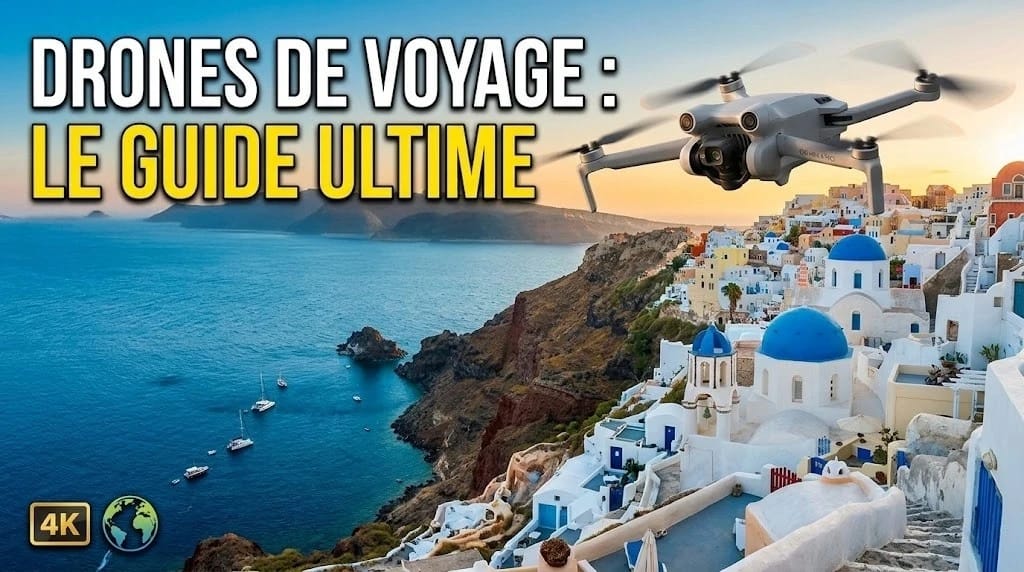
The DJI Mini 5 Pro and the DJI Flip are the two best choices in 2026. They weigh less than 250 grams, which exempts them from most European regulations. Compact, capable of 4K video, and easy to transport alongside diving gear.
How do I protect my drone from salt and humidity at sea?
Store the drone in a dry bag or hard case when not flying. Wipe the propellers and chassis with a damp cloth after each flight. Keep batteries in a dry, ventilated area. Never change batteries with wet or salty hands.
There was a time, on diving cruises, when everyone was still asleep. The boat was already above the reef the night before, the sun hadn't yet risen but the light was already there – that cold, direct light that paints the atolls from the sky like a brushstroke on unpolished glass. It was in that precise moment, with a coffee in hand on the upper deck, that the desire for a drone became irresistible.
Not a submersible robot. Not a toy. An aerial drone, one that flies to a hundred meters and captures what your eyes see from the zodiac, but that your phone never reproduces: the scale of the reef, the color of the water that changes with depth, the boat resting on the blue like a model.
I hesitated for a long time before bringing one. The weight, the regulations, the fear of losing it at sea. Then I started small, with a compact model of under 250 grams, and the ratio between what it weighs in the suitcase and what it adds to the images was spectacular.
Why a drone complements scuba diving photography
Underwater, we work at close range. Even with a wide-angle lens, the field of view remains limited by visibility, by the fading light, and by our proximity to the subject. We photograph details, encounters, and moments.
The drone does the opposite. It creates distance. It provides the context that diving never shows: the reef seen from above, the passage of dolphins at the surface, or a boat anchored on a drop that you have just dived. These wide shots, these transitions between the above and below worlds, transform a diving video into something complete.
And for those who publish on social media or document their travels, the aerial shot at sunrise has become a classic that the public expects, just as much as a close-up of a turtle or a colorful reef.
Three Profiles, Three Drones, Three Philosophies
The same logic that applies to underwater equipment also applies here: start with compact and lightweight gear, and upgrade only when necessary, never buy more than you know how to use.
The Lightweight Traveler: Less than 250 grams. The DJI Mini 5 Pro and DJI Flip occupy this segment. They weigh less than 249 grams, which exempts them from most European regulations (EASA C0 category). No registration is required in most EU countries, no specific license is required for recreational use, and no mandatory insurance is required below 800 grams in France and Belgium. They fold down to fit in a life jacket pocket, and their 4K image quality is more than sufficient for web content and social media. Battery life is around 30 minutes, and wind resistance is around 10 m/s. This is the drone I recommend to anyone taking their first diving trip with the idea of filming from the deck.
The Serious Creator: Around 700 grams. The DJI Air 3S weighs 724 grams, offers 45 minutes of battery life, and can withstand winds of 12 m/s. This represents a significant improvement in image quality (larger sensor, richer color profile) and reliability in strong winds. On a boat, this wind resistance makes a huge difference: the Mini vibrates and compensates from 8 m/s, while the Air 3S remains stable in conditions where you would hesitate to get out in a zodiac. However, weighing more than 250 grams puts it in the C1 category in Europe. Registration is required, online training is required in most countries, and civil liability insurance is mandatory in France and Belgium (expect to pay between €30 and €50 per year, which is the price of a meal at the airport).
The Demanding Filmmaker: 900 grams and more. The DJI Mavic 3 Pro, with its triple camera and optical zoom, is the tool for videographers who sell their images or produce content for diving channels. Its weight (around 950 grams), volume, and the regulations that come with it (C2 category, complete license, restricted areas to verify) make it a good choice for those who already know how to fly and have a specific need for cinematic quality. This is not a beginner's drone, it is a professional tool.
For alternatives, the Autel Evo Nano+ is worth a look in the ultra-light category (less than 250 grams, good image quality, less developed ecosystem than DJI). The Parrot Anafi Ai offers an interesting approach with its native European compliance, but its positioning remains more niche.
The Boat Challenge
Taking off a drone from a liveaboard is different than from a beach. The deck moves, the wind comes from everywhere, and the spray is relentless.
Take-off by hand. This is the standard technique on a boat. You hold the drone by the arm, with the motors running, and launch it upwards. All recent DJI models support this method, and it's the only one that's really reliable on a rocking deck. The landing is done in the same way: the drone returns above you, and you grab it from below. It takes a little practice, a little composure, and most importantly, you need to turn off the auto-return-to-home function (the boat has been moving since take-off).
The wind. Check the conditions before each flight. Below 8 m/s, all drones on this list are comfortable. Between 8 and 12 m/s, only the Air 3S and the Mavic 3 Pro remain stable. Above that, put the drone away and enjoy your coffee.
The spray. No consumer-grade drone is waterproof. Salt spray is the number one enemy. Fly from the highest possible deck, avoid taking off when the boat is moving forward, and at landing, immediately wipe the drone with a dry cloth. If you travel frequently at sea, a small zip-lock bag for storing the drone between flights will prevent the ambient humidity from damaging the electronics.
Regulations and Insurance: The Essentials
Drone regulations vary greatly from country to country, and this is a point that most diving and travel enthusiasts underestimate.
In Europe, the basic rule is simple. Drones weighing less than 250 grams (Category C0) can fly without registration in most situations, provided they remain below 120 meters altitude and do not fly over gatherings of people. For drones weighing over 250 grams, registration as an operator is required, along with a free online training course, and liability insurance becomes necessary in France and Belgium (between 30 and 50 euros per year, depending on the insurer).
Outside of Europe, each country has its own rules. Thailand requires prior registration with the NBTC. Egypt simply prohibits the use of drones without military authorization. The Maldives require a permit that can take several weeks to obtain. Indonesia tolerates lightweight drones but prohibits flying over certain areas. The golden rule: check the local regulations before you go, not when you arrive at the airport with your drone in your bag.
Regarding insurance, in France and Belgium, liability insurance for drones is mandatory for all devices weighing over 800 grams. Below this weight, it is not legally required but is strongly recommended. Several insurers offer annual coverage between 30 and 50 euros. This is a very reasonable cost compared to the cost of an accident.
Batteries and Saltwater Protection
Lithium-polymer batteries for drones are sensitive to humidity and heat. In an underwater environment, two precautions are essential.
Store the batteries in a waterproof bag with a silica gel sachet when not in use. The salty air on a boat can corrode the contacts within a few days if the batteries are exposed. And charge the batteries in a dry place, not on the upper deck during the night when it rains.
For air transport, drone batteries are allowed in the cabin (not in the hold) provided that they do not exceed 100 Wh per battery. The batteries in the Mini, Air, and Mavic models are all below this limit. Carry them in their original case or in a fire-resistant bag designed for this purpose.
Filming marine life from above: ethics and altitude
Aerial shots of dolphins at the surface, manta rays filtering near the boat, or whales in transit are among the most spectacular that a drone can capture. However, they come with a responsibility.
The general rule, applied by most marine parks and conservation organizations, is to never descend below 30 meters above a marine mammal. For sea turtles at the surface, a minimum of 15 meters. For seabirds in flight, caution dictates that you should not approach at all. The noise of even a small drone can cause measurable stress in certain species.
If the animal changes its behavior (dives, speeds up, changes direction), it's a signal that you are too close or too far. Move away immediately. The most beautiful image in the world is not worth disturbing the animal.
Start Small, Progress Based on Need
The philosophy we advocate at AquaExposure for underwater equipment applies exactly to drones: start with the simplest and most compact tool that meets your real needs, learn to master it, and only upgrade when you have identified a concrete limit in your practice.
A DJI Mini 5 Pro or a DJI Flip costs less than 400 euros, weighs less than 250 grams, and allows you to capture images you would never have been able to achieve otherwise. If, after six months, you feel that the wind, the sensor, or the battery life is limiting you, the Air 3S will be the solution. And your Mini will become your lightweight travel drone while the larger one remains at home.
Our underwater photography course includes a dedicated section on the complete visual storytelling of a diving trip, from the surface to the bottom. Because the best story is the one that shows both worlds.
Frequently Asked Questions
Can a drone be launched from any boat? Yes, provided that manual launch is used and the automatic return to the departure point is disabled. A two-square-meter deck is sufficient for this maneuver. The pilot should stand facing into the wind, holding the drone by the hand, and launch it upwards with a smooth motion.
Is drone insurance mandatory for diving trips? In France and Belgium, it is mandatory for drones weighing more than 800 grams. For models weighing less than 250 grams, it is not required but is still recommended. Abroad, each country sets its own rules. Always check before departure.
Can salt damage a drone after a single trip in the sea? A single trip in strong spray conditions can be enough to corrode the battery contacts and clog the motors. Immediate drying after each flight and storing in a waterproof bag are the two actions that extend the life of the drone in a marine environment.
Is a license required to pilot a drone weighing less than 250 grams in Europe? No, in most cases. Drones of category C0 (less than 250 grams) are exempt from registration and training for recreational use below 120 meters. However, some countries impose local restrictions, particularly near airports and military zones.
What budget to expect for a first diving trip drone? Between 300 and 450 euros for a DJI Mini 5 Pro or a DJI Flip with an extra battery. Add 30 to 50 euros per year for insurance if you exceed 800 grams, and a waterproof bag for around 10 euros. This is an investment comparable to a good diving light.