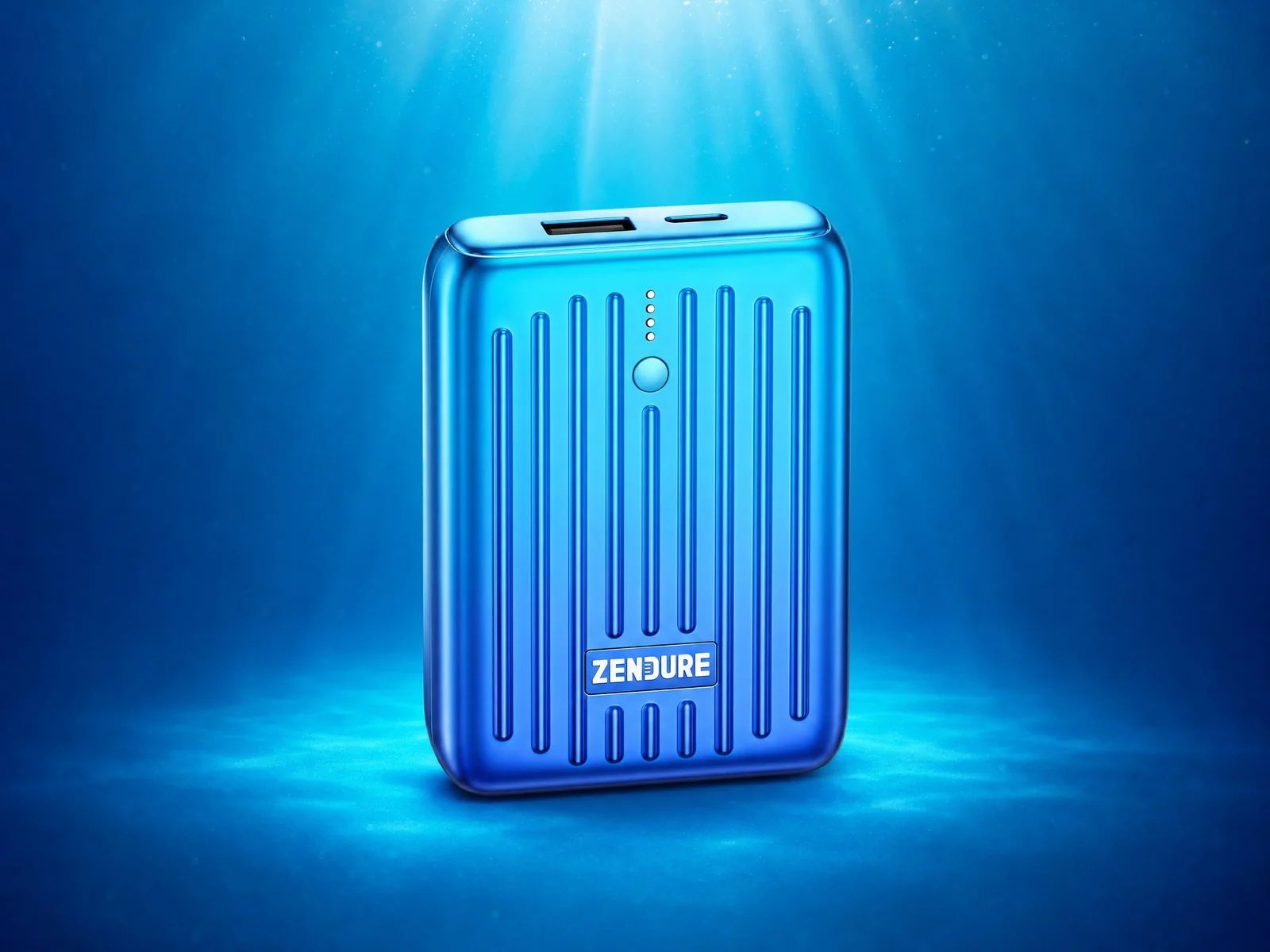
Zendure SuperMini: A compact power bank for your dive computers.
Discover the review of the Zendure SuperMini 10000mAh. This ultra-compact power bank with X-Charge mode is perfect for charging your dive computers and smartphones.
To improve your mastery of your equipment and optimize your diving procedures, discover our specialized training modules on AquaExposure training.
Can I charge a dive computer with a Zendure SuperMini?
Yes, this battery features the X-Charge mode, specifically designed for low-power devices such as dive computers or smartwatches. This prevents automatic charging interruptions [1].
Is the Zendure SuperMini power bank allowed on airplanes?
With an energy output of 36.3 Wh, it falls below the general 100 Wh limit set by IATA. It must be transported exclusively in carry-on baggage, but it is essential to check the specific rules of your airline before departure [2].
Is it possible to charge a laptop with this model?
No, a power output of 20W is insufficient to effectively power or charge a laptop. It is optimized for smartphones, tablets, and small diving accessories [1].
Zendure SuperMini: Compactness for the Traveling Diver
Between rinsing equipment, downloading memory cards, and preparing for the next dive, organization on the deck of a dive boat leaves little room for bulky items. There is often a need to stay connected while also wanting to travel light, without each accessory becoming an additional constraint in an already full bag. It is in this context of demanding mobility that the Zendure SuperMini finds its place, offering a backup solution that remains unobtrusive until the moment it is truly needed.
A format designed for underwater travel
When preparing a bag for an expedition or even a simple day trip, every gram counts. The Zendure SuperMini immediately stands out for its reduced dimensions of 79 by 56 by 26 millimeters [1]. To provide a concrete comparison, its surface area is slightly smaller than that of a standard credit card. This ultra-compact format allows it to be easily slipped into a buoyancy compensator pocket or a small compartment in a waterproof bag.Weighing just 180 grams, it offers remarkable energy density for a capacity of 10,000 mAh [1]. This lightness is a valuable asset for divers who must adhere to the strict weight limits of carry-on luggage during international travel. The casing provides reassuring robustness for mobile use, although it requires special attention in the saline environment of dive sites.
X-Charge Technology for Your Dive Computers
One of the recurring problems with standard power banks is their handling of devices with very low power consumption. Many models automatically shut down when they detect a current that is too low, considering the charging process to be complete. For a diver who wants to extend the battery life of their dive computer or smartwatch between dives, this feature can be frustrating.
The Zendure SuperMini incorporates a feature called X-Charge mode [1]. By double-pressing the power button, you activate a protocol that keeps the power output active even for the lowest currents. This is an essential feature to ensure a complete and secure charging of your underwater instruments without constant monitoring. This attention to detail for small devices demonstrates a genuine understanding of the needs of users in natural environments.## Charging Performance and Integrated Protocols
Despite its small size, this battery doesn't compromise on transfer speed. It features two distinct ports. The first is a bidirectional USB-C port supporting Power Delivery (PD) 3.0, capable of delivering up to 20W of output and accepting 18W of input [1]. The second is a USB-A port equipped with ZEN+ 2.0 technology, compatible with Quick Charge 3.0, offering a power output of up to 18W [1].
This configuration offers versatility. You can quickly charge your smartphone or power a small auxiliary light. The pass-through charging function is also present [1]. This allows you to charge the battery while simultaneously powering a connected device. However, it's advisable to exercise caution with this option in tropical climates, as it can generate heat that may affect the long-term lifespan of the lithium-ion cells.
Air Travel and Safety Considerations
Transporting lithium batteries is a sensitive issue for all travelers. The Zendure SuperMini has a total energy capacity of 36.3 Wh [1]. This figure is well below the 100 Wh threshold generally accepted by IATA and authorities like the FAA for transport without prior authorization [2][3].It is essential to verify the applicable regulations with the airline and authorities at the time of departure. Compliance with international standards never guarantees acceptance onboard. The decisions of the relevant authority during the security check and the internal policies of each carrier always take precedence over the product's specifications. The battery must absolutely be carried in carry-on luggage. Placing it in checked baggage is strictly prohibited for fire safety reasons. Never assume that a battery will be accepted without prior confirmation from your airline.
Who is this battery for?
The Zendure SuperMini is not intended to replace a high-capacity power station. Its role is that of a compact backup power source. It is primarily intended for divers who travel light and need to ensure the battery life of their smartphone and keep their diving equipment operational.
It is particularly useful for days spent on a boat where space is limited. Its AquaExposure rating, which reflects our editorial assessment of its compactness and specialization for small accessories, makes it a top choice for those who prioritize absolute mobility without compromising the safe charging of small devices.
Limitations and technical compatibilityIt is important to understand the limitations of this equipment. With a maximum output of 20W, this battery cannot effectively charge a laptop, which typically requires a higher power output [1]. It is optimized for mobile devices such as iPhones, Android smartphones, compact tablets, and sports accessories.
Another limitation concerns the operating environment. The Zendure SuperMini is not a waterproof battery. The USB ports must remain perfectly dry and free of any salt residue before any connection is made. After a dive, be sure to handle the device with dry hands and away from areas where water may splash. Corrosion of the contacts is a real risk that can compromise the reliability of the charging process.
Useful Conclusion
Choosing travel equipment often involves making compromises. The Zendure SuperMini offers a way to reduce the compromise in weight without sacrificing the technology necessary for our modern equipment. By offering a mode specifically designed for low currents in such a compact size, it addresses a specific need for traveling divers.
Ultimately, when it's time to consult dive tables or review photos, this reserve of power provides a welcome peace of mind. Its greatest quality remains its unobtrusiveness: it fades into the background during the action, only to be present at the crucial moment, allowing us to focus on the enjoyment of the next dive.To compare this model with all the available options on the market, please consult our external battery/power bank comparator and our complete selection of diving equipment.