AquaExposure
HomepageTrainingToolsArticles
AquaExposure

© 2026 AquaExposure. Ethically preserving the depths.

AquaExposure
Homepage
Pricing
Menu
Homepage
PricingShopArticles
AquaExposure — Explore Beneath, Capture Beyond
Zendure SuperTank: A robust power source for underwater photography.
Table of Contents
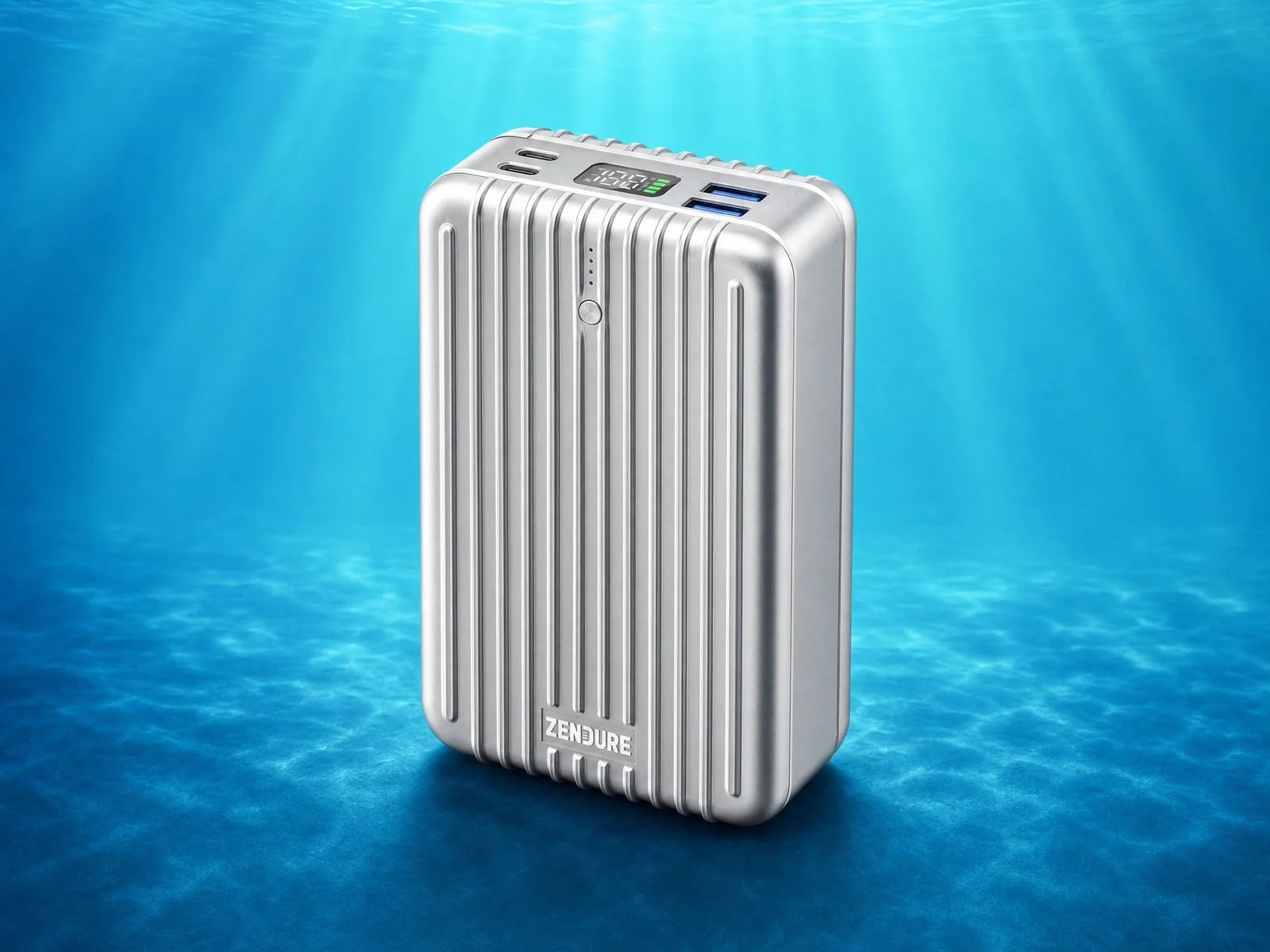
  • 01A polycarbonate shell for demanding environments.The first thing you notice when you pick up this battery is its substantial size and textured surface, reminiscent of professional suitcases. The casing is made from high-density polycarbonate and ABS to absorb mechanical shocks. According to the manufacturer's specifications, this structure can withstand a crushing force of up to 90 kg [1]. On a boat where equipment is tossed around by the rocking motion, this robustness provides a necessary peace of mind. You can slide it to the bottom of a bag without worrying that excessive pressure will damage the internal cells. This physical resistance is a major factor for AquaExposure, as diving equipment is subjected to significant stress during transport. The SuperTank protects the power against the hazards of travel and sudden handling.
  • 02100W of power for professional housings.Beyond its robustness, it's the electrical specifications that set this model apart. With a capacity of 26,800 mAh, or 96.48 Wh, it falls just below the critical threshold of 100 Wh set by international regulations [2] [3]. This capacity allows you to recharge a smartphone multiple times or revive a power-hungry laptop between dives. The main USB-C port delivers up to 100W of Power Delivery, enabling you to fully charge a MacBook Pro and clear its memory cards without waiting. The second USB-C port offers 60W, which is still sufficient for a tablet or a second camera housing. Two USB-A ports complete the setup with outputs of 18W and 15W. This configuration allows you to charge up to four devices simultaneously, for a total combined power of 138W [1].
  • 03The X-Charge mode for small diving accessories.A common problem with high-capacity batteries is their inability to detect devices that consume very little power, such as a dive computer. Often, the battery will automatically shut off, assuming that the charging process is complete. Zendure has incorporated a feature called X-Charge to address this technical limitation. By pressing the power button twice, the battery enters a specific mode that keeps the output active for very low currents. This is a crucial feature for divers. Being able to recharge a dive computer between dives without having to constantly monitor whether the battery remains on simplifies logistics on the boat. Once the charging is complete, another press of the button returns the battery to its standard mode.
  • 04Fast charging and thermal management in tropical environments.The SuperTank also stands out for its charging speed. Thanks to its 100W bidirectional port, it can be fully recharged in approximately two hours with a compatible wall charger and cable [1]. This speed is crucial during a short stopover before returning to sea for a night dive. Using the full power output causes a noticeable temperature increase on the housing. Although the material dissipates heat, it is recommended not to leave the battery in a confined space or in direct sunlight during these intensive charging phases. The pass-through charging function is available, allowing you to charge the battery while simultaneously powering another device. However, this option increases the heating, especially in humid tropical climates.
  • 05Air Travel: Necessary and Constant VigilanceThe issue of air travel is a recurring concern for travelers exploring remote reefs. The SuperTank has a power output of 96.48 Wh, which technically places it within the category of batteries allowed in the cabin by the FAA or IATA. These organizations generally set the limit at 100 Wh per battery without prior authorization [3]. However, it should never be assumed that boarding is guaranteed. The rules of an airline and the decisions of the local authority always take precedence over the technical specifications of the product. It is imperative to verify the applicable rules with the airline and the authorities at the time of departure for each flight. Never present the acceptance of a battery on an airplane as an absolute guarantee. These batteries must always be carried in carry-on luggage and should never be placed in checked baggage.
  • 06Who is this battery suitable for?This power bank is designed for users who cannot risk running out of power during expeditions. If your equipment is limited to a smartphone, a lighter model will be more suitable. However, it becomes an essential tool for underwater photographers using power-hungry hybrid camera systems. Divers who work on their laptops during data transfers will appreciate the 100W power output, which prevents draining the internal battery. It is also ideal for those who go on dive cruises where electrical outlets are limited. Finally, travelers visiting areas with unreliable power supplies will find the SuperTank to be a reliable backup for their sensitive equipment.
  • 07Technical limitations and cable compatibility.Despite its advantages, the SuperTank has some limitations. Its weight of 500 grams can be noticeable in a carry-on bag that is already full of camera equipment. While the casing is resistant to impacts, the battery is not waterproof. A fall into saltwater or prolonged exposure to spray without protection would be fatal to the internal circuits. It is essential to store it in a dry bag as soon as you approach the shore or board a boat. To take advantage of the 100W power, you must use USB-C cables that are certified for 5 amps. A standard cable will often limit the power to 60W, which will reduce the usefulness of this model for the most powerful laptops.
  • 08Conclusion regarding use on expeditions
MATERIEL 7 minBenjamin Coste

Zendure SuperTank: A robust power source for underwater photography.

Discover the Zendure SuperTank 26800mAh battery. An ultra-durable case and 100W of power for your diving equipment and computers.

To improve your mastery of your equipment and optimize your procedures while diving, discover our specialized training modules on AquaExposure training.

Zendure SuperTank: A robust power reserve for underwater photography

Between the deck of a dive boat, camera equipment bags, and the transfers between dives, power management becomes a logistical priority. For an underwater photographer, running out of battery power before the last dive of the day is a real risk that can jeopardize the success of an expedition. The goal is to find a solution that can withstand the rigors of handling and offers sufficient power to avoid waiting for elusive subjects. The Zendure SuperTank meets these specific field requirements.

A polycarbonate shell for demanding environments.The first thing you notice when you pick up this battery is its substantial size and textured surface, reminiscent of professional suitcases. The casing is made from high-density polycarbonate and ABS to absorb mechanical shocks. According to the manufacturer's specifications, this structure can withstand a crushing force of up to 90 kg [1]. On a boat where equipment is tossed around by the rocking motion, this robustness provides a necessary peace of mind. You can slide it to the bottom of a bag without worrying that excessive pressure will damage the internal cells. This physical resistance is a major factor for AquaExposure, as diving equipment is subjected to significant stress during transport. The SuperTank protects the power against the hazards of travel and sudden handling.

100W of power for professional housings.Beyond its robustness, it's the electrical specifications that set this model apart. With a capacity of 26,800 mAh, or 96.48 Wh, it falls just below the critical threshold of 100 Wh set by international regulations [2] [3]. This capacity allows you to recharge a smartphone multiple times or revive a power-hungry laptop between dives. The main USB-C port delivers up to 100W of Power Delivery, enabling you to fully charge a MacBook Pro and clear its memory cards without waiting. The second USB-C port offers 60W, which is still sufficient for a tablet or a second camera housing. Two USB-A ports complete the setup with outputs of 18W and 15W. This configuration allows you to charge up to four devices simultaneously, for a total combined power of 138W [1].

The X-Charge mode for small diving accessories.A common problem with high-capacity batteries is their inability to detect devices that consume very little power, such as a dive computer. Often, the battery will automatically shut off, assuming that the charging process is complete. Zendure has incorporated a feature called X-Charge to address this technical limitation. By pressing the power button twice, the battery enters a specific mode that keeps the output active for very low currents. This is a crucial feature for divers. Being able to recharge a dive computer between dives without having to constantly monitor whether the battery remains on simplifies logistics on the boat. Once the charging is complete, another press of the button returns the battery to its standard mode.

Fast charging and thermal management in tropical environments.The SuperTank also stands out for its charging speed. Thanks to its 100W bidirectional port, it can be fully recharged in approximately two hours with a compatible wall charger and cable [1]. This speed is crucial during a short stopover before returning to sea for a night dive. Using the full power output causes a noticeable temperature increase on the housing. Although the material dissipates heat, it is recommended not to leave the battery in a confined space or in direct sunlight during these intensive charging phases. The pass-through charging function is available, allowing you to charge the battery while simultaneously powering another device. However, this option increases the heating, especially in humid tropical climates.

Air Travel: Necessary and Constant VigilanceThe issue of air travel is a recurring concern for travelers exploring remote reefs. The SuperTank has a power output of 96.48 Wh, which technically places it within the category of batteries allowed in the cabin by the FAA or IATA. These organizations generally set the limit at 100 Wh per battery without prior authorization [3]. However, it should never be assumed that boarding is guaranteed. The rules of an airline and the decisions of the local authority always take precedence over the technical specifications of the product. It is imperative to verify the applicable rules with the airline and the authorities at the time of departure for each flight. Never present the acceptance of a battery on an airplane as an absolute guarantee. These batteries must always be carried in carry-on luggage and should never be placed in checked baggage.

Who is this battery suitable for?This power bank is designed for users who cannot risk running out of power during expeditions. If your equipment is limited to a smartphone, a lighter model will be more suitable. However, it becomes an essential tool for underwater photographers using power-hungry hybrid camera systems. Divers who work on their laptops during data transfers will appreciate the 100W power output, which prevents draining the internal battery. It is also ideal for those who go on dive cruises where electrical outlets are limited. Finally, travelers visiting areas with unreliable power supplies will find the SuperTank to be a reliable backup for their sensitive equipment.

Technical limitations and cable compatibility.Despite its advantages, the SuperTank has some limitations. Its weight of 500 grams can be noticeable in a carry-on bag that is already full of camera equipment. While the casing is resistant to impacts, the battery is not waterproof. A fall into saltwater or prolonged exposure to spray without protection would be fatal to the internal circuits. It is essential to store it in a dry bag as soon as you approach the shore or board a boat. To take advantage of the 100W power, you must use USB-C cables that are certified for 5 amps. A standard cable will often limit the power to 60W, which will reduce the usefulness of this model for the most powerful laptops.

Conclusion regarding use on expeditions

The Zendure SuperTank combines high power with real physical durability in the field. It does not replace a massive power station, but it offers substantial battery life in a portable format. By following temperature precautions and checking the rules of your airline before each trip, it becomes a key component of your digital logistics when traveling. It allows you to focus on capturing light and enjoying the silence of the depths without worrying about the battery level of your equipment.To compare this model with all the available options on the market, please consult our external battery pack comparison tool and our complete selection of diving equipment.

[1]: https://powerbank.zendure.com/pages/supertank-instruction-manual "Zendure SuperTank User Manual" [2]: https://powerbank.zendure.com/blogs/news/what-kinds-of-power-banks-are-allowed-on-a-flight "Zendure Blog: Power Banks on Flights" [3]: https://www.faa.gov/hazmat/packsafe/lithium-batteries "FAA PackSafe: Lithium Batteries" [4]: https://www.zdnet.com/article/the-worlds-best-power-bank-the-zendure-supertank/ "ZDNet Review: Zendure SuperTank"

Share

/blog/zendure-supertank-en

Table of Contents

  • 01A polycarbonate shell for demanding environments.The first thing you notice when you pick up this battery is its substantial size and textured surface, reminiscent of professional suitcases. The casing is made from high-density polycarbonate and ABS to absorb mechanical shocks. According to the manufacturer's specifications, this structure can withstand a crushing force of up to 90 kg [1]. On a boat where equipment is tossed around by the rocking motion, this robustness provides a necessary peace of mind. You can slide it to the bottom of a bag without worrying that excessive pressure will damage the internal cells. This physical resistance is a major factor for AquaExposure, as diving equipment is subjected to significant stress during transport. The SuperTank protects the power against the hazards of travel and sudden handling.
  • 02100W of power for professional housings.Beyond its robustness, it's the electrical specifications that set this model apart. With a capacity of 26,800 mAh, or 96.48 Wh, it falls just below the critical threshold of 100 Wh set by international regulations [2] [3]. This capacity allows you to recharge a smartphone multiple times or revive a power-hungry laptop between dives. The main USB-C port delivers up to 100W of Power Delivery, enabling you to fully charge a MacBook Pro and clear its memory cards without waiting. The second USB-C port offers 60W, which is still sufficient for a tablet or a second camera housing. Two USB-A ports complete the setup with outputs of 18W and 15W. This configuration allows you to charge up to four devices simultaneously, for a total combined power of 138W [1].
  • 03The X-Charge mode for small diving accessories.A common problem with high-capacity batteries is their inability to detect devices that consume very little power, such as a dive computer. Often, the battery will automatically shut off, assuming that the charging process is complete. Zendure has incorporated a feature called X-Charge to address this technical limitation. By pressing the power button twice, the battery enters a specific mode that keeps the output active for very low currents. This is a crucial feature for divers. Being able to recharge a dive computer between dives without having to constantly monitor whether the battery remains on simplifies logistics on the boat. Once the charging is complete, another press of the button returns the battery to its standard mode.
  • 04Fast charging and thermal management in tropical environments.The SuperTank also stands out for its charging speed. Thanks to its 100W bidirectional port, it can be fully recharged in approximately two hours with a compatible wall charger and cable [1]. This speed is crucial during a short stopover before returning to sea for a night dive. Using the full power output causes a noticeable temperature increase on the housing. Although the material dissipates heat, it is recommended not to leave the battery in a confined space or in direct sunlight during these intensive charging phases. The pass-through charging function is available, allowing you to charge the battery while simultaneously powering another device. However, this option increases the heating, especially in humid tropical climates.
  • 05Air Travel: Necessary and Constant VigilanceThe issue of air travel is a recurring concern for travelers exploring remote reefs. The SuperTank has a power output of 96.48 Wh, which technically places it within the category of batteries allowed in the cabin by the FAA or IATA. These organizations generally set the limit at 100 Wh per battery without prior authorization [3]. However, it should never be assumed that boarding is guaranteed. The rules of an airline and the decisions of the local authority always take precedence over the technical specifications of the product. It is imperative to verify the applicable rules with the airline and the authorities at the time of departure for each flight. Never present the acceptance of a battery on an airplane as an absolute guarantee. These batteries must always be carried in carry-on luggage and should never be placed in checked baggage.
  • 06Who is this battery suitable for?This power bank is designed for users who cannot risk running out of power during expeditions. If your equipment is limited to a smartphone, a lighter model will be more suitable. However, it becomes an essential tool for underwater photographers using power-hungry hybrid camera systems. Divers who work on their laptops during data transfers will appreciate the 100W power output, which prevents draining the internal battery. It is also ideal for those who go on dive cruises where electrical outlets are limited. Finally, travelers visiting areas with unreliable power supplies will find the SuperTank to be a reliable backup for their sensitive equipment.
  • 07Technical limitations and cable compatibility.Despite its advantages, the SuperTank has some limitations. Its weight of 500 grams can be noticeable in a carry-on bag that is already full of camera equipment. While the casing is resistant to impacts, the battery is not waterproof. A fall into saltwater or prolonged exposure to spray without protection would be fatal to the internal circuits. It is essential to store it in a dry bag as soon as you approach the shore or board a boat. To take advantage of the 100W power, you must use USB-C cables that are certified for 5 amps. A standard cable will often limit the power to 60W, which will reduce the usefulness of this model for the most powerful laptops.
  • 08Conclusion regarding use on expeditions

Questions about the Journal

Can I charge a dive computer with a Zendure SuperTank?

Yes, thanks to the X-Charge mode, which can be activated by a double press of the power button, the battery provides a current suitable for small, low-power devices.

Is the battery waterproof?

No, the SuperTank is not waterproof. Its casing protects against impacts and crushing, but it must be kept away from splashes and salt water.

What is the recharge time for the SuperTank?

With a compatible 100W wall charger, the battery can be fully recharged in approximately two hours.

Articles in the same category

xFROG DSMB Closed 150 cm: Test- Visibility- and Reviews of the xFROG DSMB Parachute (2026)

xFROG DSMB Closed 150 cm: Test- Visibility- and Reviews of the xFROG DSMB Parachute (2026)

XDEEP 130cm SMB Deco Buoy- Test, Visibility, and Review of the DSMB Parachute (2026)

XDEEP 130cm SMB Deco Buoy- Test, Visibility, and Review of the DSMB Parachute (2026)

XDEEP DSMB Closed Narrow 140 cm: Review, Visibility, and Opinions on the XDEEP DSMB Parachute (2026)

XDEEP DSMB Closed Narrow 140 cm: Review, Visibility, and Opinions on the XDEEP DSMB Parachute (2026)

AquaExposure

Underwater photography excellence, accessible to everyone.

Stay in touch

[email protected]

Stay informed about our new courses and expeditions.

Support the project
Legal Notices·CGV·Confidentiality·

© 2026 AquaExposure. Ethically preserving the depths.