Unique wildlife in Europe
Cuttlefish mating (April-July), octopuses, seahorses at Grevelingenmeer, flatfish, nudibranchs. A density of photogenic species rarely seen in temperate waters.
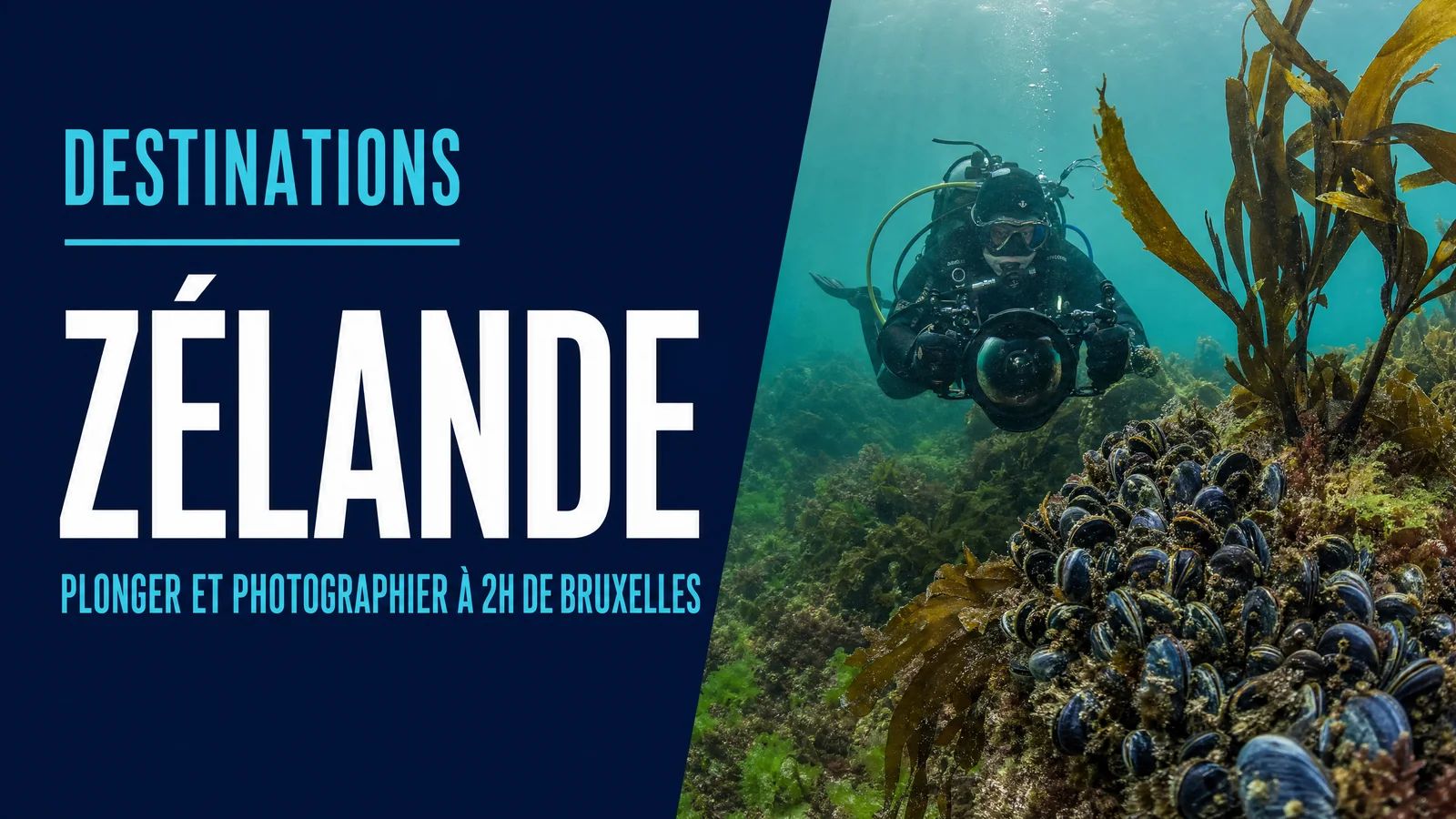
Netherlands - 2 h from Brussels
The favourite playground of Belgian divers. Cuttlefish, octopuses, wrecks and seahorses, plus the AquaExposure techniques to photograph it all without a strobe, even in green water.
Cuttlefish mating (April-July), octopuses, seahorses at Grevelingenmeer, flatfish, nudibranchs. A density of photogenic species rarely seen in temperate waters.
The green waters of Zeeland are the perfect laboratory for mastering flash-free photography. The AquaExposure method was tested and refined on these very sites.
2 h from Brussels, 2 h 15 from Liege, 1 h 45 from Ghent. An ideal weekend destination to put your AquaExposure training into practice.
Each site has its own character and signature species. The AquaExposure training teaches you to read every environment and adapt your technique accordingly.
Inland lake with no tidal current: stable 4-6 m visibility, warmer water, seahorses (Hippocampus hippocampus), cuttlefish, nudibranchs. The best beginner site for underwater photography in Zeeland. Max depth 20 m.
The bridge pillars shelter crustaceans, conger eels and dense marine life. Currents depend on tides - dive at slack. Good visibility 3-6 m. Wrecks and artificial reefs nearby.
Easy-access site with abundant flatfish on the sandy bottom, nudibranchs, lobsters. Moderate currents. Ideal for practising still-subject and macro photography.
The largest marine nature reserve in the Netherlands. Maximum diversity but powerful currents. Seals, rays, weevers, giant flatfish. Reserved for experienced divers with a local guide.
Visibility in Zeeland ranges from 2 to 8 metres depending on tides, season and dive site. The best conditions occur at slack tide (neither incoming nor outgoing), in late spring and autumn. Sheltered sites such as Grevelingenmeer (a closed lake) offer more stable visibility of 4-6 m. For photography, 3-4 m visibility is plenty when you apply the natural-light techniques taught in the AquaExposure training.
Zeeland is remarkably rich in photogenic marine life: common cuttlefish (April-July, spectacular mating displays), common octopus, flatfish (dab, plaice, flounder), lobsters and brown crabs sheltering in wrecks, eels, seahorses (Grevelingenmeer), nudibranchs and starfish. Wrecks also harbour conger eels and weevers. It is one of Europe's most productive cold-water environments for underwater photography.
In Zeeland the natural light is diffuse and often green-grey. AquaExposure's recommended settings: ISO 400-800 depending on depth, aperture f/5.6-f/8 for depth of field, shutter speed 1/125-1/250 s to freeze moving subjects. White balance is corrected in post (red filter or custom curve). The Scenography of Erasure method works especially well in Zeeland's greenish waters.
The best photo sites in Zeeland: Grevelingenmeer (seahorses, cuttlefish, good visibility, calm water, ideal for beginners), Zeelandbrug (wreck + abundant marine life, currents to respect), Burghsluis (flatfish and nudibranchs, easy access), Oosterschelde (maximum diversity, nature reserve, strong currents, advanced level). For Belgian photographers, Grevelingenmeer is the best starting point.
From Brussels or Wallonia, Zeeland is a 2-2.5 hour drive. Recommended preparation: first practise in a Belgian quarry (Ciney or Tilff) to master cold-water settings, then follow the AquaExposure modules on animal approach and natural-light reading. Book at Grevelingenmeer sites (Dive Center Zeeland or Wetsuit.nl). Check the tides (Marees.fr or Windguru) before you leave.
Master the techniques specific to cold water and European marine life. The AquaExposure training is designed for Belgian and Zeeland-based divers.