Controlled conditions
No waves, no currents, no tides. Quarries offer stable conditions that let you focus on photography rather than navigation. Ideal for testing the settings and techniques learned.
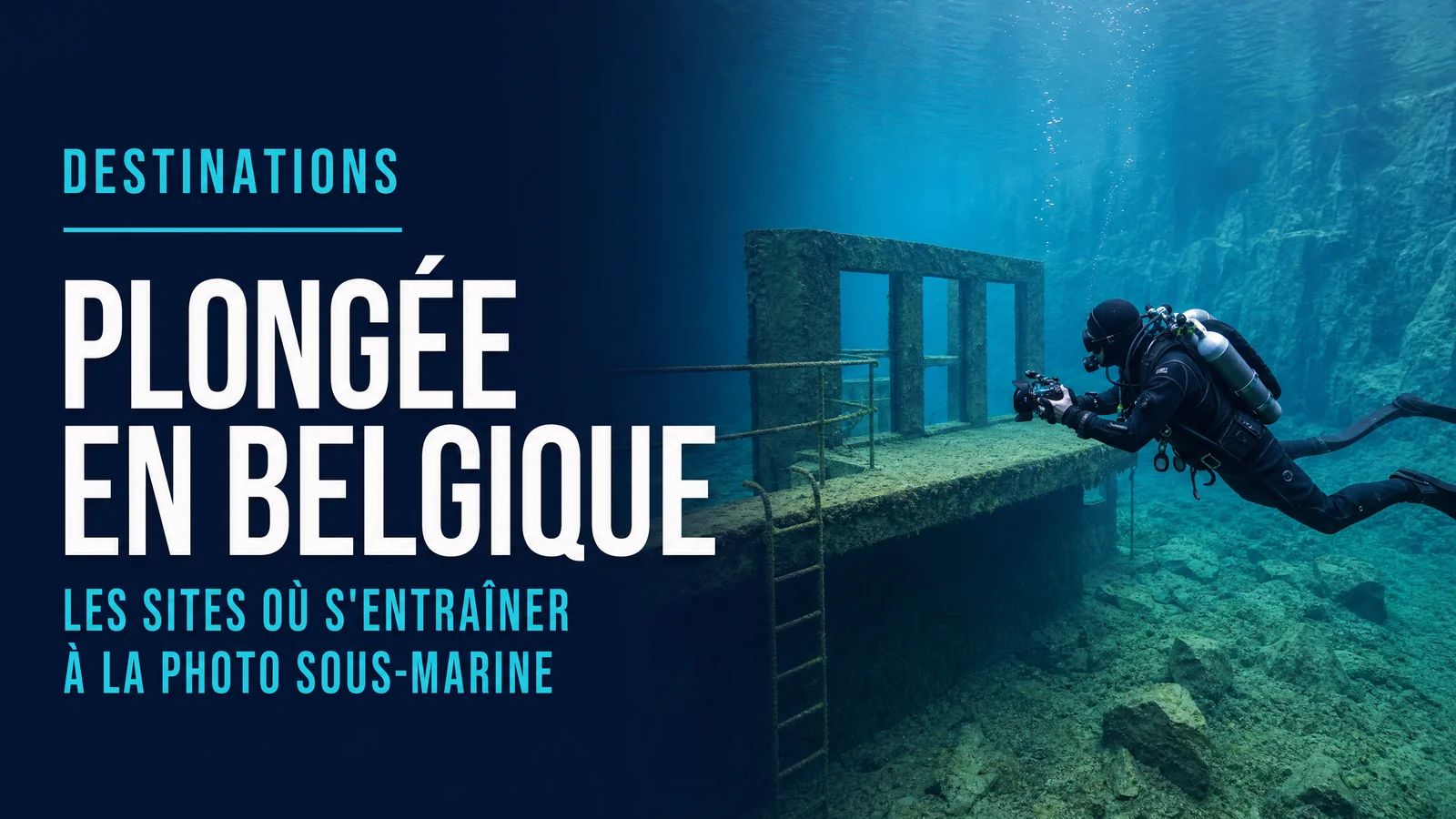
Belgium - Ciney - VDE - Vaudelet - Tilff - Nemo33
Ciney, Tilff, Vaudelet, Thaudi, Eau d'Heure dam, Nemo33. Belgium is full of photo dive sites. Clear water, local fauna, controlled conditions. The perfect training ground before the sea.
No waves, no currents, no tides. Quarries offer stable conditions that let you focus on photography rather than navigation. Ideal for testing the settings and techniques learned.
Curious and approachable European perch, golden bream, roach, eels, crayfish. Belgian freshwater fauna is little known but remarkably photogenic with the right techniques.
Ciney (Namur), Tilff (Liege), Pont-a-Lesse. All less than 1h30 from Brussels, Liege or Charleroi. Photo weekends accessible without flying.
Belgium has a good dozen sites accessible to photographer divers. Here are the best, classified by region.
The national reference. Clear freshwater (3-8m visibility), abundant and curious perch, bream, roach, trout. Submerged structures (boats, cars, bikes) for composition practice. Dive club on site with compressor. Depth 5-22m.
The other major Namur site, often mentioned alongside Ciney. Clear freshwater, abundant fauna, perch, bream, pike-perch, and a well-established site atmosphere with on-site diving infrastructure. Ideal for practising animal approach and composition settings in secure conditions. Depth 5-20m.
One of the best-known quarries in Walloon Brabant, close to Chaumont-Gistoux. Freshwater, well-present local fauna, ideal for Brussels area divers who want to practise without driving two hours. A must for starting photography in real conditions.
Site appreciated by Namur divers. Clear freshwater, perch and cyprinids, submerged structures to explore. Depth and conditions comparable to Ciney, with often lower weekday attendance, which makes animal approach easier.
Popular site among Liege divers. Cold river water fauna: trout, minnows, crayfish. Good summer visibility (4-7m). Excellent for practising macro and small subjects. Max depth 18m.
The largest artificial lake in Belgium, with authorised diving areas. Atypical environment: deep freshwater, structures submerged during dam creation, varied lake fauna (perch, pike-perch, pike). A different diving experience from classic quarries, with significant depths.
Accessible and calm quarry, ideal for beginners and families. Max depth 12m, decent visibility. Varied freshwater fish and submerged structures. Affordable access fee.
Less frequented site, so fauna often less scared and easier to approach. Perch, pike and pike-perch. Depth 5-18m. An interesting option to avoid crowded sites at weekends.
Nemo33 is the deepest indoor diving centre in Belgium, 33 metres in freshwater maintained at 33 C, crystal clear all year round. It is a unique site: no natural fauna, but unique conditions for progressing in underwater photography.
Practical info
Sint-Pieters-Leeuw
20 min from Brussels
33m depth
Water 33 C all year round
Required level
Open Water minimum
The AquaExposure course is structured so you progress in stages. Belgian quarries are the ideal step between online learning and your first sea or Zeeland outings.
Online course
Theory modules + videos from home
Quarry practice
Apply settings in controlled conditions
Zeeland & sea
Transfer techniques to seawater
Yes. Belgian quarries are excellent sites for learning and practising underwater photography. Freshwater is generally clearer than seawater (3-8m visibility in summer), weather conditions don't apply (no waves or currents), and freshwater fauna, perch, bream, roach, eels, is ideal for working on animal approach and basic settings. It is the perfect training ground before heading to sea or Zeeland.
The best season for photography in Belgian quarries is late spring and summer (May-September). Visibility is maximum (6-10m sometimes), fauna is active, and water temperature rises to 12-18 C at the surface. In winter, visibility remains decent but fauna is less active and the thermocline very pronounced. Avoid heavy rain periods which cloud the water.
In Belgian quarries, the water is greenish but clear. Starting settings recommended by AquaExposure: ISO 400-800, aperture f/5.6-f/8, speed 1/100-1/200s. Auto white balance or manual 'freshwater' setting depending on your camera. No red filter needed in freshwater, correction is done in post-processing (slight cyan/green correction). The Scenography of Erasure technique applies perfectly in this environment.
Belgian quarries are accessible from Open Water level (PADI) or 1 star (CMAS/LIFRAS). Most sites have shallow areas (5-10m) ideal for beginners and deeper areas (15-25m) for confirmed divers. Some quarries like Ciney have submerged structures explorable from level 1. The AquaExposure course is designed to work at all levels.
The Ciney quarry (province of Namur) is ideal for starting underwater photography in Belgium: clear water, abundant fauna (curious perch, bream), submerged structures (boats, cars), accessible depth (5-20m) and dive club on site. The Tilff quarry on the Ourthe also works very well, with cold river water fauna. For Walloon Brabant divers, Vaudelet (Villers-la-Ville) is the closest and one of the best known in the region. For families and less experienced divers, Pont-a-Lesse (max depth 12m) is an excellent choice.
Nemo33 in Sint-Pieters-Leeuw (near Brussels) is the deepest indoor diving centre in Belgium and one of the deepest diving pools in Europe (33m). It is an ideal environment for working on exposure settings at depth, testing camera housing, and practising buoyancy before a quarry or sea outing. The water is fresh, warm (33 C), crystal clear, perfect conditions for understanding artificial and natural light management without outdoor diving constraints.
Learn techniques adapted to Belgian freshwater. Whether at Vaudelet, Ciney, Tilff or Nemo33, you will come back with images you will be proud of.